
When choosing between potassium chloride and sodium chloride for your water softener, know potassium offers about 80% ion exchange efficiency.
However, it requires roughly 25% more salt and more frequent regeneration.
Potassium costs markedly more but benefits those on low-sodium diets and reduces environmental impact by avoiding soil degradation.
Sodium chloride is more economical and efficient but adds sodium to softened water.
You’ll also need to adjust your softener settings to optimize performance with potassium.
Exploring these details can help you decide which suits your needs best.
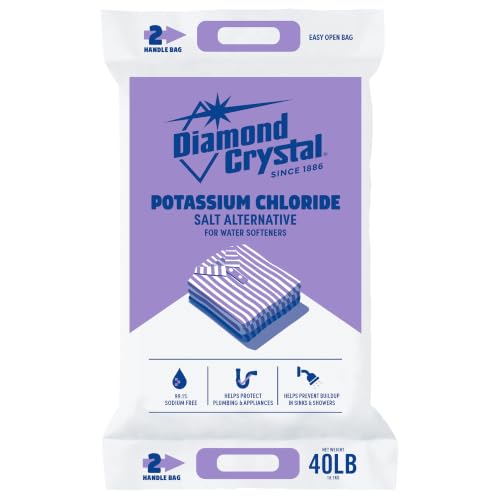
- Low-Sodium Softening Solution: Diamond Crystal Potassium Chloride removes hard water minerals just…
- Reliable Purity and Formula: Made with 99.1% pure potassium chloride, these crystals contain low…
- Everyday Household Benefits: Softer skin, cleaner dishes, and reduced soap film buildup make this…
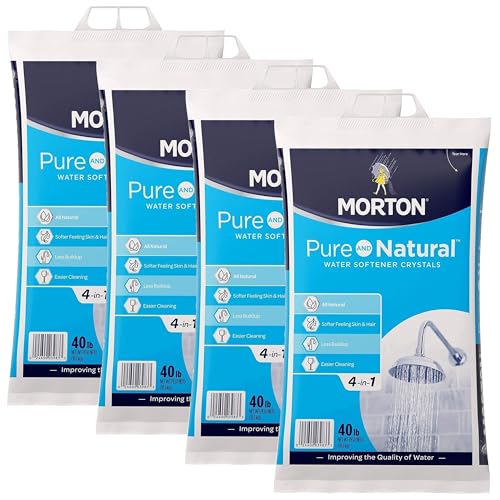
- Premium Natural Water Softener – Morton Pure and Natural Water Softener Salt pellets is produced…
- Softer Feeling Skin and Hair – These water softener crystals work to reduce water hardness…
- Less Buildup – Use the Morton salt water softener to reduce the accumulation of minerals that hard…
Key Takeaways
- Potassium chloride softens water by replacing hardness minerals but is about 20% less efficient than sodium chloride.
- Potassium chloride requires approximately 25% more salt volume and more frequent regenerations than sodium chloride.
- Potassium chloride costs significantly more per bag, increasing long-term expenses despite environmental benefits.
- Potassium chloride is preferred for low-sodium diets as it doesn’t add sodium to softened water.
- Potassium chloride is environmentally friendlier, reducing soil degradation and sodium buildup in water and soil.
Water Softener Potassium vs Salt: Side-by-Side Comparison
| Comparison Factor | Potassium Chloride | Sodium Chloride Salt |
|---|---|---|
| Softening Efficiency | About 80% as effective as sodium chloride | Higher ion exchange efficiency |
| Amount Required | Requires roughly 25% more product | Requires less salt for similar softening |
| Regeneration | May require more frequent regeneration | Generally allows standard regeneration cycles |
| Operating Cost | More expensive over time | Usually the more economical option |
| Sodium in Water | Does not add sodium to softened water | Adds sodium ions during ion exchange |
| Environmental Consideration | Helps reduce sodium buildup in soil and water | Sodium discharge may contribute to soil degradation |
| System Adjustments | Hardness settings may need an increase of about 20% | Usually works with standard system settings |
| Best Suited For | Households prioritizing lower sodium exposure or environmental concerns | Households prioritizing efficiency and lower operating costs |
How Potassium and Sodium Chloride Water Softeners Work?

Although potassium chloride and sodium chloride operate through the same ion exchange process, they differ in efficiency and regeneration requirements.
When you use either salt, the resin beads in your water softener attract calcium and magnesium ions, replacing them with sodium or potassium ions.
This ion exchange softens the water by removing hardness minerals. However, sodium chloride removes these minerals more efficiently, so you’ll need to adjust system settings when switching to potassium chloride.
Potassium operates at about 80% of sodium’s effectiveness, leading to more frequent regenerations. You’ll also notice potassium requires roughly 25% more product volume to achieve comparable softening.
Despite these differences, both salts work interchangeably within standard ion exchange systems. This allows you to select based on your specific needs without modifying hardware.
Choosing resins with high capacity and efficiency can help optimize performance regardless of the salt type used.
Comparing Efficiency and Performance of Potassium vs Sodium Softener Salts
When comparing potassium and sodium softener salts, you’ll find that sodium chloride delivers higher efficiency in removing hardness minerals, operating at full capacity. Potassium chloride functions at about 80% effectiveness.
This means you’ll need to adjust your softener’s hardness settings by roughly 20% when using potassium. Because potassium has a lower ion exchange capacity, your system will regenerate more frequently to maintain softening performance.
Additionally, sodium requires less volume to achieve the same hardness removal compared to potassium. Despite both salts working with standard ion exchange resins, these differences affect operational efficiency.
Using a softener with digital control valves can help optimize regeneration cycles to reduce salt and water waste when switching between potassium and sodium salts.
Comparing Costs: Potassium vs Sodium Chloride Water Softener Salt
Understanding the efficiency differences between potassium and sodium chloride salts naturally leads to evaluating their cost implications.
Potassium chloride costs markedly more, impacting your budget over time despite its environmental benefits. Sodium chloride remains the most economical option, requiring less product volume for comparable water softening.
Consider these cost factors when choosing between the two:
- Potassium chloride costs 4 to 10 times more per 40-lb bag (~$40) compared to sodium salt (~$4).
- Potassium’s lower ion exchange capacity means you’ll use about 25% more product, increasing long-term expenses.
- Sodium chloride’s higher efficiency reduces regeneration frequency, further lowering maintenance costs.
Additionally, selecting the right salt form and purity level can influence both water softener performance and ongoing costs.
Balancing these elements helps you select the most cost-effective solution for your water softening needs.
Health Impacts of Potassium vs Sodium in Softened Water
When you use sodium chloride in your water softener, it introduces sodium ions into your water. This can be a concern for people on low-sodium diets. If you’re watching your sodium intake, that’s something to keep in mind.
Now, potassium chloride is a different story. It replaces those hardness minerals with potassium, which is generally beneficial. Plus, it tends to pose fewer dietary concerns. Additionally, potassium-based softeners are often preferred for septic system health because they avoid salt buildup that can harm beneficial bacteria.
Sodium Impact on Health
Although both potassium chloride and sodium chloride serve as effective agents in water softening, the presence of sodium in softened water poses distinct health considerations.
When sodium replaces hardness minerals, it increases the sodium ion concentration in your water supply. This can impact your health, especially if you’re on a low-sodium diet or have hypertension.
Key points to take into account include:
- Sodium chloride adds sodium ions to water, potentially increasing your daily sodium intake.
- For water hardness levels at 22 grains or below, the sodium increase remains generally safe for consumption.
- Individuals with strict sodium restrictions should monitor softened water intake or consider potassium chloride alternatives.
Understanding sodium’s health impact helps you make informed choices about your water softening method. Proper maintenance of your water softening system, similar to regular system inspections, ensures optimal performance and safety.
Potassium Benefits Explained
Several health-conscious individuals prefer potassium chloride in water softening because it avoids adding sodium ions to your water supply.
Unlike sodium chloride, potassium chloride replaces hardness minerals with potassium, which is beneficial for cardiovascular health and does not contribute to sodium intake.
The potassium in softened water is trace and safe, supporting overall electrolyte balance without adverse effects.
This makes potassium chloride an ideal choice if you want to reduce sodium exposure from your water.
It is important to note that water softeners do not remove chlorine, so additional chlorine removal methods may be needed to protect your system and improve water quality.
| Aspect | Potassium Chloride |
|---|---|
| Sodium Addition | None |
| Electrolyte Benefit | Supports potassium intake |
| Health Impact | May support heart health |
| Suitability | Preferred for low-sodium needs |
Choosing potassium enhances water quality while maintaining health-conscious standards.
Dietary Restrictions Considerations
Because sodium chloride introduces sodium ions into softened water, individuals with sodium-restricted diets must carefully consider their water softening options.
Using sodium-based softeners adds to daily sodium intake, which can be problematic if you manage hypertension or cardiovascular conditions.
Potassium chloride offers an alternative by replacing hardness minerals with potassium ions, avoiding sodium addition altogether.
Here’s what you should know:
- Sodium softening typically adds a small amount of sodium, generally safe if water hardness is below 22 grains.
- Potassium chloride doesn’t contribute sodium, benefiting those on strict sodium restrictions.
- The potassium levels introduced are trace and can be healthful, as potassium supports heart and muscle function.
Choosing potassium chloride helps you maintain dietary restrictions without compromising softened water quality.
For households aiming to optimize water use and quality, integrating a smart recirculating pump can further enhance system efficiency and reduce water waste.
Environmental Effects of Using Potassium vs Sodium Chloride Softening Salt
When you choose potassium chloride over sodium chloride for water softening, you markedly reduce the environmental impact on soil and plant life.
Sodium discharge from softeners can degrade soil structure and inhibit plant growth due to sodium’s tendency to displace essential nutrients.
Potassium chloride, however, acts as a beneficial nutrient, supporting plant health and maintaining soil fertility.
Both salts generate similar brine waste volumes during regeneration, but potassium minimizes the risk of salt-induced ecological damage.
Using potassium reduces sodium accumulation in local water bodies and prevents soil salinization, a common issue with sodium chloride.
By opting for potassium, you support a more sustainable water softening process that protects ecosystems while maintaining effective hardness removal.
This option does require slightly more product volume due to its lower ion exchange capacity.
Additionally, potassium-based softening helps avoid soil compaction and elevated alkalinity often caused by sodium from traditional softeners.
How to Adjust Your Water Softener Settings for Potassium Salt?
When you switch to potassium salt for your water softener, it’s a good idea to bump up your water hardness setting by around 20%. This adjustment helps keep your water softening effective.
You might also notice that your softener goes through regeneration cycles a bit more often. That’s because potassium has a lower ion exchange capacity compared to sodium.
And don’t forget about the salt volume! You’ll need to use about 25% more potassium pellets to achieve the same level of hardness removal. Keeping these adjustments in mind will help you get the best results from your water softener. Regularly monitoring resin condition can help you plan maintenance and prevent performance issues.
Adjusting Hardness Settings
Adjust your water softener’s hardness setting upward by approximately 20% to accommodate potassium chloride’s lower ion exchange efficiency.
Since potassium operates at about 80% effectiveness compared to sodium chloride, this adjustment guarantees accurate softening performance. Here’s how to proceed:
- Locate your softener’s control panel and access the hardness setting menu.
- Increase the value by 20% above your current water hardness reading. For example, if your water hardness is 10 grains, set it to 12 grains.
- Save the new setting and monitor water softness to confirm proper calibration.
This precise adjustment compensates for potassium’s reduced ion exchange capacity, preventing under-softening and maintaining system efficiency without altering regeneration frequency.
Always consult your softener’s manual for specific programming steps. Regular testing of water hardness and iron levels can help optimize salt use and ensure your system remains efficient.
Increasing Regeneration Frequency
Frequently, using potassium chloride in your water softener requires increasing the regeneration frequency due to its lower ion exchange capacity compared to sodium chloride. You’ll need to adjust your system’s settings to compensate for potassium’s roughly 80% softening efficiency. This means regenerating more often to maintain ideal water softness.
| Salt Type | Ion Exchange Capacity | Regeneration Frequency Adjustment |
|---|---|---|
| Sodium Chloride | High | Standard cycle |
| Potassium Chloride | Moderate (80% of Na) | Increase by 20-25% |
| Blended Salt | Variable | Adjust based on blend ratio |
Calculating Salt Volume
Since potassium chloride requires more frequent regeneration due to its lower ion exchange capacity, you’ll also need to increase the amount of salt used per regeneration cycle.
To properly adjust your water softener settings for potassium salt, follow these steps:
- Increase the hardness setting by 20% on your softener control to compensate for potassium’s 80% efficiency compared to sodium chloride.
- Boost the salt dosage by approximately 25% to ensure the resin fully regenerates, as potassium requires more volume to exchange the same hardness minerals.
- Monitor water hardness regularly after adjustments to fine-tune salt usage and prevent under- or over-regeneration.
Frequently Asked Questions
Can Potassium Pellets Cause Clogging in Cold Climates?
Yes, potassium pellets can cause clogging in cold climates. When temperatures drop below freezing, these pellets tend to form a gel-like consistency.
This gel can accumulate in your system’s brine tank or lines, leading to blockages and malfunctions. To prevent this, you should keep your softener in a heated area or use insulation.
Regular maintenance checks during winter also help you spot and address any potential clogging early on.
Does Potassium-Softened Water Taste Different From Sodium-Softened Water?
Yes, potassium-softened water often tastes different from sodium-softened water.
You’ll notice potassium-softened water lacks the characteristic slippery texture sodium imparts, making it feel more like natural water.
Some users prefer this subtle difference in taste, finding it cleaner or less metallic.
This variation arises because potassium ions replace hardness minerals without adding sodium ions, which influence water’s mouthfeel and flavor profile, especially for those sensitive to sodium’s taste.
How Does Potassium Salt Affect the Feel of Softened Water?
You might think potassium-softened water feels like liquid silk, but it’s actually closer to natural water.
It’s smooth without that slippery, almost slimy sensation sodium imparts.
Potassium ions don’t create the slick texture sodium ions do, so your skin and hair won’t feel coated or slick after washing.
This subtle difference means you get soft water that feels clean and fresh, not artificially slick.
It enhances your overall water experience.
Can I Blend Potassium and Sodium Salts in My Softener?
Yes, you can blend potassium and sodium salts in your softener. Doing so helps reduce overall costs while still lowering sodium content in softened water.
Just adjust your system settings to accommodate the mixed ion exchange. Keep in mind potassium requires about 20-25% higher hardness settings.
This combination maintains softening efficiency and offers a balance between environmental benefits and operational expenses without compromising water quality.
Are There Specific Brands That Recommend Potassium Salt Use?
Think of your water softener as a finely tuned instrument, where each brand composes its own symphony of settings.
GE Appliance, for instance, explicitly recommends potassium salt, adjusting hardness settings by 20% to optimize performance.
While most systems accept potassium, only select brands provide tailored guidance to guarantee efficiency.
You should check your softener’s manual or manufacturer website for such specific instructions to achieve precise calibration and avoid operational issues.
Make the Right Choice for Your Water Softener
When choosing between potassium and sodium chloride for your water softener, consider efficiency, cost, health, and environmental impact.
Potassium offers a healthier, eco-friendlier alternative but often at a higher price and slightly different performance.
Sodium is cost-effective and widely used but may affect health and the environment more.
Adjusting your system for potassium salt guarantees peak results.
Ultimately, the choice depends on your priorities, balancing budget, health, and sustainability for the best water softening outcome.
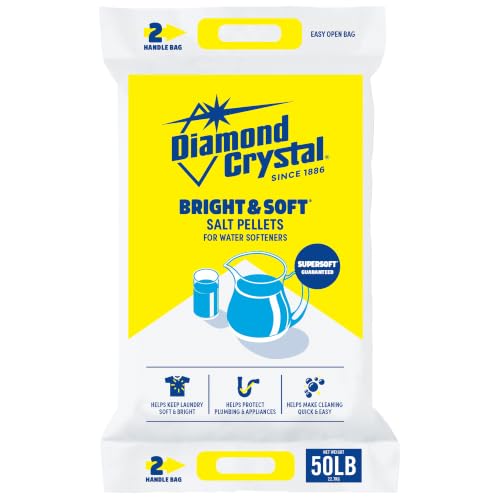
- Effective Water Softening Solution: Bright & Soft Salt Pellets transform hard water into soft water…
- Premium Purity Formula: Made with typically 99.8% pure salt and greater than 99.7% water soluble…
- Everyday Household Benefits: Soft, bright laundry and hair, plus spot-free dishes, make these…
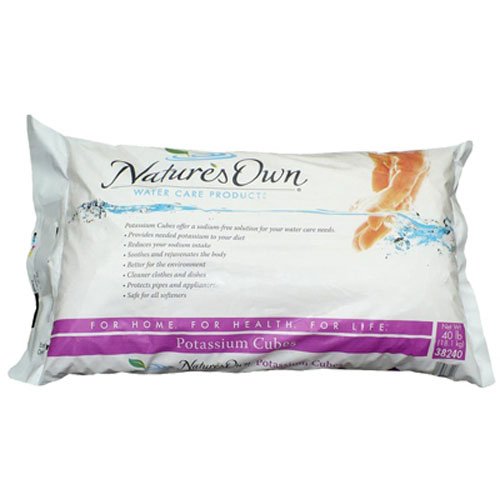
- This product adds a great value
- Product is highly durable and very easy to use
- This product is manufactured in China
Last update on 2026-10-26 / Affiliate links / Images from Amazon Product Advertising API