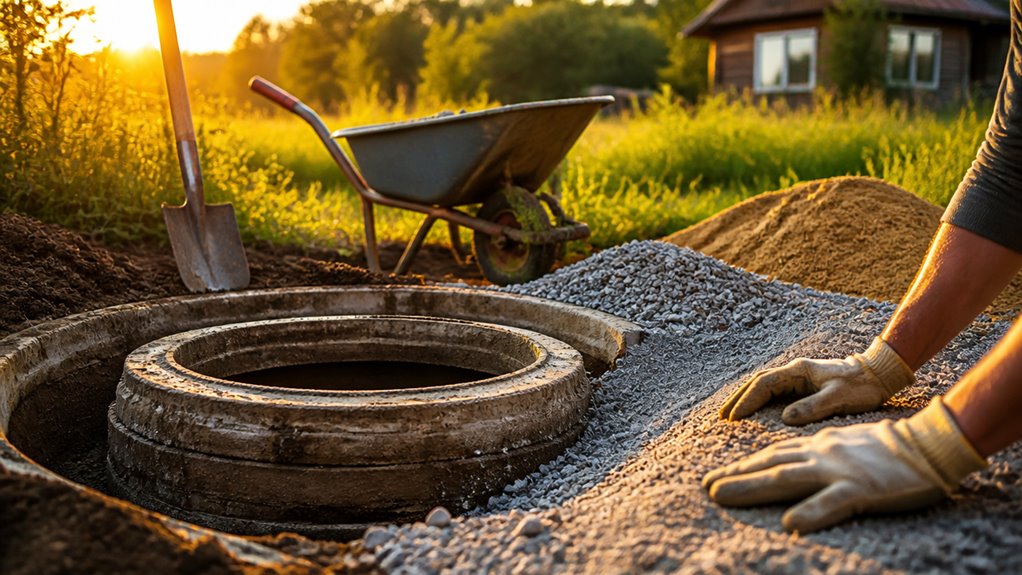
To fill your old septic tank correctly, first pump out all liquids and remove the tank lid for safe access.
Drill a hole for drainage and crush the tank if it’s metal and unstable.
Use only approved materials like clean sand, gravel, or concrete slurry, layering and compacting thoroughly to prevent settling.
Always follow local regulations, secure necessary permits, and schedule inspections.
Taking these steps minimizes contamination risks and structural failures.
More insights on safe, compliant decommissioning await you further.
Key Takeaways
- Pump out all sewage and liquids completely before filling to eliminate hazards and prevent contamination.
- Use approved clean fill materials like sand, gravel, or concrete slurry for structural stability and compliance.
- Drill a hole in the tank bottom to drain trapped water and prevent liquid accumulation during filling.
- Fill the tank slowly in layers, compacting each to avoid settling and ensure a solid, void-free fill.
- Obtain necessary permits, schedule inspections, and follow local regulations to ensure proper decommissioning.
Preparing an Old Septic Tank for Filling

Before you begin filling an old septic tank, you must first remove all sewage and residual liquids by pumping the tank completely. This step eliminates hazards and prevents contamination during filling.
Completely pump out all sewage and liquids before filling an old septic tank to ensure safety and prevent contamination.
Next, remove or destroy the tank lid to avoid collapse risks and guarantee safe access. Drill or punch a hole in the tank’s bottom to allow trapped water to drain, preventing liquid accumulation within the void.
If the tank is metal and requires decommissioning, crush it in place to minimize structural instability. These core steps prepare the tank for safe, effective filling and comply with standard decommissioning practices.
Always confirm local regulations before starting, as permanent abandonment often has specific procedural requirements to protect health and structural integrity.
Using bio-accelerator formulations can help maintain septic system health before decommissioning to avoid future environmental issues.
Choosing the Best Materials for Septic Tank Filling
Several types of fill materials are suitable for septic tank filling, but you’ll want to select only those approved by your local jurisdiction to assure compliance and long-term stability.
Using improper materials can lead to settling, voids, or contamination risks.
Commonly accepted materials include:
- Clean fill material such as sand or gravel, which compacts well and provides structural support.
- Concrete slurry or density fill, often permitted for permanent decommissioning, offering high stability.
- Soil or earth with low organic content, avoiding clay-heavy soils prone to shrink-swell movement.
Avoid organic debris, wood, roots, or common dirt that degrade or cause voids.
Confirm local codes before proceeding, as approvals and restrictions vary.
Proper material choice assures durable filling and prevents future ground subsidence or structural failure.
Additionally, preventing root intrusion into surrounding pipes and systems is crucial to maintaining long-term septic integrity.
Filling and Compacting a Septic Tank Step-by-Step
Once you’ve prepared the tank by pumping out liquids, removing the lid, and opening the bottom for drainage, you can begin filling it with your chosen material.
Start by placing clean sand, gravel, or approved fill slowly into the tank to force out any remaining liquid.
Avoid overfilling beyond the tank’s vertical sidewalls or outlet pipe level unless local regulations allow it.
After filling, compact the material carefully in layers to minimize future settling and soil subsidence.
Use mechanical compaction tools if accessible, ensuring stable, dense fill throughout the tank’s volume.
If the tank is metal and structurally unsound, crush it in place before filling.
Complete filling only when the tank is fully packed and compacted, providing a solid, void-free base beneath the site for safe long-term abandonment.
Additionally, ensure that sump pump water is not directed into the septic tank during or after filling to prevent disruption of bacterial processes and system overload.
Safety Tips to Prevent Collapse and Contamination
Although filling an old septic tank may seem straightforward, you must prioritize safety to prevent structural collapse and environmental contamination.
Filling an old septic tank requires careful attention to safety to avoid structural and environmental risks.
Before you start, make certain the tank is fully pumped out and the lid removed or destroyed to eliminate fall hazards. Properly drain the tank by opening a hole at the bottom to prevent trapped liquids that can cause voids or subsidence.
Follow these key safety tips:
- Use only approved clean fill materials like sand or gravel. Avoid organic debris that can decompose and destabilize the fill.
- Fill slowly and compact the material thoroughly to minimize settling and potential surface collapse.
- If the tank is metal or structurally compromised, crush it in place before filling to prevent future void formation.
Additionally, managing soil stability around the fill area is crucial to avoid long-term settling and damage.
Adhering to these practices protects both your property and the environment.
Permits and Inspections for Septic Tank Decommissioning
Making certain safety and proper filling techniques is only part of the septic tank decommissioning process. You must also navigate permits and inspections that regulatory agencies require.
Before beginning, obtain a decommissioning permit from your local health department. This often specifies acceptable fill materials and whether the tank must be opened, crushed, or removed.
During the process, provide proof of sewage pumping and receipts for fill materials as required. After filling, schedule a final inspection to verify compliance and secure permit closure.
Keep detailed records documenting the tank’s location and confirmed abandonment for future reference. Permit requirements vary by jurisdiction, so consult local codes to ensure you meet all regulations precisely.
Following these steps helps avoid legal issues and ensures the site’s safe, permanent closure. Installing a backwater valve can further protect your property from sewage backflow during and after the decommissioning process.
Why You Should Hire Licensed Pros for Septic Tank Filling?
When it comes to filling your septic tank, it’s really important to hire licensed professionals. They know all the local regulations and permit requirements, so you can rest easy knowing everything’s above board.
Plus, these experts are trained to handle safety risks effectively. They understand structural hazards and know how to manage materials properly. So, you’re not just getting the job done; you’re also keeping everyone safe.
Additionally, licensed pros ensure proper septic system compliance to protect your property and the environment.
Ensuring Regulatory Compliance
When handling septic tank filling, following local regulations is essential to avoid costly penalties and safety hazards.
Licensed professionals understand and comply with these rules, ensuring your project meets all legal requirements.
Their expertise guarantees proper permits, documentation, and inspection processes are secured and maintained.
Here’s why you should hire licensed pros:
- They obtain and manage all necessary permits and inspections to keep your project compliant.
- They select approved fill materials and use correct filling methods specified by local codes.
- They provide detailed records of the tank’s location and abandonment status to prevent future liabilities.
Additionally, maintaining the integrity of your septic system through regular maintenance helps prevent costly repairs and environmental damage.
Expert Safety Management
Managing safety risks during septic tank filling demands specialized knowledge and experience that licensed professionals bring to the job. They guarantee proper decommissioning steps, prevent structural collapse, and comply with local safety codes.
You’ll avoid hazards like toxic gas exposure, unstable soil, and improper fill that can cause future subsidence. Licensed pros use approved materials and follow protocols to secure the site effectively.
| Safety Aspect | Professional Advantage |
|---|---|
| Hazard Identification | Recognize unseen risks |
| Proper Equipment Use | Utilize calibrated tools safely |
| Regulatory Compliance | Secure permits, inspections |
| Structural Integrity | Prevent tank collapse or voids |
| Environmental Protection | Avoid contamination and leaks |
Additionally, they know to turn off the circuit breaker to ensure electrical safety before beginning any work on the tank.
Hiring licensed experts protects your property and health, guaranteeing the septic tank fills safely and permanently.
Frequently Asked Questions
How Long Does the Septic Tank Filling Process Usually Take?
The septic tank filling process usually takes a few hours to complete.
You’ll first pump out all sewage and residual liquids, which might take one to two hours depending on tank size.
Then, removing or crushing the lid and drilling drainage holes can take another hour.
Filling and compacting the tank with approved material generally takes an additional hour or so.
Can I Fill a Septic Tank Myself Without Professional Help?
You can fill a septic tank yourself, but about 70% of jurisdictions require licensed professionals due to safety and environmental risks.
You’ll need to pump out all waste, remove the lid, drill a drainage hole, and use approved fill materials like sand or gravel.
Improper filling can cause soil settling or contamination. Always check local regulations, obtain permits, and consider hiring experts to guarantee compliance and avoid costly mistakes.
What Happens if a Septic Tank Is Not Properly Filled?
If you don’t properly fill a septic tank, you risk soil settling or collapse above the tank, creating dangerous sinkholes.
Trapped liquids can cause contamination or structural failure. The tank may become a safety hazard for people and vehicles.
Improper filling also risks sewage leakage, environmental damage, and costly repairs.
You could face legal issues if local codes require correct decommissioning procedures and you skip them.
Is It Necessary to Notify Neighbors Before Septic Tank Abandonment?
You generally don’t have to notify neighbors before abandoning a septic tank unless local regulations explicitly require it.
However, it’s wise to check with your local health department or permitting authority, as some jurisdictions mandate notifications or provide public records of decommissioning permits.
Keeping neighbors informed can prevent disputes and protect property values.
Always follow local codes and obtain required permits to ensure proper legal and environmental compliance during abandonment.
Can Septic Tank Filling Affect Nearby Trees or Landscaping?
You might think filling a septic tank is harmless, yet it can impact nearby trees and landscaping if done improperly.
Using unsuitable fill like clay-heavy soil encourages shrink-swell movement, causing soil settling that stresses roots and damages plants.
Organic debris in fill invites decay, destabilizing the ground.
To protect your landscaping, use clean sand or gravel, compact fill thoroughly, and avoid overfilling above tank edges.
This approach preserves soil integrity and root health.
Best Way to Fill in Old Septic Tank: Final Safety Tips
When it’s time to gracefully retire your old septic tank, taking careful steps guarantees a smooth changeover.
By properly preparing, selecting suitable materials, and following precise filling and compacting methods, you’ll avoid future issues and maintain site stability.
Don’t overlook permits or safety precautions; they’re key to a responsible closure.
If in doubt, trusting licensed professionals can make the process seamless and secure, giving you peace of mind as you move forward.