
To kill roots in your sewer line effectively, start with mechanical removal like hydro-jetting or cable cutting to clear blockages.
Follow promptly with chemical treatments such as copper sulfate to control regrowth inside the pipes.
Keep in mind, mechanical methods restore flow quickly but don’t seal entry points, so periodic chemical applications and inspections are necessary.
For lasting protection, consider permanent repairs like pipe lining or replacement.
Exploring these options can help you choose the best long-term solution.
Key Takeaways
- Mechanical removal using cable machines or hydro-jetting effectively clears roots and restores sewer flow before chemical treatment.
- Chemical root killers like copper sulfate control and slow root regrowth but do not fully remove debris or restore flow.
- Applying chemicals soon after mechanical clearing maximizes effectiveness in preventing root regrowth inside pipes.
- Permanent pipe repairs or lining prevent root re-entry by sealing cracks and joints, reducing recurrence long-term.
- Combining mechanical cleaning with chemical treatments and ongoing maintenance ensures the best long-term root control.
Root Intrusion: Causes and Problems
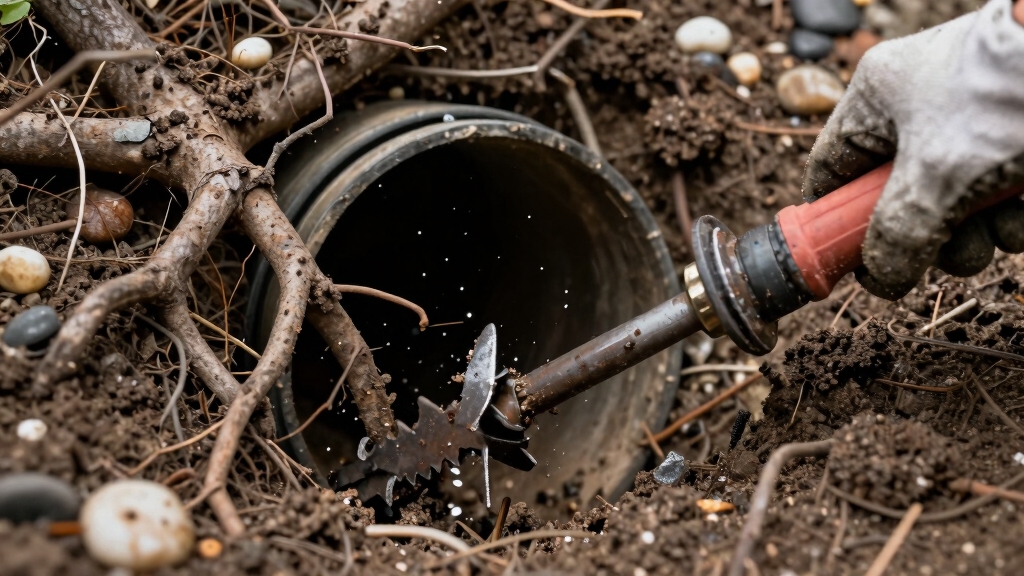
When tree roots find their way into sewer lines, they cause blockages that disrupt normal flow and can lead to costly damage.
Roots enter through cracks, joints, or deteriorated pipe sections, seeking moisture and nutrients.
Roots penetrate through cracks and joints, drawn by moisture and nutrients within damaged pipe sections.
Once inside, they expand, restricting water passage and increasing the risk of backups or pipe collapse.
You’ll notice slow drains, gurgling sounds, or foul odors as early signs.
Ignoring these symptoms allows root masses to thicken, complicating removal and escalating repair costs.
Your sewer system’s material and age influence vulnerability.
Older clay or concrete pipes with loose joints are especially susceptible.
Understanding the root intrusion causes helps you monitor problem areas and plan timely interventions.
This can prevent severe damage and expensive replacements.
Addressing root intrusion early is key to maintaining your sewer line’s integrity.
Regular application of copper sulfate treatments can help manage and prevent root growth effectively over time.
Mechanical Methods to Remove Root Intrusions
If you’re dealing with roots blocking your sewer pipes, cable drain cleaning machines are a great option. They can cut through those pesky intrusions efficiently.
You see, flexible-shaft root cutters spin really fast, making it easier to break through tough roots and get your flow back on track.
Now, while mechanical removal is effective for tackling existing roots, it’s important to remember that it won’t prevent them from growing back. So, it’s a good idea to consider some ongoing maintenance or additional solutions to keep those roots at bay in the future.
For persistent or severe blockages, professionals often use motorized augers that combine power with precision to clear deep root intrusions effectively.
Cable Drain Cleaning
Cutting through root intrusions inside sewer lines demands specialized mechanical tools like cable drain cleaning machines. You’ll use a rotating steel cable, powered by a motor, to physically cut and break up roots blocking the pipe.
These machines are effective at quickly restoring flow by grinding through dense root masses. You feed the cable into the line via the cleanout or access point, then control its rotation to target the blockage.
While cable drain cleaning clears existing roots, it doesn’t prevent regrowth since the root entry point remains intact. This method is best suited as an immediate solution or part of a combined approach, often followed by chemical root killers to slow future invasions.
Regular maintenance with cable cleaning can help manage recurring root problems efficiently. It is important to inspect the auger regularly for damage or wear to ensure safe and effective operation during cable drain cleaning.
Flexible-Shaft Root Cutters
Flexible-shaft root cutters attack root intrusions by rotating a steel cable equipped with cutting blades at high speeds, typically around 2,000 RPM. You guide the flexible shaft through the sewer line to the blockage, where the rotating blades grind and slice through roots, clearing the pipe’s interior.
This method is highly effective for immediate removal of root masses without requiring excavation. However, flexible-shaft cutters only remove the roots inside the pipe; they don’t address the source or entry point of root intrusion.
Because of this, roots often regrow if you don’t follow up with chemical root killers or pipe repairs.
Flexible-shaft root cutters offer a powerful mechanical solution that restores flow quickly. They should be part of a broader maintenance strategy to prevent recurring blockages.
Regular inspections and professional cleanings are essential to detect and manage root intrusion before it causes severe damage.
Chemical Root Killers: How and When to Use Them?
Although chemical root killers won’t clear all debris or fully restore flow, they play a crucial role in controlling root regrowth inside sewer lines.
You typically apply products like copper sulfate by pouring them into a toilet to reach affected pipes. Use chemicals after mechanical root cutting for best results, ideally within an hour or after eight weeks.
Check local regulations before use, as some restrict these chemicals.
Quiet check valves, designed with noise reduction mechanisms, can help minimize disturbances caused by sudden pressure changes during chemical treatments.
| Chemical Type | Application Method |
|---|---|
| Copper Sulfate | Pour into toilet |
| Dichlobenil | Direct pipe treatment |
| Metam Sodium | Professional use only |
Combining Methods for Long-Term Root Control
Chemical root killers can slow regrowth but won’t remove existing roots or fully restore pipe flow. To achieve long-term root control, you need to combine mechanical root removal with chemical treatment.
Start by using a cable drain cleaning machine or flexible-shaft cutter to cut and clear roots blocking your sewer line. Immediately follow this with a root-killing chemical like copper sulfate or dichlobenil to inhibit regrowth on remaining root fragments.
This dual approach maximizes effectiveness. Mechanical cleaning clears the obstruction while chemicals target residual roots. For ongoing maintenance, apply root killers periodically after clearing to slow future invasion.
Be cautious about improper drainage methods to prevent clogging caused by debris and roots that can damage your pipes and drainage system.
Hydro-Jetting for Root Removal
Hydro-jetting uses high-pressure water streams to blast away roots and debris clogging your sewer line. This method aggressively clears blockages without chemicals, relying on water force and sometimes spinning nozzles to cut roots.
It’s environmentally friendly and highly effective for restoring full flow quickly. However, hydro-jetting requires professional-grade equipment and skill to avoid pipe damage.
Because tree roots are a common cause of sewer blockages, addressing tree root intrusion early can prevent extensive damage.
| Feature | Details |
|---|---|
| Pressure | Up to 4,000 PSI |
| Root Cutting | Spinning nozzles available |
| Environmental Impact | No chemicals, water only |
| Equipment Cost | High (professional units) |
| Best Use | Large blockages, root removal |
Use hydro-jetting as a strong mechanical option to remove roots before considering chemical treatments or repairs.
Permanent Pipe Repair to Prevent Root Intrusion
After clearing roots with hydro-jetting or other mechanical methods, you still face the risk of roots returning through damaged pipe sections. Permanent pipe repair offers the most reliable defense by eliminating entry points.
You can replace the compromised pipe segment with modern PVC, which is durable, waterproof, and resistant to root intrusion. If excavation is impractical, consider pipe relining. This involves installing an epoxy-coated liner inside the existing pipe to seal cracks and joints.
Both methods restore structural integrity and prevent roots from penetrating. Unlike chemical treatments or mechanical clearing, permanent repair addresses the root cause, reducing recurrence.
Investing in repair guarantees long-term sewer line protection, minimizes maintenance frequency, and preserves flow capacity. Always have a professional evaluate pipe condition to determine the best repair method for your system. Pipe lining also offers the advantage of minimal disruption to your property compared to full pipe replacement.
Frequently Asked Questions
Are Root-Killing Chemicals Safe for Septic Systems?
You need to be cautious using root-killing chemicals in septic systems.
Some, like copper sulfate, can harm beneficial bacteria essential for waste breakdown.
Always check product labels and local regulations before applying them.
If you use root killers, opt for those labeled safe for septic systems and follow guidelines strictly.
Mechanical cleaning combined with careful chemical use often provides better results without risking septic system health.
Can Tree Roots Damage Sewer Lines Without Entering Them?
Like a silent siege, tree roots can damage sewer lines without entering them by exerting pressure on the pipe’s exterior, causing cracks or deformation.
You’ll notice slow drainage or leaks as early signs.
This external intrusion weakens pipe integrity, leading to costly repairs.
Inspect regularly and consider durable materials like PVC to resist root pressure.
Preventative maintenance helps you avoid structural failures before roots make their way inside.
How Often Should Sewer Lines Be Inspected for Root Intrusion?
You should inspect your sewer lines for root intrusion at least once a year, especially if you live in an area with mature trees nearby.
If you notice slow drains or gurgling sounds, check more frequently.
Regular inspections help catch root growth early before severe blockages occur.
Combining mechanical cleaning with root killers during inspections increases effectiveness.
For recurring issues, consider professional assessments for pipe repair or relining to prevent future intrusions.
What Signs Indicate Root Intrusion Before Major Blockage Occurs?
When your drains start whispering with slow water flow or gurgling sounds, it’s like roots tapping at your pipes’ walls.
These subtle signs signal early root intrusion before a full blockage. You might notice toilets flushing sluggishly or water backing up in sinks.
Acting on these hints allows you to address root growth promptly, avoiding the chaos of major clogs and costly repairs later.
Stay alert to keep pipes clear.
Are There Environmentally Friendly Alternatives to Chemical Root Killers?
Yes, you can use hydro-jetting as an environmentally friendly alternative to chemical root killers.
It relies on high-pressure water to flush roots and debris without harmful additives.
Mechanical removal with cable machines also avoids chemicals by physically cutting roots inside pipes.
Both methods effectively clear roots while minimizing environmental impact.
However, these approaches don’t prevent regrowth, so combining them with preventive maintenance or pipe repair is wise for long-term control.
Protect Your Sewer Line From Future Root Damage
Think of your sewer line as a fortress, with roots as persistent invaders seeking entry.
By combining mechanical removal, targeted chemicals, and hydro-jetting, you can reclaim control and seal breaches.
Remember, just as a fortress needs permanent repairs to resist future attacks, reinforcing your pipes guarantees lasting protection.
Taking these practical steps keeps your sewer line clear and functioning, preventing root intrusion from ever gaining a foothold again.