Jetting in plumbing uses high-pressure water, typically between 1,500 and 4,000 PSI, to clear pipes thoroughly by blasting away grease, sludge, mineral scale, roots, and other debris along the entire pipe surface.
A specialized nozzle sprays water forward to dislodge blockages and backward to propel the hose and scour walls. This restores peak flow without chemicals.
This precise method prevents recurring clogs and extends pipe life. You can explore how this technique works and when it’s best applied next.
Key Takeaways
- Jetting in plumbing is a high-pressure water cleaning method used to clear pipe blockages and restore full flow.
- A specialized nozzle sprays water forward to dislodge debris and backward to scour pipe walls and propel the hose.
- It effectively removes grease, sludge, mineral scale, biofilm, and even tree roots when pipe conditions allow.
- Jetting offers thorough cleaning along the entire pipe length, preventing recurring clogs and extending pipe life.
- Professional operation involves pre-inspection, pressure control, and post-cleaning verification to protect pipe integrity.
What Hydro Jetting in Plumbing Means and How It Works?

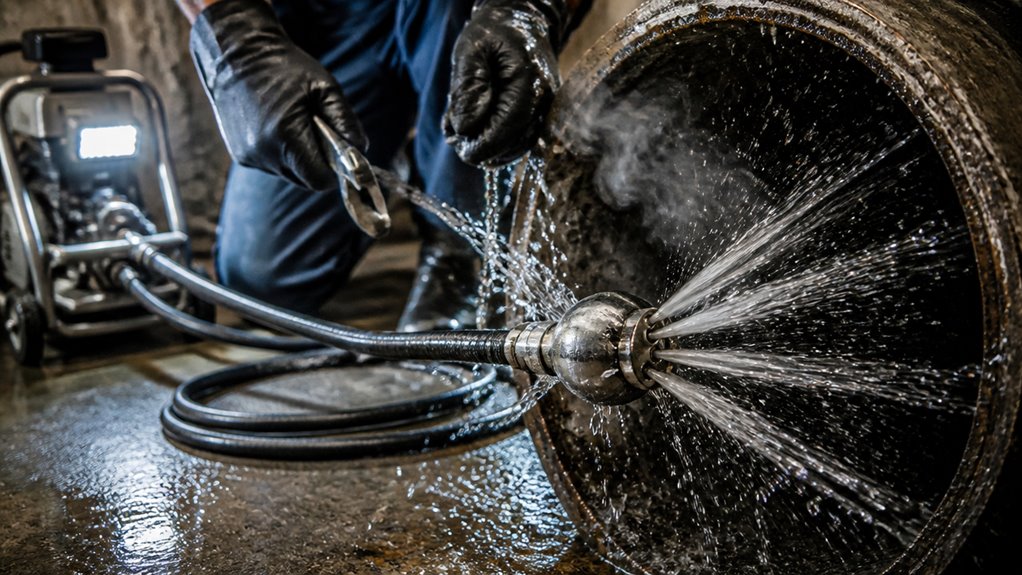
Understanding hydro jetting in plumbing means recognizing it as a high-pressure water cleaning technique designed to clear and restore pipe flow efficiently. You insert a hose into the pipe, usually through a cleanout, and activate a specialized nozzle that sprays water both forward and backward.
The rear-facing jets propel the hose deeper into the line while simultaneously scouring the pipe walls. This high-pressure water stream breaks up clogs and dislodges grease, sludge, mineral scale, and debris. The force pushes all obstructions downstream, effectively clearing the line.
Hydro jetting operates at pressures typically between 1,500 and 4,000 PSI, requiring professional handling to adjust pressure according to pipe material and condition. This method thoroughly cleans the entire pipe interior, not just the blockage point, ensuring peak flow restoration.
Common Plumbing Problems Solved by Hydro Jetting
Hydro jetting is a fantastic solution for tackling those pesky grease buildups that standard methods sometimes overlook. You know how frustrating it can be when those clogs just won’t budge? Well, hydro jetting cuts right through that stubborn mess, restoring your pipes to a smooth flow.
But that’s not all! It also takes care of invasive tree roots that can sneak into your sewer lines. Imagine those roots getting flushed out, leaving your plumbing system clear and functioning properly.
With its impressive capabilities, hydro jetting really stands out as a versatile option for maintaining and rejuvenating your plumbing system. Regular hydro jetting can also help prevent pipe damage caused by corrosion and buildup, extending the life of your plumbing infrastructure.
Clearing Grease Buildup
Tackling grease buildup in your plumbing requires more than just regular snaking or chemical cleaners. Grease tends to adhere stubbornly to pipe walls, narrowing flow and increasing clog risks.
Hydro jetting employs high-pressure water streams, typically between 1,500 and 4,000 PSI, to scour these deposits comprehensively. The specialized nozzle directs jets both forward and backward, breaking up hardened grease layers and flushing residue downstream.
Unlike mechanical snaking, jetting cleans the entire pipe circumference, restoring full diameter flow and preventing recurrence. However, professional assessment is essential to verify pipe integrity before applying this intense pressure.
For ongoing prevention of grease buildup, incorporating enzyme-based or gel drain cleaners can help maintain clear pipes and reduce odors by breaking down organic residues over time, making them a complementary solution to hydro jetting treatments. This approach includes products with enzyme-based formulas designed for safe, long-term pipe care.
Removing Tree Root Intrusions
Removing tree root intrusions requires powerful, targeted action since roots can infiltrate sewer lines through small cracks, causing blockages and damage. Hydro jetting delivers high-pressure water streams that cut through and dislodge these roots without harming the pipe structure.
When you use jetting for root removal, you guarantee thorough cleaning beyond the blockage point, restoring peak flow and preventing future invasions.
With hydro jetting, you can:
- Eliminate stubborn root masses lodged deep inside pipes
- Avoid costly pipe replacements by preserving pipe integrity
- Achieve immediate restoration of proper drainage function
- Prevent recurring clogs caused by root regrowth
Employing a professional plumber to perform hydro jetting guarantees precise pressure control and effective root removal, safeguarding your plumbing system efficiently. Additionally, combining hydro jetting with chemical root killers can provide ongoing protection against root regrowth and maintain clear pipes longer.
Why Plumbers Choose Hydro Jetting for Drain Cleaning?
You know, hydro jetting really shines when it comes to tackling those stubborn grease clogs that regular methods just can’t seem to budge.
It’s pretty impressive how this technique cleans the entire interior of the pipe, not just the spot where the blockage is. This means it restores the full flow capacity, which is a huge win!
That’s why plumbers often turn to hydro jetting. It’s not just effective; it’s also an efficient solution for keeping drains in top shape.
If you’re looking for a thorough way to maintain your plumbing, this is definitely the way to go!
Hydro jetting also offers an environmentally friendly alternative to chemical root killers by using high-pressure water to clear roots and debris effectively.
Effective Grease Removal
Harnessing high-pressure water streams, hydro jetting excels at breaking down stubborn grease deposits that traditional methods often leave behind.
When you rely on hydro jetting, you activate a forceful cleaning process that shatters grease buildup coating your pipes. This restores flow efficiently and reliably.
Unlike snaking, it targets grease along the entire pipe surface, not just the clog point. This guarantees lasting results and reduces repeat blockages.
You benefit from:
- Thorough removal of viscous, baked-on grease
- Prevention of future grease accumulation
- Rapid restoration of pipe flow capacity
- Elimination of odors caused by trapped grease
Hydro jetting’s precision and power make it the preferred choice for effective grease removal in commercial and residential plumbing systems. Proper maintenance, such as ensuring the discharge pipe slope, can further enhance performance and reduce noise during operation.
Comprehensive Pipe Cleaning
While many drain cleaning methods focus solely on clearing visible blockages, hydro jetting delivers all-inclusive pipe cleaning by thoroughly scouring the entire interior surface of your plumbing lines.
This method uses high-pressure water jets that not only break up clogs but also remove grease, mineral scale, sludge, and biofilm adhering to pipe walls.
By cleaning beyond the immediate blockage, hydro jetting restores full flow capacity and prevents recurring issues.
Plumbers rely on this technique because it guarantees uniform cleaning along the entire pipe length, reducing buildup that traditional snaking often misses.
Additionally, hydro jetting’s adjustable pressure and specialized nozzles allow precise treatment tailored to pipe material and clog type, making it a superior, preventive and corrective solution in professional drain maintenance.
In some sump pump systems, installing two check valves can enhance efficiency and protection during water discharge, a concept similarly valued in maintaining clear and functional plumbing lines.
How Hydro Jetting Equipment and Nozzles Clear Pipes?
Hydro jetting equipment employs high-pressure water propelled through specialized nozzles designed to break up blockages and thoroughly clean pipe interiors. When you operate this system, the hose inserts into the pipe, and the nozzle sprays water both forward and backward.
Forward jets aggressively dislodge debris, while rear-facing jets propel the hose deeper and scour pipe walls. This dual-action guarantees comprehensive removal of buildup and blockages.
Using hydro jetting, you’ll experience:
- Immediate restoration of optimal flow by clearing entire pipe surfaces
- Efficient removal of grease, sludge, and mineral scale without chemicals
- Precise control over pressure to protect pipe integrity
- Reduced risk of recurring clogs due to thorough cleaning
This equipment’s design and functionality make it indispensable for professional pipe maintenance and cleaning. Additionally, the use of durable materials such as thermoplastic in related equipment ensures longevity and resistance to harsh environments.
Best Situations to Use Hydro Jetting for Your Pipes
Knowing how hydro jetting equipment and nozzles effectively clear pipes helps you determine when this method is the most appropriate solution.
You should consider hydro jetting when dealing with persistent clogs caused by grease, sludge, mineral scale, or biofilm buildup that traditional snaking can’t fully remove.
It’s ideal for restoring flow in sewer lines affected by heavy grease deposits and for cleaning long pipe sections, since it scours the entire interior surface.
You’ll also find it effective for preventive maintenance, reducing the risk of future blockages.
Additionally, hydro jetting can dislodge roots infiltrating sewer pipes, provided the pipe condition is suitable.
Always make certain a professional inspection precedes jetting to verify pipe integrity and select proper pressure settings for safe, efficient cleaning.
For optimal results and safety, understanding the pump’s flow rate capacity and debris handling capabilities is essential when choosing hydro jetting equipment.
Risks and Limitations of High-Pressure Hydro Jetting
Because high-pressure hydro jetting applies intense force within pipes, it carries inherent risks that require careful consideration. If your pipes are old, fragile, or damaged, excessive pressure can worsen cracks or cause collapses.
High-pressure hydro jetting’s intense force can damage old or fragile pipes, so caution is essential.
You must also make certain the equipment is expertly controlled to prevent hose binding, which can damage piping or pose safety hazards. Additionally, improper pressure settings can harm pipe material or fail to clear certain blockages effectively.
Be aware of these risks and limitations:
- Potential damage to aging or brittle pipes
- Risk of injury or equipment mishandling without professional training
- Not suitable for all clog types or pipe materials
- Necessity for thorough pre-inspection to avoid worsening existing damage
Understanding these factors helps you decide when hydro jetting is appropriate. Selecting equipment with adequate power and flow rate is crucial to ensure effective and safe cleaning without causing damage.
What Happens During a Professional Hydro Jetting Service?
Before any water jetting begins, a professional plumber thoroughly inspects your pipes using a camera to identify damage and determine the best pressure settings.
Once assessed, they insert a high-pressure hose equipped with a specialized nozzle into your drain or sewer line, typically through a cleanout access.
The nozzle emits water jets forward and backward; the rear jets propel the hose while the forward jets scour pipe walls, breaking up clogs and dislodging buildup.
This dual action cleans the entire interior surface, removing grease, sludge, and mineral deposits.
Throughout the process, the plumber monitors pressure levels carefully to avoid pipe damage.
After jetting, a follow-up camera inspection verifies that blockages are cleared and the pipes remain structurally sound, ensuring peak flow restoration and system integrity.
Hydro jetting is often preferred over traditional drain augers due to its ability to clean pipes more thoroughly without the risk of scratching or damaging pipe interiors, as seen with some manual tools like drain augers.
Frequently Asked Questions
How Often Should I Schedule Hydro Jetting for Maintenance?
You should schedule hydro jetting every 12 to 18 months for regular maintenance, depending on your plumbing system’s usage and condition.
If you notice slow drains or frequent clogs, consider more frequent service.
For commercial or heavy-use systems, quarterly or biannual jetting might be necessary.
Always consult a professional plumber to assess your pipes and recommend a tailored schedule based on inspection results and pipe material.
Can Hydro Jetting Damage Septic Systems?
Hydro jetting operates at pressures from 1,500 to 4,000 PSI, which can damage delicate septic system components if not carefully managed.
You can avoid damage by ensuring a professional adjusts the pressure to suit your septic pipes’ material and condition.
High-pressure water can disrupt septic tanks or drain fields if misapplied.
Always request a thorough inspection before jetting to protect your system’s integrity and maintain its proper function.
Is Hydro Jetting Safe for All Pipe Materials?
Hydro jetting isn’t safe for all pipe materials. You need to avoid using it on older, fragile, or damaged pipes, like clay, cast iron with corrosion, or certain PVC types that can’t withstand high pressure.
Always get a camera inspection first to assess pipe condition. A professional will adjust pressure settings to suit your pipe’s material and clog type, ensuring effective cleaning without causing damage.
How Long Does a Typical Hydro Jetting Service Take?
When a plumber hydro jets a residential sewer line clogged with grease, the entire service often takes about 1 to 2 hours.
The time depends on pipe length, clog severity, and inspection needs. For instance, inspecting with a camera before and after jetting adds time but guarantees safety and effectiveness.
You should expect professionals to balance thorough cleaning with efficiency, tailoring pressure and duration to your specific plumbing system.
What Should I Do to Prepare My Home Before Hydro Jetting?
Before hydro jetting, clear the area around your cleanout access and drains to allow the plumber easy entry.
Turn off any automatic sprinkler systems near sewer lines to avoid water damage.
Inform your plumber about any ongoing plumbing issues or fragile pipes.
Remove items from under sinks and near drains to prevent water splashes.
Finally, make sure pets and children stay clear of work zones for safety during the high-pressure cleaning process.
Know When Plumbing Jetting Is the Right Solution
Imagine powerful streams of water blasting through your clogged pipes, clearing away years of buildup with precision. That’s hydro jetting, an advanced, effective method that tackles tough blockages and restores flow without harsh chemicals.
While it’s not for every situation, when used correctly by skilled professionals, hydro jetting guarantees your plumbing stays clean and efficient. Trust this high-pressure solution to keep your pipes running smoothly, avoiding costly repairs and disruptions.