To winterize your septic toilet, first shut off the main water supply and flush to clear water from the tank and bowl.
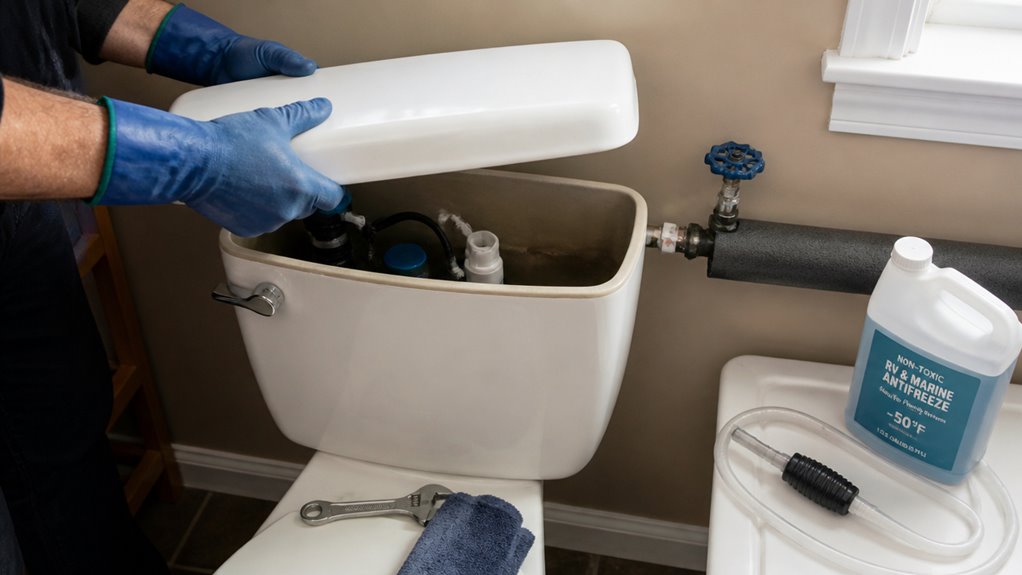
Remove remaining water with a sponge or wet vacuum. Then add RV-grade antifreeze safe for septic systems, ensuring it covers the trap lines.
Insulate pipes and septic components to prevent freezing, and minimize water use before extended vacancy.
Proper inspection and maintenance are essential to avoid damage. Further steps will help you protect your system effectively through winter.
Key Takeaways
- Shut off the main water supply, flush the toilet, and remove all remaining water from the tank and bowl using a sponge or wet vacuum.
- Use RV- or plumbing-grade antifreeze safe for septic systems, avoiding toxic automotive antifreeze to protect septic bacteria.
- Pour septic-safe antifreeze into the toilet bowl and tank to fully cover trap water lines, following manufacturer dilution instructions.
- Inspect supply lines, tanks, and insulation for leaks or damage before winter to prevent freezing and costly repairs.
- Insulate exposed pipes and septic components, limit water usage, and schedule septic pump-outs before extended non-use periods.
How to Shut Off and Drain Your Toilet for Winterizing?

Start by turning off the main water supply to your toilet to prevent any additional water from entering the system.
Next, flush the toilet to clear most standing water from the tank and bowl.
Use a sponge, rag, or wet vacuum to remove any remaining water, ensuring the tank and bowl are as dry as possible.
Drain exposed supply lines and connected fixtures to minimize freeze risk.
Inspect the supply line and tank for slow leaks before winter arrives, as even small trickles can freeze and cause ice buildup or damage.
Completing these steps thoroughly reduces the chance of frozen pipes and ice damage during cold weather, setting a solid foundation for proper winterization of your septic toilet system.
It is important to turn the main water valve clockwise until it stops to ensure the water flow is completely shut off before beginning these steps.
How to Protect Your Toilet Bowl and Traps From Freezing?
To keep your toilet bowl and traps from freezing, it’s important to use the right kind of antifreeze. Make sure you choose products that are specifically labeled for RV or plumbing use. Avoid using automotive antifreeze at all costs—it’s not safe for your plumbing!
When you’re ready to apply the antifreeze, be sure to follow the recommended dilution ratios. You’ll want to add enough to cover the water level in the bowl. Before you do that, though, try to remove as much residual water as you can.
This step is key to preventing any ice damage, especially if your place will be empty for a while. Proper installation and regular checks help maintain consistent water levels to avoid freeze-related damage.
Choosing Safe Antifreeze
Choosing the right antifreeze plays a crucial role in protecting your toilet bowl and traps from freezing during winter.
Always select RV or plumbing-grade antifreeze labeled as safe for septic systems. Avoid automotive antifreeze, which contains toxic chemicals harmful to your septic environment.
Opt for propylene glycol-based products, as they’re non-toxic and effective at lowering the freezing point. Check manufacturer specifications to guarantee compatibility with your toilet and septic system.
Using the correct antifreeze prevents damage to plumbing seals and internal components while maintaining system integrity. Keep in mind that improper antifreeze can cause corrosion or septic contamination.
Prioritize products designed specifically for winterizing plumbing to protect your toilet bowl and traps efficiently and safely throughout the cold season.
Additionally, ensuring that any additives are fully dissolved and used in moderate amounts helps protect the septic system’s microbial balance.
Proper Antifreeze Application
When applying antifreeze to your septic toilet, you’ll want to guarantee the correct dilution and coverage to effectively prevent freezing. Use only RV or plumbing-grade antifreeze, never automotive types.
After draining the water from the tank and bowl, pour antifreeze directly into the bowl to cover the trap water line fully. Maintain the antifreeze level to protect all water-holding areas exposed to freezing temperatures.
Follow manufacturer instructions for dilution ratios when adding antifreeze to the tank. Too weak won’t protect, and too strong wastes product.
For longer vacancies, remove as much residual water as possible before application to maximize antifreeze effectiveness. Ensuring thorough coverage prevents ice formation in the bowl and traps, safeguarding your toilet’s plumbing from freeze damage during cold weather.
Additionally, regularly inspecting your system for wear, corrosion, or damage can help maintain its freeze protection effectiveness.
Managing Residual Water
Managing residual water effectively prevents freezing damage to your toilet bowl and traps during winter. Start by shutting off the main water supply and flushing the toilet to clear most water.
Use a sponge or wet vacuum to remove remaining water from the tank and bowl. This reduces the risk of ice buildup that can crack porcelain or pipes. Adding RV-safe antifreeze after draining guarantees trapped water won’t freeze. Using RV-safe antifreeze ensures compatibility with septic systems and preserves microbial health.
| Step | Action | Purpose |
|---|---|---|
| Shut off supply | Turn off main valve | Stop new water flow |
| Flush toilet | Clear standing water | Reduce residual water |
| Drain tank & bowl | Remove leftover water | Prevent freezing damage |
| Add antifreeze | Use RV-safe product | Protect traps and bowl |
| Inspect for leaks | Check slow leaks before cold | Avoid ice buildup in lines |
When and How to Use RV Antifreeze Safely in Your Toilet?
When it comes to using RV antifreeze in your toilet, it’s super important to choose the right kind. Always go for RV-specific antifreeze that’s labeled as safe for plumbing systems. Trust me, avoid those automotive types!
Before you get started, make sure to shut off the water supply. Once that’s done, drain the toilet and try to remove as much water as possible to prevent any dilution.
After you’ve done that, just pour the recommended amount of antifreeze into both the bowl and the tank. Be sure to follow the product’s instructions for the best protection. Happy winterizing!
For the best results, always use RV-specific antifreeze to protect your plumbing system without causing damage.
Proper Antifreeze Selection
Choose RV antifreeze labeled specifically for plumbing use to protect your septic toilet during freezing conditions.
Avoid automotive antifreeze, as it contains toxic chemicals harmful to your septic system and the environment.
Opt for non-toxic, propylene glycol-based antifreeze formulated for RVs or marine plumbing. This ensures it’s safe if ingested in small quantities.
Check the product label for NSF approval or similar certifications indicating suitability for potable water systems.
Use the correct concentration; undiluted antifreeze typically provides adequate freeze protection, but follow manufacturer guidelines.
Keep antifreeze separate from other chemicals to prevent contamination.
Proper selection prevents pipe and trap damage while maintaining septic health.
Using the right antifreeze type safeguards your system from freeze damage without introducing hazardous substances or compromising septic function.
For ongoing septic system care, consider using enzyme-based cleaners to maintain biological balance and prevent buildup during winter months.
Safe Application Steps
Although selecting the right RV antifreeze is essential, applying it correctly guarantees effective freeze protection without damaging your septic toilet.
First, shut off the main water supply and flush the toilet to clear standing water. Drain residual water from the tank and bowl using a sponge or wet vacuum.
Next, add only RV-safe antifreeze, never automotive types, directly into the bowl and tank following manufacturer dilution guidelines. Make certain the antifreeze level sufficiently covers trap areas to prevent freezing.
For extended vacancy, remove as much water as possible before application. Avoid excessive water use before freezing temperatures to reduce septic strain.
Finally, check for leaks before applying antifreeze, as even slow drips can cause ice buildup. Following these steps helps protect your septic toilet efficiently and safely throughout winter. It is also important to avoid draining sump pump water into the septic system to prevent disruption of bacterial processes and system overload.
How to Insulate Pipes and Septic Components Before Winter?
When preparing your septic system for winter, insulating exposed pipes and components is essential to prevent freezing damage.
Start by wrapping all above-ground pipes feeding the toilet and septic plumbing with foam pipe insulation or heat tape designed for plumbing use.
Secure insulation with waterproof tape to avoid moisture infiltration.
Cover shallow or exposed septic tank lids, risers, and inspection points with thick organic mulch or soil to retain ground heat.
Make certain any vulnerable plumbing sections where cold air penetrates are shielded with insulation blankets or foam boards.
Avoid leaving gaps that allow drafts.
Regularly check the insulation’s condition during winter to maintain effectiveness.
Proper insulation reduces freeze risks, extends component life, and minimizes costly repairs caused by burst pipes or damaged septic parts in cold weather.
Additionally, it is important to seal air leaks around pipes and penetration points before insulating to prevent cold drafts and heat loss.
How to Reduce Septic System Strain Before Winter?
Proper insulation helps maintain stable temperatures around your septic components.
Reducing system strain before winter also plays a key role in preventing failures.
Begin by scheduling a septic tank pump-out if it’s due or if you’ll be away for an extended period. This removes solids that could freeze and block the system.
Next, minimize water usage to avoid overloading the tank and drain field. Spread out laundry, showers, and other high-volume activities.
Check all fixtures, including the toilet, for leaks or malfunctions. Repair them promptly to prevent excess water flow or ice formation.
Implementing water-efficient fixtures can further reduce strain on your septic system during colder months.
How to Maintain Your Toilet During Extended Non-Use?
Regularly maintaining your toilet during extended non-use prevents freezing damage and odor issues.
First, fully shut off and drain the water supply to eliminate standing water that can freeze.
Use a sponge or wet vacuum to remove residual water from the tank and bowl.
Add RV-grade antifreeze to the bowl and tank according to manufacturer guidelines to protect the trap and pipes.
Seal the toilet bowl if evaporation or odors are a concern.
Check for leaks before departure, as slow drips can cause ice buildup.
Insulate exposed pipes and septic components to preserve temperature stability.
If the home remains unoccupied for months, periodically verify the bowl’s antifreeze level or drain the system completely.
These steps maintain system integrity, reduce freeze risk, and minimize septic strain during your absence.
Common Mistakes to Avoid When Winterizing Your Septic Toilet
Although winterizing your septic toilet might seem straightforward, overlooking key precautions can cause costly damage. Avoid using automotive antifreeze, which can harm your plumbing and septic system.
Don’t pour unapproved chemicals or additives into the septic tank, as they disrupt bacterial balance. Never use open flames to thaw frozen pipes; this risks fire and pipe damage.
Avoid forcing water flow through frozen lines, which may cause pipe bursts.
| Mistake | Reason to Avoid |
|---|---|
| Using automotive antifreeze | Toxic and harmful for septic |
| Pouring unapproved chemicals | Disrupts septic bacterial action |
| Thawing with open flames | Fire hazard and pipe damage |
| Forcing water flow | Potential pipe bursts |
Follow proper procedures to prevent expensive repairs and maintain system integrity.
Frequently Asked Questions
Can I Use Bleach to Sanitize My Toilet Before Winterizing?
You can use bleach to sanitize your toilet before winterizing, but use it sparingly.
Avoid pouring large amounts into the septic system, as bleach can harm beneficial bacteria essential for septic function.
After sanitizing, flush and drain the toilet thoroughly to remove excess bleach.
Opt for septic-safe cleaners when possible to protect your system.
Always follow with proper winterization steps to prevent freezing and damage during cold weather.
How Often Should Septic Tanks Be Inspected During Winter?
You should inspect your septic tank at least once during winter, especially if your home experiences extended freezing or vacancy.
Frequent checks help you catch slow leaks, ice buildup, or insulation failures early.
If your system is due for pumping or you expect heavy water use, consider additional inspections.
Regular monitoring prevents costly damage and guarantees the system remains functional through cold months.
Always follow local regulations and professional recommendations for inspection frequency.
What Are Signs of Septic System Freezing Problems?
You’ll notice slow drains or backups, gurgling sounds in toilets or drains, and foul odors near the septic tank if freezing occurs.
The ground above the tank or drain field might feel unusually hard or icy.
Watch for frost buildup on exposed pipes. If you see standing water around the septic area during freezing temps, that’s a red flag.
Acting quickly prevents costly damage and system failure.
Is It Safe to Use a Hairdryer to Thaw Frozen Pipes?
You’re better off avoiding a hairdryer to defrost frozen pipes.
While it might seem like a gentle approach, the uneven heat could stress your plumbing, especially near septic connections.
Instead, use a safer, controlled heat source like a heating pad or warm towels.
Applying slow, steady warmth prevents damage and reduces risk.
Quick fixes with direct heat can backfire, causing cracks or leaks.
How Do I Dispose of Used RV Antifreeze Properly?
You should never pour used RV antifreeze down the drain or toilet.
Instead, collect it in a sealed container and take it to a hazardous waste disposal facility or a recycling center that accepts antifreeze.
Check local regulations for specific disposal guidelines.
If unsure, contact your local waste management authority for proper instructions.
Proper disposal prevents environmental contamination and protects your septic system and local water sources.
Protect Your Septic Toilet From Winter Freezing
Winterizing your septic toilet might seem complex, but following these steps guarantees protection against freezing and system damage.
You might worry about using RV antifreeze, but when applied correctly, it’s safe and effective for your pipes and traps.
Taking time to shut off, drain, insulate, and maintain your system now prevents costly repairs later.
Stay proactive. Your septic system will function smoothly through winter without strain or risk of freeze damage.