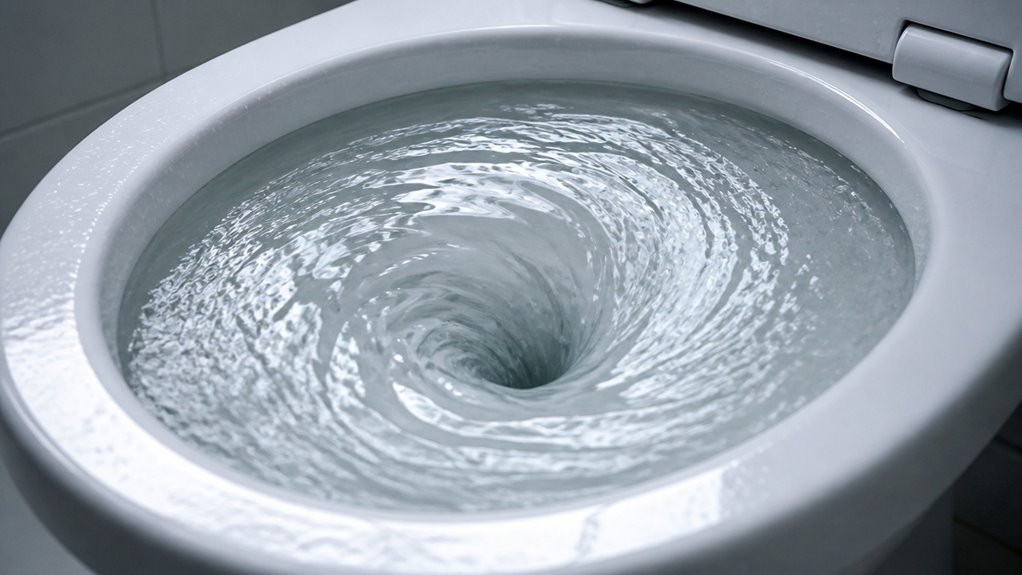
If your toilet water rises then slowly drains without a full clog, you’re likely facing partial blockages in the trapway or drain line.
You may also have vent stack airflow issues or reduced flush power due to low tank water or mineral buildup in rim and siphon jets.
Adjusting the tank fill level, clearing debris, and cleaning mineral scale often restore proper flow.
Persistent problems may need vent inspection or professional help.
Understanding these causes and fixes can help you restore efficient flushing.
Key Takeaways
- Partial blockages in the trapway or drain line cause water to rise then slowly drain without a full clog.
- Mineral scale buildup in rim and siphon jets reduces flush volume, slowing bowl drainage.
- Low tank water level or worn flappers weaken flush force, causing slow water drainage.
- Vent stack blockages create vacuum resistance, slowing drainage and causing gurgling sounds.
- Simple fixes include plunging, adjusting tank water level, and cleaning mineral deposits from jets.
Common Causes of Toilet Water Rising and Slow Draining

When your toilet water rises and drains slowly, it’s usually because something’s restricting the flow rather than a full blockage.
Partial clogs in the trapway or drain line narrow the passage, causing water to back up before slowly draining.
Partial clogs in the trapway or drain line restrict flow, causing slow water drainage and backup.
Mineral scale buildup in rim jets or siphon jets reduces flush volume, weakening siphon action and slowing bowl clearance.
Low tank water levels limit flush force, so the bowl never empties quickly.
Faulty components like worn flappers or misadjusted floats can also reduce refill volume and flush power.
These issues typically cause water to rise near the bowl’s brim and then recede gradually, signaling restricted flow instead of complete stoppage.
Identifying these causes helps you target appropriate fixes, such as cleaning jets, adjusting water levels, or clearing partial obstructions.
If problems persist or worsen, it’s important to consider calling a professional to inspect for deeper drainage issues.
How Partial Blockages and Venting Cause Slow Toilet Flushes?
Although a full clog completely blocks water flow, partial blockages and venting issues often cause your toilet to flush slowly. This happens by restricting airflow or narrowing the drain path.
A partial obstruction in the trapway or drain line lets water rise near the bowl’s brim before draining sluggishly. This indicates reduced flow area rather than a sealed blockage.
Simultaneously, vent stack blockages disrupt necessary airflow. This causes vacuum resistance that delays draining and produces gurgling sounds. These vent restrictions prevent smooth pressure equalization, slowing the flush cycle.
Diagnosing involves listening for glugging, checking other fixtures for slow drainage, and testing drain line clearance.
Addressing these issues typically requires clearing partial clogs with a plunger or auger. Inspecting or cleaning blocked vents can restore proper airflow and normal flushing speed. Additionally, tree root intrusion can cause partial blockages leading to slow drainage and should be considered during diagnosis.
How Tank Water Level and Mineral Buildup Affect Flush Power?
Partial blockages and vent issues can slow your toilet’s flush, but insufficient tank water level and mineral buildup also play significant roles in weakening flush power.
When the water in your tank sits below the designated fill line, your flush lacks the volume and velocity needed to clear the bowl efficiently.
Likewise, mineral deposits can accumulate inside the rim jets and siphon jet, reducing the water flow that initiates siphoning action.
This scale buildup narrows the passageways, diminishing flush force and prolonging bowl drainage.
To maintain peak flush performance, you need to monitor and adjust the tank water level and inspect jets for mineral scaling regularly.
Ignoring these factors compromises flush power even if no blockages exist, causing slow drainage and rising bowl water.
Additionally, performing regular maintenance similar to testing pressure relief valves can help ensure reliable system operation and prevent related issues.
Simple Fixes to Improve Slow Draining and Rising Toilet Water
To fix a slow-draining toilet with rising bowl water, start by clearing any partial obstructions using a plunger or toilet auger.
Next, check the tank water level and adjust the float or fill valve to guarantee full flush force.
Clean mineral buildup from rim jets and siphon jets with vinegar or a wire to restore proper flow.
Inspect the flapper for wear or leaks and replace if necessary.
Finally, verify the vent stack is clear of debris to prevent airflow restrictions that slow drainage.
- Use a plunger or auger on partial clogs
- Adjust tank water level for peak flush volume
- Remove mineral scale in rim and siphon jets
- Replace faulty flapper or fill valve components
- Clear roof vent blockages to maintain airflow
Regular maintenance of the vent pipe is crucial to avoid blocked vent pipes that disrupt air pressure and drainage.
When to Call a Plumber for Persistent Slow Draining Problems?
When slow draining problems stick around despite your best efforts, it’s time to contemplate calling a professional plumber.
Persistent slow drainage often signals issues beyond simple clogs, such as vent stack blockages, sewer line restrictions, or mineral buildup inside jets that reduce flush force.
If plunging, auguring, and cleaning don’t restore normal flow, a plumber’s expertise is essential to diagnose less obvious causes like venting problems or partial trap obstructions.
Also, if multiple fixtures drain slowly or you hear gurgling sounds, these systemic signs require professional assessment.
A plumber can perform specialized inspections, including camera scans or vent clearing, to address hidden blockages or airflow imbalances.
Don’t delay calling a plumber when basic fixes fail, as unresolved slow drainage can worsen and damage your plumbing system.
In some cases, replacing or installing an air admittance valve can improve ventilation and resolve persistent drainage issues.
Frequently Asked Questions
Can Flushing Frequency Affect Toilet Water Rising and Draining Speed?
Yes, flushing frequency can influence how your toilet water rises and drains.
Frequent flushing may not allow the drain or vent system to clear completely, causing slower drainage and water rising higher.
It can also worsen partial blockages by pushing debris repeatedly without fully clearing it.
To maintain peak flow, avoid rapid successive flushes and give the system time to reset between uses, especially if you notice slow draining or water rising near the bowl’s brim.
Does the Type of Toilet Bowl Shape Impact Slow Draining Issues?
You might be surprised to learn that yes, the shape of your toilet bowl can impact slow draining.
Elongated bowls often promote faster flushing and better siphon action, while round bowls might drain more slowly due to smaller trapways.
But don’t jump to conclusions; slow drainage usually involves multiple factors like venting and partial clogs.
Are Certain Toilet Cleaners Known to Worsen Mineral Buildup?
Yes, some toilet cleaners containing harsh acids or abrasive chemicals can actually worsen mineral buildup by etching surfaces. This makes scale adhere more readily over time.
You should avoid cleaners with hydrochloric acid or bleach if mineral deposits are a concern. Instead, use mild acidic solutions like vinegar, which dissolve mineral scale gently without damaging jets or siphon openings.
Regular, gentle cleaning helps maintain flush efficiency and prevents slow draining caused by buildup.
How Does Water Hardness Influence Toilet Flush Performance Over Time?
Hard water leaves behind mineral footprints, slowly narrowing your toilet’s pathways.
Over time, calcium and magnesium deposits clog rim jets and siphon jets, weakening flush force and reducing water flow.
This mineral buildup starves the flush of power, making water rise then drain sluggishly.
To maintain peak performance, you’ll need to clean these deposits regularly, ensuring the flush remains strong and efficient.
This prevents long-term flow restrictions caused by water hardness.
Can Seasonal Weather Changes Affect Toilet Venting and Drainage?
Yes, seasonal weather changes can affect your toilet venting and drainage.
Cold weather may cause ice or debris buildup in roof vents, restricting airflow and slowing drainage.
Heavy rains can saturate soil around underground vents or drain lines, reducing vent efficiency and causing sluggish flushing.
You should inspect vents for blockages seasonally and clear debris to maintain proper airflow and efficient drainage throughout the year.
How to Restore Proper Toilet Flushing and Drainage?
When your toilet water rises then slowly drains, you’ll want to check for partial blockages, venting issues, and tank water levels.
You’ll need to address mineral buildup, adjust water levels, or clear vent pipes to restore proper flow.
You can try simple fixes like using a plunger or cleaning the trap.
But if problems persist, you should call a plumber.
You deserve a toilet that flushes fully, drains smoothly, and functions reliably every time.