If your basement drain is clogged, start by shutting off nearby water supplies and removing movable items to prevent damage.
Use a plunger that fits snugly to loosen the blockage and switch to a drain snake if needed. Rotate carefully to avoid pipe damage.
Manually remove visible debris with gloves, then try flushing with baking soda and vinegar before rinsing with hot water.
If issues persist or worsen, professional help may be necessary. You can explore more detailed steps and precautions to safely restore your drain’s flow.
Key Takeaways
- Turn off water supply and sump pump to prevent additional water flow before addressing a clogged basement drain.
- Use a plunger with a tight seal or a manual drain snake to dislodge clogs safely without damaging pipes.
- Manually remove visible debris wearing gloves after removing the drain cover, using a flashlight and wet-dry vacuum if needed.
- Clean the drain naturally by pouring baking soda and vinegar, then flush with hot water to break down residue.
- Call a professional plumber immediately if backups persist, water contains sewage, or multiple drains clog simultaneously.
Preparing to Clear a Basement Drain Clog

Before you start clearing a basement drain clog, turn off the water supply to nearby fixtures like sinks and washing machines to prevent additional flow.
Turn off water supply to nearby fixtures before clearing a basement drain clog to prevent extra water flow.
If a sump pump is present, shut it off to stop unwanted water circulation.
Block any overflowing drains using towels or a wet-dry vacuum to redirect standing water away from floors.
Protect vulnerable flooring such as carpet or wood by relocating furniture and movable items to avoid water damage.
If you detect sewer gas odors, open windows for ventilation to maintain air quality and reduce health risks.
These immediate safety and preparation steps are essential to minimize water damage and ensure a safe working environment before you begin clearing the clog manually or mechanically.
Also, inspect the sump pump’s check valve to prevent water from flowing back into the pump during operation.
Plunger and Drain Snake Techniques for Tough Clogs
Once you’ve secured the area and stopped water flow, you can move on to using a plunger or drain snake to tackle tougher clogs.
Start by selecting a plunger that fits the basement drain opening tightly. Create a firm seal and push down, then pull up sharply to generate suction.
Repeat several times to loosen the obstruction. If plunging fails, switch to a manual drain snake.
Insert the cable slowly into the drain until you feel resistance, then rotate the handle to break up or hook the clog.
Avoid forcing the snake to protect old pipes. After dislodging debris, carefully retract the cable and dispose of the blockage.
These methods address blockages beyond surface-level debris, improving drain flow efficiently without chemical use.
For best results, always wear protective gear such as safety glasses and gloves when using a drain snake.
Manual Removal of Visible Basement Drain Clogs
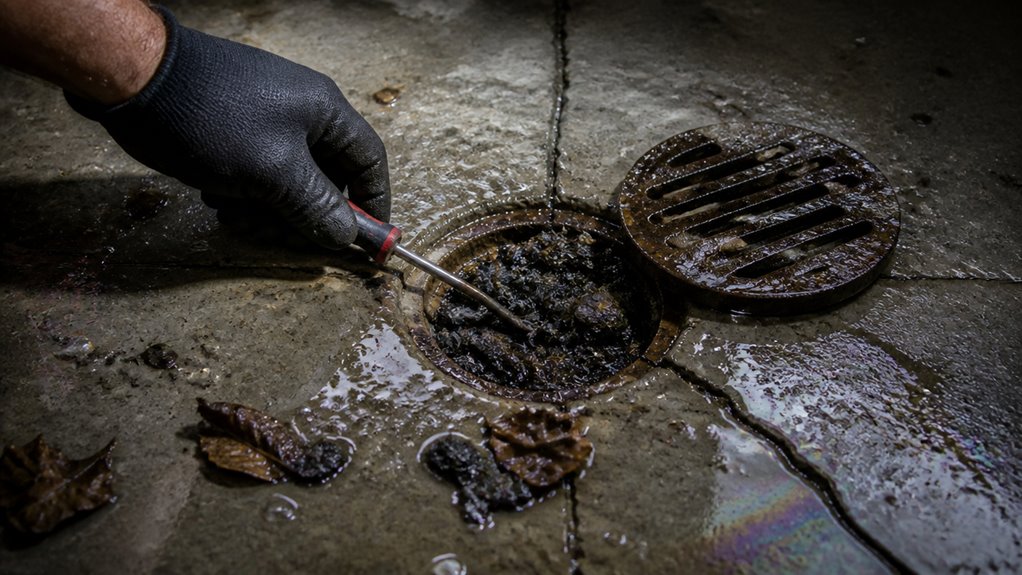
Begin by removing the drain cover carefully using a screwdriver or similar tool to expose the clogged area. Shine a flashlight down the opening to identify visible debris such as hair, sludge, or soap scum causing the blockage.
Put on gloves to protect your hands and manually extract any accessible debris. If blockages are beyond reach, use a wet-dry vacuum to suction out material trapped near the surface.
Make sure you check just beneath the grate first, as many clogs occur there. Avoid forcing tools deep into the pipe to prevent damage.
After clearing visible obstructions, replace the drain cover securely. This manual removal step often restores flow before attempting more invasive methods like snaking or chemical treatments. For tougher clogs, consider using a pistol grip drum auger to safely and effectively clear the drain.
Natural Cleaning Solutions to Clear and Maintain Basement Drain Flow
Using natural cleaning solutions can effectively break down minor buildup and maintain basement drain flow without risking pipe damage from harsh chemicals.
Start by pouring one cup of baking soda directly into the drain, followed by one cup of vinegar. Allow the mixture to fizz and react for several minutes, breaking down grease and organic residue.
Afterward, flush the drain thoroughly with hot or boiling water to dissolve loosened deposits and clear away debris. To verify effectiveness, slowly pour a bucket of water down the drain and observe flow.
If the water drains smoothly without backing up, repeat this process monthly to maintain clear pipes. Stop using this method and consider professional help if backups persist or worsen after your natural cleaning attempts.
Regular maintenance and proper cleaning techniques help prevent biofilm buildup, which is a common cause of persistent drain odors and clogs.
When to Call a Pro for Basement Drain Problems?
If natural cleaning methods fail to resolve your basement drain issues or if backups occur frequently, it’s time to seek professional assistance.
Call a pro immediately if the water contains sewage or emits a foul odor, indicating a major backup.
Also, contact emergency plumbing if water actively rises or won’t stop backing up.
If multiple drains back up simultaneously or if recurring backups persist despite your efforts, professional intervention is necessary.
A specialist can properly assess aging or corroded pipes, preventing further damage.
Professionals use advanced tools like powered augers and video inspection cameras to diagnose and clear deep blockages safely.
Don’t delay; timely professional help minimizes property damage and restores proper drainage efficiently.
Regular inspections and early detection of issues like tree root intrusion can prevent severe damage and costly repairs.
Frequently Asked Questions
How Can I Prevent Basement Drain Clogs in the Future?
You can prevent basement drain clogs by regularly cleaning drain covers and removing debris buildup.
Avoid pouring grease, oil, or heavy solids down the drain.
Install a mesh screen to catch hair and larger particles.
Periodically flush drains with hot water and natural solutions like baking soda and vinegar to break down buildup.
Schedule routine inspections and maintenance, especially if your pipes are older, to catch potential issues early and keep water flowing freely.
What Tools Should I Keep on Hand for Basement Drain Emergencies?
Imagine a sudden gush of water pooling unexpectedly. What do you reach for?
Keep a sturdy plunger that fits your drain snugly, a manual drain snake or auger for deep clogs, and a wet-dry vacuum to extract standing water.
Have gloves, a flashlight, and towels ready to protect your space.
Baking soda and vinegar offer a natural clean-up option.
These tools guarantee you act fast, minimizing damage and restoring flow efficiently every time.
Are There Specific Signs That Indicate Pipe Corrosion in Basement Drains?
Yes, you can spot pipe corrosion by looking for rust-colored water, persistent slow drainage, or foul odors coming from the drain.
You might also notice visible flaking or discoloration on accessible pipes and repeated clogs despite cleaning efforts.
If you detect leaks or wet spots near pipes or hear unusual noises during water flow, corrosion is likely.
Acting quickly by consulting a professional can prevent costly damage and maintain your drainage system’s integrity.
How Often Should Basement Drains Be Professionally Inspected or Cleaned?
You should get your basement drains professionally inspected and cleaned at least once a year.
Waiting longer is like inviting disaster overnight.
Regular inspections catch corrosion, blockages, and buildup before they escalate.
If your home has aging pipes or frequent backups, consider twice yearly checks.
This proactive approach makes certain pipes stay clear, prevents costly repairs, and maintains proper drainage.
Don’t gamble with neglect; schedule timely professional maintenance to protect your home’s foundation.
Can Basement Drain Clogs Affect the Overall Plumbing System in My Home?
Yes, basement drain clogs can impact your entire plumbing system. When a clog blocks water flow, it causes backups that increase pressure on pipes. This can potentially lead to leaks or bursts elsewhere.
It can also disrupt drainage in sinks, toilets, and showers. Addressing clogs promptly with plunging or snaking prevents system-wide damage.
If problems persist or worsen, call a professional plumber to avoid costly repairs and maintain peak plumbing function.
Basement Drain Is Clogged? Take Action Before Flooding
When your basement drain fights back like a stubborn knot, you’ve got the tools and tactics to untangle it.
From plungers to snakes, and natural cleaners to hands-on removal, you hold the power to restore flow.
But if the clog digs deeper than your reach, don’t hesitate to call a pro to clear the path cleanly and swiftly.
With these strategies, you’re equipped to keep your basement drain running smoothly, no matter what blocks the way.