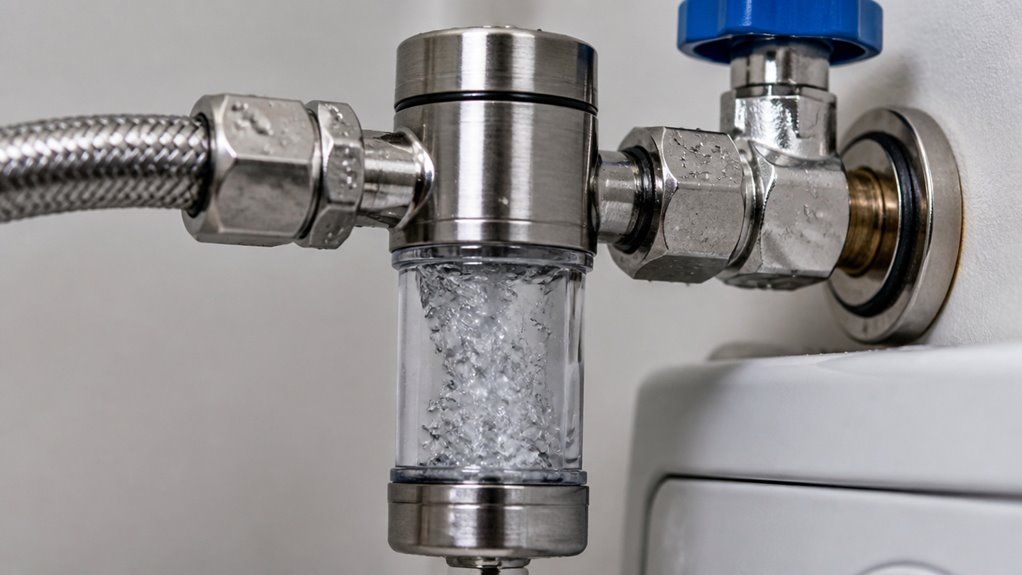
You need a water filtration system to protect your washing machine from sediment, chlorine, and minerals that cause scale, corrosion, and fabric damage.
Installing a multi-stage filter reduces limescale buildup, improves detergent efficiency, and extends your appliance’s lifespan by preventing wear and maintaining peak performance.
Proper placement before your hot water heater guarantees peak flow and protection.
Understanding filter options, installation, and maintenance will help you maximize your machine’s durability and wash quality.
Key Takeaways
- A multi-stage water filtration system removes sediment, chlorine, and hard minerals to protect washing machines and improve wash quality.
- Filtration reduces limescale buildup, extending machine lifespan and maintaining heating element efficiency.
- Installing filters before the water heater prevents scale and corrosion in appliances and plumbing.
- Activated carbon and water softening stages enhance detergent effectiveness and prevent fabric damage.
- Regular water testing ensures the filter matches contaminants and maintains optimal flow and performance.
Why Washing Machine Water Filtration Matters?

Although many people overlook it, installing a water filtration system for your washing machine directly protects the appliance’s internal components from sediment, chlorine, and mineral damage.
You prevent clogging and corrosion by filtering out sand, rust, and silt before water enters the machine. Chlorine and harsh minerals degrade rubber seals and metal parts, so reducing these elements extends your washer’s operational life.
Filtration also minimizes hard water scale buildup, which otherwise increases maintenance frequency and repair costs. By integrating a multi-stage filter system, you assure sediment capture and chemical removal at peak flow rates.
This maintains efficient water delivery without pressure loss. This technical approach preserves your machine’s integrity, improves washing performance, and reduces long-term expenses.
Making water filtration an essential, proactive solution for washing machine longevity. Regular maintenance and timely filter replacement, typically every 3-6 months, ensure optimal filtration efficiency and prevent sediment buildup that can impair performance.
How to Tell If Your Washing Machine Needs a Water Filter?
Frequently, signs indicating your washing machine needs a water filter appear as diminished wash quality, unusual odors, or visible sediment on clothes.
Common signs your washing machine needs a water filter include poor wash results, strange smells, or visible residue on clothes.
You might also notice increased buildup inside the drum or around water inlet valves, signaling sediment or mineral deposits.
If your machine requires more frequent maintenance or repair due to scale or corrosion, a filtration system can mitigate damage.
Additionally, if you live in an area with hard water, you’ll benefit from installing a filter to reduce calcium and magnesium minerals.
Monitoring these indicators lets you act promptly, preventing internal damage and preserving fabric integrity.
Installing a water filter guarantees cleaner water reaches your appliance, enhancing its efficiency and lifespan while improving overall wash performance.
Choosing a filter certified to remove heavy metals and contaminants ensures your washing machine is protected from damaging substances in the water supply.
Contaminants That Harm Your Washing Machine and Clothes
You’re putting your washing machine and clothes at risk when you expose them to sediment and rust. These contaminants can really cause some internal damage and even lead to fabric discoloration. It’s pretty frustrating, right?
And let’s not forget about chlorine and other harsh chemicals. They can seriously degrade your fabric fibers, which means your clothes won’t look or feel as good after a wash. Who wants that?
Then there’s hard water. Those pesky minerals can create scale buildup over time. This not only increases your maintenance needs but can also shorten your machine’s lifespan. No one wants to deal with a broken washing machine sooner than expected!
Additionally, the presence of iron bacteria in your water supply can cause slime buildup that clogs washing machine components and affects water quality.
Sediment and Rust Damage
When sediment and rust enter your washing machine, they cause more than just cosmetic issues. They accelerate wear on internal components and degrade fabric quality.
Sediment particles, like sand and silt, abrade pump seals and valves, leading to premature failures. Rust, originating from iron corrosion in pipes or water sources, deposits inside the drum and hoses, promoting blockages and staining fabrics.
To prevent this damage, install a sediment pre-filter designed to capture particulate matter before water reaches your machine. Regular maintenance, including timely filter replacement every three to four months, guarantees consistent protection. Using a Big Blue sediment filter with large cartridge surface area can enhance filtration efficiency and extend the lifespan of your washing machine.
Chlorine and Chemical Effects
Although chlorine and various chemical contaminants are often invisible, they can cause significant damage to both your washing machine and clothing over time.
Chlorine degrades fabric fibers, reducing clothing lifespan and color vibrancy. It also accelerates corrosion of metal components inside your machine, leading to costly repairs.
Chemical residues may build up, impairing detergent efficiency and promoting unpleasant odors.
To protect your washing machine and laundry, consider these effects:
- Fabric weakening and color fading due to chlorine exposure
- Corrosion of internal metal parts caused by chemical agents
- Detergent neutralization reducing wash performance
- Accumulation of chemical residues encouraging odor development
- Increased maintenance frequency from accelerated wear and tear
Installing an activated carbon filter stage effectively removes chlorine and chemical contaminants, preserving both your appliance and garments. Activated carbon filters are certified to reduce chlorine and improve water taste and odor, making them an excellent choice for filtration certified contaminant reduction.
Hard Water Mineral Impact
Since hard water contains high levels of calcium and magnesium minerals, it can cause significant scaling and buildup inside your washing machine.
This mineral accumulation clogs internal components, reducing water flow and heating efficiency.
Over time, scaling deteriorates seals and valves, increasing maintenance needs and repair costs.
Additionally, these minerals weaken detergent effectiveness, leading to dingy fabrics and residue on clothing.
To combat this, install a water softening stage within your filtration system to neutralize hardness ions before water enters the machine.
Regularly check and replace filters every three to four months to maintain peak protection.
Using powdered laundry softeners can also help neutralize minerals that cause fabric buildup and odors, improving washing results in hard water areas.
How to Choose the Best Washing Machine Water Filtration System?
Selecting the best washing machine water filtration system requires evaluating your water quality and identifying the specific contaminants you need to remove. Start by testing your water to detect sediment, chlorine, iron, hardness minerals, or other impurities.
Choosing the right washing machine filter starts with testing your water for key contaminants.
Choose a filtration system that matches these needs to protect your appliance and improve wash quality.
Consider these factors when selecting your filter:
- Contaminant types targeted (sediment, chlorine, iron, hardness, heavy metals)
- Filtration stages (single vs. multi-stage systems)
- Flow rate compatibility with your water source
- Installation compatibility with your washing machine inlet
- Maintenance frequency and filter replacement ease
Additionally, opting for filters made from durable, BPA-free plastics can enhance longevity and performance in hard water conditions.
When and Where to Install Your Washing Machine Water Filter?
Understanding the ideal timing and placement for your washing machine water filter guarantees maximum performance and protection.
Install the filter before water reaches the hot water heater to maximize efficiency and prevent scale buildup.
Timing is essential; install the filter when you first set up your washing machine or replace it if you notice sediment, odors, or fabric damage.
Choose a location near the main water supply and accessible wall shutoff valves for easy maintenance.
Position the filter where you can disconnect hoses safely without water spillage, ensuring you can apply Teflon tape and tighten connections securely.
Avoid placing the filter too far from the machine to maintain peak flow rates and prevent pressure loss.
Proper timing and precise placement extend your washing machine’s lifespan and improve wash quality.
Using a water filtration system with enzyme-based cleaning agents can also help protect plumbing and prevent buildup, further enhancing appliance longevity.
How to Install Your Washing Machine Filter?
Before starting the installation, turn off the main water supply and disconnect the hoses from both the wall connections and the washing machine inlet ports.
Prepare towels to catch residual water and prevent spills.
Follow these steps for precise filter installation:
Connect water supply lines to the filter housing inlet ports using standard hoses.
Apply Teflon tape to threaded connections to guarantee a leak-free seal.
Securely tighten all fittings with adjustable wrenches.
Attach the filtered water outlet to the washing machine inlet ports.
Verify all connections for leaks by slowly restoring water flow.
This method guarantees effective sediment and contaminant removal while maintaining system integrity and operational safety.
For optimal chlorine reduction, consider using filters with activated carbon block technology to ensure longer contact time and improved water quality.
How to Maintain and Replace Washing Machine Water Filters?
Regularly maintaining and replacing your washing machine water filters guarantees consistent filtration performance and protects your appliance from sediment buildup.
To maintain peak function, clean the filter housing with water, inspect rubber gaskets for integrity, and replace filters every three to four months.
Release airlock pressure before removal by pressing the designated button and turning off valves. Proper maintenance prevents clogging and extends filter lifespan.
A dedicated circuit for your washing machine can help ensure reliable performance by providing consistent power and preventing interruptions during operation.
| Maintenance Task | Recommended Frequency |
|---|---|
| Clean filter housing | Monthly |
| Inspect rubber gaskets | Every 3 months |
| Replace water filters | Every 3-4 months |
Following this schedule secures your washing machine receives clean, filtered water, reducing wear and improving longevity.
How Multi-Stage Washing Machine Water Filters Improve Laundry Quality?
You know, if you really want to boost your laundry quality, multi-stage washing machine water filters are a game changer.
They do a fantastic job of removing sediment, chlorine, and minerals. This means you can say goodbye to hard water scale buildup, which not only protects your washing machine but also keeps your fabrics in great shape.
Plus, with fewer contaminants in the water, your clothes come out cleaner and fresher. Who doesn’t love that?
And let’s not forget, these filters can actually help extend the lifespan of your appliance. It’s a win-win all around!
Sediment Removal Benefits
Since sediment like rust, sand, and silt can accumulate inside your washing machine, a multi-stage water filtration system plays a crucial role in protecting both the appliance and your laundry.
By effectively removing these particles, the system prevents clogging and abrasion of internal components, ensuring smooth operation. It also maintains water flow rates, avoiding pressure drops that reduce washing efficiency.
Sediment removal enhances fabric cleanliness by preventing embedded debris from redepositing onto clothes.
Key sediment removal benefits include:
- Prolonged washing machine lifespan by reducing wear on valves and pumps
- Prevention of sediment buildup in hoses and drum
- Consistent water pressure for peak detergent performance
- Reduced risk of mechanical failures caused by particle abrasion
- Improved fabric care with minimized particulate residue on laundry
Installing a quality multi-stage filter maximizes these technical advantages.
Chlorine And Mineral Reduction
Although sediment removal is essential, reducing chlorine and minerals in your washing machine’s water plays an equally critical role in preserving fabric quality and enhancing wash results.
Multi-stage filtration systems employ activated carbon filters to effectively remove chlorine, which otherwise degrades fabric fibers and fades colors.
Additionally, mineral reduction targets dissolved compounds like calcium and magnesium that can interact with detergents, reducing their efficiency and causing stiffness in fabrics.
By integrating these filtration stages, you guarantee softer water that minimizes chemical damage and improves detergent performance.
This results in cleaner, brighter laundry with extended fabric lifespan.
Installing such filters before your washing machine’s inlet prevents chlorine and mineral exposure, optimizing wash cycles and protecting your garments from premature wear and discoloration.
Hard Water Scale Protection
When hard water passes through your washing machine, dissolved calcium and magnesium minerals quickly form scale deposits on internal components. This reduces efficiency and increases wear.
Multi-stage water filters incorporate water softening stages that neutralize these minerals, preventing scale buildup. This protection maintains peak water flow and heating element performance, enhancing laundry quality and extending appliance lifespan.
You’ll notice fewer breakdowns and less frequent maintenance.
Key benefits of hard water scale protection include:
- Prevention of scale deposits on heating elements and valves
- Improved washing machine efficiency and reduced energy consumption
- Enhanced detergent effectiveness for cleaner clothes
- Extended lifespan of hoses and seals
- Reduced need for costly repairs and service interventions
Installing a multi-stage filter guarantees your washing machine operates at peak performance in hard water environments.
Save Money and Extend Your Washing Machine’s Life
Protect your washing machine by installing a water filtration system that removes sediment, chlorine, and minerals responsible for internal wear.
By filtering out abrasive particles like sand and rust, you prevent damage to internal components such as valves and pumps, reducing repair frequency.
Eliminating chlorine and mineral buildup curbs corrosion and hard water scale, which degrade seals and heating elements.
This maintenance cutback saves money on costly replacements and service calls.
Additionally, filtered water improves detergent efficiency, enhancing wash quality and protecting fabrics.
This means fewer rewashes and less wear on your machine.
With straightforward installation and regular filter replacements every three to four months, you guarantee peak performance and extend your machine’s operational lifespan greatly.
This maximizes your investment while minimizing downtime and maintenance expenses.
Frequently Asked Questions
Can Washing Machine Filters Reduce Water Bills?
Washing machine filters don’t directly reduce your water bills since they don’t lower water usage.
However, by preventing sediment and scale buildup, they improve your machine’s efficiency, helping it use water more effectively.
This can indirectly save water over time by maintaining proper flow and preventing leaks.
Plus, reducing maintenance needs means fewer disruptions, allowing your appliance to run at peak performance and avoid excess water waste during inefficient cycles.
Are Washing Machine Water Filters Compatible With All Brands?
You might be surprised, but washing machine water filters aren’t universally compatible with every brand. Most filters work with standard appliance connections, making installation straightforward.
However, you’ll want to check the inlet port size and hose threading to guarantee a perfect fit. Some specialized or high-end models may require adapters or custom solutions.
Always verify your machine’s specifications before purchasing a filter to avoid leaks or performance issues.
How Does Water Temperature Affect Filter Performance?
Water temperature directly impacts filter performance by influencing flow rate and contaminant removal efficiency.
If the water’s too hot, it can degrade filter media like activated carbon, reducing its ability to remove chlorine and organic compounds.
Conversely, cold water may slow filtration but preserves media integrity.
To guarantee peak performance, maintain water temperatures within the filter’s specified range, usually between 40°F and 100°F. Avoid exposure to extreme heat that could damage filter components.
Can Filtered Water Impact Detergent Effectiveness?
Yes, filtered water can improve detergent effectiveness by removing minerals like calcium and magnesium that cause hardness.
These minerals otherwise reduce detergent solubility and cleaning power.
By eliminating chlorine and sediment, filtered water prevents chemical interference and fabric damage.
This allows detergents to work more efficiently, resulting in better stain removal and brighter fabrics.
Additionally, it leads to less detergent residue, optimizing your washing machine’s performance and extending your clothes’ lifespan.
Is Professional Installation Recommended for Complex Filter Systems?
Professional installation proves particularly practical for complex filter configurations. You’ll benefit from expert experience ensuring exact equipment alignment, airtight assembly, and ideal outlet orientation.
This precision prevents pressure problems and leakage, preserving system performance and longevity. While simpler setups might suit your DIY skills, intricate multi-stage systems demand deft handling of components like Teflon tape application, valve adjustments, and flow rate calibration.
Hiring a pro safeguards seamless setup, saving you costly fixes later.
Final Thoughts on Water Filtration System for Washing Machine
You might overlook a washing machine water filter, but ignoring it risks costly damage and poor laundry results.
Installing and maintaining a quality filter protects your appliance from harmful contaminants while improving fabric care.
By choosing the right system and following proper installation and upkeep, you save money and extend your machine’s lifespan.
In this balance between prevention and performance, a water filtration system becomes an essential component of efficient laundry care.