You’re facing polybutylene pipe issues because internal walls degrade from chlorine and heat exposure, causing brittleness and micro-fractures that often hide until sudden leaks occur.
These failures concentrate at fittings, joints, and near water heaters. They are worsened by installation errors like over-tightening and sharp bends.
Visual signs can be subtle or absent, making thorough inspections essential. Understanding common failure points, risks, and proper repair or replacement strategies will help protect your home’s plumbing system effectively.
Key Takeaways
- Polybutylene pipes degrade internally due to chlorine exposure, causing brittle walls, micro-fractures, and sudden leaks.
- Failures commonly occur at fittings and joints, especially acetal fittings and areas with sharp bends or poor installation.
- Hot water accelerates chemical degradation, increasing leak risk near water heaters and stressed pipe sections.
- Visual inspection is unreliable; internal damage often remains hidden despite normal exterior appearance.
- Over-tightening, misaligned joints, and improper bending create stress points that worsen chemical degradation and cause premature pipe failure.
Why Polybutylene Pipes Fail?

Although polybutylene pipes may look intact from the outside, they often fail because their inner walls degrade due to exposure to chlorine and oxidants in municipal water.
This chemical attack causes the pipe’s interior to become brittle, flake, and develop micro-fractures, progressing invisibly while the exterior appears normal.
Hot water accelerates this degradation, especially near water heaters, increasing vulnerability.
Both the pipe body and acetal fittings suffer damage, not just one component.
Stress from kinks, tight bends, and improper crimping worsens the failure risk.
The material’s susceptibility to combined chemical and mechanical stress leads to sudden leaks, often at joints and fittings, with little warning.
Understanding these failure mechanisms is critical for managing polybutylene plumbing systems effectively.
Similar to PEX, polybutylene is also vulnerable to chlorine exposure, which exacerbates chemical degradation.
How to Spot Signs of Polybutylene Pipe Damage?
To spot signs of polybutylene pipe damage, start by taking a good look at the visible sections of the pipes. Check for any discoloration, cracks, or brittle fittings, especially around the joints and connections. Those are the areas where leaks tend to crop up the most.
Also, don’t forget to pay attention to spots that are under stress. Places like tight bends or the area near your water heater can be real trouble zones. Sometimes, internal damage starts quietly, hidden within the pipe wall.
And here’s a tip: keep an eye out for subtle signs like those annoying recurring drips or unexplained moisture. Catching these early can help you identify internal deterioration before it turns into a major problem.
When repairing or replacing damaged pipes, consider using galvanized pipe for its corrosion resistance and durability.
Visual Inspection Clues
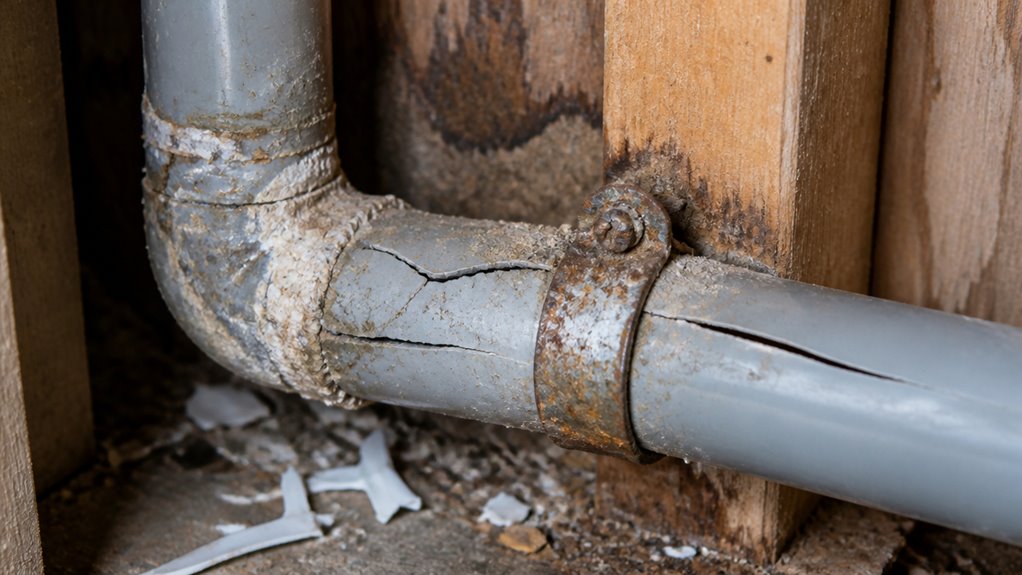
When inspecting polybutylene plumbing, focus on visual clues that reveal internal damage despite an outwardly normal appearance. Look for cracked or brittle fittings, which often indicate chemical degradation inside the pipe.
Check for discoloration; although the exterior may appear intact, subtle changes in hue—gray, blue, or black—can hint at aging or exposure. Pay attention to any active leaks or persistent drips that suggest micro-fractures or pinhole failures.
Examine joints and connections closely, as stress from improper installation or tight bends often manifests here first. Note that absence of visible damage doesn’t guarantee pipe integrity; internal brittleness and micro-cracking can progress unseen.
Use a thorough inspection to assess risk, documenting any anomalies before failure occurs to guide timely repair or replacement decisions. Additionally, changes in water chemistry, such as shifts in disinfectant types, can accelerate internal pipe degradation even when external signs are minimal.
Common Leak Locations
Identify common leak locations by focusing on fittings, joints, and connection points. These areas bear the highest stress and are most prone to failure in polybutylene piping systems.
You’ll typically find leaks at acetal fittings, where chemical degradation combines with mechanical stress. Pay particular attention to elbows, tees, and threaded connections prone to cracking or loosening over time.
Stresses from tight bends, kinks, or over-tightened fittings also increase leak risk, especially near water heaters where hot water accelerates material breakdown.
Straight pipe runs are less frequently compromised, but don’t ignore potential pinhole leaks along them. Regularly inspect these critical junctions for signs of moisture, corrosion, or cracking to catch leaks early.
This can prevent sudden ruptures that cause extensive water damage and costly repairs.
Additionally, thermal expansion from high temperatures can exacerbate stress at fittings and joints, increasing the likelihood of leaks in polybutylene pipes.
Signs of Internal Damage
Leaks around fittings and joints often signal deeper issues within polybutylene pipes that aren’t visible from the outside.
Internal degradation begins with chemical attack. Chlorine and oxidants cause the pipe’s inner walls to become brittle, flake, and develop micro-fractures.
This deterioration remains hidden because the exterior often looks intact. Hot water and stress points, like kinks or tight bends, accelerate damage.
You’ll notice cracked fittings, recurring drips, or active leaks as key warning signs. Internal failure can occur suddenly, with little external warning.
Don’t rely solely on visual inspection. To accurately assess damage, you must conduct thorough inspections and consider the pipe’s age, installation quality, and exposure to chemical and mechanical stress.
Recognizing these signs early is vital to preventing catastrophic failures. Using chemical compatibility knowledge when selecting pipe materials can significantly reduce the risk of internal damage.
Why Polybutylene Pipe Leaks Occur at Fittings?
Because fittings and joints concentrate mechanical stress and chemical exposure, polybutylene pipe leaks most often develop at these points rather than along straight sections of pipe.
Fittings endure localized stress from tightening and water pressure fluctuations, which exacerbates material fatigue.
Chemical attack from chlorine and oxidants targets the pipe’s inner surface, but fittings, especially acetal ones, also degrade, compromising their integrity.
These combined stresses create micro-fractures and brittleness, making fittings the weakest link.
Additionally, fittings experience bending and compression forces not present in straight pipe sections.
As a result, leaks frequently initiate where pipe meets fitting, with damage advancing internally before visible signs appear.
Understanding this stress concentration helps you anticipate leak sites and prioritize inspections at joints and fittings in polybutylene plumbing systems.
Using corrosion-resistant materials and proper fittings can help reduce leak risks at these vulnerable points.
How Installation Mistakes Cause Polybutylene Pipe Failures?
When it comes to installing polybutylene pipes, using improper fitting techniques can really set you up for premature failure. For instance, if you create uneven stress or over-tighten the fittings, you’re asking for trouble.
And let’s talk about sharp bends. Those can introduce mechanical strain that speeds up cracking and material breakdown, which is definitely not what you want.
Additionally, exposure to UV light can further weaken piping materials, accelerating deterioration and failure over time.
Improper Fitting Techniques
Improper fitting techniques markedly increase the risk of polybutylene pipe failures by introducing stress points and compromising joint integrity.
When you over-tighten fittings or misalign joints, you create micro-fractures that accelerate pipe degradation. Inadequate crimping or using incompatible fittings weakens seals, leading to leaks or sudden ruptures.
These installation errors concentrate mechanical stress at joints, undermining system longevity.
| Installation Error | Effect on Polybutylene Pipe |
|---|---|
| Over-tightening fittings | Micro-fractures, joint failure |
| Misaligned joints | Seal compromise, leak initiation |
| Incompatible fittings | Poor sealing, sudden rupture |
To avoid failures, ensure precise fitting alignment, proper torque, and use only approved components tailored to polybutylene systems. Using fittings with proper sealing mechanisms designed for specific pipe materials helps maintain joint integrity and prevent leaks.
Stress From Sharp Bends
When polybutylene pipes are bent sharply during installation, the material undergoes concentrated stress that compromises its structural integrity.
You risk creating stress points where micro-fractures can initiate, accelerating chemical degradation from chlorine exposure inside the pipe.
Sharp bends cause uneven wall thickness and localized strain, which weakens the pipe over time.
If you stretch or kink the pipe tautly, you amplify these vulnerabilities, increasing the likelihood of sudden leaks or ruptures.
Because polybutylene’s internal deterioration often remains hidden, these stress concentrations can trigger failure without visible warning.
To mitigate this, you must adhere to manufacturer bending radii and avoid tight turns.
Proper installation reduces compounded mechanical and chemical stresses, prolonging system life and preventing costly water damage from unexpected pipe failure.
Risks Polybutylene Pipes Pose to Your Home
Although polybutylene pipes were once popular for residential plumbing, they now pose significant risks to your home’s water system and structural integrity. These pipes degrade internally due to chlorine exposure, leading to brittle walls and micro-fractures that remain hidden until failure occurs.
The sudden and often catastrophic leaks can cause extensive water damage before you notice any signs.
You should be aware that:
- Failures typically occur at fittings and joints, not just along straight runs, often without prior visible warning.
- Chemical degradation accelerates near water heaters, increasing vulnerability.
- Structural damage from leaks can escalate rapidly, affecting walls, ceilings, and floors, resulting in costly repairs.
Additionally, compromised plumbing components like check valves can lead to loss of pressure and exacerbate water system issues associated with polybutylene pipes.
When to Repair or Replace Polybutylene Pipes?
Because polybutylene pipes degrade internally and failures often occur suddenly at joints or fittings, you should act proactively rather than wait for visible leaks.
Polybutylene pipes degrade internally and can fail suddenly—proactive action is essential before leaks appear.
Assess your system for signs like brittle fittings, recurring drips, or multiple leak points. Targeted repairs may provide a temporary fix but don’t address the underlying material degradation and risk.
Replace pipes when you detect multiple compromised joints, visible cracking, or if your system is aged with plastic fittings prone to failure.
Since internal deterioration progresses unseen, relying on visual inspection alone is insufficient. You should prioritize replacement to avoid sudden ruptures, water damage, and costly emergency repairs.
Consulting a professional for thorough inspection and risk evaluation helps determine the best timing for full replacement, ensuring long-term reliability and safety.
In some cases, temporarily fixing leaks by tightening the washer nut can help manage issues before full replacement is feasible.
Planning a Safe Polybutylene Pipe Replacement
Before initiating a polybutylene pipe replacement, you need a thorough assessment of your plumbing system to identify all vulnerable sections and prioritize repairs.
This assessment helps you avoid hidden deterioration that can cause sudden failures.
Focus on areas prone to chemical degradation and mechanical stress, especially near fittings and water heaters.
When planning replacement, consider these critical steps:
Inspect all visible and concealed pipes for brittleness, cracks, and leaks.
Document problem areas and evaluate the extent of internal damage.
Choose durable materials and guarantee proper installation techniques to prevent recurring issues.
Frequently Asked Questions
What Are the Common Lifespan Expectations for Polybutylene Pipes?
You can generally expect polybutylene pipes to last about 10 to 20 years under typical conditions.
However, factors like exposure to chlorine, hot water, and mechanical stress can materially reduce their lifespan.
Since internal degradation often begins unnoticed, failures might occur suddenly before you see visible signs.
Because of this unpredictability, relying on the upper end of their lifespan isn’t advisable. Proactive inspection and timely replacement are essential.
How Does Water Chemistry Affect Polybutylene Pipe Degradation?
Water chemistry directly impacts polybutylene pipe degradation by exposing the pipe’s inner surface to chlorine and other oxidants found in treated municipal water.
These chemicals attack the material, causing brittleness, flaking, and micro-fractures.
Hot water accelerates this breakdown, especially near water heaters.
If your water has higher chlorine levels or oxidative agents, expect faster internal deterioration. This increases the risk of sudden leaks or pipe failure over time.
Are There Specific Brands of Polybutylene Pipe Known for Better Durability?
You might expect some brands of polybutylene pipe to outperform others, but in reality, no specific brand stands out for better durability.
All polybutylene formulations share similar vulnerabilities to oxidation and chemical attack from treated water.
While manufacturing quality can vary, the material’s inherent susceptibility means brand differences don’t materially reduce failure risk.
Can Polybutylene Pipes Be Safely Reused After Repair?
You shouldn’t safely reuse polybutylene pipes after repair because internal degradation continues unseen. This makes future failure likely.
While a patch might temporarily stop leaks, the pipe’s brittleness and micro-fractures persist, especially near fittings and bends.
For reliable safety, replace the entire system rather than relying on repairs. This prevents sudden ruptures, extensive water damage, and costly consequences associated with hidden material breakdown and aging components.
What Insurance Implications Exist for Homes With Polybutylene Plumbing?
Insurance companies often treat homes with polybutylene plumbing like a house of cards, unstable and risky.
You’ll likely face higher premiums or coverage exclusions due to the material’s high failure rate and hidden deterioration.
Some insurers may refuse policies altogether or require full pipe replacement before issuing coverage.
It’s vital you disclose this plumbing type during applications and consider proactive replacement to safeguard your insurance eligibility and minimize potential claim disputes.
Polybutylene Pipe Issues: Final Thoughts and Safety Tips
If you’ve got polybutylene pipes, don’t wait for the other shoe to drop. These pipes are prone to leaks and failures, especially at fittings and due to installation errors.
Ignoring the signs can lead to costly water damage. Act decisively by inspecting, repairing, or replacing them with safer alternatives.
Taking control now guarantees your home’s plumbing is secure, preventing headaches down the road and protecting your investment with confidence.