To get rid of gnats in your garbage disposal, start by turning off the power and removing trapped organic debris beneath the splash guard and in the drain.
Scrub these areas with dish soap and a stiff brush. Flush the disposal with cold water during use and rinse with baking soda and vinegar weekly to disrupt breeding.
Set an apple cider vinegar trap near the sink to catch adults. Practicing these steps regularly prevents reinfestation and guarantees a cleaner disposal environment.
Explore further for detailed cleaning and prevention methods.
Key Takeaways
- Identify the breeding site by covering the drain with plastic wrap overnight and checking for gnats beneath in the morning.
- Turn off and unplug the disposal before removing debris and scrubbing the splash guard and disposal opening with dish soap and a stiff brush.
- Use an apple cider vinegar trap near the sink to catch adult gnats and reduce their population effectively.
- Flush the disposal with cold water during use, then clean weekly with baking soda and vinegar or enzyme-based cleaners to break down residue.
- Apply fruit fly drain treatment gel inside the drain to eliminate larvae and prevent ongoing gnat breeding.
Why You’re Seeing Gnats in Your Garbage Disposal?

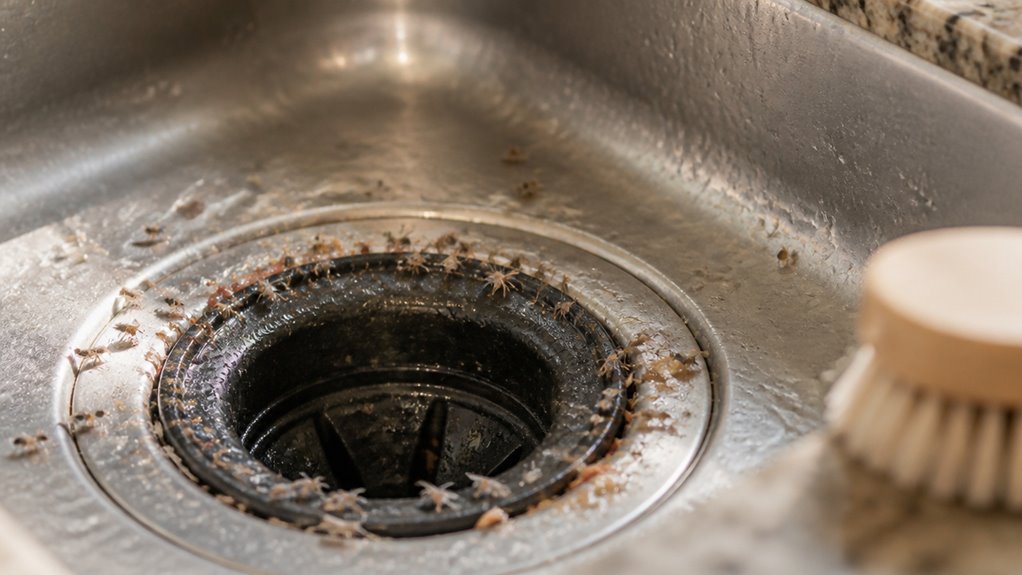
If you’re noticing gnats around your garbage disposal, it’s usually because they’ve found a perfect breeding ground in the organic debris trapped inside.
These tiny flies are attracted to leftover food particles lodged beneath the rubber splash guard or in the drain trap. This trapped grime provides an ideal environment for egg laying and larval development.
Tiny flies thrive on leftover food trapped beneath splash guards and drain traps, creating perfect breeding grounds.
Since infestations often originate within the disposal or drain, you’ll typically see activity focused around the sink area.
Persistent gnat presence signals ongoing food residue buildup rather than a surface-level problem. Understanding that the root cause is organic matter accumulation helps you target the source effectively.
Identifying this breeding site is the first step toward eliminating gnats and preventing their return. Regular drain cleaning and enzymatic treatments can disrupt the biofilm and bacterial growth that support gnat infestations.
How to Safely Clean Your Garbage Disposal to Eliminate Gnats?
To safely clean your garbage disposal and get rid of those pesky gnats, the first step is to turn off the power. Trust me, you don’t want any accidents while you’re working in there!
Once that’s done, carefully lift or remove the rubber splash guard. You’ll be surprised at the hidden grime that can build up underneath it.
Now, grab a stiff brush and some dish soap. It’s time to scrub! Focus on the disposal opening and the areas around it where residue tends to hang out. A little elbow grease goes a long way!
Be sure to remove debris regularly to prevent odors and gnat infestations from developing in the first place.
Power Off Disposal
Start by turning off the power to your garbage disposal to guarantee safety during cleaning. This essential step prevents accidental activation, protecting you from injury and allowing thorough cleaning.
Locate the disposal’s power switch or, better yet, unplug it or turn off the circuit breaker controlling it. Once the unit is off, you can safely remove debris and scrub surfaces without risk.
Follow these steps for safe power-off cleaning:
- Confirm the disposal is completely powered off by testing the switch.
- Unplug the unit or switch off the dedicated breaker for added security.
- Use tongs or pliers to remove visible food scraps and gunk.
- Proceed with scrubbing and rinsing debris to eliminate gnat breeding grounds.
Always prioritize power disconnection before cleaning. Wearing safety goggles and gloves is recommended to protect yourself from harmful substances during the cleaning process.
Remove Splash Guard
Lift the rubber splash guard carefully to access the grime hiding underneath, where gnats often lay their eggs. Before you start, make sure the garbage disposal is powered off to avoid accidents.
Gently pull back the splash guard or, if removable, take it out completely for better access. Use a stiff brush and dish soap to scrub the underside thoroughly, removing all organic buildup that attracts gnats.
Be precise, focusing on the edges and crevices where residue accumulates. If the splash guard is stuck, avoid forcing it; instead, loosen it gradually to prevent damage.
After cleaning, rinse the splash guard and surrounding area well. Properly removing and cleaning this component is essential to eliminate gnats’ breeding sites and maintain a hygienic disposal. Regular maintenance of the garbage disposal, including clearing food debris and grease buildup, helps prevent gnats and other issues related to clogged garbage disposal.
Scrub Thoroughly Inside
After removing and cleaning the splash guard, turn off the power to your garbage disposal to work safely inside.
Thorough scrubbing is essential to eliminate the food residue where gnats breed.
Use a stiff brush and dish soap to clean the underside of the splash guard and the disposal opening.
Remove any visible scraps with tongs or pliers.
Don’t forget the upper drain area, which can also harbor grime.
Follow these steps:
- Scrub the rubber splash guard underside with a stiff brush and soap.
- Clean the disposal opening and upper drain with a toothbrush.
- Remove food debris manually using tongs or pliers.
- Rinse thoroughly to wash away loosened residue.
This detailed cleaning disrupts gnat breeding sites effectively. Using surfaces with a glazed finish can help resist stains and make future cleaning easier.
Flushing and Scrubbing Techniques to Remove Food Residue and Gnats
When you tackle flushing and scrubbing your garbage disposal, you’ll effectively remove the food residue that attracts gnats and fruit flies.
Start by running cold water before and during disposal use to help move particles through. Afterward, flush with hot or warm, soapy water to dissolve leftover grime.
For deeper cleaning, pour a baking soda and vinegar mixture into the disposal. Let it sit 10–15 minutes, then rinse thoroughly.
Scrub the underside of the rubber splash guard and the disposal opening with a stiff brush or toothbrush to remove hidden buildup.
Adding ice cubes and coarse salt while running cold water will scour grinding surfaces and dislodge stubborn debris.
Repeat these flushing and scrubbing steps regularly to keep your disposal clean and gnat-free.
Using a cleaner with D-Limonene can dissolve fats and oils that contribute to buildup and odors in your disposal.
How to Trap Adult Gnats Near Your Sink?
If you’re looking to catch those pesky adult gnats near your sink, I’ve got a simple trick for you.
Just grab a small bowl and mix together some apple cider vinegar with a few drops of dish soap. The vinegar will attract them, and the soap will help trap them effectively.
Oh, and here’s another tip: you might want to cover the drain overnight with some plastic wrap.
This way, you can see if those little critters are breeding in your disposal or drain. Setting up these traps will help you reduce the adult gnat population while you work on figuring out where they’re coming from. Happy trapping!
Using enzyme-based cleaners can also help break down organic buildup in the disposal, supporting a septic-safe cleaning approach.
Apple Cider Vinegar Trap
Frequently, trapping adult gnats near your sink involves using a simple and effective apple cider vinegar trap. This trap attracts gnats with the vinegar’s scent, and the dish soap breaks the surface tension, causing them to drown.
To set it up correctly:
- Pour about half a cup of apple cider vinegar into a small bowl.
- Add a few drops of dish soap and gently stir to combine.
- Place the bowl near the sink or garbage disposal where gnats gather.
- Leave it overnight and replace the mixture every few days to maintain effectiveness.
This trap helps reduce the adult gnat population so you can focus on eliminating the breeding source inside your disposal or drain. For deeper infestations, consider using a specialized fruit fly drain treatment gel to eliminate larvae and breeding sites within drains.
Drain Cover Test
Using an apple cider vinegar trap can help reduce the number of adult gnats around your sink.
However, confirming the exact source of the infestation is equally important. The Drain Cover Test lets you determine if your disposal or drain is the breeding site.
Simply cover the drain tightly with plastic wrap overnight. If gnats gather beneath the cover by morning, you’ve pinpointed the problem area.
| Test Step | Purpose |
|---|---|
| Cover drain | Trap gnats inside |
| Wait overnight | Allow gnats to accumulate |
| Check for gnats | Confirm infestation source |
This method helps you focus your cleaning efforts precisely where it’s needed to eliminate the root cause of gnats near your sink.
Tips to Prevent Gnats From Coming Back
Keeping gnats from making a comeback starts with consistent maintenance and mindful habits in your kitchen. You need to prevent organic debris buildup, which creates ideal breeding grounds.
Focus on thorough cleaning and proper disposal use to reduce attractants.
Follow these tips to keep gnats away:
- Avoid putting food scraps or organic waste directly into the drain or disposal.
- Clean the disposal regularly, paying close attention to the splash guard and drain opening.
- Always run cold water during and after disposal use to flush out food particles.
- Implement a weekly cleaning routine using baking soda, vinegar, ice, or hot water to break down residue.
Using pumps that operate quietly and efficiently, such as energy-efficient pond pumps, can help maintain a cleaner water environment around your home.
Routine Maintenance to Keep Your Garbage Disposal Gnat-Free
Regularly maintaining your garbage disposal is essential to prevent gnats from returning.
Start by cleaning the splash guard and underside with dish soap and a stiff brush to remove food residue where gnats breed.
Use a toothbrush to scrub the disposal opening and upper drain, removing any visible gunk with tongs.
Flush the disposal with cold water during and after use to clear particles.
Perform weekly deep cleanings using a baking soda and vinegar mixture or hot water to break down grime.
Incorporate abrasive cleaning by grinding ice cubes with coarse salt to scour interior surfaces.
Avoid putting organic debris down the drain and keep the area clean to eliminate breeding sites.
Consistent upkeep like this will keep your garbage disposal gnat-free and hygienic.
For added protection, consider using a septic-safe drain cleaner designed to safely break down organic buildup without harming your plastic pipes or septic system.
Frequently Asked Questions
Can Gnats in Garbage Disposals Spread Diseases?
Gnats in garbage disposals don’t typically spread diseases like mosquitoes or flies do, but you shouldn’t ignore them.
They breed in decaying organic matter, which can harbor bacteria and fungi.
If you touch contaminated surfaces or food after gnats have been present, you risk transferring germs.
Are Chemical Pesticides Safe to Use in Garbage Disposals?
Chemical pesticides aren’t a magic wand for your garbage disposal. They can be risky, like throwing a wrench into delicate machinery.
You shouldn’t use them because they may damage your plumbing, harm beneficial microbes, and leave toxic residues in your sink.
Instead, rely on thorough cleaning, natural flushes, and trapping methods.
These practical steps guarantee safety and effectiveness without introducing harsh chemicals to your home’s ecosystem.
How Long Does It Take for Gnats to Disappear After Cleaning?
You’ll typically see gnats start to disappear within a few days after thorough cleaning, usually around 3 to 5 days.
That’s because you’re eliminating their breeding sites and food sources in the disposal and drain.
However, it’s vital to maintain regular cleaning and trap any remaining adults to prevent reinfestation.
If gnats persist beyond a week, double-check for missed residue or hidden breeding spots to make certain complete removal.
Can a Garbage Disposal Be Replaced to Solve Gnat Infestations?
Yes, you can replace a garbage disposal to address gnat infestations, but it’s not always necessary.
Gnats breed in food residue, so thorough cleaning often solves the problem. If your disposal is old, damaged, or has persistent grime you can’t remove, replacement might help eliminate breeding sites.
However, make sure you clean surrounding drains and traps too. Gnats may return even with a new unit installed.
Do Gnats in Garbage Disposals Bite or Cause Skin Irritation?
No, gnats in garbage disposals don’t bite or cause skin irritation.
These tiny flies mainly annoy you by buzzing around and laying eggs in moist organic residue.
While they don’t feed on blood or harm your skin, their presence signals unsanitary conditions that need cleaning.
You’ll want to focus on thorough disposal and drain cleaning to eliminate the breeding grounds and prevent further infestations, rather than worrying about bites or irritation.
How to Get Rid of Gnats in the Garbage Disposal: Final Tips?
By understanding why gnats gather in your garbage disposal, you can clean thoroughly, flush effectively, and trap adults efficiently.
You’ll prevent future infestations by maintaining routine care, removing food residue promptly, and keeping your sink area dry.
Taking these steps not only eliminates gnats but also promotes a healthier, fresher kitchen environment.
Stay proactive, stay consistent, and stay vigilant. This is how you keep your garbage disposal gnat-free for good.