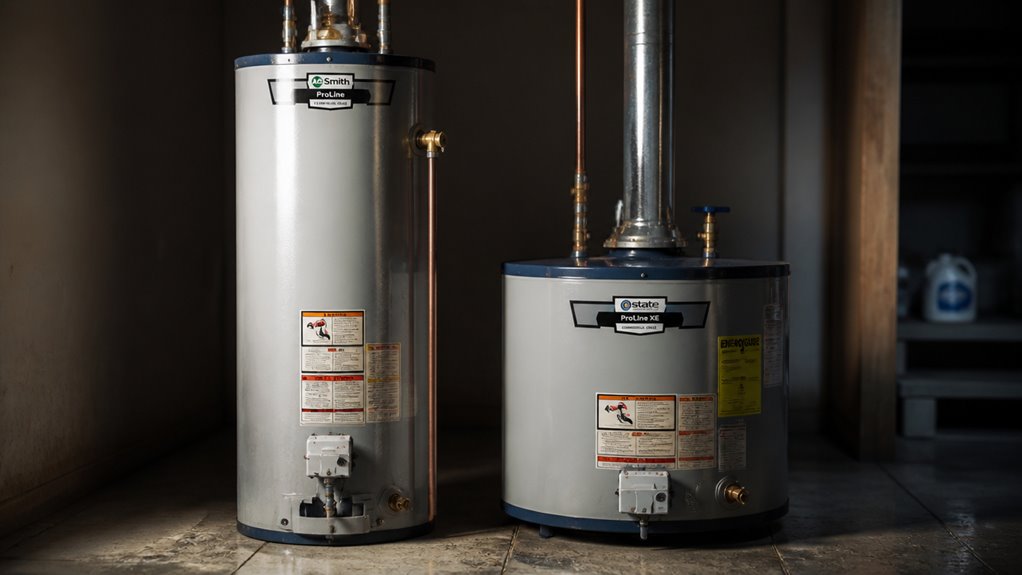
When choosing between tall and short water heaters, consider your space and demand carefully.
Tall units, 46–76 inches high with narrow diameters, suit larger households needing up to 100 gallons. They fit spaces with ample vertical clearance like garages.
Short heaters, 30–49 inches tall and wider, work better for smaller households and tight areas like under counters.
Tall models may incur higher standby losses and installation costs. Short ones reduce heat loss but require more floor space.
To optimize capacity, location, and efficiency, understanding these factors is essential.
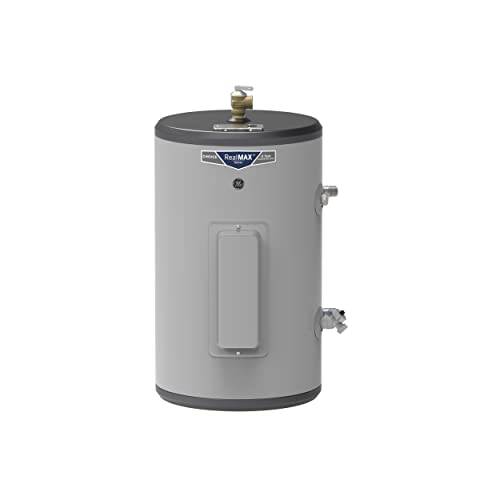
- EASY INSTALLATION – Installs in minutes with existing plumbing. Uses standard 3/4-in NPT compatible…
- COMPACT DESIGN – Offers flexibility and space savings in places like kitchens, bathrooms, laundry…
- LEADING WARRANTY- 8- year limited replacement or 8-year tank and parts/1-year labor warranty for…

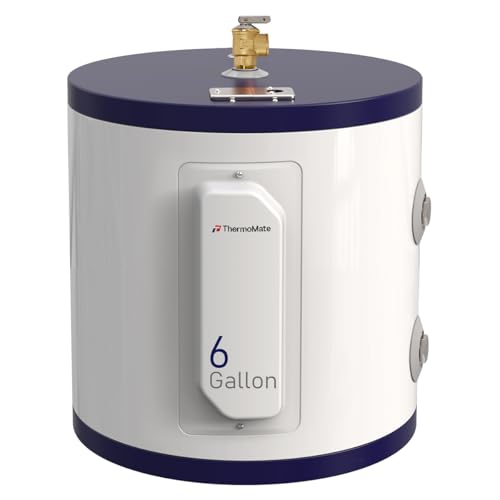
- 【6 Gallons point of use】mini tank water heater provides instant hot water where you need it with…
- 【16inch low profile】 14.75×16.14” compact small water heater (120 Volt Hard Wired…
- 【1500W INCOLOY-800】 heating element – better corrosion resistance performance and more efficient…
Key Takeaways
- Tall water heaters (46–76 in) suit large households needing up to 100 gallons, optimizing vertical space in garages or basements.
- Short water heaters (30–49 in) fit low-ceiling areas like closets, with diameters 20–26 in, ideal for small households and limited floor space.
- Tall units have higher standby heat loss due to larger surface area, while short units reduce energy waste in low-demand settings.
- Installation costs for tall heaters can be higher because of additional vertical clearance and plumbing requirements.
- Proper sizing depends on household size, usage patterns, and existing plumbing alignment to minimize modification and ensure efficiency.
Tall vs Short Water Heater Comparison: Capacity, Space, Efficiency, and Installation
| Comparison Point | Tall Water Heater | Short Water Heater | Best Choice |
|---|---|---|---|
| Main Design | Taller and narrower tank built for vertical space | Shorter and wider tank built for low-clearance spaces | Depends on available space |
| Typical Height | Around 46–76 inches tall | Around 30–49 inches tall | Short for low ceilings |
| Diameter | Usually narrower, around 18–21 inches | Wider, often around 20–26 inches | Tall for smaller floor footprint |
| Best Location | Garages, basements, and utility rooms | Closets, under counters, and compact rooms | Match to installation area |
| Capacity Range | Can support larger tanks, often up to 100 gallons | Often better for smaller tanks, usually 30–50 gallons | Tall for higher demand |
| Household Fit | Better for larger households or multiple bathrooms | Better for small households or apartments | Based on hot water usage |
| Energy Efficiency | May have more standby heat loss if oversized | Can reduce heat loss in low-demand settings | Short for lower demand |
| Installation Needs | Needs more vertical clearance and top connection space | Needs more floor space due to wider shape | Depends on plumbing layout |
| Cost Consideration | May cost more due to larger size and installation needs | Often lower upfront for smaller capacities | Short for budget-friendly installs |
| Best Overall Use | When you need capacity and vertical space is available | When you need compact height and moderate capacity | Choose by space and demand |
Size and Shape Differences Between Tall and Short Water Heaters

When choosing between tall and short water heaters, you’ll notice that their size and shape differ substantially to fit various spatial constraints.
Tall water heaters typically measure 46 to 76 inches in height with diameters of 18 to 21 inches, optimizing vertical space usage. In contrast, short water heaters range from 30 to 49 inches tall and have wider diameters, around 20 to 26 inches, making them suitable for areas with limited ceiling height.
When evaluating installation feasibility, you must account not only for tank dimensions but also clearance for plumbing and top connections, which can add roughly 10 inches to required height.
This dimensional analysis helps you select a model that balances spatial limitations with practical accessibility. It ensures efficient integration into your designated mechanical or utility space.
Additionally, knowing the water heater’s age can influence your choice since older units may require different maintenance considerations based on their design and usage history.
How Household Size Affects Tall vs Short Water Heater Capacity?
Although both tall and short water heaters serve the same fundamental purpose, your household size materially influences the ideal tank capacity you should choose.
For smaller households, typically two to three people, a short water heater with up to 50 gallons provides adequate hot water while minimizing standby heat loss and space usage.
Larger households with multiple simultaneous hot water demands benefit from tall water heaters that can hold up to 100 gallons, ensuring sufficient supply during peak usage.
Oversizing wastes energy and space, while undersizing risks running out of hot water.
Consider your household’s routine: frequent laundry, dishwashing, or multiple bathrooms increase demand, favoring taller, higher-capacity units.
Ultimately, matching tank capacity to household size optimizes performance, efficiency, and user comfort without unnecessary cost or spatial compromise.
Higher BTU input generally improves recovery rates, helping to meet peak household demand more efficiently by heating water faster in larger tanks with higher energy input.
Best Installation Locations for Tall and Short Water Heaters
When you’re thinking about where to install tall water heaters, it’s a good idea to look for spaces with plenty of vertical clearance. Garages and basements are usually perfect for this. Their narrow footprint really makes the most of the height available.
On the flip side, short water heaters are a better fit for compact areas. If you’ve got low ceilings or tight closets, these are the way to go. They can handle wider diameters while fitting snugly in spaces with limited overhead room.
And remember, no matter which type you choose, always keep plumbing connections and clearance requirements in mind. This will help ensure you have a proper fit and easy access for maintenance later on.
Additionally, ensuring the installation area has proper ventilation requirements is crucial for efficient and safe water heater operation.
Ideal Spaces For Tall
In spaces with ample vertical clearance, tall water heaters optimize storage capacity without expanding the floor footprint. They’re ideal in garages, basements, and utility rooms where ceiling height exceeds 76 inches, accommodating both tank height and plumbing connections.
Their narrow diameter (18–21 inches) uses vertical space efficiently, freeing up floor area for other equipment. When planning installation, ensure at least 10 inches clearance above the tank for safe venting and servicing.
Proper clearance requirements are essential to ensure efficient operation and to prevent overheating during installation.
| Location | Ceiling Height | Clearance Needed |
|---|---|---|
| Garage | 8 feet or higher | 10+ inches above |
| Basement | 7.5 feet or higher | 10+ inches above |
| Utility Room | 7 feet or higher | 10+ inches above |
This setup suits larger households requiring up to 100 gallons of hot water without spatial compromise.
Compact Areas For Short
While tall water heaters excel in spaces with ample vertical clearance, short water heaters prove ideal in compact areas where height is limited.
You’ll find short models fit efficiently under counters, in tight closets, or in mechanical rooms with low ceilings.
Their wider diameter compensates for reduced height, allowing sufficient capacity in constrained vertical spaces.
When installing in compact areas, verify the floor footprint carefully, as short water heaters require more horizontal space.
This form factor suits small households or apartments where space optimization is critical.
By selecting a short water heater, you leverage its design to maximize usable volume without exceeding height restrictions.
This guarantees a practical, space-conscious installation that meets demand without compromising accessibility or safety.
Always confirm the model’s exact dimensions relative to your available space before installation.
For optimal performance and protection during colder months, it is also important to consider insulating pipes and tank to minimize heat loss and prevent freezing damage.
Clearance And Plumbing Needs
Considering clearance and plumbing needs is essential when choosing the best installation location for tall and short water heaters.
Tall models require vertical clearance of 56 to 86 inches, accounting for 10 inches extra for plumbing connections above the tank. They fit best in garages or basements with sufficient ceiling height.
Short water heaters, measuring 30 to 49 inches, work well in low-clearance spaces but need wider floor space due to larger diameters.
When planning installation, you must verify both floor footprint and overhead clearance, including access for plumbing and maintenance.
Additionally, align pipe locations with existing plumbing to minimize costly modifications.
Proper clearance guarantees safe venting, adequate water flow, and convenient servicing. This makes it a critical factor in determining the optimal placement for either tall or short water heater units.
It is also important to consider potential additional plumbing requirements that may increase installation complexity and costs.
Comparing Energy Efficiency of Tall and Short Water Heaters
When you’re comparing tall and short water heaters, it’s important to really consider standby heat loss. You see, larger tanks usually lose more heat over time, which can impact efficiency. But here’s the thing: the quality of insulation plays a big role too. Good insulation can help reduce those size-related losses, making a difference in overall efficiency.
Now, don’t forget about your usage patterns! The way you use hot water can also shift the efficiency balance. If you’re cycling the unit more often to keep the water warm, that can change things up quite a bit. So, it’s definitely something to think about when making your decision! High insulation ratings and heat traps are essential to minimize standby heat loss and reduce electricity costs over time.
Standby Heat Loss
Frequently, standby heat loss plays a critical role in determining the overall energy efficiency of both tall and short water heaters.
Since water heaters maintain stored water at set temperatures, heat naturally dissipates through the tank walls, requiring additional energy to reheat.
Tall water heaters, with their larger surface area and higher volume, generally experience greater standby heat loss compared to shorter models.
However, the difference isn’t solely due to height; tank diameter and insulation quality also influence heat loss rates.
Short water heaters, having smaller storage volumes, reduce the total heat lost when demand is low, improving efficiency for smaller households.
When evaluating standby heat loss, consider how tank size and shape affect energy consumption patterns, especially if your household’s hot water usage fluctuates or remains minimal.
Upgrading to water heaters with efficient heating elements can further reduce energy waste associated with standby heat loss.
Insulation Impact
Standby heat loss highlights how insulation quality markedly affects the energy efficiency of both tall and short water heaters.
When you choose a water heater, consider that insulation thickness and material directly influence heat retention, reducing energy wasted maintaining water temperature.
Tall water heaters, with greater surface area, tend to lose more heat unless insulated effectively.
Conversely, short water heaters have less surface area exposed, which can inherently reduce heat loss if insulation is comparable.
However, variations in insulation technology or standards between models can outweigh size differences.
Consequently, you should prioritize insulation R-value and uniform coverage over tank height alone.
Proper insulation minimizes heat transfer through the tank walls, directly improving energy efficiency and operational costs, irrespective of whether your water heater is tall or short.
Additionally, electric water heaters require no venting, which simplifies installation and enhances safety by eliminating risks related to combustion gases and carbon monoxide hazards.
Usage Pattern Effects
Although both tall and short water heaters can serve your household needs, their energy efficiency depends on your specific usage patterns.
If your household demand is low, a short water heater typically reduces standby heat loss, improving efficiency.
Conversely, tall water heaters suit higher simultaneous hot water use but may waste energy maintaining larger volumes at temperature during low demand.
Matching your usage to tank capacity optimizes energy consumption.
| Usage Pattern | Efficiency Impact |
|---|---|
| Low demand | Short heaters reduce standby losses |
| High demand | Tall heaters sustain large volume supply |
| Frequent simultaneous use | Tall models prevent shortages |
| Infrequent use | Tall models incur unnecessary heat loss |
| Variable demand | Proper sizing vital for efficiency |
Select your heater by analyzing usage frequency and volume to minimize energy waste. Many booster units can increase deliverable hot water by up to 45%, effectively extending the capacity of your existing water heater with electric tankless boosters.
Costs of Tall vs Short Water Heaters: Upfront and Long-Term
When comparing the costs of tall versus short water heaters, you’ll find that upfront expenses generally correlate with tank capacity and size.
Tall water heaters, with larger tanks, often up to 100 gallons, tend to have higher purchase prices due to increased material usage and manufacturing complexity.
Conversely, short water heaters, typically under 50 gallons, cost less initially, reflecting their smaller volume and simpler design.
Long-term costs hinge on energy efficiency and usage patterns. Short models can reduce standby heat loss in low-demand settings, potentially lowering utility bills by up to 40%.
However, if your household requires more hot water, a tall unit may prevent shortages and reduce cycling frequency, balancing energy use over time.
Installation costs may also differ, as tall units require adequate vertical clearance, possibly increasing labor expenses.
Choosing the Right Water Heater Capacity for Your Home
Selecting the right water heater capacity hinges on accurately matching your household’s hot water demand to the tank size.
Analyze your household size and typical simultaneous hot water usage. Dishwashers, laundry, and bathing patterns directly influence required capacity.
For example, households with 4+ members generally benefit from tall units holding up to 100 gallons. Smaller households of 2-3 people often find short models with 30-50 gallon tanks sufficient.
Avoid oversizing, which wastes energy maintaining excess hot water, and undersizing, which causes shortages during peak use.
Consider recovery rates as well, ensuring the unit can replenish hot water fast enough to meet demand.
Adapting to Your Existing Plumbing When Replacing a Water Heater
You’ll need to factor in your existing plumbing setup carefully before replacing a water heater to guarantee a seamless fit and operation.
Identify pipe locations, diameters, and connection types, such as threaded or soldered joints, to ensure compatibility with the new unit.
Account for the vertical and horizontal clearances required for inlet and outlet plumbing, including shutoff valves and pressure relief valves.
Note that tall water heaters may demand additional height clearance, around 10 inches more, due to top connections, while short models require more floor space.
Verify venting configurations and gas or electric supply align with the replacement model.
Adapting your plumbing reduces installation complexity, prevents costly modifications, and maintains system integrity.
Prioritize matching existing pipe orientations and clearances to optimize installation efficiency and long-term reliability.
Frequently Asked Questions
How Do Tall and Short Water Heaters Differ in Maintenance Requirements?
You’ll find maintenance differences mainly relate to access and capacity.
Tall water heaters may require more effort for top connections and flushing due to height, demanding ladder use or extended reach.
Short models offer easier access for inspection and servicing but might need more frequent checks if capacity is smaller.
Both need regular sediment flushing, anode rod replacement, and pressure relief valve tests.
Your space and unit size influence convenience and frequency.
Are There Specific Brands Known for Better Tall or Short Water Heaters?
When it comes to brands, Rheem and A.O. Smith often lead the pack, with Rheem excelling in tall models due to their efficient vertical design and robust capacity.
For short water heaters, Bradford White stands out, offering compact units with advanced insulation and energy-saving features.
You’ll want to analyze your space and demand, then match those specs with brand strengths.
Precision matters more than just size in choosing the right heater.
Do Tall or Short Water Heaters Have Different Warranty Options?
Warranty options don’t typically differ solely based on whether a water heater is tall or short. Instead, manufacturers set warranties by model series, capacity, and technology used.
You’ll find similar warranty lengths across both types, often ranging from 6 to 12 years on the tank. When choosing, focus on the specific product specs and brand reputation rather than height.
Warranty terms depend more on design and build quality than size.
How Do Water Heater Shapes Affect Resale Value of a Home?
Water heater shapes influence resale value by affecting perceived space efficiency and utility.
A compact, short model fits better in tight areas, appealing to buyers valuing space-saving features.
Conversely, a tall unit signals higher capacity for larger households, attracting families needing more hot water.
Prioritize matching the heater shape to your home’s size and layout, as mismatches may reduce appeal and decrease value.
Can Tall or Short Water Heaters Integrate With Solar Water Heating Systems?
Yes, both tall and short water heaters can integrate with solar water heating systems, but you’ll want to take into account capacity and space.
Tall units, with larger storage, handle solar preheated water well for bigger households.
Short units fit tight spaces but may limit solar storage volume.
Make certain your heater’s connections support solar input and check compatibility with your system’s controls.
Proper integration maximizes energy savings regardless of tank shape.
Choose the Right Water Heater for Your Space
Choosing between tall and short water heaters hinges on your household size, space constraints, and energy goals.
Tall models offer greater capacity but demand more vertical space. Short units fit tighter areas with potentially lower output.
Consider installation logistics and long-term costs carefully. Neglecting these factors is like trying to fit a whale into a goldfish bowl.
By analyzing your plumbing and usage needs, you’ll select a water heater that perfectly balances efficiency and practicality.
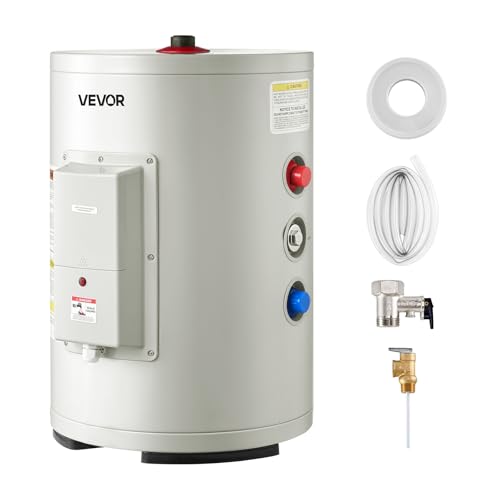
- 6-Gallon Capacity: Our tank water heater suits single apartments and RVs, or as a supplementary hot…
- Fast Heating & Excellent Insulation: Our storage water heater features an extended immersion heating…
- Reliable & Long-Lasting: The high-temperature-resistant and corrosion-resistant enamel interior…
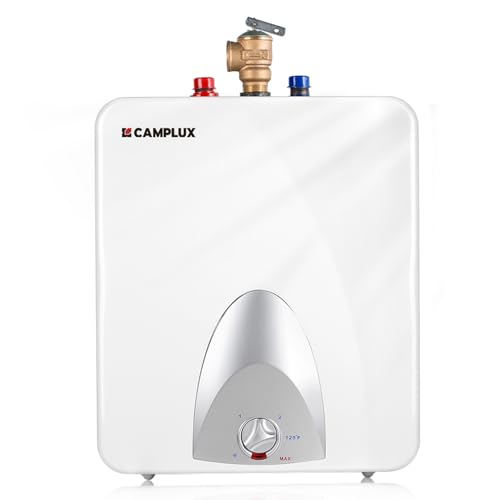
- Saving Energy & Money – Built-in insulation foam reduces heat loss. A 6-gallon point-of-use…
- High Quality Built & Elegant Design – CAMPLUX electric water heater has a glass-lined tank for long…
- UL Approval Safety – Thermostat Control allows adjustment of water temperature. With 3 temperature…
Last update on 2026-09-05 / Affiliate links / Images from Amazon Product Advertising API