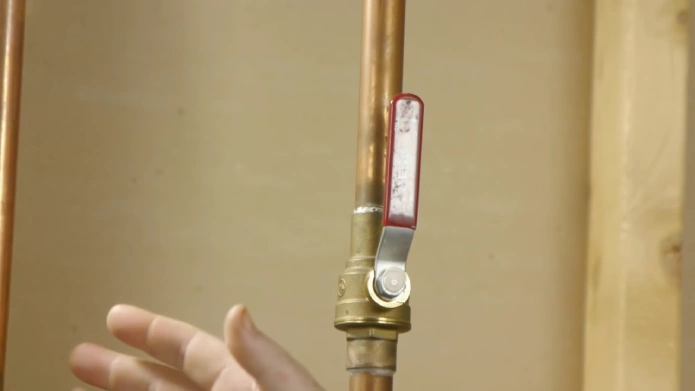

Your sump pump drains water from the pit through a discharge pipe that pushes it away from your foundation. The pipe typically leads to approved locations like storm drains, downhill slopes, or dry wells, keeping water from pooling near your home and damaging your foundation.
A check valve on the pipe prevents water from flowing back into the pit, protecting the pump from unnecessary cycling. Proper pipe materials, slope, and discharge distance also matter. There’s more to optimizing your system’s performance and compliance with local codes.
Key Takeaways
- Sump pumps discharge water to approved endpoints like storm drains, downhill slopes, or daylighted areas away from the foundation.
- The discharge pipe must extend at least 10 feet from the foundation to prevent water pooling and soil saturation near the home.
- Alternative discharge locations include dry wells or yard drains, ensuring compliance with local codes and avoiding nuisance flooding.
- Proper discharge placement avoids walkways and driveways to prevent ice hazards, erosion, and structural damage to the foundation.
- Check valves on the discharge line prevent backflow, ensuring water flows outward and protects the sump pit from refilling.
How a Sump Pump Moves Water Away From Your Home?
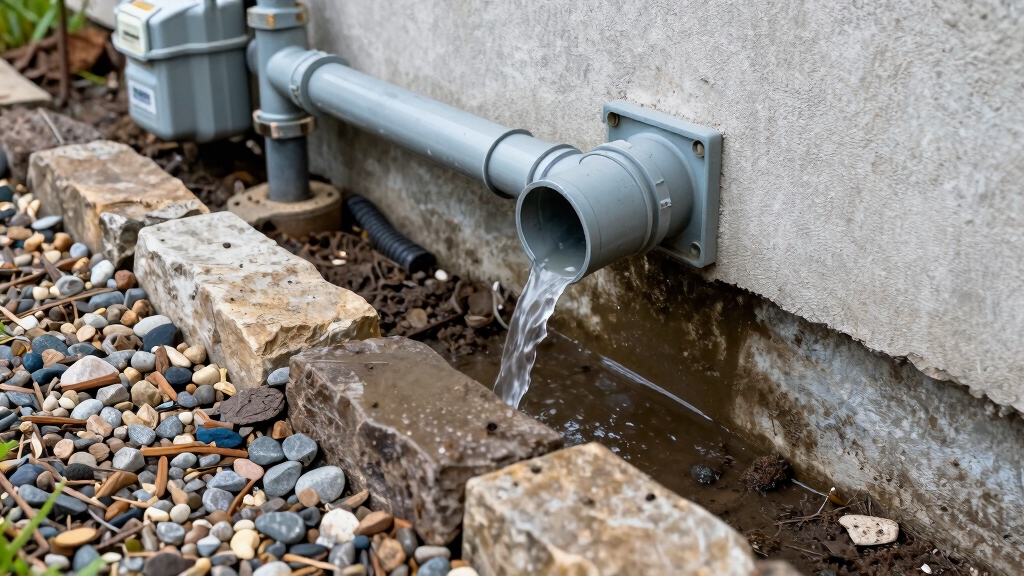
A sump pump kicks in when water levels rise in the sump pit, triggered by a float switch that detects the increasing water. When rising water is detected by the float switch, the sump pump activates to prevent flooding.
As the float moves upward, it activates the pump’s motor, which forces water through the discharge pipe. This pipe is typically made from solid, corrosion-resistant PVC, sized around 1.5 inches in diameter.
The pump pushes water out with enough pressure to flow downhill or toward an approved drainage area. A check valve installed in the discharge line prevents water from flowing back into the pit after pumping stops.
The pipe’s slope guarantees continuous outflow by gravity, reducing the risk of reflooding. This system effectively reroutes groundwater away from your foundation, protecting your basement from water damage and structural issues.
Submersible pumps are commonly used in sump pump systems due to their quieter operation and efficient submerged motor design.
Common Sump Pump Discharge Locations
When it comes to directing your sump pump’s discharge, you typically want to send that water to storm drains or downhill slopes. This is key for keeping water away from your foundation, which is super important for preventing damage.
Using sturdy PVC piping is a great choice. It doesn’t corrode, so you can count on it for reliable flow. Plus, don’t forget to install a check valve on the line; this little device stops water from flowing back into the pit, which is a real lifesaver.
Choosing the right sump pump based on discharge capacity ensures your system handles water efficiently and prevents frequent emptying.
Typical Discharge Endpoints
When setting up your sump pump discharge, it’s essential to direct the water flow well away from your home’s foundation to prevent damage or reflooding. Typical discharge endpoints include storm drains, dry wells, or natural slopes that allow gravity to carry water safely away.
You can also extend the discharge pipe several feet beyond your foundation to guarantee water doesn’t pool near your basement walls. Avoid discharging near walkways or driveways to prevent ice buildup in cold climates.
In some cases, discharge may empty into a yard drain or a daylighted area downhill from your home. Always guarantee the endpoint complies with local codes and doesn’t cause nuisance flooding to neighboring properties.
Proper endpoint selection safeguards your foundation and maintains effective water management. Additionally, sump pumps, especially submersible models, are designed for efficient operation indoors or outdoors, making them versatile for various discharge setups.
Discharge Pipe Materials
Choose durable and corrosion-resistant materials like PVC for your sump pump discharge pipe to guarantee long-lasting performance.
Schedule 40 PVC, typically 1.5 inches in diameter, is the industry standard because it resists corrosion and withstands outdoor elements.
It also provides a smooth interior surface, reducing friction and improving water flow efficiency.
When installing, make sure the pipe maintains a consistent downward slope away from your foundation to prevent standing water.
Use appropriate fittings, such as elbows, couplings, and adapters, to navigate around obstacles while maintaining a secure, leak-free connection.
Avoid materials prone to rust or degradation, such as galvanized steel, which can clog or weaken over time.
Proper material choice and installation safeguard your system’s reliability and protect your home from water damage.
For a strong and leak-free connection, remember to prime and cement PVC pipes before securing the sump pump hose.
Preventing Water Backflow
Selecting durable PVC pipes for your sump pump discharge sets the stage for effective water removal, but preventing backflow requires additional components.
You need to install a check valve on the discharge line; this critical device stops water from returning to the sump pit after the pump stops.
Position the check valve vertically on a straight section of pipe to guarantee optimal operation and minimize strain on the pump.
Additionally, slope the discharge pipe away from your foundation at a consistent gradient to facilitate gravity-driven outflow and reduce the risk of standing water.
Direct the pipe’s endpoint to a storm drain or a downhill slope far from your home to prevent reflooding.
These measures collectively guarantee efficient, uninterrupted water removal and safeguard your basement from water damage.
Proper installation and maintenance of the check valve are essential to ensure it functions correctly and prolongs the life of your sump pump system.
Why Proper Sump Pump Discharge Location Protects Your Foundation?
Although sump pumps efficiently remove water from your basement, their discharge location plays a critical role in protecting your foundation.
You must make certain the discharge pipe directs water far enough from the foundation’s base to prevent reflooding and soil saturation. This is essential, as it can weaken concrete and cause cracks.
Ideally, discharge points should lead to storm drains or downhill slopes that facilitate quick water dispersion. Improper placement risks water pooling near your home, increasing hydrostatic pressure against the foundation walls.
You should also avoid discharging near sidewalks or driveways where runoff can cause erosion or freeze hazards.
Proper discharge location also helps maintain the integrity of the home’s foundation by preventing water accumulation that could lead to structural damage.
Materials Used for Sump Pump Discharge Pipes

When installing a sump pump discharge system, you rely primarily on PVC pipes for their durability and resistance to corrosion.
Schedule 40 PVC, typically 1.5 inches in diameter, provides a sturdy conduit that withstands constant moisture and pressure fluctuations.
Its smooth interior minimizes friction, guaranteeing efficient water flow away from your foundation.
You’ll also encounter fittings like elbows, couplings, and adapters to configure the pipe layout precisely.
While metal pipes are less common due to corrosion risks, PVC remains the preferred choice for longevity and low maintenance.
Properly sloping the discharge pipe is essential to prevent standing water and backflow.
PVC pipes have higher pressure ratings than flexible hoses, making them well-suited for demanding sump pump applications.
How Check Valves Stop Water From Flowing Back?
You know how important it’s to keep water from flowing back into your sump pit, right? That’s where the check valve comes in handy. It lets water flow out through the discharge pipe when the pump is running, but once the pump shuts off, it closes tightly to block any reverse flow.
This little device plays a big role in protecting your system from reflooding. Plus, it helps reduce the cycling of your pump, which can save you some wear and tear in the long run. So, having a check valve is definitely a smart move for any sump pump setup! Installing the valve 8 to 12 inches above floor level ensures easy access for maintenance.
Check Valve Functionality
Check valves play a pivotal role in sump pump systems by preventing discharged water from flowing back into the sump pit. Installed on the discharge pipe, they allow water to flow out while automatically closing when the pump stops, blocking reverse flow.
This one-way valve typically features a spring-loaded or weighted flap that seals the pipe once pressure ceases. By stopping backflow, check valves protect the pump from unnecessary cycling and reduce wear.
You’ll find these valves installed vertically or horizontally, depending on pipe orientation. They require proper maintenance to avoid clogging or failure.
Ensuring your check valve functions correctly helps maintain efficient drainage, prevents sump pit refilling, and safeguards your basement from flooding caused by water returning through the discharge line.
In some setups, installing two check valves can provide extra protection against backflow and increase system reliability.
Preventing Backflow Issues
To keep water from flowing back into the sump pit, check valves rely on a one-way mechanism that automatically closes once the pump stops pushing water through the discharge pipe.
This prevents reverse flow that could flood your basement or damage the pump. Properly installed check valves maintain system efficiency and protect the sump pump from overworking.
Key points to contemplate when preventing backflow include:
- Make certain the check valve is installed vertically on the discharge line.
- Use durable materials like PVC to resist corrosion.
- Regularly inspect the valve for debris or wear.
- Confirm the valve closes tightly to block reverse water movement.
- Position the discharge pipe slope correctly to support gravity drainage.
Choosing a valve with a spring-loaded internal mechanism can further reduce noise and prevent sudden pressure changes.
How Far Should the Sump Pump Discharge Pipe Extend From the Foundation?
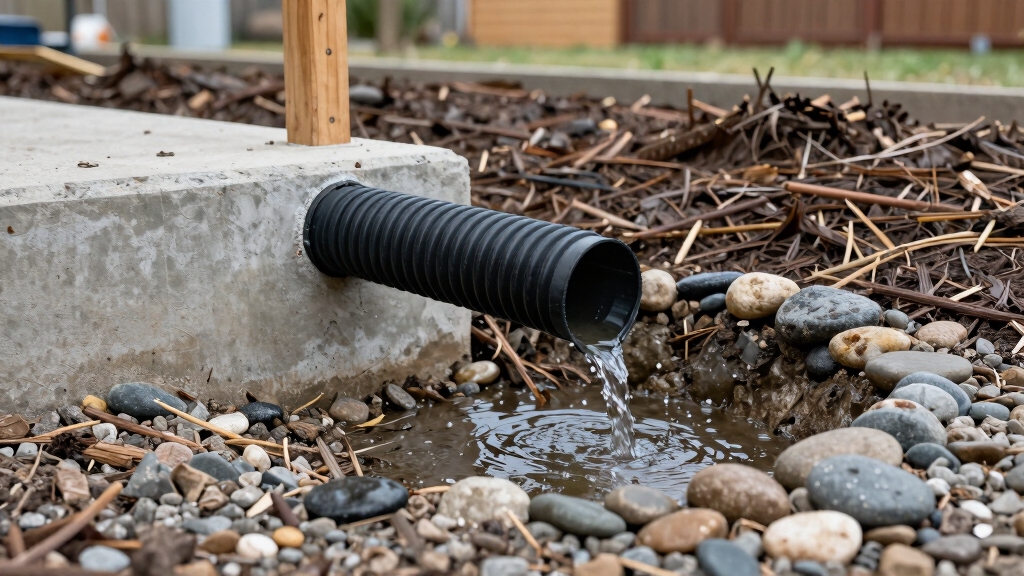
When installing a sump pump discharge pipe, extending it sufficiently far from the foundation is essential to prevent water from seeping back and causing basement flooding.
Generally, the discharge pipe should extend at least 10 feet away from your foundation. This distance helps guarantee water disperses safely without saturating the soil near your home.
You should also consider local codes and terrain slope to optimize discharge effectiveness.
| Distance from Foundation | Purpose |
|---|---|
| 5 feet | Minimum to reduce immediate seepage |
| 10 feet | Recommended for most installations |
| 15 feet | Ideal for flat or poor-draining soil |
| 20+ feet | Required when discharging to public drains or steep slopes |
How Sump Pit Design Ensures Efficient Water Collection?
Extending the discharge pipe far from your foundation effectively moves water away, but the sump pit itself plays a key role in managing how that water enters the system.
A well-designed sump pit collects water efficiently, preventing foundation flooding and guaranteeing your pump activates only when needed.
You’ll want a pit that meets these criteria:
- Depth of 18-24 inches with a sturdy plastic or concrete liner
- Minimum inside diameter of 18 inches to accommodate pump and water volume
- Liner perforated with about 100 holes, roughly 3/8-inch wide, for groundwater entry
- Capacity of 15-25 gallons to hold sufficient water before pumping
- Inlet sized for 4-inch drainpipes connecting perimeter drains or slab leaks
This design guarantees reliable water collection, smooth pump operation, and foundation protection.
Ensuring Your Sump Pump Discharge Meets Local Codes
Although sump pump discharge may seem straightforward, adhering to local codes is essential to guarantee safety, prevent property damage, and avoid fines.
You need to verify approved discharge locations, such as storm drains or downhill slopes, ensuring water doesn’t flow onto neighboring properties or public sidewalks.
Use durable PVC pipes sized and sloped according to code, typically 1.5-inch Schedule 40, to direct water away from the foundation efficiently.
Install a check valve on the discharge line to prevent backflow, as required.
Also, confirm whether permits or inspections are necessary before installation.
Avoid discharging into sewer systems unless explicitly allowed.
Troubleshooting Common Sump Pump Discharge Problems
After making certain your sump pump discharge complies with local codes, the next step is to address common problems that can hinder proper water removal.
Troubleshooting these issues helps maintain system efficiency and prevents basement flooding. Focus on the discharge pipe, check valve, and pump operation for quick diagnosis.
Effective troubleshooting ensures sump pump efficiency and protects your basement from flooding.
Inspect the discharge pipe for clogs or ice blockages that restrict flow.
Verify the check valve functions to prevent backflow into the pit.
Confirm the discharge pipe slope directs water away from the foundation.
Check for leaks or loose fittings causing water loss or pressure drop.
Test the float switch mechanism to make certain the pump activates at the correct water level.
Addressing these points promptly preserves your sump pump’s performance and safeguards your home’s foundation.
Frequently Asked Questions
How Often Should I Test My Sump Pump’s Discharge System?
You should test your sump pump’s discharge system at least twice a year, ideally before the rainy season and after.
Regular testing guarantees the pump activates correctly, the float switch moves freely, and the discharge pipe is clear with a functioning check valve.
Run water into the pit to simulate rising levels, watch the pump engage, and verify water flows away properly. Frequent checks prevent failures during critical times.
Can a Sump Pump Discharge Pipe Freeze in Winter?
Yes, your sump pump discharge pipe can freeze in winter, especially if temperatures drop below 32°F and water remains stagnant in the pipe.
Since discharge pipes are typically solid PVC and extend outdoors, freezing is a risk without proper insulation or slope to guarantee complete drainage.
You should slope the pipe downward and install a check valve to prevent backflow.
This reduces freeze risk and maintains efficient water flow during cold months.
What Maintenance Is Required for the Sump Pump Discharge Line?
You should regularly inspect the discharge line for clogs, cracks, or leaks to guarantee uninterrupted water flow.
Flush the pipe periodically to prevent sediment buildup and clear any ice blockages during winter.
Check that the check valve functions properly to avoid backflow.
Verify the pipe’s slope remains adequate for drainage.
Also, make sure the discharge endpoint stays clear of debris and that all fittings remain tightly connected to prevent leaks or damage.
Are Sump Pump Discharge Locations Affected by Neighborhood Regulations?
Think of your sump pump’s discharge as a river seeking permission to flow.
Yes, neighborhood regulations often govern where that water can go.
You’ll need to check local codes because some areas restrict discharge to prevent flooding or contamination.
You might’ve to direct water to storm drains, approved slopes, or soakaways.
Following these rules avoids fines and guarantees your system works efficiently without causing issues for neighbors or the environment.
How Do I Know if My Sump Pump Discharge Pipe Is Clogged?
You’ll know your sump pump discharge pipe is clogged if water pools around your foundation or basement floor, and your pump runs longer than usual without effectively removing water.
Listen for unusual noises like struggling or sputtering sounds during pump operation.
Inspect the discharge pipe for visible blockages or ice buildup.
Also, check the check valve for trapped debris.
Regular maintenance and clearing debris guarantee proper flow and prevent clogs.
Protect Your Foundation the Smart, Code-Compliant Way
You might worry that directing your sump pump discharge far from your foundation could cause water pooling elsewhere, but proper grading and pipe placement prevent this issue effectively.
By ensuring your discharge pipe extends at least 10 feet away and follows local codes, you protect your home’s foundation without creating new problems. With the right materials, check valves, and sump pit design, you’ll keep water flowing away efficiently and safeguard your basement from flooding.