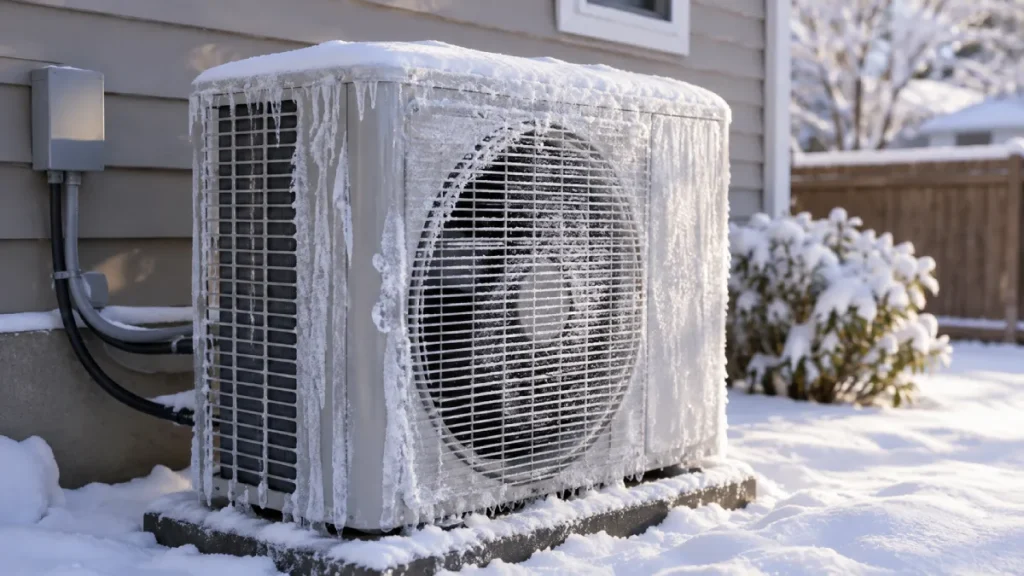
To unfreeze your heat pump, first turn off the system and cut power at the breaker to guarantee safety.
Gently remove loose snow with a soft broom.
Then thaw ice using warm water, never boiling, or let it melt naturally.
Avoid sharp tools, heat guns, or high-pressure sprays that can damage parts.
Once thawed, restore power and monitor the unit to verify proper defrost cycles and efficient operation.
Understanding these steps helps prevent damage and improves performance.
Key Takeaways
- Turn off the heat pump and shut off power at the breaker before beginning the thawing process for safety.
- Gently remove loose snow and ice with a soft broom to restore airflow without damaging the unit.
- Use warm or lukewarm water poured slowly from top to bottom to melt ice gradually; avoid boiling water or sharp tools.
- Allow several hours for complete thawing and ensure the outdoor coil is fully clear and dry before restarting.
- After thawing, restore power, reset thermostat to heating mode, and monitor the unit for proper defrost cycle operation.
Turning Off Your Heat Pump Safely Before Thawing

Before you begin thawing your heat pump, make sure to power down the system completely.
Start by setting your thermostat to Off or Emergency Heat mode to prevent the unit from running.
Begin by switching your thermostat to Off or Emergency Heat to stop the heat pump from operating.
Then, shut off power at the breaker or disconnect switch for enhanced safety during manual thawing.
Avoid operating the heat pump while ice remains on the unit, as this can cause further damage.
Keep backup heating available if your outdoor unit is frozen solid, guaranteeing your home stays warm during the process.
Whenever possible, wait for the heat pump’s automatic defrost cycle to clear frost naturally, as this reduces the risk of damage.
These precautions guarantee a safe and effective start to your thawing procedure.
Additionally, be aware that heat pump operation can produce noise during defrost cycles, which is normal and usually temporary.
Clearing Snow and Ice From Your Heat Pump’s Outdoor Unit
To keep your heat pump running smoothly, it’s important to start by clearing away any snow, leaves, and debris around the outdoor unit. This helps maintain good airflow.
Next, grab a soft broom to gently brush off any loose ice. Just be careful not to damage the coils while you’re at it!
And remember, it’s best to avoid running the system until all that ice has melted away.
When it comes to thawing, try pouring warm water gently from the top down. Just give it some time to melt naturally whenever you can.
It’s the best way to ensure everything stays in good shape!
Additionally, maintaining the outdoor unit above 32 degrees Fahrenheit helps prevent freezing and potential damage during cold weather.
Clearing Debris Safely
When you clear debris from your heat pump’s outdoor unit, make sure to remove snow, leaves, mulch, and any other obstructions that can block airflow.
Start by turning off the system at the thermostat and breaker to ensure safety.
Use a soft broom or brush to gently clear loose snow and debris without damaging delicate fins or coils.
Check the base and coil area thoroughly to confirm nothing restricts air intake or drainage.
Avoid using sharp tools or excessive force that could harm components.
Maintaining clear airflow prevents frost from building up quickly and supports efficient operation.
After clearing, inspect the area regularly for recurring debris accumulation.
Persistent blockage may indicate drainage or placement issues that need addressing to prevent future freeze-ups.
Regular checks on the condensate pan can help detect issues early and prevent water leakage caused by ice build-up.
Thawing Methods Explained
In dealing with ice buildup on your heat pump’s outdoor unit, employing safe thawing methods is indispensable to prevent damage while restoring functionality.
First, turn off the system and shut off power at the breaker to guarantee safety. Avoid running the heat pump during thawing.
Remove loose snow and ice gently with a soft broom to clear airflow. Use warm or lukewarm water to melt ice gradually, pouring it carefully over the coils from top down.
Never use boiling water, sharp tools, or heat guns, as these can damage fins and tubing. Allow several hours for complete thawing if ice is substantial.
Afterward, restore power and monitor the unit for frost recurrence. Following these steps helps maintain your heat pump’s performance and prevents mechanical issues.
Additionally, ensure the unit has adequate clearance requirements to promote proper airflow and prevent future ice buildup.
Safe Methods to Thaw Frozen Heat Pump Coils
To thaw frozen heat pump coils, it’s best to start with a natural approach. Just let the ice melt on its own when temperatures rise above freezing.
If you’re in a hurry, you can gently pour warm or lukewarm water over the coils. Just steer clear of boiling water, as that could cause thermal shock and potentially damage the system.
And remember, no sharp tools or high-heat devices! They can really harm the delicate components of your unit. Taking a little extra care goes a long way in keeping your heat pump running smoothly.
Additionally, ensuring proper insulation and heat tape around your system can help prevent freezing and reduce energy loss during cold weather.
Natural Thawing Techniques
Frequently, allowing your heat pump coils to thaw naturally proves the safest and most effective approach to clearing ice buildup.
Start by turning off the system and cutting power at the breaker to prevent damage or injury.
Clear snow, leaves, and debris from around the unit to guarantee proper airflow and prevent further frost accumulation.
Avoid using tools or heat sources that could harm the coils.
If outdoor temperatures rise above freezing, ice will gradually melt without intervention.
Monitor the thawing process carefully, giving the ice several hours to clear completely.
Natural thawing minimizes the risk of mechanical damage and supports the unit’s self-defrost cycle.
Only resume operation once all ice has melted and the coils are fully dry to guarantee safe and efficient function.
Be aware that melting ice on outdoor coils can trigger intermittent gurgling and trickling noises due to moisture effects.
Using Warm Water Safely
Applying warm water carefully can accelerate thawing frozen heat pump coils without risking damage. To do this safely, follow these steps:
- Use warm or lukewarm water, never boiling, to avoid thermal shock that can warp or crack coils.
- Pour water gently from the top down, allowing it to melt ice gradually without forcing damage.
- Turn off the heat pump and cut power at the breaker before applying water to prevent electrical hazards.
- Allow several hours for thawing if ice is thick. Avoid premature system restart until fully clear.
Ensure the area has adequate fresh air supply when thawing to maintain proper system function and safety.
Avoiding Harmful Tools
While warm water can safely speed up thawing, certain tools and methods may cause irreversible damage to your heat pump’s delicate components. Avoid using sharp objects like screwdrivers or ice picks to chip ice, as they can puncture coils or bend fins.
Never apply boiling water or high-heat devices, which risk thermal shock and structural harm. Instead, rely on gentle techniques such as pouring lukewarm water or waiting for the system’s automatic defrost cycle.
Using devices with built-in automatic thermostat controls can help prevent freezing issues by maintaining a consistent temperature.
| Unsafe Tool/Method | Potential Damage | Recommended Alternative |
|---|---|---|
| Screwdriver/Ice pick | Coil puncture, fin damage | Lukewarm water application |
| Boiling water | Thermal shock to coils | Use warm water, not boiling |
| Heat gun/hair dryer | Overheating components | Allow natural thaw or fan mode |
| Hammer | Structural damage | Soft broom to remove snow |
| High-pressure spray | Fin deformation | Gentle water flow |
Common Mistakes to Avoid When Defrosting Your Heat Pump
If you want to protect your heat pump’s components and guarantee efficient operation, you must avoid common mistakes during defrosting.
Incorrect methods can damage the unit and reduce lifespan.
Here are key errors to watch for:
- Running the heat pump while ice remains. This strains components and wastes energy.
- Using boiling water or sharp tools. Thermal shock and physical damage to coils are risks.
- Neglecting to turn off power before thawing. This endangers you and the system.
- Ignoring blocked airflow. Debris around the unit causes rapid refreezing and inefficiency.
Additionally, regular maintenance and servicing are essential to prevent issues that can lead to freezing problems and reduce overall system efficiency.
Restarting and Troubleshooting Your Heat Pump After Thawing
Once the ice has fully melted and you’ve made sure the outdoor coil is clear, you can safely restore power and reset your thermostat to normal heating mode.
Monitor the unit closely for at least an hour to confirm it operates without refreezing. Check that the defrost cycle activates periodically in cold conditions to prevent ice buildup.
If frost reappears rapidly or the unit fails to heat efficiently, shut it down and inspect for airflow blockages, dirty filters, or mechanical faults.
Make certain drainage is clear to avoid water accumulation and refreezing. If problems persist, consult a professional technician to diagnose potential compressor or defrost system issues.
Restarting cautiously and troubleshooting promptly helps maintain your heat pump’s performance and longevity after thawing. Understanding the reliability and durability factors of your heat pump can also aid in preventing future issues.
Preventing Freeze-Ups and Maintaining Your Heat Pump
To minimize freeze-ups and maintain peak performance, you should regularly inspect and clean your heat pump’s components. Proper maintenance prevents costly repairs and guarantees efficient operation during cold months.
Regular inspection and cleaning of your heat pump ensure peak performance and prevent costly cold-weather repairs.
Focus on these critical tasks:
- Replace dirty air filters frequently to maintain airflow and reduce ice formation risk.
- Keep the outdoor unit elevated and clear from snow, leaves, and debris to avoid airflow obstruction.
- Assure proper drainage around the unit to prevent meltwater from refreezing on coils.
- Schedule professional inspections if defrost cycles fail or ice buildup recurs, signaling mechanical issues.
Consistent attention to these details protects your system and extends its lifespan. This reduces downtime caused by freeze-ups. Don’t ignore persistent frost—it’s a warning sign to act swiftly.
Frequently Asked Questions
How Often Should Professional Maintenance Be Scheduled for Heat Pumps in Cold Climates?
You should schedule professional maintenance for your heat pump at least once a year, ideally before the cold season starts.
In colder climates, biannual check-ups can help catch issues early and ensure the defrost cycle works correctly.
Regular inspections maintain efficiency, prevent freeze-ups, and extend equipment life.
Don’t wait for problems; proactive servicing keeps your system reliable and reduces costly repairs during freezing conditions.
Can Heat Pump Freeze-Ups Cause Long-Term Damage if Untreated?
Yes, severe freeze-ups can seriously sabotage your system. If you don’t address ice accumulation promptly, it can strain components, reduce efficiency, and cause compressor damage.
Prolonged frost blocks airflow, leading to overheating and potential mechanical failure. Neglecting freeze-ups risks costly repairs or even full unit replacement.
What Are the Signs of a Malfunctioning Defrost Sensor?
You’ll notice a malfunctioning defrost sensor if your heat pump frequently freezes despite defrost cycles, or if the unit runs defrost mode excessively without clearing ice.
Erratic temperature readings or failure to initiate defrost cycles also indicate sensor issues.
Additionally, a sudden rise in energy consumption and inconsistent heating performance can signal sensor malfunction.
If you observe these signs, have the sensor tested and replaced promptly to prevent damage.
Are There Specific Heat Pump Models Better Suited for Freezing Conditions?
When it comes to freezing conditions, some heat pump models are built like tanks. They handle icy weather better. You’ll want those with enhanced defrost cycles, variable-speed compressors, and cold-climate ratings.
Models from Mitsubishi’s Hyper-Heating line or Fujitsu’s Halcyon series are excellent choices. These units maintain efficiency and warmth even below freezing. Choosing a cold-climate heat pump guarantees reliable performance and reduces freeze-related issues in harsh winters.
How Does Humidity Affect Heat Pump Frost Buildup?
Humidity directly influences frost buildup on your heat pump by increasing moisture levels in the air.
When humid air contacts the cold outdoor coil, water vapor condenses and freezes, accelerating frost accumulation.
Higher humidity means more frequent and heavier frost, potentially reducing efficiency.
Managing humidity around the unit and ensuring proper airflow helps minimize frost formation.
This allows your heat pump’s defrost cycle to operate effectively and maintain peak performance in cold conditions.
Final Answer: How to Unfreeze Heat Pump Safely
You might worry that thawing your heat pump yourself could cause damage, but following safe, step-by-step methods protects your unit and restores function quickly.
By turning off the system, clearing ice carefully, and using approved thawing techniques, you avoid costly repairs while maintaining efficiency.
Regular maintenance and prompt action prevent future freeze-ups. Taking control now guarantees your heat pump runs smoothly and reliably throughout the cold season.