To remove calcium buildup, start by identifying white, chalky deposits on fixtures or pool surfaces.
Apply a mix of equal parts white vinegar and water, letting it soak for an hour to soften the scale.
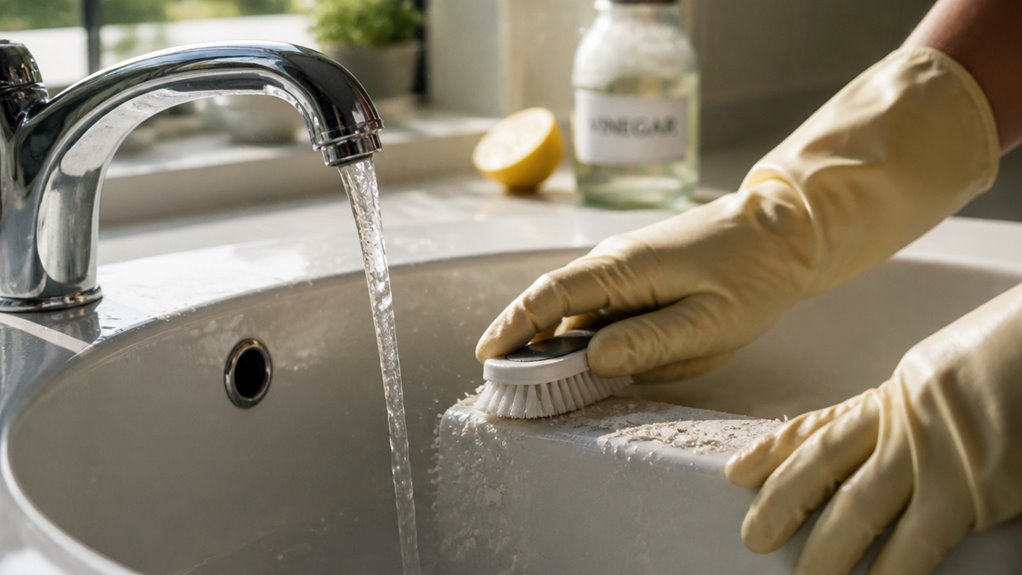
Use a soft brush or cloth to gently scrub, and a plastic scraper for stubborn spots.
For tougher deposits, safely use diluted muriatic acid with gloves and ventilation.
Keep water chemistry balanced to prevent recurrence.
You’ll find more detailed methods and prevention tips ahead.
Key Takeaways
- Apply equal parts white vinegar and water to calcium deposits, soak for an hour, then gently scrub with a soft brush or cloth.
- Use a plastic putty knife or scraper to carefully lift softened calcium buildup without scratching surfaces.
- For tougher buildup, apply diluted muriatic acid (1:10 ratio) with gloves and eye protection, then scrub gently and rinse thoroughly.
- Use a wet pumice stone or stiff brush on pool tiles to remove stubborn calcium scale effectively.
- Prevent buildup by regularly testing water chemistry and using water softeners or scale sequestering agents.
Identifying Calcium Buildup on Different Surfaces

When you spot white, chalky deposits on your fixtures or pool surfaces, you’re likely dealing with calcium buildup caused by hard water minerals.
White, chalky deposits on fixtures or pool surfaces usually indicate calcium buildup from hard water minerals.
This scale often forms where water evaporates, leaving calcium and magnesium behind. To identify it accurately, first check the surface type.
Porcelain, ceramic, stone, chrome, and pool tile all respond differently to cleaning. In toilets, deposits tend to accumulate inside the bowl and under-rim jets, requiring targeted attention.
For pools, elevated pH, alkalinity, and calcium levels encourage scale formation. Testing water chemistry is essential before treatment.
Proper assessment helps you choose an appropriate cleaning approach and prevents damage. Always verify the buildup’s texture and location to guarantee effective, surface-safe removal.
To remove calcium buildup effectively, consider using white vinegar as a natural and mild acid cleaner to dissolve deposits without damaging surfaces.
How to Use Vinegar and Tools to Remove Calcium Scale?
To tackle calcium scale effectively, start by applying a mixture of equal parts white vinegar and water directly onto the affected area. Allow it to soak for at least an hour to soften the mineral deposits.
After soaking, follow these steps:
- Use a soft cloth, sponge, or a soft nylon brush to gently scrub the softened scale.
- For toilets, focus on under-rim jets and bowl surfaces with a firm-bristled brush after vinegar treatment.
- Lift any remaining buildup with a plastic putty knife or scraper to avoid surface scratches.
- For pool tiles, gently scrub with a wet pumice stone or a stiff pool brush to remove stubborn scale.
This method safely dissolves and loosens calcium deposits without damaging delicate surfaces.
Using Acidic Cleaners for Tough Calcium Deposits
Although vinegar works well for many calcium deposits, tougher buildup often requires stronger acidic cleaners like diluted muriatic acid or sulfamic acid to effectively break down scale.
For stubborn calcium buildup, stronger acids like diluted muriatic or sulfamic acid are more effective than vinegar.
When using these acids, always dilute properly; muriatic acid typically at a 1:10 ratio. Apply carefully to the affected area.
Wear gloves and eye protection, and ensure good ventilation. After the acid has softened the deposits, scrub gently with a soft brush or sponge to avoid damaging surfaces.
Rinse thoroughly with water to remove all chemical residue. For stone surfaces, follow with a pH-neutral cleaner before the final rinse to protect the finish.
Avoid using harsh acids on delicate materials and never mix acids with other cleaners. This method targets stubborn calcium buildup that vinegar alone can’t dissolve efficiently.
Regular maintenance helps prevent sediment buildup that can narrow flow paths and cause pressure drops in water systems.
Preventing Calcium Buildup With Water Treatment Tips
By maintaining balanced water chemistry, you can markedly reduce calcium buildup before it starts.
Proper water treatment prevents scale from forming on surfaces, saving you time and effort later.
To keep calcium buildup at bay, follow these key steps:
- Test your water regularly to monitor pH, alkalinity, and calcium hardness levels.
- Use a water softener to reduce calcium and magnesium concentrations in your supply.
- Add liquid scale removers or sequestering agents to your pool system as recommended.
- Run your pool pump for at least 48 hours after treatment to circulate chemicals effectively.
Choosing a resin with high ion exchange capacity can improve the efficiency of your water softener and further reduce hardness minerals.
Implementing these measures helps maintain clean surfaces, improves water quality, and extends the life of your fixtures and pool equipment.
Staying proactive is your best defense against stubborn calcium deposits.
Maintaining Balanced Water Chemistry to Avoid Scale
Keeping your water chemistry in balance plays a major role in preventing calcium scale from forming on surfaces.
You should regularly test your water’s pH, alkalinity, and calcium hardness, aiming for a pH between 7.2 and 7.6 and total alkalinity around 60–80 ppm.
Elevated levels encourage scale buildup, making removal tougher.
In pools, adjust water chemistry before applying any scale treatment to enhance effectiveness.
Using a liquid scale remover or sequestering agent can help control minerals when circulated through the system.
It’s vital to run your pool pump for at least 48 hours afterward.
For whole-house water, installing a water softener reduces calcium and magnesium, preventing buildup across fixtures.
Consistent monitoring and adjustments keep your water balanced and minimize calcium deposits long-term.
Consider choosing a water softener with digital control valves to optimize regeneration cycles and reduce salt and water waste.
Frequently Asked Questions
Can Calcium Buildup Damage Plumbing Pipes Over Time?
Yes, calcium buildup can damage your plumbing pipes over time. It creates scale deposits that narrow pipe interiors, reducing water flow and increasing pressure.
This strain can lead to leaks or pipe bursts. You’ll also notice decreased efficiency in appliances like water heaters.
Regularly testing your water hardness and treating it, along with removing scale deposits promptly, helps protect your pipes and maintain your system’s longevity and performance.
Is Calcium Buildup Harmful to Health if Ingested?
You generally won’t harm your health by ingesting small amounts of calcium buildup, as calcium is an essential mineral.
However, consuming large quantities of scale residues, especially from contaminated or untreated water, might cause digestive discomfort or introduce harmful bacteria.
It’s wise to prevent buildup in your water system and avoid drinking visibly scaled water.
Regular maintenance and water treatment help keep your water safe and reduce any potential health risks.
How Often Should Calcium Buildup Removal Be Performed?
You should remove calcium buildup as soon as you notice visible deposits forming to prevent damage and maintain surfaces.
For pools, regular monthly checks and adjustments of water chemistry help minimize frequent scale removal. Toilets and faucets might need cleaning every few weeks, especially in hard water areas.
Staying proactive with maintenance and water treatment reduces heavy buildup, so your cleaning efforts remain effective and less time-consuming over time.
Are There Eco-Friendly Alternatives to Vinegar for Calcium Removal?
Yes, you can use lemon juice or citric acid as eco-friendly alternatives to vinegar for calcium removal. Both are natural acids that effectively dissolve mineral deposits without harsh chemicals.
You’ll apply them similarly, diluted if needed, left to sit, then scrubbed gently. Baking soda mixed with water can also help as a mild abrasive.
These options are safe and biodegradable, making them good choices for environmentally conscious cleaning.
Can Calcium Buildup Affect Water Heater Efficiency?
Yes, calcium buildup can reduce your water heater’s efficiency by insulating the heating element. This makes it work harder to heat water, leading to longer heating times, increased energy use, and higher utility bills.
You should regularly flush your water heater to remove scale deposits, especially if you have hard water. Maintaining proper water chemistry and considering a water softener can also help prevent significant calcium accumulation inside the unit.
Keep Calcium Buildup Away for Good
You might be surprised to learn that nearly 85% of homeowners face calcium buildup issues at some point.
By regularly using vinegar or acidic cleaners and maintaining balanced water chemistry, you can prevent stubborn scale from damaging your surfaces.
Taking simple steps like water treatment and routine cleaning not only saves you money but also extends the life of your fixtures.
Stay proactive, and you’ll keep calcium buildup under control with minimal effort.