You can’t assume public drinking fountains are filtered, as many older or basic models deliver untreated municipal water without built-in filtration.
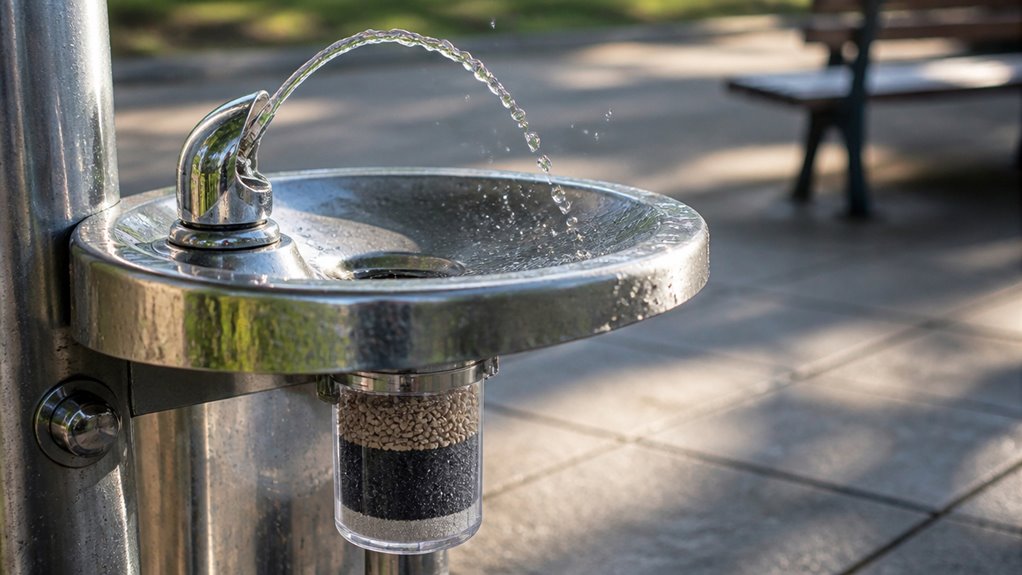
Filtration depends on factors like fountain type, location, and age. Newer or bottle-filling stations often include activated carbon filters to improve taste and odor.
Certifications like NSF/ANSI marks help verify filter claims, but visual checks alone aren’t reliable. Understanding these details clarifies water safety and how filtration impacts quality, offering important insights ahead.
Key Takeaways
- Most public drinking fountains are unfiltered unless specifically designed with built-in filtration systems or newer models like bottle-filling stations.
- Filtration presence depends on fountain age, model, location, and facility type, with newer installations more likely filtered.
- Visual inspection alone cannot confirm filtration; look for labels, certifications, or manufacturer specifications to verify.
- Filtered fountains often use activated carbon to reduce taste and odor but may not remove all contaminants or pathogens.
- Certification marks like NSF/ANSI help verify filtration claims and performance but do not guarantee complete contaminant removal.
Are Public Drinking Fountains Typically Filtered?

Public drinking fountains aren’t typically filtered unless explicitly designed to be.
Public drinking fountains usually provide unfiltered water unless they are specifically built with filtration systems.
You’ll find that filtration depends largely on the fountain’s model, age, and location. Newer installations, especially bottle-filling stations, often include built-in filters.
Many older or basic public fountains dispense untreated municipal water. The presence of a fountain doesn’t guarantee filtered water at the tap.
Facility type also influences filtration. Schools, gyms, malls, and other public spaces vary widely in whether their fountains are filtered.
Since filtration technology and maintenance practices differ, you can’t assume consistent water quality across all public fountains.
To determine if a fountain is filtered, check for manufacturer information, facility signage, or visible filter components rather than relying on appearance or location alone.
Whole home filtration systems use multi-stage filtration and advanced media to improve water quality at all taps, which is often not the case for public drinking fountains without dedicated filtration systems.
What Risks Come From Unfiltered Drinking Fountains?
Knowing whether a drinking fountain is filtered matters because unfiltered fountains can pose several water quality risks.
When fountains lack filtration, you risk exposure to bacteria, viruses, and chemical pollutants such as lead, especially in older plumbing systems.
Stagnant water in intermittently used fountains encourages bacterial growth, increasing contamination potential.
Additionally, unfiltered water may contain chlorine and other compounds impacting taste and odor, while emerging contaminants like PFAS remain unaddressed.
Waterborne pathogens can also spread through atomized droplets from the fountain’s spray.
Without proper filtration or maintenance, these risks persist regardless of municipal water quality standards.
Consequently, relying on unfiltered fountains can compromise water safety and quality, emphasizing the importance of verifying filtration presence to protect your health.
Heavy rain and runoff may introduce microbial contamination that further compromises water sources connected to drinking fountains.
How Filter Types Affect Water Quality?
Understanding how different filter types work is key to evaluating the water quality you get from a drinking fountain.
Sediment filters remove large particles but don’t eliminate microbes or improve taste.
Activated carbon filters reduce chlorine taste and odor; however, they won’t remove bacteria or viruses.
UV purification, though rare in fountains, can inactivate pathogens but isn’t a common feature.
Most fountain filters focus on taste, odor, and particulate reduction rather than full sterilization.
Filter performance varies by manufacturer and model, so you should consider the specific filter type when evaluating water safety and quality.
Keep in mind, a fountain labeled as filtered may still leave residual contaminants if the filter’s scope is limited or maintenance is neglected.
For comprehensive contaminant removal, multi-stage systems combining activated carbon with UV or other media are often necessary to ensure improved water safety and taste, as seen in multi-stage filtration systems.
Which Certifications Matter for Fountain Filters?
When you’re checking out fountain filters, it’s really important to look for NSF/ANSI certifications. These certifications are your assurance that the filter can actually remove specific contaminants as claimed.
For instance, standards like NSF/ANSI 42 and 53 are especially relevant. They focus on reducing things like taste and odor, as well as health-related contaminants. This directly impacts the safety of your drinking water, which is something we all care about, right?
Additionally, understanding the specific contaminants present in your water through testing helps ensure you choose the right filter for your needs.
NSF/ANSI Standards Overview
Because drinking fountain filtration varies widely, certification standards like NSF/ANSI play a crucial role in verifying filter performance claims.
You’ll find key NSF/ANSI standards relevant to fountain filters include 42, 53, 372, and 401. Standard 42 focuses on aesthetic effects, such as reducing chlorine taste and odor, while 53 targets health-related contaminants like lead and cysts.
Standard 372 guarantees compliance with lead-free material requirements, and 401 addresses emerging contaminants like pharmaceuticals. When a filter carries these certifications, you can objectively assess which contaminants it reduces and to what extent.
Keep in mind, certifications don’t guarantee complete removal but establish verified reduction capabilities. Understanding these standards helps you make informed choices about which fountains truly offer filtered water based on evidence-backed criteria.
Many effective systems that meet these certifications also preserve beneficial minerals like calcium and magnesium to maintain balanced taste and water quality.
Certification Impact on Safety
NSF/ANSI certifications play a significant role in determining the safety and reliability of drinking fountain filters. They offer measurable standards for contaminant reduction.
When you rely on certified filters, you guarantee tested performance against contaminants like lead, cysts, and chlorine. Understanding which certifications matter helps you evaluate a fountain’s filtration quality objectively.
| Certification | Focus Area |
|---|---|
| NSF/ANSI 42 | Aesthetic effects (taste, odor) |
| NSF/ANSI 53 | Health effects (lead, cysts) |
| NSF/ANSI 372 | Lead content in materials |
| NSF/ANSI 401 | Emerging contaminants (PFAS, pharmaceuticals) |
Many whole-house water filtration systems incorporate multi-stage filtration to effectively reduce lead and other harmful contaminants from water sources.
How Filtration Improves Taste, Safety, and Odor?
Filtration enhances drinking fountain water by targeting specific contaminants that affect taste, safety, and odor.
When you rely on filtered fountains, you reduce exposure to substances that degrade water quality and consumer experience.
Specifically, filtration can:
Remove chlorine and related chemicals that cause unpleasant taste and smell.
Reduce sediment and particulate matter for clearer water.
Lower lead and other heavy metals, improving safety.
Limit bacterial growth by removing some microbes or preventing stagnation.
Decrease emerging contaminants like PFAS, depending on filter type.
Regular maintenance and timely replacement of filters ensure consistent filtration efficiency and water quality.
How to Tell If a Public Drinking Fountain Is Filtered?
Understanding how filtration enhances water quality leads to the practical question: how can you tell if a public drinking fountain is actually filtered?
First, look for visible labels or certifications like NSF/ANSI marks indicating filtration standards compliance. Many filtered fountains, especially newer models and bottle-filling stations, display this information clearly.
You can also inquire with facility management about their water systems and maintenance schedules. Visual inspection alone isn’t reliable; some fountains may look modern but lack filtration.
Remember, unfiltered fountains deliver municipal water without point-of-use treatment, which might contain contaminants. Confirming filtration status requires evidence, such as manufacturer specifications or filter replacement records.
Relying on explicit filter presence and certification guarantees you assess water safety objectively rather than assuming filtration based on appearance or location.
Additionally, understanding the role of activated carbon filtration can help you recognize the common technology used to reduce chlorine and improve taste in many filtered drinking fountains.
Frequently Asked Questions
How Often Should Drinking Fountain Filters Be Replaced or Maintained?
You should replace or maintain drinking fountain filters according to the manufacturer’s guidelines, typically every 3 to 6 months.
Usage frequency and water quality affect this schedule, so high-traffic areas might need more frequent changes.
Neglecting maintenance reduces filter effectiveness and risks contaminant buildup.
Regularly check for filter status indicators or facility reports to guarantee peak performance.
Proper upkeep preserves water quality and safety, preventing microbial growth and chemical exposure.
Are Bottle-Filling Stations Safer Than Traditional Drinking Fountains?
Think of bottle-filling stations as a cleaner stream flowing beside an older, murkier river. Yes, they’re generally safer.
You’ll find more integrated filtration systems in bottle fillers, reducing contaminants like chlorine and particulates. Still, safety hinges on regular maintenance and filter changes.
Traditional fountains often lack these filters, exposing you to microbes or metals. So, bottle fillers usually offer better protection, but only if the system’s well-maintained and certified.
Can Drinking Fountains Remove Emerging Contaminants Like PFAS?
Drinking fountains generally can’t remove emerging contaminants like PFAS unless they’ve specialized filtration.
Standard filters focus on sediment, chlorine taste, or particulates but don’t target PFAS effectively.
Some advanced systems with certified filters can reduce these chemicals, but they’re rare in public fountains.
You should check if the fountain uses NSF/ANSI 401-certified filters for emerging contaminants.
Make certain proper maintenance is in place to rely on any PFAS removal claims.
Do UV Purification Systems Exist for Public Drinking Fountains?
Yes, UV purification systems do exist for public drinking fountains, but they’re quite uncommon.
UV technology can effectively inactivate bacteria and viruses, offering an added disinfection layer.
However, most public fountains rely on sediment or carbon filters rather than UV.
If you want a fountain with UV purification, you’ll need to check the specific model or facility, as it’s not a standard feature and often requires specialized installation and maintenance.
How Does Stagnant Water Affect Bacteria Growth in Fountains?
Stagnant water in fountains creates a breeding ground for bacteria, contrasting with the clean image you expect from drinking water.
When water sits unused, it loses residual disinfectants, allowing microbes to thrive.
This increases your risk of exposure to harmful bacteria and biofilms.
So, even if the water source is safe, stagnant conditions within the fountain can compromise water quality.
Making regular flushing and maintenance essential to reduce bacterial growth effectively.
Final Thoughts on Are Drinking Fountains Filtered
You should know that only about 30% of public drinking fountains use filtration systems. This markedly impacts water quality and safety.
Understanding the types of filters and their certifications helps you make informed choices about your drinking water. Filtration improves taste and odor while reducing harmful contaminants.
By recognizing these factors, you can better assess the risks and benefits of using public fountains. This way, you can prioritize your health accordingly.