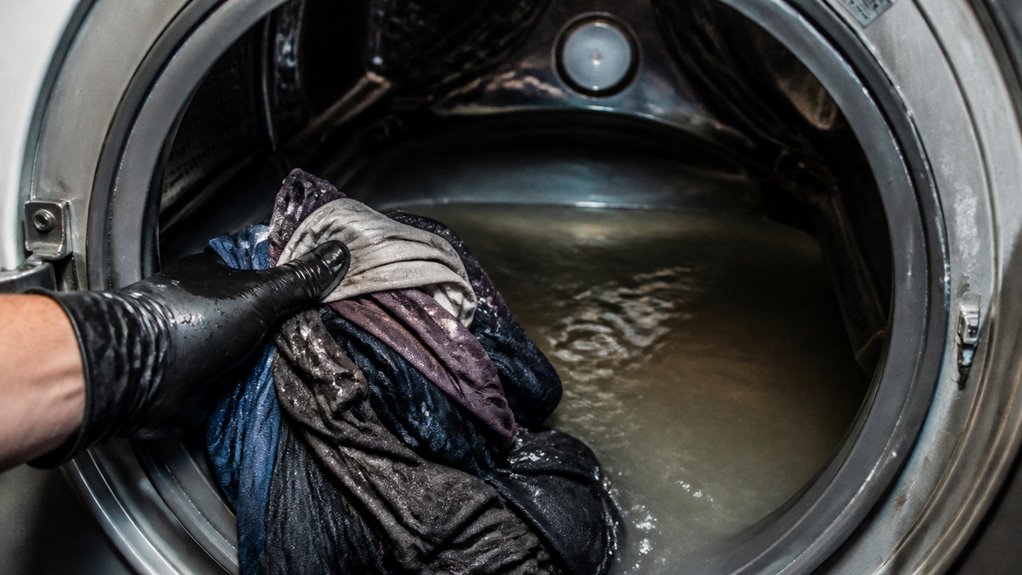
You have standing water in your washing machine likely because the drain hose is clogged, kinked, or inserted too far into the standpipe, causing siphoning or backup.
A blocked pump filter or jammed drain pump may also prevent water expulsion. Faulty lid or door switches, unbalanced loads, or control issues can stop the drain cycle too.
Improper standpipe height or household drain blockages can contribute as well. Exploring these factors further will help you identify effective solutions.
Key Takeaways
- Standing water often results from clogged or kinked drain hoses obstructing water flow during draining.
- A blocked pump filter or coin trap can prevent proper water drainage, causing water to remain in the tub.
- Failed or jammed drain pumps may be unable to expel water, leading to standing water inside the washer.
- Improperly positioned or faulty lid/door switches can halt the drain cycle, leaving water inside the machine.
- Incorrect standpipe height or clogged household drains can cause water backup into the washing machine.
Why Is My Washer Holding Water? Common Drainage Problems Explained?

When your washer holds water after a cycle, it usually points to a drainage issue you need to fix. Common causes include a clogged drain hose, blocked pump filter, or a failed drain pump.
Check the drain hose for kinks, sharp bends, or debris buildup that could obstruct water flow. Inspect the pump filter for lint, coins, or fabric pieces that might be blocking water passage.
If the drain pump fails or jams, it won’t effectively push water out, leaving standing water behind. Additionally, make sure the lid or door switches work correctly, as some washers stop draining when they detect an open lid.
Finally, control issues or unbalanced loads can interrupt the drain cycle, causing water to remain in the drum. Identifying these problems narrows down your repair steps. In some cases, persistent drainage problems may indicate blockages in the basement drain that affect overall water flow in your home system.
Fixing a Clogged Drain Hose to Stop Standing Water
First things first, take a look at your drain hose. Check for any kinks, bends, or even visible blockages like lint and debris. You’d be surprised at what can build up in there! If you spot any clogs, grab a flexible brush or some compressed air and clear them out carefully.
Once you’ve done that, don’t forget to straighten the hose. This little step is super important because it helps ensure proper water flow and keeps those pesky backups from happening in the future. Easy, right?
Also, remember to wear gloves and eye protection when handling tools or chemicals to stay safe while cleaning.
Identifying Hose Blockages
Inspect the drain hose carefully to identify any kinks, bends, or visible blockages that could be preventing water from exiting the washing machine.
Check for sharp bends or crushing that restrict flow. Look closely for lint, fabric pieces, coins, or detergent residue lodged inside or around the hose openings.
In colder conditions, make sure the hose isn’t frozen solid, which stops drainage entirely. Verify the hose isn’t inserted too far into the standpipe, as this can cause siphoning or backup.
Examine the hose length and routing to confirm it follows manufacturer guidelines without excessive slack. By spotting these issues early, you can pinpoint hose-related drainage problems accurately before moving on to clearing or straightening steps.
Proper visual inspection is key to diagnosing standing water caused by hose blockages.
Using a drain hose with a corrugated design can help prevent kinking and ensure consistent water flow during drainage.
Clearing And Straightening Hose
Clear any debris or buildup from the drain hose to restore proper water flow and prevent standing water in your washing machine.
Detach the hose carefully, then inspect it for clogs caused by lint, fabric scraps, or detergent residue.
Flush the hose with water or use a flexible brush to dislodge blockages.
Check for sharp bends, kinks, or crushing that restrict flow.
Straighten any bends and reposition the hose to guarantee a smooth, downward slope toward the drain.
Avoid inserting the hose too far into the standpipe, which can cause backflow.
In colder environments, verify the hose isn’t frozen.
After clearing and straightening, reconnect the hose securely and run a drain cycle to confirm water flows freely.
Regular maintenance prevents buildup and reduces drainage issues.
When using extension cords for any connected equipment, ensure you select one with the proper wire gauge to avoid power loss or damage.
Cleaning the Washer’s Drain Pump Filter and Coin Trap
When dealing with standing water in your washing machine, cleaning the drain pump filter and coin trap is often a critical step.
Start by unplugging the machine and locating the filter access panel, usually near the bottom front.
Place a shallow pan or towel underneath to catch residual water.
Unscrew or unclip the filter cover and carefully remove the filter.
Clear out lint, fabric softener buildup, pet hair, coins, and other debris.
If your machine has a coin trap, clean it thoroughly as well.
After cleaning, reinstall the filter securely to prevent leaks.
Regularly maintaining these components guarantees proper drainage and prevents clogs that cause water to remain in the drum.
This simple task often restores normal function without needing further repairs.
If you notice persistent leaks or issues, checking the condition of the shut off valve may also be necessary.
Diagnosing and Repairing a Jammed or Failed Drain Pump
After cleaning the drain pump filter and coin trap, you’ll want to verify whether the drain pump itself is functioning properly.
Start by unplugging the washer. Then access the pump, usually located behind a panel at the front or bottom.
Manually rotate the pump impeller; it should turn freely without resistance. If it’s jammed, inspect for debris like coins, fabric, or small objects and remove them.
If the impeller spins freely but the washer still won’t drain, test the pump motor with a multimeter for continuity.
A failed motor or broken impeller requires pump replacement. Reinstall the pump securely and check all electrical connections.
After reassembly, run a drain cycle to confirm the issue is resolved and water clears efficiently from the drum.
Always ensure to turn off the circuit breaker before beginning any repair work to prevent electric shocks and accidents.
How Lid and Door Issues Can Stop Your Washer From Draining?
Although it may seem unrelated, lid and door mechanisms play a critical role in your washer’s ability to drain properly.
Top-load washers rely on a lid switch that signals the machine to start draining. If the switch fails or the lid isn’t fully closed, the washer won’t drain to prevent safety hazards.
Similarly, front-load washers use door latches or lock sensors that must engage correctly for the drain cycle to proceed. If these components malfunction or the door isn’t securely closed, the washer interprets this as an open state, pausing or stopping drainage.
Before deeper troubleshooting, always check that the lid or door closes firmly and the switches function correctly.
Fixing or replacing faulty lid or door switches often restores proper drainage and prevents standing water in the drum.
Regular inspection and maintenance of these components can extend the washer’s lifespan and ensure reliable operation, similar to how proper cleaning and care extend the life of a toilet auger.
Why Cycle Interruptions Cause Washer Drain Problems?
Checking lid and door mechanisms is a key step, but cycle interruptions can also cause your washer to stop draining properly.
An unbalanced load may cause the washer to pause or skip the spin and drain stages, leaving water behind.
An unbalanced load can halt spin and drain cycles, resulting in leftover water in the washer.
Faulty timers, control boards, or programming errors can prematurely interrupt the cycle before drainage completes.
Low-spin settings or paused cycles often result in standing water without any mechanical faults.
Your machine’s sensors may halt the final drain if load distribution is uneven, mistaking it for a safety risk.
These control-related interruptions mimic drain problems even when the pump and hoses are fully functional.
To address this, make sure balanced loads, inspect control components, and verify cycle settings.
This will help prevent unnecessary water retention in your washer.
If these steps do not resolve the issue, it may be necessary to inspect or replace the float switch to ensure proper pump activation.
How Your Home’s Drain and Installation Affect Washer Water Levels?
It’s really important to keep your household drain clear of any blockages. If it’s not, you might end up with water backing up into your washer, and nobody wants that mess!
Also, make sure the standpipe is at the right height. If it’s too low or too high, it can really mess with the drainage process.
Oh, and don’t forget to check the drain hose too! It should be installed properly—no kinks or pushing it too far into the standpipe. That way, you’ll keep the water flowing smoothly.
Regular maintenance like cleaning the drain hose and P-trap can prevent blockages causing backups and keep your washer draining properly.
Household Drainage Blockages
When water fails to drain properly from your washing machine, the issue might lie beyond the appliance in your home’s drainage system.
Household drain blockages or improper installation can cause water to back up into the washer, resulting in standing water. Make certain the standpipe and drain line are free of obstructions and sized correctly to handle discharge flow.
| Cause | Effect on Washer Drainage |
|---|---|
| Clogged household drain | Water backs up into washer |
| Narrow or blocked standpipe | Slow or no drainage |
| Improper drain height | Water cannot exit washer |
| Partial drain pipe blockage | Residual water remains in tub |
Regularly inspect your home’s drain for buildup or damage to maintain proper washer water levels. Improper drainage can also contribute to clogging and damage in related systems, causing further complications.
Standpipe Height Importance
Although a properly installed washing machine drain hose is essential, the height of the standpipe plays a critical role in guaranteeing effective water discharge.
If the standpipe is too low, water may back up into the washer, causing standing water. Conversely, if it’s too high, the pump must work harder, increasing wear and reducing efficiency.
To optimize drainage:
- Guarantee the standpipe height is typically between 18 and 30 inches from the floor.
- Verify the diameter is at least 2 inches to accommodate discharge flow.
- Confirm the hose is inserted only 6 to 8 inches into the standpipe to prevent siphoning or water backup.
Proper standpipe height balances gravity and pump pressure, preventing water from lingering in your washing machine.
Proper Hose Installation
Make sure the drain hose is installed correctly to maintain proper water flow and prevent standing water in your washing machine. Incorrect installation can cause water backup or slow drainage.
Avoid inserting the hose too far into the standpipe and check for kinks, sharp bends, or blockages. Also, assure the hose height matches your washer’s specifications to prevent siphoning.
| Issue | Effect on Drainage |
|---|---|
| Kinked or bent hose | Stops wastewater flow |
| Hose inserted too far | Causes water backup |
| Incorrect hose height | Leads to siphoning or slow drain |
| Blocked hose | Prevents proper drainage |
Regularly inspect and adjust hose installation to keep your washer draining efficiently and avoid standing water.
How to Inspect and Clear Your Washer’s Drain Hose?
Start by unplugging your washer and locating the drain hose, which typically runs from the back of the machine to the household drain or standpipe.
Inspect the hose carefully for kinks, sharp bends, or crushing that could block water flow.
Check the hose thoroughly for kinks, sharp bends, or any damage that might obstruct water flow.
Next, detach the hose and check for obstructions inside, such as lint, fabric pieces, or detergent buildup.
Clear any debris with a flexible brush or a long object like a coat hanger, being careful not to damage the hose.
Finally, make sure the hose is properly positioned, not inserted too far into the standpipe, to prevent siphoning or backup.
- Look for physical damage or sharp bends restricting flow.
- Remove and flush the hose to clear blockages.
- Reinstall the hose correctly, avoiding deep insertion.
When to Call a Technician for Drain Pump or Control Repairs?
If you’ve ruled out common issues like a clogged drain hose or blocked filter but still find water standing in your washer, it’s time to contemplate professional help for drain pump or control system repairs.
A technician can diagnose a failed or jammed drain pump that no longer moves water effectively, especially if debris removal didn’t resolve the issue. They’ll also test electrical components like the lid switch, door latch, and control board to identify faults disrupting the drain cycle.
Attempting repairs without proper tools or knowledge risks further damage. Persistent standing water after basic troubleshooting signals complex mechanical or electronic faults best handled by a qualified technician.
This ensures safe, accurate repairs and prevents recurrence. Don’t delay calling for expert diagnosis when simple fixes don’t restore proper drainage.
Frequently Asked Questions
Can Detergent Type Cause Standing Water in My Washing Machine?
Yes, the detergent type can cause standing water in your washing machine.
Using too much detergent or a non-HE detergent in a high-efficiency washer can create excess suds.
These suds can interfere with the pump’s ability to drain water properly, leading to standing water.
Always use the recommended amount of HE detergent for your machine to avoid buildup and guarantee efficient draining during cycles.
Does Water Hardness Affect Washer Drainage Performance?
Think of water hardness as tiny, invisible saboteurs.
Yes, hard water can affect your washer’s drainage by causing mineral buildup inside hoses, pumps, and filters.
This scale accumulation narrows pathways, slowing or blocking water flow, leading to standing water.
To keep things flowing smoothly, you’ll want to routinely clean these parts and consider installing a water softener if your area’s water is especially hard.
This proactive step prevents stubborn clogs and drainage issues.
How Often Should I Clean My Washing Machine Drum?
You should clean your washing machine drum at least once a month to prevent buildup of detergent residue, lint, and odors.
If you use the washer frequently or notice unpleasant smells, clean it more often.
Run a maintenance cycle with hot water and a washing machine cleaner or white vinegar.
Regular cleaning helps maintain peak performance, prevents standing water issues, and extends your washer’s lifespan.
Don’t forget to wipe the door seal and detergent drawer too.
Can Overloading the Washer Cause Water to Remain in the Drum?
Imagine stuffing a suitcase so full it won’t close properly. That’s what overloading your washer does.
Yes, it can cause water to remain in the drum because the excess clothes prevent the washer from spinning effectively.
This imbalance interrupts the draining cycle, leaving water behind.
To avoid this, don’t exceed your washer’s capacity.
Distribute clothes evenly and keep loads manageable to guarantee proper drainage and spinning performance.
Are There Any Signs of Mold or Mildew From Standing Water?
Yes, standing water often leads to mold and mildew growth inside your washing machine.
You’ll notice a musty odor, visible black or greenish spots around the drum, door gasket, or detergent dispenser.
These signs indicate bacteria buildup caused by moisture retention.
To prevent damage and health risks, promptly address standing water issues and clean your washer regularly with appropriate disinfectants or specialized washing machine cleaners.
Why Is There Standing Water in My Washing Machine? Final Fixes
Think of your washing machine as a busy highway. When traffic, or water, backs up, it’s usually due to a blockage, a faulty signal, or a broken toll booth.
By clearing clogs, checking the pump, and ensuring proper door function, you keep the flow smooth. If the problem persists, don’t hesitate to call a technician.
Like a traffic controller, they’ll restore order, preventing standing water from causing costly gridlocks in your laundry routine.