
Condensation beads on your toilet tank, leaving puddles on the floor. That cold drip sound never stops, and mold silently spreads in dark corners. Your bathroom feels damp and uncomfortable, but the cause seems invisible.
Keeney K836-22 uses closed-cell foam to block moisture and offers a peel-and-stick design for quick setup. The other kit layers aluminum foil with rubber foam to form a thermal shield that cuts temperature swings and halts condensation.
Frost King’s insulation set fills cracks and gaps, sealing any weak spots to boost protection where others fall short.
| Image | Name | Editor's Rating | Price |
|---|---|---|---|

|
Keeney K836-22 Anti-Condensation Toilet Tank Liner Insulatio...
|
|
|
|
Toilet Tank Insulation Kit, Self-Adhesive Anti Condensation ...
|
|
Effective Toilet Tank Insulation Kits to Prevent Condensation
Prevent condensation and protect your bathroom from moisture damage with top-quality toilet tank insulation kits designed to enhance comfort and durability. Explore options that offer easy installation and reliable performance.
1. Keeney K836-22 Anti-Condensation Toilet Tank Liner Insulation Kit
- TOILET TANK LINER: Anti-condensation toilet tank liner insulation kit helps prevent condensation...
- PREVENTS WATER DAMAGE: Ideal for houses on well water, helps keep floors dry and safe while also...
- ADJUSTABLE FIT: Easy-to-adjust size by cutting the closed cell foam material liner to fit the inside...
Condensation inside your toilet tank might not seem like much, but it can cause real headaches such as water damage and mold growth. The Keeney K836-22 tackles this issue by adding a layer of insulation to your toilet tank, preventing water droplets from forming on the outside.
This insulation kit fits most standard tanks and can be trimmed to size for a custom fit. Its closed-cell foam construction blocks moisture efficiently while the self-adhesive backer makes installation quick and glue-free.
Using this liner helps protect your bathroom floors from water pooling and damage. It’s especially useful for homes on well water, where tank condensation tends to be more frequent and troublesome.
Its lightweight foam material requires little maintenance once installed, keeping your tank insulated without adding bulk or complexity.
Best for: Homeowners looking to prevent floor water damage caused by toilet tank condensation in standard-sized tanks.
What We Like:
- Adjustable foam liner fits a variety of toilet tanks after trimming.
- Self-adhesive backing allows easy, glue-free installation.
- Closed-cell foam material effectively reduces condensation.
- Lightweight and unobtrusive, it doesn’t interfere with tank operation.
Specification:
| Specification | User Benefit |
|---|---|
| Material: Foam | Moisture-resistant material prevents water accumulation outside the tank. |
| Size: 16-Inch x 48-Inch | Large sheet can be trimmed to fit most toilet tank sizes. |
| Color: White | Neutral color blends with most toilet interiors discreetly. |
| Installation: Self-adhesive backing | Ensures a secure and simple setup without extra adhesives. |
| Weight: 4.6 ounces | Lightweight design avoids stressing tank components. |
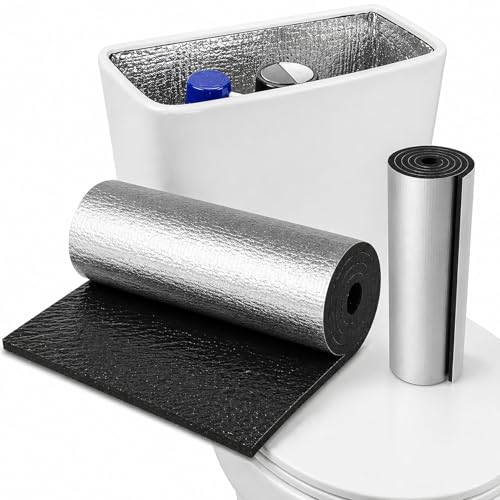
2. Toilet Tank Insulation Kit with Self-Adhesive Aluminum Foil Liner to Prevent Condensation
- 【Stop Toilet Tank Sweating & Wet Floors】 Tired of puddles forming around your toilet? Our toilet...
- 【Peel & Stick Installation, No Tools Needed】 Forget messy glues or professional help. This...
- 【Dual-Layer Material for Lasting Protection】 Made of aluminum foil + rubber foam, this toilet...
Condensation on your toilet tank can lead to constant dripping and damage to your bathroom floor, but the solution is often overlooked. Instead of accepting wet floors as inevitable, this toilet tank insulation kit tackles the root cause by creating a thermal barrier to stop moisture in its tracks.
This kit uses a durable dual-layer material combining aluminum foil with rubber foam to block temperature exchange effectively. Unlike standard foam liners that deteriorate quickly, this insulation holds up well against humidity and temperature changes, ensuring long-term protection.
The self-adhesive backing allows for simple peel-and-stick installation on any smooth toilet cistern surface. No tools or professional help needed, so even first-time DIYers can fit it quickly and cleanly. The large 100×40cm sheet can be trimmed to fit most round, oval, or rectangular tanks.
Beyond stopping sweat and puddles, this liner also offers extra protection for pipes in colder climates by helping maintain warmer water temperatures inside the cistern. This feature helps prevent freezing and costly pipe damage, making it especially practical in cooler basements or older homes.
Best for: Homeowners and renters who want an easy, durable solution to prevent toilet tank condensation and protect bathroom floors from water damage.
What We Like:
- Stops condensation and moisture buildup before it causes damage
- Peel-and-stick design requires no special tools or skills
- Durable aluminum foil and rubber foam layers resist wear and humidity
- Flexible sizing with a large sheet easily cut to fit any tank shape
- Helps safeguard pipes from freezing in colder environments
Specification:
| Specification | User Benefit |
|---|---|
| Material Composition | Combines aluminum foil with rubber foam to block moisture and temperature changes effectively |
| Size | 100×40 cm sheet offers coverage for most standard and compact toilet tanks |
| Installation Type | Self-adhesive backing allows quick, tool-free application on smooth cistern surfaces |
| Durability | Designed to withstand daily use and humidity without degrading quickly |
| Cold Weather Protection | Adds insulation to help prevent pipe freezing and damage during chillier periods |
Quick Guide: Top Toilet Tank Insulation Kit Feature Analysis
| Product Name | Material | Dimensions | Installation |
|---|---|---|---|
| Keeney Anti-Condensation Liner | Foam | 16″ x 48″ | Self-adhesive backer, no glue needed |
| Generic Peel & Stick Kit | Aluminum foil + rubber foam | 39.4″ x 15.7″ | Peel & stick, no tools needed |
What Makes a Toilet Tank Insulation Kit Truly Effective?

Choosing the best toilet tank insulation kit isn’t just about picking any product off the shelf. There are specific qualities that determine how well the insulation prevents condensation, saves water, and extends your toilet’s lifespan. Knowing what to prioritize can save time and frustration.
Material Composition and Moisture Resistance
The material of the insulation kit is a defining factor in how well it performs. Insulation must resist moisture because toilet tanks are prone to condensation, which leads to dripping and potential mold growth. A kit made from high-quality materials will act as a barrier, preventing moisture from passing through.
For example, closed-cell foam, like in the Keeney K836-22, provides excellent moisture resistance because its dense structure traps no water. Another approach is a dual-layer material combining aluminum foil and rubber foam, which blocks temperature exchange and moisture at the same time by reflecting heat and creating a waterproof seal.
Ignoring material quality often results in insulation that absorbs water, deteriorates quickly, and fails to stop condensation, leading to persistent water damage and costly repairs.
Size and Fit Customization
The dimensions and adaptability of the kit impact installation ease and effectiveness. A toilet tank liner that can be trimmed or comes in generous sizing ensures a snug fit on various tank models, eliminating gaps where moisture can sneak through.
Keeney’s liner, sized at 16″ x 48″, can be cut to match the exact tank dimensions, preventing loose edges or bunching. Kits with peel-and-stick designs that cover the tank comprehensively, such as the generic aluminum foil and rubber foam combo sized at 39.4″ x 15.7″, wrap around the tank effectively without complex cutting.
Without a proper fit, insulation may sag or leave areas exposed, defeating its purpose and allowing condensation to form on unprotected surfaces.
Installation Process and User-Friendliness
The ease of installing a toilet tank insulation kit plays a crucial role in effectiveness and user experience. A complicated setup can result in poor fitting or discourage completing the job properly. Kits that need special tools, extra adhesives, or waiting for glue to dry often slow progress and increase frustration.
Many popular kits feature peel-and-stick adhesives or self-adhesive backers that simplify the process. For example, the Keeney kit includes a repositionable adhesive, allowing users to adjust the insulation for a perfect fit without any mess or extra tools. This approach speeds up installation and ensures the insulation stays firmly in place.
Skipping on installation quality often means the insulation doesn’t fully seal, causing cold spots or moisture buildup. This reduces the energy-saving benefits and might even lead to frustrating redo attempts. Prioritizing user-friendly installation ensures your kit performs as intended from day one.
Thermal Barrier Efficiency
The main role of any toilet tank insulation is to prevent temperature exchange between the cold tank water and the warmer bathroom air. The better the thermal barrier, the less condensation forms on the tank’s exterior.
Aluminum foil layers reflect radiant heat while rubber foam slows conductive heat transfer, creating a highly effective thermal buffer. Alternatively, thick closed-cell foam prevents cooling and moisture migration through its dense structure. The effectiveness of these materials can be measured in R-values, which indicate resistance to heat flow—higher values mean better insulation.
Choosing insulation without adequate thermal resistance results in continued sweating on the tank despite added layers, meaning little practical benefit.
Durability and Long-Term Performance
Durability is key to ensuring your toilet tank insulation stays effective over time. Materials that can’t hold up against constant moisture and temperature swings will fail quickly, making this a crucial factor when choosing a kit.
High-quality options often feature closed-cell foam or treated rubber foam that resists water damage and stays intact without crumbling. Kits with an aluminum foil layer create an extra barrier that repels moisture while extending lifespan. The adhesive backing also needs to be strong enough to hold the insulation firmly in place without peeling or shifting.
Ignoring durability means your insulation could degrade within a year, leading to wasted time and money to replace it. You’ll lose both the energy savings and the convenience that a reliable kit provides if materials break down too soon.
Maintenance and Mold Prevention
Moisture is inevitable around toilets, making mold and mildew growth a major concern inside or behind insulation kits. The best kits focus on blocking moisture and resist fungal growth to keep your bathroom healthy. This factor can make or break your comfort and hygiene.
Many kits use closed-cell foam, which naturally repels water, lowering mold chances. Layers of reflective foil also stop condensation from forming on the tank’s interior surfaces. Some premium products add an antimicrobial treatment to the foam, offering extra protection, especially in bathrooms with limited airflow.
Ignoring this aspect can lead to hidden mold problems. Over time, this causes unpleasant odors, potential health risks, and even structural damage to walls or floors around your toilet. Proper maintenance and mold-resistant materials keep everything fresh and safe.
Cost-Effectiveness and Energy Savings
The upfront price might seem modest for these kits, but evaluating cost against insulation longevity and performance is vital. Well-made insulation reduces heating or cooling losses associated with sudden temperature exchange, translating to indirect energy savings.
Investing in a durable toilet tank liner that prevents water damage and decreases condensation-related repairs can save more money long term than repeatedly buying cheap, ineffective liners. Aluminum foil and rubber foam kits might cost a bit more but offer enhanced lifespan and insulation value.
Choosing cheaper, flimsy liners can lead to frequent replacements and higher utility bills due to wasted heat or cold, making them less economical overall despite lower initial cost.
Frequently Asked Questions
What are the main benefits of using a toilet tank insulation kit?
Insulation kits primarily prevent condensation buildup on the toilet tank, which helps avoid water damage and mold growth around your bathroom. By creating a thermal barrier, they keep moisture from forming drops on the tank’s exterior.
For example, kits like the Keeney Anti-Condensation Liner use closed-cell foam to effectively block moisture, which can otherwise drip and damage flooring. This small upgrade can save significant repair costs over time.
To maximize results, ensure the insulation is trimmed properly and installed securely without gaps where moisture can escape.
Can I install a toilet tank insulation kit myself without professional tools?
Most kits, including the popular options with self-adhesive backers, are designed for easy, glue-free installation. This makes them user-friendly for DIY projects without needing special tools.
The dual-layer aluminum foil and rubber foam kits, for instance, peel and stick directly onto the tank’s interior, eliminating complex steps. This helps avoid mistakes that could reduce effectiveness.
Take your time during installation and follow trimming instructions closely to achieve a snug fit and prevent peeling over time.
How much energy or water savings can I expect with toilet tank insulation?
While the primary goal is condensation prevention, reducing moisture also helps maintain consistent water temperatures inside the tank, which can slightly improve efficiency. The energy saved from avoiding chilled tank surfaces can reduce heat loss in heated rooms.
Though the direct water savings are minimal, some users notice less need for bathroom cleaning or mold remediation, which indirectly preserves resources and costs related to maintenance.
Consider insulation as part of a broader bathroom efficiency strategy rather than a standalone energy saver.
Are these insulation kits compatible with all toilet tank sizes?
Most insulation kits offer flexible sizing, designed to fit standard toilet tanks but can be cut down to size for custom fits. For example, the Keeney liner measures 16″ x 48″ and is easy to trim, accommodating various tank dimensions.
The generic peel-and-stick kit sized 39.4″ x 15.7″ also adjusts well to many tanks but may require extra trimming on irregularly shaped or oversized tanks.
Always measure your tank before purchasing and trimming the insulation to ensure full and secure coverage.
Will the insulation kit affect the operation or maintenance of my toilet?
Insulation kits are designed to be unobtrusive, so they typically do not interfere with toilet mechanisms or maintenance tasks. They simply line the inside of the tank to prevent condensation and enhance efficiency by reducing moisture.
However, when installing, avoid covering any moving parts or sensors to prevent operational issues. Kits with adhesive backers are easy to remove if you need to access internal components later.
Regularly check the insulation for moisture buildup or deterioration, especially if installed in humid environments, to maintain performance.
Maximizing Efficiency with the Right Toilet Tank Insulation
Addressing the challenge of toilet tank condensation is crucial to prevent moisture damage, and choosing the appropriate insulation kit greatly reduces this issue. Properly insulated tanks maintain a dry environment, preserving your bathroom’s integrity and improving overall comfort.
Foam liners are ideal for standard tanks due to their ease of installation and effective moisture control, while kits combining aluminum foil and foam suit those with unique tank shapes or higher insulation needs.
Measure your tank carefully before purchasing to avoid size mismatches, and install the kit on a dry surface to ensure lasting efficiency. Handle all components gently to protect delicate materials, optimizing your investment’s performance.
Last update on 2026-10-24 / Affiliate links / Images from Amazon Product Advertising API