You might hear buzzing in your walls due to loose electrical wiring, overloaded circuits, or faulty dimmer switches causing electromagnetic hums and vibrations.
Seasonal insect nests like bees or wasps also create steady buzzing, especially in warm months.
Plumbing pipes vibrating from high water pressure and mechanical systems such as HVAC ductwork or unbalanced fans can produce similar sounds.
Recognizing these causes helps you pinpoint the source and assess risks. You can explore how to accurately diagnose and address each buzzing type next.
Key Takeaways
- Buzzing in walls can stem from loose electrical wiring, faulty dimmer switches, or overloaded circuits creating electromagnetic vibrations.
- Seasonal buzzing often indicates bee or wasp nests localized inside wall cavities during warm months.
- Plumbing pipes vibrating due to high water pressure or faulty valves can cause buzzing sounds when water flows.
- HVAC systems with loose ductwork, unbalanced fans, or aging ballasts can transmit buzzing vibrations through walls.
- Immediate professional inspection is needed if buzzing is accompanied by sizzling sounds, burning smells, heat, or breaker trips.
Why Walls Buzz: Common Causes Explained?

Although buzzing sounds behind your walls can seem mysterious, they usually stem from a few common sources related to electrical systems, pests, plumbing, or mechanical vibrations.
You might encounter loose wiring inside outlets or junction boxes, generating vibrations that produce a buzzing noise. Faulty dimmer switches or overloaded circuits often create electromagnetic hums.
Insects like bees or wasps nesting within wall cavities can also cause steady buzzing, especially during warmer months.
Plumbing pipes subjected to high water pressure vibrate against framing, transmitting buzzing when faucets run.
Mechanical elements, such as loose HVAC ductwork or unbalanced ceiling fans, can send vibrations through walls, mimicking buzzing sounds.
Understanding these typical causes helps you narrow down potential issues and prioritize appropriate inspections or repairs. Additionally, high water velocity in pipes can increase pressure surges, leading to vibrations that cause buzzing noises within walls.
Identifying the Source of Wall Buzzing
If you’re trying to figure out what’s causing that annoying buzzing in your walls, start by paying attention to any electrical signals. You know, if you hear buzzing near outlets or switches, that could be a sign of wiring issues.
Next, keep your ears open for any signs of pests. If you notice a steady buzzing during the warmer months, or maybe some scratching sounds coming from a specific area of the wall, that could point to critters making themselves at home.
And don’t forget to look for clues related to your plumbing or HVAC system. If the buzzing seems to happen when you’re using water or when your HVAC is running, it might be a mechanical issue. Just take note of when you hear the noise, and you’ll be one step closer to solving the mystery!
In some cases, electrical noises might indicate problems with circuits not having a dedicated circuit, which can lead to buzzing sounds and other electrical issues.
Electrical Indicators and Patterns
Listen carefully near outlets, switches, or electrical panels to detect buzzing patterns that indicate wiring issues. Electrical buzzing often results from loose wiring, faulty dimmer switches, or overloaded circuits causing electromagnetic vibrations.
Identifying these patterns can help you pinpoint the source before hazards develop. Pay attention to buzzing that intensifies when devices draw power, signaling potential overload or loose connections.
Intermittent humming near dimmer switches or lighting controls could be caused by incompatible components. Sizzling or crackling sounds indicate arcing or damaged insulation, which demand immediate action.
Noticing these electrical indicators helps you differentiate wiring faults from other noise sources. This allows for timely repairs and reduces fire risks. If you detect any abnormal buzzing, avoid DIY fixes and consult a licensed electrician to guarantee safety and proper diagnosis.
Additionally, understanding the role of a check valve in preventing backflow can help you recognize if water pressure issues might be contributing to unusual wall noises.
Pest Activity Clues
When buzzing sounds seem to come from inside your walls, you should check for pest activity as a likely cause. Insects like bees, wasps, or hornets build nests in wall cavities, producing steady buzzing.
Rodent movement may accompany scratching or gnawing sounds near the affected area. Identifying pest activity requires noting location, season, and additional noises.
| Pest Type | Clues |
|---|---|
| Bees/Wasps | Constant buzzing, especially in warm months |
| Rodents | Buzzing with scratching or movement sounds |
| Nest Location | Localized to one wall section |
You should inspect walls carefully to avoid disturbing active nests, which can increase risk. Recognizing these pest-specific patterns helps pinpoint the source and informs appropriate remediation steps. In colder months, it is also important to consider that unheated spaces in walls can cause additional noises due to temperature-related effects on pests and materials.
Plumbing and HVAC Signs
Check plumbing and HVAC systems carefully if you hear buzzing inside your walls, as these sources produce distinct vibration patterns.
Plumbing buzz often occurs when water pressure causes pipes to vibrate against framing, especially during faucet use or toilet flushing.
HVAC-related buzzing usually coincides with system operation, caused by loose ductwork or unbalanced ceiling fans transmitting vibrations through walls.
Look for these signs to identify the source:
Plumbing: Notice if buzzing intensifies when water flows or valves operate, indicating pipe vibration or valve issues.
HVAC: Buzzing aligns with HVAC run times, often accompanied by rattling ductwork or fan imbalance.
Mechanical: Equipment mounted near walls can send vibrations through structural elements, mimicking buzzing inside walls.
Pinpointing these patterns helps you address the root cause efficiently and safely. Installing quiet exhaust fans can also reduce HVAC-related buzzing by minimizing vibration transmission.
Electrical Causes of Wall Buzzing
When you hear buzzing in your walls, it can be pretty unsettling.
Often, the culprit is loose wiring inside outlets or switches. You see, when connections aren’t secure, they can vibrate and create that annoying hum.
But that’s not the only reason you might be hearing that sound. Overloaded circuits can also play a role. When multiple devices are drawing power at the same time, it can produce a magnetic buzz that really intensifies.
Recognizing these electrical symptoms early is super important. It not only helps prevent potential hazards but also guides you toward a more targeted inspection.
Buzzing can also be caused by worn contactors or failing capacitors, which may require professional attention due to the risk of electrical arcing and fire hazards from faulty electrical components.
Loose Wiring Issues
Loose wiring inside outlets, switches, or junction boxes often causes buzzing sounds within walls due to vibrations from electrical current. When connections aren’t secure, the electrical current fluctuates, creating mechanical vibrations that transmit sound through the wall structure.
You might notice buzzing especially near specific outlets or switches as the loose wire moves slightly under load.
Key indicators of loose wiring include:
- Intermittent buzzing that changes with device use or load fluctuations
- Audible vibrations localized near electrical fixtures
- Mild heat or discoloration around outlets indicating poor contact
Addressing loose wiring promptly is vital because it can lead to arcing, increased resistance, and fire hazards.
Regular checks of electrical connections can prevent such failures and maintain safety.
Always turn off power before inspecting or repairing. Consult a licensed electrician to guarantee safe and effective resolution.
Overloaded Circuit Symptoms
In addition to loose wiring, overloaded circuits frequently cause buzzing sounds inside walls due to excessive electrical current flowing through the wiring.
When too many devices draw power on a single circuit, the increased current creates a magnetic field around the wires, producing a humming or buzzing noise.
This sound often intensifies as load increases, signaling that the circuit is handling more than it was designed for.
You might notice the buzzing near outlets, switches, or the breaker panel, especially during high usage periods.
Ignoring these symptoms risks overheating, damaging wiring insulation, or causing arcing, which poses a serious fire hazard.
If you detect persistent buzzing linked to electrical load, you should promptly reduce circuit demand and consult a licensed electrician to assess and balance your home’s electrical system safely.
Voltage fluctuations can also contribute to the buzzing sound and impact the overall performance of connected devices, making it important to address electrical problems promptly.
Pests That Buzz Inside Your Walls
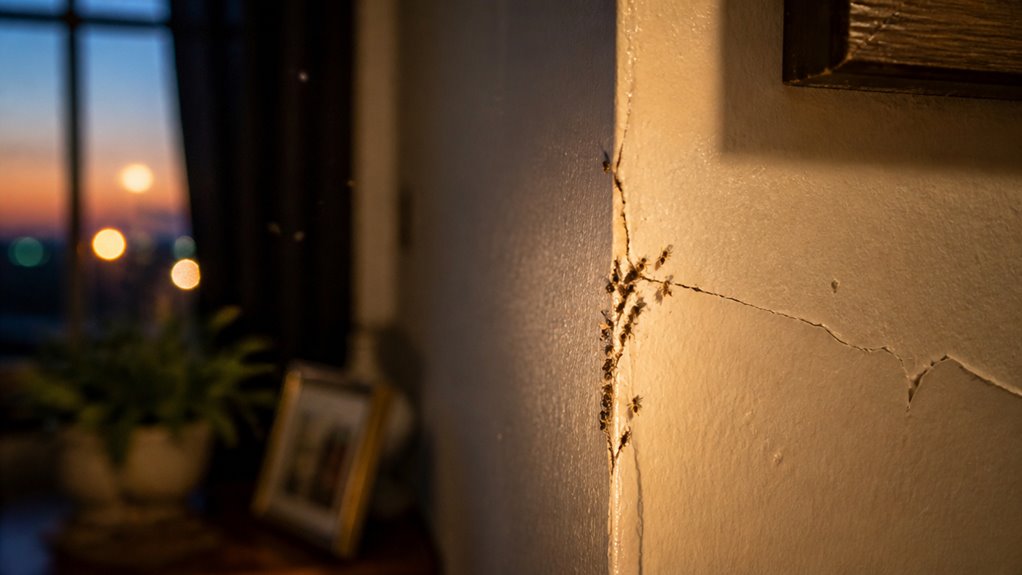
You’ll often hear buzzing inside walls during spring and summer due to insects like bees, wasps, hornets, and yellow jackets nesting within wall cavities.
Buzzing inside walls in spring and summer often signals bees, wasps, or yellow jackets nesting nearby.
These pests create a steady, localized buzzing sound as they maintain their colony and move within the space between drywall and studs.
Differentiating pest buzzing from electrical or mechanical causes hinges on specific auditory and physical clues.
Key indicators of pest-related buzzing include:
- Buzzing that’s constant during warm months and localized to one wall section.
- Accompanying sounds such as scratching or movement near the buzzing area.
- Visible entry points or residue indicating insect activity around wall openings.
Recognizing these signs helps you identify when the buzzing originates from active insect nests rather than wiring or mechanical issues.
Plumbing Causes of Wall Buzzing
High-pressure water flowing through pipes can cause vibrations that resonate within your walls, producing a noticeable buzzing sound.
This occurs when water moves rapidly, causing pipes to vibrate against framing or other surfaces. You may notice the buzzing intensify when faucets run or toilets flush.
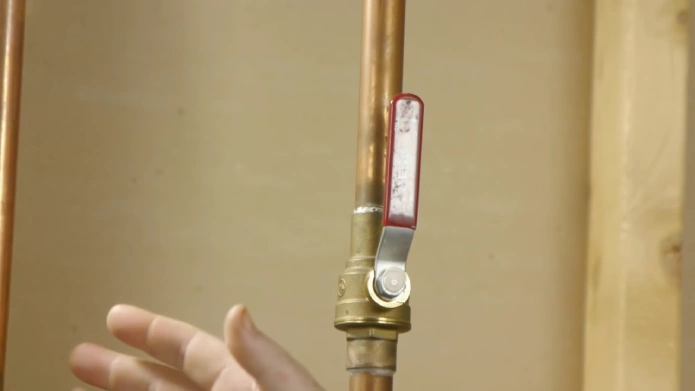
Faulty valves or partially restricted plumbing can exacerbate these vibrations by disrupting flow and increasing turbulence inside pipes.
Because plumbing buzz transmits through studs and drywall, pinpointing the exact source can be difficult. Homes with elevated water pressure are more susceptible to these noises.
To address this, inspect valves for wear, make sure pipes are securely fastened, and consider pressure regulation.
Unlike electrical buzzing, plumbing-related sounds generally indicate mechanical issues rather than fire hazards. However, they still warrant prompt attention to prevent damage or leaks.
High water pressure can strain plumbing components and lead to water pressure regulator leaks, which may contribute to the buzzing sounds.
HVAC and Mechanical Causes of Wall Buzzing
Although mechanical systems often operate quietly, loose or imbalanced components within your HVAC setup can generate vibrations that transmit through walls. This produces buzzing or humming sounds.
These vibrations often arise from ductwork, fans, or nearby mechanical equipment. Identifying the source requires careful examination while the system runs.
Consider these common HVAC and mechanical causes:
- Loose or improperly secured ductwork rattling against framing.
- Ceiling fans with unbalanced blades or loose mounts transmitting vibration.
- Aging fluorescent light ballasts emitting audible buzzing as they degrade.
You may notice buzzing intensify when the HVAC system cycles on or off. Mechanical vibrations can easily travel through studs and drywall, making the exact origin hard to pinpoint.
Addressing loose components or securing equipment typically mitigates the noise and prevents further structural transmission. Ensuring proper maintenance of mechanical systems can also reduce the likelihood of buzzing caused by worn or loose parts.
When Wall Buzzing Means Danger?
Because buzzing sounds inside walls can signal serious issues, you need to approach them with caution and urgency.
Buzzing inside walls often signals serious problems requiring immediate and careful attention.
Electrical faults are the most critical cause, as loose wiring, damaged insulation, or arcing can produce buzzing and pose a significant fire hazard.
If you notice buzzing near outlets, switches, or panels, or if it’s accompanied by burning smells, heat, or breaker trips, act immediately.
Pest-related buzzing, while less dangerous, requires careful handling to avoid disturbing active nests, which could escalate risks.
Plumbing vibrations usually present less danger but might indicate excessive water pressure or failing valves that need attention.
Persistent or worsening buzzing demands prompt investigation because overlapping causes—electrical, pest, or mechanical—can coexist, increasing potential hazards within your walls.
Diagnosing, Fixing, and Preventing Wall Buzzing
Identifying the source of buzzing inside your walls requires a systematic approach that considers electrical, pest, plumbing, and mechanical factors.
Start by isolating when and where the sound occurs, noting if it correlates with electrical use, water flow, HVAC operation, or seasonal changes.
Use visual inspections and diagnostic tools like circuit testers or moisture meters to narrow causes.
Fixes depend on the source: secure loose wiring, treat or remove nests safely, adjust water pressure or replace faulty valves, and tighten HVAC components.
To prevent recurrence, maintain electrical systems, seal entry points for pests, regulate water pressure, and service mechanical equipment regularly.
- Inspect outlets, switches, and panels for electrical faults.
- Check plumbing valves and water pressure for vibrations.
- Examine HVAC ducts and fans for loose or imbalanced parts.
Frequently Asked Questions
Can Weather Changes Cause Buzzing in Walls?
Yes, weather changes can cause buzzing in your walls.
Temperature fluctuations can expand or contract building materials, causing loose wiring or pipes to vibrate and produce buzzing.
Increased humidity may also affect electrical connections or promote pest activity inside wall cavities, leading to buzzing sounds.
Additionally, shifting air pressure during storms can cause HVAC ducts or vent systems to rattle.
Monitoring conditions during weather changes helps pinpoint the source effectively.
Does Wall Buzzing Affect Home Resale Value?
Buzzing bothers buyers and burdens your home’s marketability. Persistent, puzzling noises provoke perceptions of poor maintenance or potential problems, potentially postponing purchase decisions.
Electrical or pest-related buzzing signals safety and structural concerns, which savvy shoppers scrutinize. Plumbing or HVAC hums can hint at costly repairs.
To protect property price, promptly pinpoint and professionally resolve buzzing. Clear communication about fixes reassures buyers, preserving your home’s peak selling power and preventing value depreciation.
Are Buzzing Sounds in Walls Common in New Homes?
Yes, buzzing sounds in walls can occur even in new homes. You might experience this due to loose wiring, improperly installed dimmer switches, or HVAC duct vibrations.
New constructions sometimes have settling issues that cause pipes or framing to vibrate. While less common than in older homes, these noises still indicate installation or component issues you should address promptly to avoid electrical hazards or structural damage.
Can Wall Buzzing Interfere With Wi-Fi or Electronics?
Yes, wall buzzing can interfere with Wi-Fi or electronics, especially if it stems from electrical faults like loose wiring or faulty dimmer switches.
These issues produce electromagnetic interference (EMI) that disrupts wireless signals and sensitive devices.
You might notice slower internet speeds or intermittent connectivity.
To minimize interference, identify and fix the electrical source promptly.
Ensure wiring is secure and circuits aren’t overloaded.
This reduces EMI and protects your electronics.
Is Wall Buzzing Related to House Settling or Foundation Issues?
No, wall buzzing isn’t typically related to house settling or foundation issues. Settling causes creaks, cracks, or popping sounds—not buzzing.
Buzzing usually stems from electrical faults, plumbing vibrations, pests, or HVAC systems. If you hear buzzing, you should inspect wiring, pipes, or mechanical components instead of focusing on structural shifts.
However, foundation problems might cause other noises, so it’s wise to monitor all unusual sounds and their specific characteristics carefully.
Check Electrical Issues Before Ignoring the Buzzing
Now that you know the common causes of buzzing in your walls, from electrical issues and pests to plumbing and HVAC, it’s clear you shouldn’t just brush it off.
Ignoring these sounds could lead to bigger problems down the road. By pinpointing the source early and taking proper action, you can nip the problem in the bud and ensure your home stays safe and quiet.
Remember, a little buzz today could mean a big headache tomorrow.