Last Updated on July 12, 2026
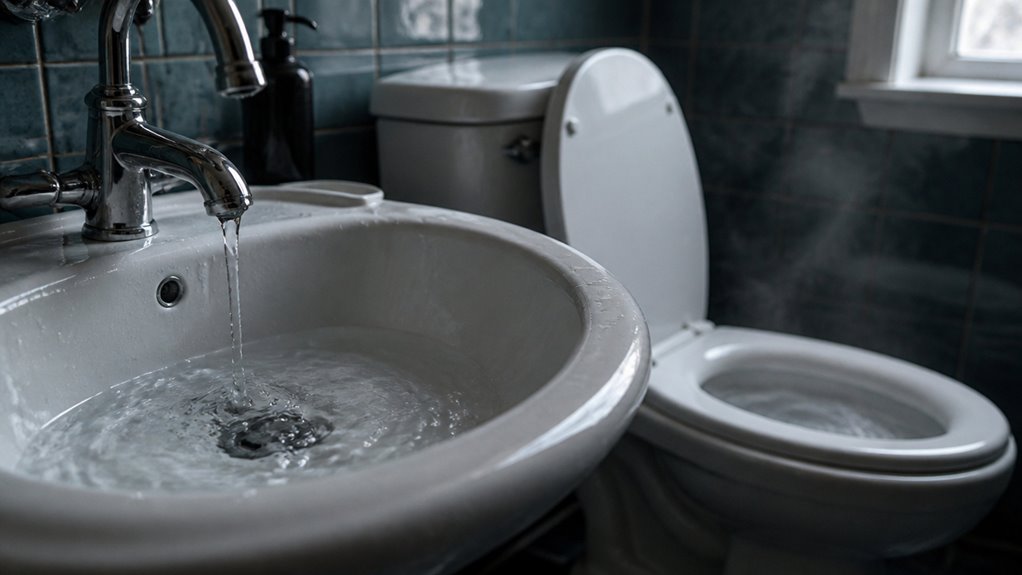
If your sink gurgles when the toilet flushes, you’re likely facing a blocked drain or vent pipe that disrupts air pressure. This forces air through the sink’s P-trap.
Debris like grease, hair, or nests can clog plumbing vents or drains, causing this imbalance. You can inspect and clear vent blockages or use a drain snake to remove clogs.
Tightening P-trap seals helps too. Persistent gurgling signals deeper issues worth exploring for effective resolution.
Key Takeaways
- Sink gurgling after toilet flush indicates vent pipe blockage causing negative pressure and air being pulled through the sink P-trap.
- Shared plumbing lines amplify pressure changes, leading to gurgling noises when the toilet drains.
- Inspect roof vent for blockages like leaves or nests that trap air and prevent proper venting.
- Partial drain clogs from hair, grease, or food debris can trap air, causing gurgling during toilet flushing.
- Clearing vent blockages or drain clogs with a snake or plunger often resolves the gurgling issue.
Why Your Sink Gurgles When the Toilet Flushes?

When your sink gurgles as the toilet flushes, it’s usually because air is being pulled through the sink’s drain due to a venting issue or partial clog.
Sink gurgling during toilet flushes often signals a venting problem or partial clog pulling air through the drain.
This happens because the system needs to equalize pressure when water rushes down the toilet drain. If the vent pipe is blocked or restricted, negative pressure develops, causing air to be sucked through the sink’s P-trap.
You may notice slow drainage, bubbles in the sink water, or a faint odor, all signs of improper venting or partial obstructions.
To address this, inspect the vent pipe for debris and check the sink drain for blockages. Ensuring proper airflow through the vent system restores pressure balance and eliminates gurgling noises efficiently.
Additionally, regular inspections and preventive maintenance can help avoid issues caused by blockages from debris that exacerbate venting problems.
How Drain Clogs and Vent Pipes Cause Sink Gurgling?
When drain lines get clogged, it really messes with the water flow. You see, as the water slows down, it traps air in there, and that’s what leads to those annoying gurgling sounds in your sink.
Now, if the vent pipes are blocked, it gets even trickier. These vents are supposed to let air escape, but when they can’t, it creates negative pressure. This pulls air through the P-trap, which isn’t ideal.
And here’s where it gets interesting: if you have shared plumbing lines, those air pressure imbalances can make the gurgling even louder, especially when the toilet flushes. So, it’s a bit of a domino effect!
In many cases, these symptoms can be early signs of internal blockages that require prompt attention to prevent further drainage problems.
Drain Line Blockages
Drain line blockages often trigger sink gurgling by restricting water flow and trapping air within the pipes. When water can’t flow freely, pressure changes force air to escape through the sink’s drain, causing the gurgling sound.
You might notice slow drainage or bubbles forming in the sink water after flushing the toilet, signaling a partial clog. Common causes include accumulated hair, grease, or soap scum narrowing the drain.
Food particles or debris can build up in the pipe, and foreign objects may partially block the flow. To fix this, start by clearing the clog with a plunger or a drain snake.
Regularly cleaning the drain and avoiding flushing non-flushable items helps prevent future blockages and eliminates gurgling noises. However, using a drain snake improperly can damage pipes, especially if they are older or corroded, so exercise caution and consider professional assessment when necessary.
Vent Pipe Obstructions
Blockages don’t just occur in the drain line; vent pipes can also become obstructed, causing similar gurgling sounds in your sink.
When vent pipes are clogged with debris like leaves, nests, or hair, they restrict air flow needed to balance pressure during drainage.
This trapped air creates negative pressure, pulling air through the sink’s P-trap and generating gurgling noises.
To diagnose, inspect the roof vent for visible blockages and use a plumbing snake to clear deep obstructions.
Flush the vent pipe with a garden hose afterward to ensure free flow.
Regularly clearing vent pipes and avoiding debris buildup prevents these issues.
If gurgling persists after cleaning, call a professional plumber to assess and repair your vent system effectively.
Proper venting prevents clogs and maintains drainage efficiency by allowing air to enter the system through external venting systems.
Air Pressure Imbalances
Why does your sink gurgle every time the toilet flushes? This happens because air pressure imbalances develop in your plumbing system.
When drain clogs or vent pipes get blocked, they restrict airflow and water flow, causing negative pressure. This pulls air through the sink’s P-trap, creating that unmistakable gurgling sound.
Key causes include:
- Partial clogs in drain lines trapping air and water
- Blocked or obstructed vent pipes preventing air escape
- Shared plumbing lines amplifying pressure fluctuations during flushing
To fix this, clear clogs with a plunger or plumbing snake. Inspect and clean vent pipes, and make certain the P-trap is sealed tightly.
Maintaining unobstructed vents and drains will prevent air pressure imbalances and eliminate gurgling. Regular maintenance is essential, as blockages in plumbing can worsen these pressure issues over time.
Common Debris That Blocks Your Sink and Vent Pipes
You know how it goes—hair and soap scum can really pile up in your sink drain. Before you know it, you’re dealing with those slimy blockages that slow down water flow. It’s pretty frustrating, right?
And don’t even get me started on vent pipes! Leaves and nesting materials can sneak in there and cause some serious clogs. When that happens, you end up with restricted airflow, which can lead to pressure issues. Not fun at all!
Then there’s the kitchen sink. Food particles and grease love to hang out in the drain, and over time, they can solidify into tough obstructions. If you don’t take care of them quickly, you might find yourself in a bit of a bind.
These blockages often create stagnant water in the drains, which fosters bacterial growth and intensifies foul odors.
Hair And Soap Scum
Frequently, hair and soap scum combine to form a slimy obstruction that restricts water flow in your sink and vent pipes.
This buildup narrows the pipe diameter, causing slow drainage and trapped air that leads to gurgling noises when the toilet flushes.
To address this, you should:
- Regularly remove hair caught in drain strainers to prevent accumulation.
- Use enzyme-based cleaners to dissolve soap scum without damaging pipes.
- Periodically inspect and snake vent pipes to clear hidden blockages.
Ignoring this debris allows it to harden, worsening clogs and venting problems.
By proactively maintaining your drains and vents, you’ll restore proper airflow and water flow, eliminating gurgling sounds.
If symptoms persist despite cleaning, consider professional assistance to inspect for deeper obstructions or damaged vent components.
Additionally, using enzyme-based cleaners regularly can maintain pipe health and prevent future buildup.
Leaves And Nesting Materials
Accumulating leaves and nesting materials often block vent pipes and sink drains, disrupting airflow and causing gurgling noises when the toilet flushes.
These natural debris create partial clogs that restrict air movement, leading to negative pressure in the plumbing system.
This pressure imbalance pulls air through the sink’s P-trap, producing the characteristic gurgling sound.
To resolve this, inspect your roof vent for visible obstructions like leaves or bird nests.
Use a plumbing snake or garden hose to clear blockages in the vent pipe, ensuring unobstructed airflow.
Regularly removing external debris prevents buildup and maintains proper ventilation.
If the gurgling persists after clearing, check the sink drain for trapped materials and secure any loose P-trap connections.
Persistent issues may require professional assessment to avoid damage to your plumbing system.
Installing an Air Admittance Valve can help maintain balanced pressure and prevent these gurgling sounds by allowing air into the system when negative pressure occurs.
Food Particles And Grease
After clearing leaves and nests from your vent pipes, the next frequent culprit behind gurgling noises is the buildup of food particles and grease.
These substances accumulate inside drain lines, restricting water flow and trapping air. This causes pressure imbalances and the characteristic gurgling sound.
To address this, you need to identify common problem areas:
Grease solidifies in pipes, narrowing the drain diameter.
Food debris combines with grease, forming stubborn blockages.
Residue clings to pipe walls, disrupting vent airflow.
Regularly cleaning your sink drain and avoiding pouring grease down the drain can prevent buildup.
Use a drain snake or enzymatic cleaners to break down deposits.
Maintaining clear vent pipes guarantees proper air circulation, reducing negative pressure and gurgling noises when the toilet flushes.
For effective and safe cleaning of galvanized pipes, consider using enzyme-based drain cleaners that protect your plumbing while breaking down organic buildup.
If problems persist, consult a plumber for thorough inspection and cleaning.
Signs Your Sink Is Gurgling Due to Blockages
You’ll often notice your sink gurgling right after you flush the toilet. This signals a blockage somewhere in the drain or vent system.
A gurgling sink after flushing often indicates a blockage in the drain or vent system.
This sound occurs because trapped air struggles to escape, creating negative pressure that pulls air through the sink’s P-trap. If water drains slowly or backs up into the sink, that’s a clear sign of obstruction.
You might also see bubbles forming in the sink water during flushing, indicating air displacement caused by a blockage. A foul odor from the sink can point to stagnant water trapped by the clog.
Additionally, if your toilet flushes with difficulty or makes gurgling noises, it often means shared plumbing lines are affected by the same blockage. These symptoms help you pinpoint when you need to address potential drain or vent obstructions promptly.
Such blockages can cause pressure fluctuations in your plumbing system, leading to further drainage and flow issues.
How to Inspect and Clear Sink and Vent Blockages?
Start by removing the sink drain cover and inspecting the pipe for visible debris like hair or grease buildup.
Use a flashlight to check for blockages that could restrict water flow. Next, examine the P-trap under the sink for clogs or leaks, loosening it if necessary to clear obstructions.
Finally, inspect the vent pipe on your roof for debris like leaves or nests that block air escape.
Use a plumbing snake to break up deep clogs in the drain and vent pipes.
Flush the vent pipe with water to confirm it’s clear and air can flow freely.
Tighten or replace any loose or damaged fittings in the drain system.
Following these steps helps restore proper drainage and venting. This prevents gurgling caused by trapped air and partial blockages.
Quick Fixes for Sink Gurgling After Toilet Flush
Once you’ve cleared visible blockages in the drain and vent pipes, addressing sink gurgling after a toilet flush often involves quick, targeted fixes.
Start by tightening the P-trap connections under the sink to eliminate leaks and guarantee airtight seals. Replace any faulty air admittance valve (AAV) that may be failing to equalize pressure.
Flush the vent pipe with a garden hose to confirm free airflow and remove residual debris. Installing a T-fitting can improve venting efficiency by correctly linking the sink drain to the main vent system.
Additionally, using a plunger on the sink drain can clear minor clogs that contribute to air trapping. These straightforward steps often resolve gurgling caused by pressure imbalances and partial obstructions, restoring proper drainage function swiftly.
When to Call a Plumber for Persistent Sink Gurgling?
Although some sink gurgling issues can be resolved with DIY methods, persistent or worsening noises often signal deeper plumbing problems that require a professional’s expertise.
Persistent sink gurgling often indicates serious plumbing issues needing professional attention.
If you notice ongoing gurgling despite basic fixes, it’s time to call a plumber. Ignoring the issue may lead to sewer backups or vent pipe damage.
Consider professional help when you experience:
Repeated gurgling after multiple toilet flushes or slow drainage, indicating a stubborn clog or vent obstruction.
Foul odors from the sink, which suggest trapped sewage or stagnant water needing thorough cleaning.
Signs of water backup or bubbling in the sink, pointing to pressure imbalances or blocked venting systems.
A plumber can diagnose complex vent or sewer line issues, ensuring reliable and lasting resolution.
Preventing Sink Gurgling With Regular Maintenance
Regularly maintaining your plumbing system substantially reduces the chances of sink gurgling caused by blockages or vent issues. You should schedule routine drain cleanings and inspect vent pipes for debris or nests.
Using drain strainers prevents hair and food particles from accumulating. Avoid flushing non-flushable items to keep sewer lines clear. Annual professional inspections detect hidden problems early.
| Maintenance Task | Purpose |
|---|---|
| Drain Cleaning | Removes grease, hair, and debris |
| Vent Pipe Inspection | Clears nests, leaves, blockages |
| Use Drain Strainers | Prevents solid debris entry |
Frequently Asked Questions
Can Sink Gurgling Damage My Home’s Plumbing System?
You might say your plumbing is sending subtle signals when your sink gurgles during toilet flushes.
While occasional gurgling won’t instantly harm your system, persistent noises often indicate vent or drain blockages.
If ignored, these can cause pressure imbalances and water backup.
Address these early by clearing clogs, inspecting vents, or calling a plumber.
Taking prompt action prevents minor annoyances from escalating into costly repairs or water damage.
Does Sink Gurgling Affect Water Pressure in Other Fixtures?
Yes, sink gurgling can affect water pressure in other fixtures.
When air is trapped due to partial clogs or blocked vent pipes, it disrupts normal water flow and creates negative pressure.
This pressure imbalance may cause weak or inconsistent water pressure elsewhere in your plumbing system.
To fix it, clear vent blockages, clean drain lines, and ensure proper venting.
If problems persist, call a plumber to prevent further damage.
Are Certain Sink Materials More Prone to Gurgling Noises?
Certain sink materials, like thin metal or lightweight plastic, can amplify gurgling noises due to their resonance qualities.
Heavier materials such as cast iron or solid stone dampen sound vibrations better, reducing noise.
However, material choice alone rarely causes gurgling.
You should focus on proper venting and drainage to eliminate noise.
If you notice persistent gurgling, inspect the vent pipes and drain traps regardless of your sink’s material.
Can a Faulty Toilet Cause Sink Gurgling Issues?
Think of your plumbing like a symphony; a faulty toilet can throw off the whole performance.
Yes, a malfunctioning toilet can cause your sink to gurgle by disrupting air pressure or clogging shared drain lines.
Fixing the toilet’s flush mechanism or clearing blockages restores harmony.
Inspect the toilet’s venting and drainage promptly to prevent noise and backups.
If the problem persists, call a plumber to diagnose and resolve complex issues efficiently.
Is Sink Gurgling Linked to Sewer Line Problems Outside the Home?
Yes, sink gurgling can indicate sewer line problems outside your home.
Blockages or tree root intrusions in the main sewer line create pressure imbalances that cause air to be pulled through your sink’s drain, producing gurgling sounds.
You should inspect for slow drainage or backups and consider hiring a plumber to perform a sewer scope or hydro-jetting.
Addressing external sewer issues promptly prevents costly damage and restores proper airflow in your plumbing system.
Fix a Gurgling Sink and Protect Your Plumbing
Next time your sink gurgles as the toilet flushes, don’t ignore it. You might be facing a hidden clog or a blocked vent pipe.
Picture air struggling to escape, water swirling unpredictably, signaling trouble within your plumbing. Act fast: inspect traps and vents, clear debris, or try quick fixes.
If the problem lingers, call a plumber before that small gurgle turns into a costly flood. Regular maintenance keeps your system flowing smoothly.