
To cut PVC pipe cleanly, first measure and mark your cut precisely. Then secure the pipe firmly using a clamp or vise to prevent movement.
Choose a tool based on pipe size and cut quantity. A scissor-type or ratchet pipe cutter works well for pipes up to 1.5 inches, while a power miter saw suits larger or multiple cuts.
Always finish edges by deburring and smoothing for leak-free joints. Keep going to master these cutting and finishing techniques.
Key Takeaways
- Measure and mark the cut location precisely, securing the PVC pipe firmly to prevent movement during cutting.
- Use a ratchet-style pipe cutter for pipes up to 1.5 inches for fast, clean, and controlled cuts.
- For larger diameters or multiple cuts, use a power miter saw with a fine-tooth blade designed for PVC.
- Deburr, chamfer, and polish edges after cutting to ensure smooth insertion and leak-free solvent-welded joints.
- Maintain a clean, organized workspace and recycle PVC scraps to improve cutting accuracy and support sustainability.
How to Measure and Prepare PVC Pipe for Clean Cuts?
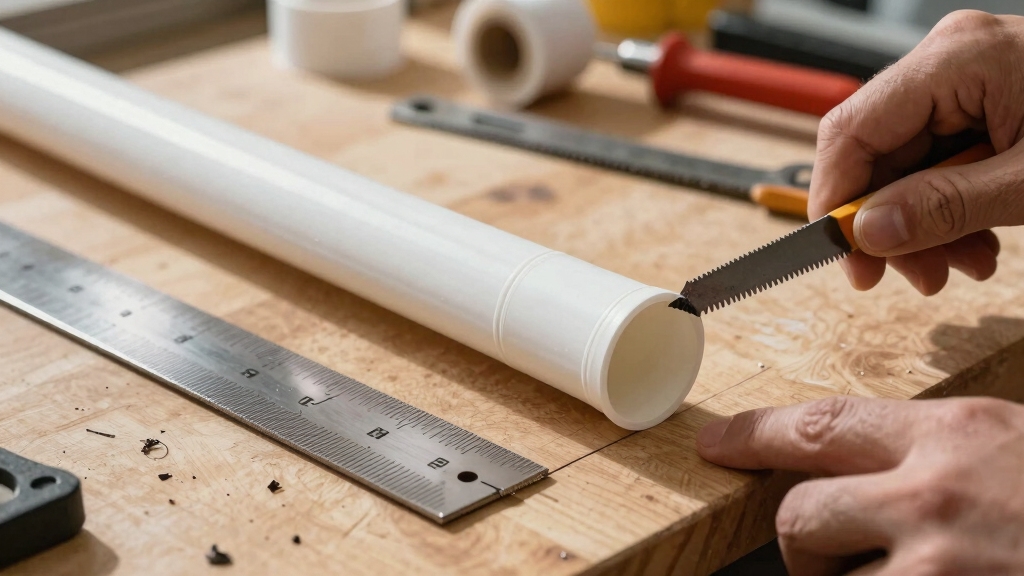
Accurately measuring and preparing your PVC pipe is essential for achieving clean, precise cuts.
Begin by using a reliable tape measure to mark the exact cut location with a pencil. Secure the pipe firmly using a vise, clamp, or miter box to prevent movement.
Wrap a strip of paper around the pipe to guide your tool alignment, ensuring the blade stays perfectly straight throughout the cut.
Consider temperature effects, as PVC can expand or contract. Measure and cut in stable, moderate temperatures to avoid dimensional inaccuracies.
Check the pipe’s manufacture date to assess age-related brittleness, which can affect cutting quality.
Proper preparation minimizes tool misalignment and reduces the risk of uneven edges or blowouts. This sets the foundation for efficient, clean cuts.
Using a ratchet drive mechanism can also reduce required hand effort and improve cutting precision during the process.
How to Choose the Right PVC Pipe Cutting Tool for Your Project?
When selecting a PVC pipe cutting tool, consider the pipe diameter, quantity of cuts, and desired precision to match the tool’s capabilities.
Consider pipe size, cut volume, and precision to choose the best PVC pipe cutting tool.
For small diameters up to 1 inch, scissor-type cutters offer excellent cutting ergonomics and material compatibility. They ensure clean, straight cuts with minimal effort.
If you’re handling pipes up to 1.5 inches, ratchet-style cutters provide controlled, precise cuts without excessive hand fatigue.
For larger diameters or high-volume projects, a power miter saw with a metal cutoff blade delivers consistent precision and efficiency.
Always evaluate cutting ergonomics to reduce strain during repetitive cuts. Confirm the tool’s blade or jaw suits the pipe’s material to avoid cracking or uneven edges.
Choosing the right tool optimizes cutting quality and project efficiency. Additionally, using specialized tools like PEX cutters and crimpers can ensure smooth cuts and secure connections when working with flexible piping materials.
Hacksaw or Pipe Cutter for PVC Pipe: Which Should You Use?
Deciding between a hacksaw and a pipe cutter comes down to the size of your PVC pipe, the number of cuts you need, and the level of precision required.
Use a hacksaw for larger diameter pipes or when making few cuts, as it adapts to various sizes but demands careful attention to hacksaw ergonomics to reduce hand fatigue and maintain control.
For smaller pipes up to 1.5 inches, especially when you have multiple cuts, a ratchet-style pipe cutter offers clean, precise cuts with less effort.
Make sure regular cutter maintenance, such as cleaning blades and lubricating moving parts, preserves cutting accuracy and extends tool life.
While the hacksaw provides flexibility, pipe cutters excel in speed and precision, making your choice dependent on your project’s specific demands.
Additionally, understanding the importance of minimum bend radius can help prevent damage to pipes during installation and ensure long-lasting plumbing performance.
How to Use a Power Miter Saw for Fast, Accurate PVC Cuts?
Start by securely clamping the PVC pipe to the miter saw base, aligning your cut mark precisely with the saw blade. Always wear ear and eye protection before lowering the blade slowly through the pipe.
Securely clamp the PVC pipe, align the cut mark, and wear protective gear before slowly lowering the blade.
Use a fine-tooth or metal cutoff blade designed for PVC to guarantee clean, accurate cuts. Activate the dust extraction system to minimize debris and maintain visibility.
Blade cooling is essential; pause between cuts to prevent overheating, which prolongs blade life and maintains sharpness.
Use clamps or a vise for firm pipe stability. Align marks exactly to avoid angled cuts. Engage dust extraction to reduce airborne particles. Allow blade cooling breaks during repetitive cuts.
This approach keeps cuts precise, fast, and safe when working with PVC on a power miter saw. To ensure strong connections, always make square, clean cuts for reliable solvent-welded joints.
How to Finish and Smooth PVC Pipe Edges After Cutting?
Finishing off your PVC pipe edges immediately after cutting guarantees proper fit and secure solvent welding.
Start by deburring the cut edge using a utility knife or a deburring tool to remove roughness and prevent leaks.
Next, chamfer the edge slightly to ease insertion into fittings.
For enhanced smoothness, apply edge polishing with fine-grit sandpaper, working evenly around the circumference.
This step eliminates microscopic imperfections that could compromise joint integrity.
If you want a cleaner, chemical-free finish, consider chemical smoothing by lightly applying a PVC solvent cement or primer to dissolve and reform the surface.
This process seals minor surface irregularities and strengthens the bond.
Always clean the pipe thoroughly after finishing to remove dust and residues before proceeding with assembly.
Proper preparation and finishing of pipe edges contribute to durable, leak-free plumbing installations, similar to how corrosion-resistant materials ensure longevity in septic system components.
Tips to Avoid Common Mistakes When Cutting PVC Pipe
When you’re cutting PVC pipe, it’s super important to secure the pipe well. Use a vise or a clamp to hold it steady—this way, it won’t move around while you’re cutting.
Next up, pick the right cutting tool! The tool you choose really depends on the diameter of the pipe and how many cuts you need to make. This will help you get those clean, precise cuts you’re after.
Oh, and don’t forget the finishing touches! After you’ve made your cuts, always deburr and smooth the edges. This step is key for ensuring a proper fit and preventing any leaks.
Although PVC is different from metal pipes, understanding cutting techniques for galvanized pipe can inspire careful handling to avoid damage during cutting.
Proper Pipe Securing
Consistently securing the PVC pipe firmly before cutting is essential to prevent slips and guarantee an accurate, clean cut.
Proper pipe stabilization reduces movement that can cause uneven edges or injury.
Focus on clamp selection to match the pipe diameter and material rigidity, ensuring a secure grip without deformation.
To optimize pipe securing:
Use a vise or miter box for rigid, stable support.
Select padded clamps to avoid surface damage.
Position clamps near the cutting mark for minimal pipe movement.
Avoid over-tightening, which can crush or bend the pipe.
Additionally, sanding the cut edges after securing and cutting the pipe helps ensure a proper fit and prevents leaks.
Correct Cutting Tool
Choose the right cutting tool based on your pipe’s diameter and the number of cuts you need to make. For smaller diameters under 1 inch, scissor-type cutters or rotating pipe cutters provide clean, precise cuts. This minimizes issues related to chemical compatibility and thermal expansion.
Larger pipes or multiple cuts call for a power miter saw or hacksaw for efficiency and accuracy.
| Tool Type | Suitable Diameter | Practical Benefit |
|---|---|---|
| Scissor-type | ≤ 1 inch | Accurate, less hand fatigue |
| Ratchet-style | ≤ 1.5 inches | Controlled, minimal deformation |
| Power miter saw | All sizes, multiple cuts | Fast, consistent straight cuts |
| Hacksaw | Any diameter, few cuts | Flexible, low cost |
Selecting properly avoids uneven cuts that compromise pipe integrity and fitting. Ensuring you use the correct tool also helps maintain the chemical compatibility of sealants and adhesives applied to the pipe joints.
Clean Post-Cut Edges
After selecting the appropriate cutting tool and making your cuts, focus shifts to ensuring the pipe ends are clean and properly finished. Clean post-cut edges are vital for proper fittings and solvent welding.
Remove burrs and rough spots using a deburring tool or fine sandpaper. Edge polishing improves joint integrity and prevents leaks. Collect shavings and scraps for plastic recycling to minimize waste. Keep your workspace tidy to avoid contamination.
Deburr edges carefully to prevent fitting damage. Use a fine file or sandpaper for smooth edge polishing. Inspect cuts for cracks or unevenness before assembly. Collect and recycle plastic scraps responsibly.
Following these steps guarantees precise, durable connections and supports sustainable plastic recycling practices. Maintaining a clean, organized workspace also improves efficiency and prevents tool-related issues during cutting and finishing.
Frequently Asked Questions
Can I Cut PVC Pipe Without Any Protective Gear?
You shouldn’t cut PVC pipe without protective gear because it poses health risks like inhaling dust or debris, which can irritate your eyes and lungs.
Legal compliance often requires safety measures such as wearing eye protection and masks, especially when using power tools.
Using gloves also prevents cuts from sharp edges.
Prioritizing safety gear guarantees you avoid injury and follow regulations, making your cutting process both efficient and safe.
How Do Temperature Changes Affect Cutting PVC Pipe?
Temperature changes make PVC pipe act like a restless dancer, expanding and contracting with thermal expansion.
When it’s cold, the pipe turns brittle, increasing the risk of cracking or breaking during cutting.
You should avoid cutting PVC in very low temperatures to prevent brittle behavior.
Instead, work in moderate conditions where the pipe remains flexible, ensuring clean, precise cuts without damage or unexpected fractures.
What Is the Best Way to Dispose of PVC Pipe Scraps?
You should dispose of PVC pipe scraps by taking them to designated recycling centers that accept rigid plastics.
Avoid throwing them in regular trash, as PVC can release harmful chemicals if burned.
For large amounts or contaminated pieces, use hazardous disposal services to prevent environmental damage.
Always check local regulations for PVC waste handling and store scraps safely until proper disposal to maintain a clean, safe work area.
Can I Reuse PVC Pipe Offcuts for Other Projects?
Think of PVC pipe offcuts as puzzle pieces waiting for the right fit. Yes, you can reuse them effectively!
Spare connectors help you transform these scraps into sturdy frames, plant supports, or craft projects. Measure each piece accurately, clean cut ends, and deburr before assembly.
This guarantees a snug fit and structural integrity. With proper preparation, your offcuts become versatile building blocks, saving materials and boosting creativity.
How Do I Prevent PVC Pipe From Cracking While Cutting?
To prevent PVC pipe from cracking while cutting, secure it firmly in a rubber lined vise to avoid crushing or slipping.
Use a pre drill guide to notch the pipe before cutting, reducing stress on the material.
Cut slowly near the end to avoid blowouts, and make sure your blade aligns precisely with the mark.
Supporting the pipe evenly and minimizing vibrations during cutting greatly lowers cracking risks.
PVC Pipe Cutting Tips to Remember for Every Project
Now that you’ve got the essentials down, cutting PVC pipe will feel like a breeze rather than a chore. With precise measuring, the right tools, and a bit of care smoothing edges, your cuts will look professional and fit perfectly.
Avoiding common slip-ups guarantees your project stays on track without unnecessary hiccups. Keep these practical tips in mind, and you’ll handle PVC cutting with confident ease every time.