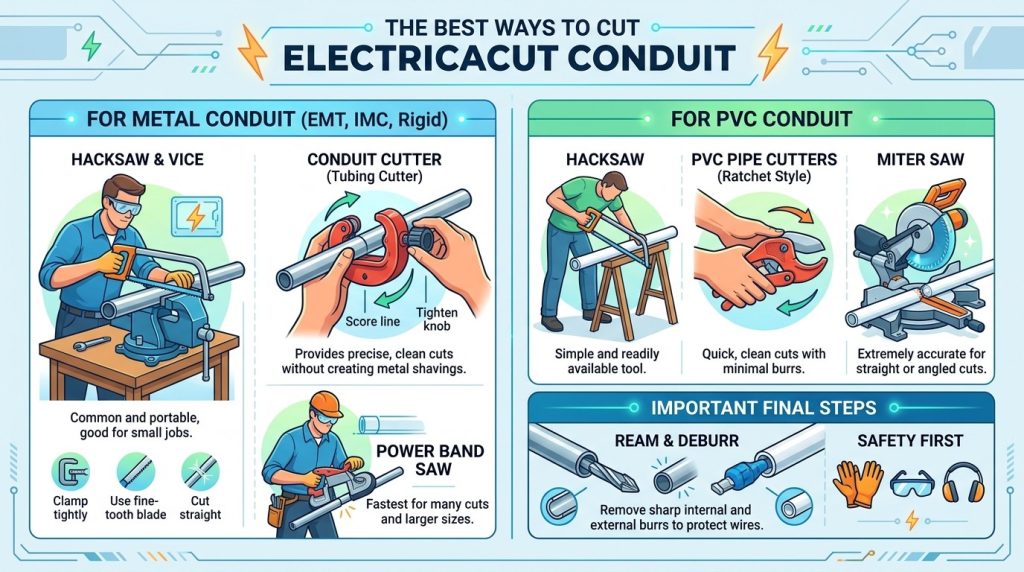
To cut conduit effectively, select the right tool: tubing cutters for small diameters and clean cuts, hacksaws for budget-friendly options, or angle grinders for thicker metals.
Secure the conduit firmly, mark your cut precisely, and rotate the cutter gradually, avoiding over-tightening. Finish by deburring edges with a file for smooth joints and proper alignment.
For larger or rigid conduit, consider power tools to maintain integrity. Below, you’ll find detailed steps and tips to enhance your cutting precision and safety.
Key Takeaways
- Use a tubing cutter for clean, precise cuts on EMT, PVC, aluminum, and copper conduits with small diameters.
- Mark the conduit accurately, secure it firmly, and wear protective gloves and eye gear before cutting.
- Rotate the tubing cutter around the conduit, tightening the knob gradually to avoid over-tightening and conduit damage.
- Deburr and smooth cut edges with a file or deburring tool to ensure proper fit and joint integrity.
- For larger or thick conduit, use an angle grinder or reciprocating saw to achieve faster, effective cuts.
Step-by-Step Guide to Cutting Conduit Safely
Start by marking your conduit with a Sharpie or dry erase marker at the exact length you need.
Before cutting, review your safety checklist: wear thick gloves, guarantee proper eye protection, and secure the conduit firmly with a hand clamp or vise.
Pay close attention to hand positioning. Keep your hands clear of the cutting wheel and rotating parts to avoid injury. Loosen the tubing cutter knob, place the conduit between rollers, and align the cutter wheel precisely on your mark.
Tighten the knob lightly, rotate the cutter around the conduit, and gradually tighten the knob with each pass. Avoid over-tightening to prevent conduit pop-out.
Once the cut reaches about 90%, you can snap the conduit by applying controlled pressure. This method guarantees a safe, clean cut with minimal risk.
For best results, always ensure your cuts are perpendicular and free of burrs to maintain joint integrity and ease installation.
Pick the Right Tool for Cutting Conduit
Selecting the right tool for cutting conduit depends on the type and size of conduit you’re working with, as well as the precision and speed required. Tool selection hinges on material compatibility. EMT conduit suits tubing cutters, while tougher metals may need power tools. Consider your project demands before choosing.
| Tool | Best For | Material Compatibility |
|---|---|---|
| Tubing Cutter | Precise, small diameters | EMT, PVC, aluminum, copper |
| Hacksaw | Basic, budget cuts | Various metals, slower speed |
| Angle Grinder | Fast cutting | EMT, thicker metals |
Using the appropriate tool guarantees clean cuts without damaging the conduit or risking injury. Match your tool to conduit type for efficiency and safety. For electrical projects, select the right wire gauge to ensure safe and effective power delivery, especially when using devices like submersible pumps.
Finishing Cuts on Conduit for Smooth, Burr-Free Edges
Although cutting conduit accurately is essential, finishing the edges properly guarantees the integrity and safety of your installation. Burrs or rough edges can damage wiring and compromise connection quality.
Proper edge finishing ensures installation safety by preventing wiring damage and maintaining connection quality. To finish cuts effectively, follow these steps:
- Use a metal file or deburring tool to remove burrs from both the outer and inner edges, assuring thread preservation if threading is involved.
- Apply edge polishing with fine-grit sandpaper or abrasive pads to smooth the surface and prevent injury during handling.
- Inspect the cut for square alignment and refile any uneven parts to maintain proper fit with connectors.
- If threading conduit, deburr the inside lip carefully to avoid damaging threads and assuring secure fittings.
These steps guarantee smooth, burr-free edges and maintain conduit functionality. Proper maintenance of tools, including soaking them in warm, soapy water, helps ensure longevity and readiness for future projects, which is crucial when working with threaded galvanized pipe.
Tips for Cutting PVC, EMT, and Metal Conduits
Mastering the nuances of cutting PVC, EMT, and metal conduits requires understanding their material properties and matching the right tools and techniques to each type.
PVC demands careful handling due to plastic expansion and thermal expansion. Cut it slowly with a tubing cutter or fine-tooth saw to avoid cracking.
EMT, a thinner metal, suits tubing cutters or angle grinders for speed. Rigid metal conduits need sturdy saw blades or power tools, but watch for burrs.
| Conduit Type | Recommended Tool | Cutting Tips |
|---|---|---|
| PVC | Tubing cutter, fine saw | Cut slowly; allow for expansion |
| EMT | Tubing cutter, grinder | Use rollers; avoid over-tightening |
| Metal | Sawzall, angle grinder | Deburr edges; wear gloves |
Always secure conduit firmly to guarantee clean, precise cuts. Using a proper PVC thread sealant after cutting can ensure leak-free and durable connections when assembling conduit fittings.
When to Try Alternative Ways to Cut Conduit?
When standard tubing cutters slow you down or don’t fit the conduit size, it’s time to explore alternative cutting methods.
You’ll want to switch when faced with larger diameters, tougher metals, or tight spaces where a cutter won’t fit.
Both the angle grinder and reciprocating saw provide efficient solutions but require careful handling to maintain cut quality and safety.
Consider these scenarios to try alternative methods:
- Cutting large-diameter EMT conduit quickly with an angle grinder.
- Working in confined spaces where tubing cutters can’t rotate fully.
- Handling thick or galvanized conduit that resists manual cutting.
- Needing faster cuts on-site for time-sensitive projects using a reciprocating saw.
Use these tools with precision to avoid rough edges and maintain conduit integrity. For plastic conduit, specialized ratchet drive mechanisms can simplify cutting and improve precision with less effort.
Frequently Asked Questions
How Do I Recycle or Dispose of Leftover Conduit Pieces Safely?
You should take leftover conduit pieces to local recycle centers that accept metal and PVC materials.
Sort them by type: metal conduit goes to scrap metal recycling, while PVC requires plastic recyclers.
Avoid disposing of conduit in regular trash to prevent environmental harm.
For contaminated or coated conduit, check hazardous disposal guidelines at your area’s waste facility.
Always wear gloves during handling to avoid injury and guarantee safe transport to recycling or disposal sites.
What Maintenance Is Required for Tubing Cutters to Ensure Longevity?
You should follow a regular lubrication schedule to keep your tubing cutter’s rollers and blade rotating smoothly. This prevents rust and wear.
Clean the cutter after each use to remove debris, then apply light machine oil.
Monitor the blade condition closely; replace the blade when it dulls or chips to guarantee clean cuts.
Proper maintenance like this extends your cutter’s life and maintains cutting precision. This makes your work safer and more efficient.
Can Conduit Cutting Methods Vary by Regional Electrical Codes?
Yes, conduit cutting methods can vary based on local codes and permit requirements. You need to make sure your chosen cutting technique complies with these regulations to avoid inspection issues.
Some regions mandate specific tools or cutting finishes to maintain safety and structural integrity. Always review local codes before starting, as they may specify how to handle conduit types, cutting precision, and deburring.
Staying compliant guarantees your installation passes permits and functions properly.
How Do Temperature Changes Affect Conduit Cutting and Installation?
Imagine cutting conduit on a chilly morning. Metal contracts, making your measurements slightly off.
Thermal expansion means conduit will expand and contract with temperature shifts, so you must plan installation timing carefully.
If you cut too tightly in cold weather, the conduit might buckle in heat. Always leave a small gap for expansion, especially in outdoor or underground installations.
This ensures secure, reliable connections that withstand temperature swings without stress or damage.
Are There Health Risks Associated With Cutting Certain Conduit Materials?
Yes, you face health risks when cutting certain conduit materials. Cutting PVC or coated conduits can release toxic dust and chemical offgassing, which irritate your respiratory system.
Always wear a respirator and work in a well-ventilated area to minimize exposure. Avoid inhaling dust from metal conduits too, as fine particles can harm your lungs.
Using proper PPE and dust control measures keeps you safe during cutting operations.
From Rough to Refined: Ending Your Conduit Work the Right Way
When you’re cutting conduit, like an electrician replacing old EMT in a busy warehouse, choosing the right tool and finishing your cuts smoothly prevents delays and hazards.
Remember, using a hacksaw on metal conduit or a PVC cutter on plastic guarantees clean edges and safe installations. By following these precise steps, you’ll save time, avoid damage, and maintain professional standards every time you cut conduit.