You shouldn’t use standard white Teflon tape on gas lines because it’s not rated for gas service and can cause leaks, equipment damage, and code violations.
White tape can shed fragments that jam valves or regulators, creating safety hazards.
Instead, use yellow gas-rated PTFE tape or approved sealants designed for natural gas and propane, which meet pressure, temperature, and chemical resistance standards.
To understand proper materials, fittings, and safe installation practices, keep exploring this topic further.
Key Takeaways
- Standard white PTFE tape is not approved or rated for gas service, risking leaks and safety hazards.
- White tape can shred, causing debris that contaminates valves and regulators, leading to malfunctions.
- Using non-gas-rated tape may violate local codes and manufacturer installation requirements.
- Yellow gas-rated PTFE tape or approved sealants are required to ensure safe, code-compliant gas seals.
- Proper installation and leak testing are essential to detect and prevent gas leaks caused by tape failure.
Why White Teflon Tape Isn’t Safe for Gas Lines?

Although white Teflon tape is widely used for water plumbing, you shouldn’t rely on it for gas lines because it’s not rated or approved for gas service.
White PTFE tape lacks the density and certification needed to withstand natural gas, propane, or similar fuel gases safely.
Using white tape on gas joints risks leaks, which can create hazardous conditions and violate code requirements.
Gas-rated tape, typically yellow and specifically designed for fuel gases, guarantees a proper seal under pressure and temperature variations.
When you’re working on gas connections, always choose materials labeled and tested for gas use.
This prevents unsafe installations and aligns with safety standards, helping you avoid costly and dangerous failures in your gas plumbing system.
Additionally, regular maintenance of the gas ball valve is crucial to ensure the integrity of gas connections over time.
What Makes Yellow Gas-Rated PTFE Tape Different?
You can’t just grab any PTFE tape for gas lines. Yellow gas-rated tape is specially made from a denser material that can handle higher pressures and temperatures. Pretty important, right?
It meets strict safety and compliance standards that white tape simply doesn’t, which means you’re getting a secure, code-approved seal.
So, understanding these key differences is crucial. It helps you avoid leaks and hazards in gas installations.
After all, safety should always come first! Additionally, unlike residential water systems where standard Teflon tape suffices, gas lines require sealants with high-pressure resistance to prevent dangerous failures.
Material Composition Differences
When dealing with gas lines, the material composition of yellow gas-rated PTFE tape sets it apart from standard white tape. It offers higher density and specialized additives that enhance its chemical resistance and durability under gas service conditions.
This higher density reduces tape shredding during assembly, minimizing the risk of loose fragments contaminating gas equipment. The additives improve the tape’s resistance to natural gas and propane, preventing chemical degradation that could compromise the seal.
Unlike white PTFE tape designed for water plumbing, yellow gas-rated tape meets strict standards for fuel gas compatibility. By choosing gas-rated tape with these composition differences, you guarantee a safer, longer-lasting seal that aligns with regulatory requirements and withstands the challenges specific to gas piping applications. Additionally, selecting a sealant or tape that provides fuel and chemical resistance is critical for maintaining system integrity in gas applications.
Pressure And Temperature Ratings
Since gas lines operate under varying pressures and temperatures, yellow gas-rated PTFE tape is engineered to meet specific ratings that standard white tape can’t handle.
This tape withstands higher pressure levels typical in natural gas and propane systems, maintaining integrity without degrading or losing sealing performance.
It also tolerates temperature fluctuations, from cold ambient conditions to the heat generated in gas flow, without becoming brittle or adhesive.
Standard white PTFE tape, designed mainly for water lines, lacks these capabilities and may fail under gas service conditions.
Using yellow gas-rated tape guarantees the seal resists pressure-induced leaks and thermal expansion stresses.
Always verify the tape’s pressure and temperature ratings align with your specific gas system requirements to maintain a reliable, code-compliant seal.
Additionally, because gas valves operate under higher pressures, the sealing materials must be compatible to ensure safety and efficiency.
Safety And Compliance Standards
Although both white and yellow PTFE tapes share the same base material, yellow gas-rated tape meets stringent safety and compliance standards that white tape does not.
Yellow tape is specially formulated and tested to withstand natural gas, propane, and similar fuel gases at specific pressures and temperatures. It complies with standards like BS EN 751-3:2022, guaranteeing it won’t degrade or contaminate gas lines.
Using white tape risks leaks, contamination from shredded fragments, and code violations. When you work on gas lines, always verify local regulations and manufacturer instructions to confirm approved sealants.
Yellow gas-rated tape, applied correctly to tapered threaded joints, guarantees a reliable, safe seal. Proper use and compliance prevent dangerous leaks and maintain system integrity in fuel gas installations.
It is crucial to avoid materials like PVC that can degrade or release harmful chemicals under heat, ensuring material safety in gas line applications.
Gas Fittings That Require Sealants Instead of Tape
Because some gas fittings rely on metal-to-metal contact or gaskets for a proper seal, you can’t just use PTFE tape on every connection. Flared fittings and parallel threads often require sealants or gaskets instead of tape to prevent leaks and ensure safety. Always consult manufacturer instructions and local codes to select the right sealing method.
| Fitting Type | Recommended Sealant | Reason |
|---|---|---|
| Flared Fittings | Elastomeric Gasket | Metal-to-metal seal |
| Parallel Threads | Approved Thread Compound | Tape alone won’t seal reliably |
| Compression Joints | Soft-Metal Gasket | Compression seal, no tape needed |
Using sealants as specified guarantees secure, code-compliant gas connections. It is important to consider that some valves, unlike ball valves with their bidirectional design, may require attention to flow direction for proper sealing and performance.
Why Loose Teflon Tape Fragments Are Dangerous for Gas Lines?
You really need to steer clear of loose Teflon tape fragments in gas lines. Why? Well, those tiny bits can contaminate regulators, valves, and orifices. Imagine them getting stuck in the wrong place—it’s not a pretty picture.
These small pieces can block internal components, which can lead to some serious malfunctions or even restrict gas flow.
And guess what? That can ramp up the risk of dangerous over-pressurization and possibly lead to system failure. So, keeping those loose fragments out is crucial for safety! Regular inspection and maintenance of gas lines can help prevent issues caused by debris buildup.
Tape Fragment Contamination
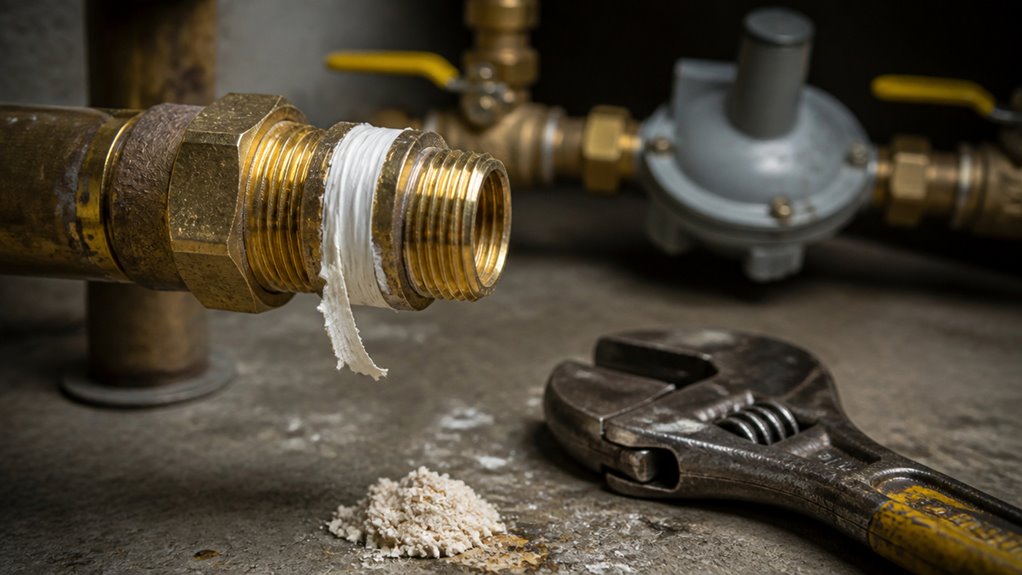
When you wrap Teflon tape on gas line threads, small fragments can break off and get into the system during assembly.
These loose particles may travel downstream, lodging in regulators, valves, or orifices.
Once trapped, tape fragments can prevent valves from fully closing, restrict gas flow, or interfere with pressure regulation.
This contamination risk is significant because it can cause equipment malfunction or unsafe pressure conditions.
Since gas systems rely on precise sealing and clean internal components, even tiny debris can compromise safety and performance.
That’s why many professionals avoid standard Teflon tape on gas lines, favoring approved gas-rated sealants applied carefully to minimize fragment generation and entry into the piping.
Your best practice: use proper materials and techniques to prevent tape debris contamination.
Improper installation can lead to malfunctions that compromise the integrity of the entire gas system.
Equipment Malfunction Risks
Loose Teflon tape fragments can jam critical gas equipment components, leading to malfunctions that compromise safety and performance.
When fragments enter regulators, valves, or orifices, they interfere with proper operation, causing valves to stick or fail to seal fully.
This can result in restricted gas flow, pressure irregularities, or dangerous over-pressurization.
You mightn’t notice these issues until a system failure occurs, posing significant safety risks. Because of these hazards, industry guidelines favor approved gas-rated sealants and careful installation techniques that minimize debris.
Applying the correct sealant only to male threads and avoiding excess tape reduces the chance of loose fragments entering the system.
Always test completed joints for leaks to catch malfunctions early and guarantee reliable, safe gas operation.
For propane systems, using galvanized pipe that is properly rated and maintained can further enhance safety by preventing corrosion-related leaks.
What You Need to Know About Gas Codes and Teflon Tape?
Although gas codes vary by jurisdiction, they play a vital role in determining whether and what type of Teflon tape you can use on gas lines. You must follow local regulations and product instructions strictly to guarantee safety and compliance. Here’s what to keep in mind:
Use only gas-rated PTFE tape, usually yellow, meeting standards like BS EN 751-3:2022.
Avoid white PTFE tape, which isn’t approved for gas.
Understand your fitting type; some require thread sealant compounds or gaskets instead of tape.
Apply tape correctly—wrap male threads in the tightening direction, leaving first threads bare.
Always perform leak testing after assembly and repair any leaks immediately.
Ignoring these code requirements risks unsafe installations and potential gas leaks.
Proper preparation and the use of manufacturer-specific tools can help ensure safe and accurate assembly and disassembly of gas line components.
Other Safe Sealant Options Besides Teflon Tape for Gas Lines
Following gas code requirements and choosing the right tape is one part of guaranteeing a safe gas line installation, but you also have several other sealant options worth considering.
Gas-rated thread sealant compounds, commonly called pipe dope, provide excellent sealing for threaded gas joints. These compounds are formulated for compatibility with natural gas and propane, resisting pressure and temperature fluctuations.
Unlike standard PTFE tape, approved pipe dopes minimize the risk of contamination from loose particles. Additionally, some fittings require elastomeric or soft-metal gaskets for effective sealing, especially flared or parallel-thread fittings where tape or compound alone won’t suffice.
Always verify that the sealant you choose is approved for the specific gas type, pressure, and fitting design to maintain compliance and guarantee leak-free, safe joints.
How to Prepare Threads Before Applying Gas Line Sealant?
Before applying any gas line sealant, you need to thoroughly clean the threads to remove dirt, oil, old sealant, or debris that could compromise the seal.
Start by inspecting threads for damage or corrosion. Use a wire brush or clean rag to remove contaminants. Avoid solvents that leave residues.
Make sure threads are dry before applying sealant.
Steps to prepare threads include:
- Visually check for nicks, cracks, or deformities.
- Remove old sealant or tape residues completely.
- Clean threads with a stiff nylon or wire brush.
- Wipe with a lint-free cloth to remove dust and oils.
- Confirm threads are dry and free of debris before sealing.
Proper preparation guarantees a tight, leak-free connection and prevents contamination inside the gas line.
How to Wrap Teflon Tape Correctly on Gas Joints?
Start by selecting the correct gas-rated Teflon tape, typically yellow high-density PTFE, for your gas joints to guarantee safety and code compliance.
Choose yellow high-density PTFE tape for gas joints to ensure safety and meet code requirements.
Clean the male threads thoroughly, removing dirt, oil, and old sealant.
Wrap the tape clockwise, matching your tightening direction to prevent unraveling during assembly.
Avoid covering the first thread to reduce the risk of tape fragments entering the gas line.
Apply two to three tight, even layers, ensuring the tape conforms smoothly without bunching or overlapping excessively.
Never use tape on fittings requiring metal-to-metal seals or parallel threads unless specified.
After wrapping, assemble the joint carefully, avoiding overtightening that can shred tape.
Proper wrapping minimizes contamination risks and improves joint integrity, supporting a safer, code-compliant gas installation.
How to Leak-Test Gas Joints Sealed With Teflon Tape?
When testing gas joints sealed with Teflon tape, you need to guarantee a thorough and reliable leak check to confirm the integrity of the connection. Follow these steps to assure safety and compliance:
Apply a soap solution evenly over the joint area.
Watch carefully for forming bubbles that indicate escaping gas.
Use a gas leak detector for a more sensitive and accurate check.
Avoid open flames or sparks during testing to prevent ignition.
If leaks appear, shut off the gas immediately and reassemble or reseal the joint.
Frequently Asked Questions
Can I Use Teflon Tape on Gas Appliance Connectors?
You can use gas-rated yellow PTFE tape on gas appliance connectors, but not standard white Teflon tape.
Make sure the tape is specifically designed for gas service to assure a proper seal and safety.
Always follow the appliance and fitting manufacturer’s instructions. Apply tape only to male threads in the tightening direction.
After assembly, perform a leak test to confirm the connection is secure and safe before use.
How Often Should Gas Line Seals Be Inspected or Replaced?
Think of your gas line seals as the gatekeepers of safety. They deserve your regular attention.
You should inspect them at least once a year or whenever you detect a gas odor, hear a hissing sound, or after any repair work.
Replace seals immediately if you find cracks, wear, or leaks during inspection.
Routine checks and prompt replacements prevent dangerous leaks, keeping your system running smoothly and your environment safe.
Is It Safe to DIY Gas Line Repairs With PTFE Tape?
You shouldn’t DIY gas line repairs using standard PTFE tape because it often isn’t rated for gas and can cause leaks or contamination.
If you do, use only gas-rated yellow PTFE tape and follow manufacturer and local code requirements strictly.
Remember, gas line work can be dangerous and is often regulated.
It’s safer and sometimes legally required to have a licensed professional handle these repairs to guarantee safety and compliance.
What Are Signs of a Failing Gas Line Seal?
Imagine you smell gas near a recently sealed joint. That’s a clear sign your gas line seal is failing.
Other signs include hissing sounds at fittings, dead vegetation near buried lines, or a drop in appliance flame intensity.
You should also watch for visible cracks or corrosion on joints. If any of these occur, shut off the gas immediately and get a professional to inspect and repair the leak to avoid dangerous situations.
Can Moisture Affect the Effectiveness of Gas-Rated Teflon Tape?
Yes, moisture can affect gas-rated Teflon tape’s effectiveness. When you apply the tape to damp threads, it may not adhere properly, reducing the seal’s integrity.
Excess moisture can also cause tape slippage during tightening, leading to leaks. To guarantee a reliable seal, always clean and dry threads thoroughly before wrapping tape.
This practice helps maintain gas-tight connections and prevents potential safety hazards.
Why No Teflon Tape on Gas Lines? Final Answer
When sealing gas lines, don’t risk using white Teflon tape. It can shred and cause leaks.
Instead, choose yellow gas-rated PTFE tape designed to withstand gas pressure and prevent loose fragments.
For example, a homeowner who used white tape experienced a dangerous leak, costing thousands in repairs.
Always prep threads properly, wrap tape tightly in the right direction, and perform leak tests to guarantee safety.
Following these steps keeps your gas system secure and code-compliant.