When choosing between Type M and Type L copper pipes, consider your system’s pressure needs and budget.
Type L has thicker walls, handles medium to high pressures, and offers better durability. This makes it ideal for main water lines and fire sprinklers.
Type M, with thinner walls, suits low-pressure, budget-friendly indoor projects but requires careful pressure testing.
Color coding helps you identify each quickly. Understanding these differences guarantees you select the right pipe for your application’s demands and longevity.
Key Takeaways
- Type L copper pipe has thicker walls, offering higher pressure capacity and better durability than the thinner-walled Type M.
- Type M is lighter, more economical, and easier to install but suitable only for low to moderate pressure residential applications.
- Type L is identified by blue markings, while Type M uses red, aiding quick on-site pipe identification.
- Type L suits demanding uses like main water lines and fire sprinklers; Type M fits branch lines and budget-conscious indoor plumbing.
- Cost and weight differences affect installation and support needs, with Type L requiring sturdier supports due to its heavier weight.
Quick Comparison Guide for Type M Vs L Copper Pipe
| Feature | Type M Copper Pipe | Type L Copper Pipe |
|---|---|---|
| Wall Thickness | Thin (approx. 0.028 in) | Thicker (approx. 0.040 in) |
| Pressure Capacity | Low to moderate pressure | Medium to high pressure |
| Durability | Moderate durability | High durability & longer lifespan |
| Cost | More affordable | Higher cost due to more copper |
| Weight | Lightweight & easy to handle | Heavier, requires stronger support |
| Common Uses | Indoor plumbing, branch lines | Main water lines, HVAC, fire systems |
| Code Compliance | Limited (depends on local codes) | Widely accepted in most plumbing codes |
| Color Marking | Red | Blue |
Understanding Type M and Type L Copper Pipes
Although both Type M and Type L copper pipes serve residential plumbing needs, they differ primarily in wall thickness, pressure ratings, and cost.
Type L has a medium wall thickness of about 0.040 inches for 1/2-inch pipes, offering greater durability and higher pressure tolerance.
Type M’s thinner walls, roughly 0.028 inches, reduce cost but limit pressure capacity.
Despite identical outer diameters, their inner diameters vary due to these wall differences.
You’ll recognize Type L by blue markings and Type M by red, aiding quick identification onsite.
Type L supports medium to high pressures and suits demanding applications, while Type M fits moderate-pressure, budget-conscious projects.
The thicker walls of Type L increase weight and cost.
Type M provides an economical, lighter alternative without compromising corrosion resistance.
For projects requiring enhanced mechanical strength and corrosion resistance, stainless steel fittings offer a superior alternative to traditional materials.
When to Choose Type M or Type L Copper Pipes?
Choosing between Type M and Type L copper pipes depends largely on the specific requirements of your plumbing system, including pressure demands, durability needs, and budget constraints.
Opt for Type L if your system requires higher pressure tolerance and enhanced durability, such as main water lines, fire sprinklers, or HVAC applications.
Type L copper pipes are ideal for high-pressure systems needing durability, like main water lines and fire sprinklers.
Its medium wall thickness handles moderate to high pressure and meets most plumbing codes.
Choose Type M for low-pressure residential systems or branch lines where cost efficiency and ease of installation are priorities.
Type M’s thinner walls suit indoor plumbing and radiant heating, assuming local codes allow.
Always verify pressure ratings and code compliance before selecting.
Your decision should balance performance needs and cost-effectiveness, ensuring the pipe meets both operational and regulatory standards.
Similar to choosing between Type M and L copper pipes, selecting between plastic vs brass fittings involves evaluating pressure requirements, durability, and cost to optimize system performance.
How Wall Thickness Affects Copper Pipe Durability and Pressure?
You might’ve noticed that Type L copper pipe has a thicker wall—about 0.040 inches for the 1/2-inch size. In comparison, Type M comes in at just 0.028 inches.
This extra thickness makes a big difference! It not only boosts Type L’s durability but also enables it to handle higher pressure applications.
So, when you’re choosing between these two types, it’s super important to consider what your system needs. If you’re looking for something that can withstand more pressure and last longer, Type L might be the way to go.
Understanding these differences really helps you make the right choice for your project! Additionally, considering the mechanical strength of materials used in fittings can further enhance system reliability when paired with the appropriate pipe type.
Wall Thickness Comparison
Understanding wall thickness is essential when selecting copper pipes, as it directly impacts both durability and pressure capacity.
Type L copper pipe has a medium wall thickness of about 0.040 inches (1/2-inch pipe), providing enhanced strength and corrosion resistance.
Type M, on the other hand, features thinner walls around 0.028 inches for the same size, reducing material cost but limiting durability.
Both types share the same outer diameter, but their inner diameters differ due to wall thickness.
Consider these key points:
- Thicker walls in Type L resist corrosion and mechanical damage better than Type M.
- Type M’s thinner wall reduces weight and cost but compromises long-term durability.
- Wall thickness variation affects the pipe’s ability to withstand environmental stressors.
Additionally, pipes with thicker walls like Type L are generally more resistant to erosion-corrosion caused by high water velocity and turbulent flow conditions.
Pressure Capacity Impact
Since wall thickness directly influences a copper pipe’s structural integrity, it plays a critical role in determining the pipe’s pressure capacity and overall durability.
Type L’s thicker walls, approximately 0.040 inches for 1/2-inch pipe, provide enhanced resistance to internal pressure and corrosion. This makes it suitable for medium to high-pressure applications.
In contrast, Type M’s thinner walls, around 0.028 inches for the same size, reduce its pressure rating and durability. This limits its use to low to moderate pressure systems.
When you select copper pipes, consider that the wall thickness impacts not only the maximum pressure the pipe can safely handle but also its lifespan under stress.
Using Type L guarantees greater reliability in demanding environments. Meanwhile, Type M fits budget-conscious projects with lower pressure requirements.
Proper cutting and threading techniques ensure that pipe integrity is maintained during installation, preventing damage that could compromise pressure capacity.
Pressure Ratings for Type M and Type L Copper Pipes
When selecting copper pipes for your project, consider the pressure ratings that distinguish Type M and Type L pipes.
Type L features thicker walls, allowing it to handle medium to high-pressure applications. This makes it suitable for main water lines and some outdoor uses.
Meanwhile, Type M has thinner walls and is rated for low to moderate pressure. It’s ideal for indoor residential supply lines where pressures are lower.
Here’s what you should keep in mind:
- Type L supports higher pressures due to its thicker wall thickness.
- Type M is designed for moderate pressure environments, limiting its use to lighter-duty applications.
- Always consult local codes, as they dictate allowable pressure limits and appropriate pipe types.
Choosing the right pipe depends on your system’s pressure requirements and regulatory standards. Similar to Schedule 40 pipes, thicker walls generally provide greater durability and higher pressure capacity, which is an important factor in pipe selection pressure capacity.
Color Coding for Easy Identification of Type M and L Pipes
You’ll notice that Type L copper pipes have a blue color code, making them easy to spot. On the other hand, Type M pipes are marked with red, which helps you quickly identify them. These standardized color codes are super handy, right?
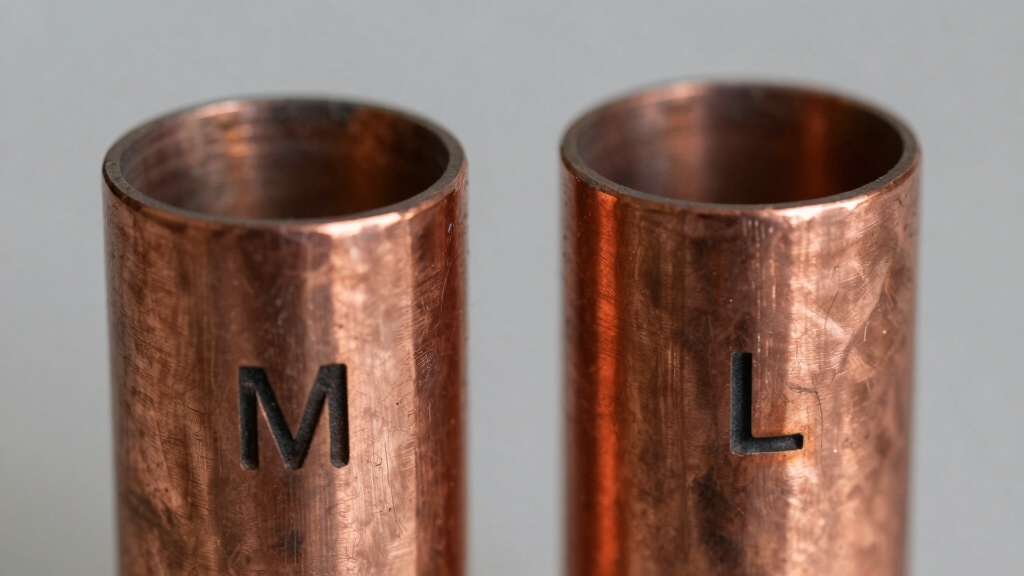
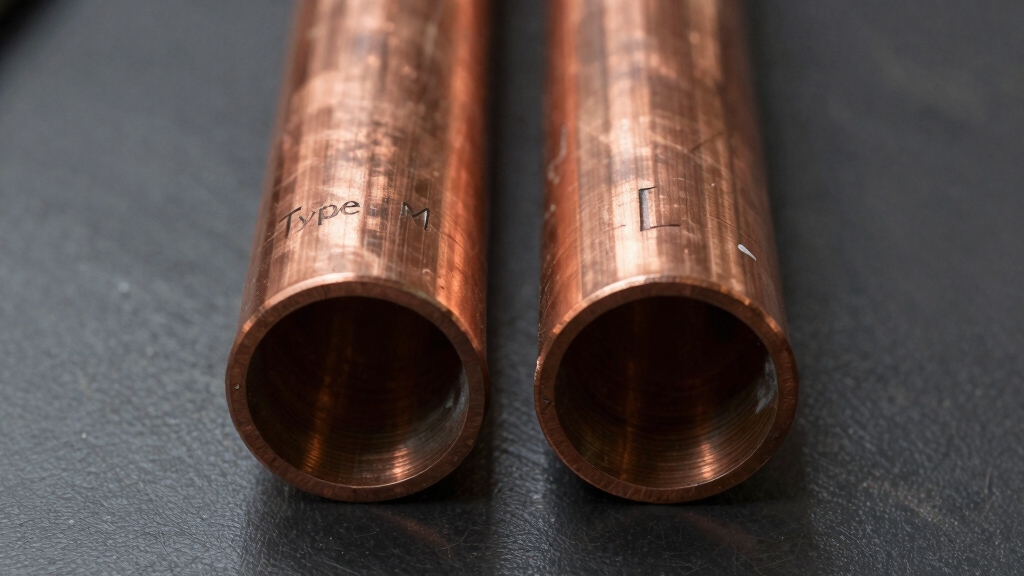
Plus, you’ll also see printed markings like “L” or “M” right on the tubing, so you can confirm the pipe type effortlessly while you’re installing.
Understanding these conventions is really important. It ensures you choose the right pipe to meet your pressure and durability needs. So, next time you’re working on a project, keep an eye out for those color codes!
Unlike copper, materials like PVC and PEX offer different benefits such as corrosion resistance and flexibility, which can influence your choice depending on the application.
Color Codes Explained
Color coding plays a crucial role in quickly identifying copper pipe types during installation and maintenance.
You’ll find that Type L copper pipe features a blue color code, while Type M is marked in red. These color indicators help you avoid confusion and speed up your workflow.
Here’s what to keep in mind:
- Type L (Blue): Medium wall thickness, suitable for medium to high pressure systems.
- Type M (Red): Thinner walls, designed for low to moderate pressure applications.
- Markings: Both types have their respective letters (L or M) printed on the pipe for added verification.
Using these color codes guarantees you select the right pipe type for your pressure and durability requirements efficiently. For enhanced plumbing system reliability, use durable and corrosion-resistant clamps that ensure a secure and leak-free connection.
Visual Identification Tips
Identifying Type M and Type L copper pipes quickly on-site relies heavily on their distinctive color markings. Type L pipes feature a blue color code, while Type M pipes are marked with red. These colors allow you to distinguish pipe types instantly, reducing installation errors.
Besides color, markings like “L” or “M” are printed directly on the tubing surface for confirmation. Here’s a quick reference:
| Feature | Type L |
|---|---|
| Color Marking | Blue |
| Wall Thickness | Medium (≈0.040 in) |
| Pressure Rating | Medium to High |
| Common Usage | Main water lines |
| Feature | Type M |
| Color Marking | Red |
| Wall Thickness | Thin (≈0.028 in) |
| Pressure Rating | Low to Moderate |
| Common Usage | Residential branches |
When connecting copper pipes to other materials such as PEX, it is important to use dielectric unions to prevent galvanic corrosion and ensure a long-lasting, leak-free connection.
Pipe Marking Standards
Although copper pipes may look similar at a glance, standardized markings help you quickly distinguish between Type M and Type L pipes on-site.
These markings include both printed labels and color codes that guarantee accurate identification during installation and inspection.
Here’s how you can identify them:
- Color Coding: Type L pipes have a blue color code, while Type M pipes use red. This visual cue is vital for fast differentiation.
- Printed Markings: Letters “L” or “M” are stamped or printed directly on the pipe’s surface.
- Consistency: These markings follow industry standards, guaranteeing you can rely on them regardless of the manufacturer.
Using these standards prevents errors and guarantees compliance with pressure and application requirements. Additionally, selecting the correct pipe type is essential to ensure compatibility with your water system’s working pressure and temperature specifications.
Typical Applications for Type M Versus Type L Copper Pipes
Typically, when selecting copper pipes for plumbing, you’ll choose Type L for main water distribution lines and high-pressure applications due to its thicker walls and greater durability.
For main water lines and high-pressure uses, Type L copper pipe is the durable, reliable choice.
Type L excels in interior hot and cold water supply, fire sprinkler systems, HVAC, and other medium- to high-pressure uses.
On the other hand, Type M suits branch lines, low-pressure residential water systems, and indoor plumbing where local codes permit.
Its thinner walls make it ideal for radiant heating and lighter-duty projects, but it’s not recommended for high-pressure or outdoor applications.
You’ll find Type L marked with a blue code for easy identification, while Type M uses red.
Knowing these applications helps guarantee you select the right pipe type for safety and compliance.
Cost Comparison of Type M and Type L Copper Pipes
When budgeting for plumbing projects, you’ll find that Type M copper pipes generally cost less than Type L due to their thinner walls and reduced copper content. This difference stems from manufacturing requirements. Type L’s thicker walls demand more material and processing, increasing price.
Consider these key cost factors:
- Material Usage: Type L uses more copper, raising raw material costs.
- Weight and Transportation: Heavier Type L pipes incur higher shipping expenses.
- Project Suitability: Type M provides a budget-friendly option for low-pressure applications, reducing overall system cost.
Pros and Cons of Type M and Type L Copper Pipes
You’ll often find Type L copper pipes preferred for applications demanding higher durability and compliance with most plumbing codes, thanks to their thicker walls and longer lifespan.
They excel in medium to high-pressure systems and interior water distribution but come with a higher cost due to increased copper content.
On the other hand, Type M copper pipes offer affordability and easier handling due to thinner walls, making them suitable for low to moderate pressure residential use.
However, these thinner walls reduce durability and limit pressure capacity, which can restrict their application in certain installations.
Both types resist corrosion well, but you should weigh Type L’s strength and code compatibility against Type M’s cost-efficiency and flexibility when selecting the appropriate pipe for your project.
Essential Installation Tips for Type M and Type L Copper Pipes
Choosing between Type M and Type L copper pipes influences your installation approach due to their differing wall thicknesses and pressure ratings. Type L’s thicker walls demand careful handling to avoid damage.
However, they offer superior durability under higher pressures. Type M’s thinner walls require more delicate installation to prevent deformation, suitable for low to moderate pressure systems.
Follow these essential installation tips:
- Support and Secure: Use appropriate hangers. Type L pipes require sturdier supports due to weight. Type M needs more frequent supports to avoid sagging.
- Soldering Technique: Apply heat evenly. Type L tolerates longer heating, but Type M’s thinner walls heat quickly, risking burn-through.
- Pressure Testing: Always conduct pressure tests within each pipe’s rating. Type L supports higher pressure. Type M must be tested carefully to avoid leaks.
Proper adherence guarantees system integrity and longevity.
Frequently Asked Questions
Can Type M and Type L Pipes Be Recycled?
Yes, you can recycle both Type M and Type L copper pipes. Copper is a valuable, highly recyclable metal, and recycling helps conserve resources and reduce environmental impact.
When you recycle these pipes, make sure they’re clean and free from contaminants like solder or insulation. Scrap yards and recycling centers typically accept copper pipes, and you might even get paid for the copper content.
Proper recycling supports sustainability and efficient material reuse.
How Do Temperature Changes Affect Type M and L Pipes?
You’ll find that temperature changes impact Type L pipes less, thanks to their thicker walls—about 0.045 inches for 3/4-inch pipe—offering better resistance to expansion and contraction.
Type M pipes, with thinner walls near 0.032 inches, flex more under thermal stress, risking faster wear.
Both types handle typical residential temperatures well, but Type L suits environments with wider fluctuations, reducing chances of leaks or damage over time.
Are There Environmental Benefits to Using Type M or L Copper?
Yes, you’ll find environmental benefits in both types.
Using Type L, with its thicker walls, means fewer replacements and less waste over time due to greater durability.
Type M requires less copper, reducing resource extraction and energy consumption during manufacturing.
Choosing the right pipe for your pressure needs minimizes material overuse, promoting sustainability.
Both pipes are recyclable, so recycling scrap further lessens environmental impact.
What Tools Are Best for Cutting Type M Versus Type L Pipes?
When it comes to cutting copper pipes, you want to hit the nail on the head with the right tool. For both Type M and Type L pipes, a quality tubing cutter is your best bet. It provides clean, precise cuts without deforming the pipe.
Since Type L has thicker walls, you might need a heavy-duty cutter or a fine-toothed hacksaw for tougher cuts. Always deburr edges afterward to make certain a proper fit and seal.
Do Type M and L Copper Pipes Require Different Maintenance Routines?
You don’t need drastically different maintenance routines for Type M and L copper pipes. Both require regular inspection for leaks, corrosion, and mineral buildup.
However, because Type L’s thicker walls offer greater durability, you can be less concerned about minor wear on it compared to Type M.
Still, you should flush both periodically to prevent sediment buildup and check fittings and joints to maintain system integrity effectively.
Type M or L Copper Pipe: Your Next Step in Plumbing Success
Choosing between Type M and Type L copper pipes is like picking the right armor for a mission. Type L’s thicker walls offer greater durability and pressure resistance, much like reinforced steel.
Type M’s lighter build suits less demanding tasks. Remember, using Type L for high-pressure systems isn’t just smarter; it’s safer.
Always match pipe type to application needs to guarantee longevity and performance, just as a craftsman selects tools precisely for each job.