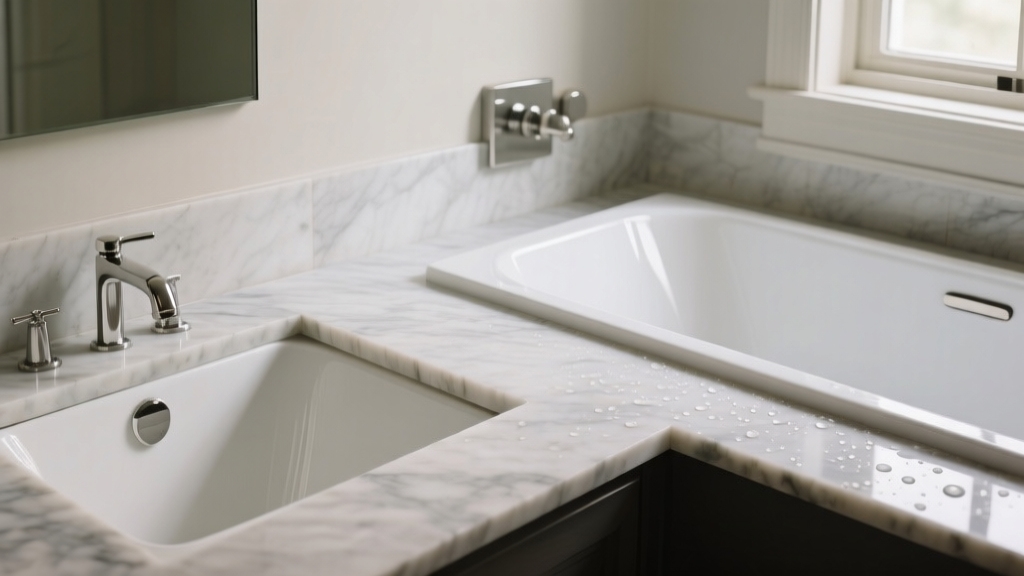
You’ll find drop-in tubs easier and faster to install, with a visible rim suited for classic or traditional spaces, and generally lower costs. Undermount tubs offer a sleek, modern look by hiding the rim, but require custom decking, stronger floor support, and more maintenance to prevent leaks.
Materials and budget also play roles: drop-in tubs are more DIY-friendly, while undermount designs suit luxury bathrooms. Exploring their differences helps you pick the best fit for your space and lifestyle.
Key Takeaways
- Drop-in tubs have a visible rim and sit in pre-built frames, making installation faster and simpler than undermount tubs.
- Undermount tubs offer a sleek, seamless look by hiding the rim, ideal for modern and luxury bathroom designs.
- Drop-in tubs are generally more affordable and easier to install, often suitable for DIY projects.
- Undermount tubs require professional installation, precise support, and regular resealing to prevent leaks and mold.
- Cleaning is easier with undermount tubs due to fewer crevices, while drop-in tubs need more frequent rim maintenance.
Installation Methods Compared

While installing an undermount tub demands building a custom deck and precisely cutting materials like tile or stone, a drop-in tub simply fits into a pre-built frame and rests on a visible rim. This makes its installation much more straightforward and quicker.
You’ll need to construct a sturdy enclosure for the undermount tub to support it from beneath and carefully waterproof the seams to prevent moisture damage. Plumbing connections for deck or wall-mounted faucets add complexity. Undermount tubs feature feet at the bottom, resting on the floor rather than the enclosure rim, which affects installation.
In contrast, drop-in tubs usually require less structural modification if the surround exists and can be installed faster, reducing labor time and cost. However, you must ensure the frame supporting the drop-in tub can bear the weight distributed across its rim. Proper preparation and clean workspace contribute to a smooth installation process.
Visual Impact and Style Options
When you’re picking between drop-in and undermount tubs, think about how the rim visibility will influence your bathroom’s overall vibe.
With drop-in tubs, you’ve got that visible rim peeking out, which really frames the tub nicely and suits traditional or classic styles. It’s like giving your bathroom a bit of character, you know? This style typically requires more space considerations due to the visible rim design.
On the flip side, if you’re leaning towards something more modern, undermount tubs might be your jam. They hide the rim completely, creating a smooth, seamless look that really blends in with your surrounding surfaces. It’s all about that clean aesthetic! Because undermount tubs rely on floor and surround support, their installation requires careful planning to ensure stability and waterproofing.
Rim Visibility Effects
Because the rim visibility differs considerably between drop-in and undermount tubs, it directly affects both the bathroom’s visual impact and your design options.
Undermount tubs feature a concealed rim, creating a seamless connection with the deck for a minimalist, modern look. This hidden edge lets you extend materials like stone or quartz over the tub, offering a unified, high-end appearance.
Additionally, undermount tubs typically require professional installation due to the need for precise attachment and sealing to the countertop. Their installation often demands careful consideration of plumbing setup to ensure proper alignment and water tightness.
In contrast, drop-in tubs have a visible rim sitting atop the deck, which interrupts the surface flow but allows for decorative trim or contrasting colors to add visual interest.
Drop-in tubs are also generally easier to install and compatible with a wider range of countertop materials, making them a popular choice for DIY projects. Many drop-in models include features like integrated tile flanges that both prevent water leakage and enhance aesthetic appeal.
While drop-in rims suit traditional styles, undermount tubs provide greater flexibility for integrated, contemporary designs. Your choice here will shape both the overall aesthetic and how you maintain the tub’s edges over time.
Design Compatibility
Although both drop-in and undermount tubs serve the same basic function, they offer distinctly different design possibilities that affect your bathroom’s overall style and visual impact.
Undermount tubs create a seamless, integrated look by hiding the rim beneath the deck, giving your bathroom a modern, minimalist, or luxury vibe. They allow you to customize the deck with stone, tile, or custom finishes, making the tub a sophisticated focal point.
Additionally, undermount tubs are known for being space-efficient, fitting neatly within built-in structures ideal for smaller bathrooms. Careful handling during transport is essential for maintaining the integrity of these integrated designs.
In contrast, drop-in tubs feature a visible rim that limits deck material options and lend themselves to classic, vintage, or family-oriented bathrooms. Their more segmented appearance suits straightforward, functional designs.
If you want a cohesive, high-end look with extensive style flexibility, undermount tubs are the practical choice. Drop-in tubs work best when simplicity and traditional style matter most.
Material Choices and Pricing
Choosing the right material for your drop-in or undermount tub directly impacts both cost and performance.
Acrylic is the most popular choice due to its affordability and lightweight nature, typically costing between $300 and $1,000. Its lightweight nature also makes installation simpler compared to heavier materials.
Fiberglass drop-in tubs are even more budget-friendly but less durable. Cast iron offers excellent heat retention and durability but comes with a higher price tag, ranging from $1,000 to $3,000 or more, especially for undermount models.
If you want a luxury look, stone resin or natural stone options start around $1,500 and can exceed $5,000. Copper undermount tubs are the most expensive, often $3,000 to $10,000.
Since undermount tubs are installed underneath a rim, they provide better weight distribution which also reduces the risk of floor damage. Keep in mind that heavier materials require more complex installations, which may increase labor costs.
Your choice should balance budget, durability, and aesthetic preferences.
Cleaning and Maintenance Considerations
When maintaining your tub, the design plays a key role in how easily you can clean and prevent buildup. Undermount tubs feature a seamless edge beneath the deck, which reduces grime traps and lets you wipe spills directly into the tub.
However, you’ll need to inspect and reseal the hidden caulk line every 3–5 years to prevent mold and water damage. Due to their installation style, undermount tubs are best suited for solid surface decks like granite or marble, ensuring durability and a seamless appearance. Regular inspections and maintenance help avoid issues similar to those found in water softener resin wear.
Drop-in tubs have a visible rim that’s easier to access for cleaning but tends to collect dirt, soap scum, and water stains, requiring more frequent attention around the lip.
Both types depend on quality sealing to avoid leaks, but undermount tubs demand more precise installation and maintenance. Your tub’s material also affects cleaning—acrylic surfaces clean easily, while stone or cast iron need gentler products to protect finishes.
Structural Support and Weight Distribution
Cleaning and maintenance go hand in hand with understanding how your tub’s design impacts its structural support and weight distribution.
Drop-in tubs rest on a rim supported by an enclosure frame. This concentrates weight and stress on the ledge and frame. This can increase the risk of rim chipping if the frame isn’t sturdy.
Undermount tubs, however, sit directly on built-in feet that transfer weight evenly across the floor joists. This reduces point loads and potential damage. Keep in mind, undermount tubs often require floor reinforcement to handle heavier loads, especially with dense materials like cast iron.
Meanwhile, drop-ins rely on a strong enclosure rim but may not need floor upgrades. Whichever you pick, consider total weight—including tub, water, and occupants—to ensure your bathroom’s structure can handle it safely.
Regular maintenance and care of the supporting structure can help prolong its durability and prevent costly repairs.
Customization Possibilities
Although both drop-in and undermount tubs serve the same basic function, they offer distinctly different customization possibilities that can considerably impact your bathroom’s style and usability.
With drop-in tubs, you can choose surround materials like tile, stone, or wood, creating decks that provide storage, seating, or decorative space. Their variety in shapes and depths, plus features like jets or lighting, let you tailor the bathing experience. The wide, flat rim adds practicality for bath items.
Additionally, drop-in tubs are recessed into a constructed surround, which obscures the tub’s exterior and leaves only the interior visible, enhancing aesthetic flexibility with a recessed installation. Proper maintenance and avoiding continuous operation ensure the longevity of the pump systems often integrated within tub surrounds, preventing damage to motor components.
Undermount tubs integrate seamlessly beneath countertops, emphasizing minimalist design with sleek surrounds that hide plumbing. You can incorporate built-in shelving and niches into the surround, using luxurious materials for a spa-like finish.
Their flush installation creates a clean, tailored appearance, perfect if you prefer a modern, uninterrupted surface. However, attention to operational guidelines, such as intermittent use, is important to avoid issues like pump overheating and to maintain the efficiency of water management systems.
Suitability for Different Bathroom Designs
When you’re deciding between drop-in and undermount tubs, it’s important to think about your bathroom’s style and layout.
Drop-in tubs are great for traditional designs and can fit nicely in smaller spaces since they offer some flexibility in placement. Their easier and more affordable installation makes them a practical choice for many homeowners.
On the flip side, undermount tubs really shine in modern bathrooms that have open layouts. Just keep in mind that they need precise framing to achieve that seamless look.
Traditional vs Modern Styles
Since bathroom design reflects your personal style and functionality needs, choosing between drop-in and undermount tubs depends largely on the aesthetic you want to achieve.
Drop-in tubs suit traditional bathrooms with their exposed rims, which you can decorate with tile or trim to enhance classic charm. If you prefer a modern, minimalist look, undermount tubs offer sleek integration and a flush, uncluttered appearance.
Consider these points:
- Drop-in tubs fit vintage or family bathrooms, prioritizing practicality and decorative customization.
- Undermount tubs complement contemporary, luxury, or spa-inspired designs with seamless surrounds and innovative features.
- Both styles adapt well, but undermount tubs align better with cutting-edge, high-end trends.
Choose the style that matches your bathroom’s character and your lifestyle needs. When installing undermount tubs, using waterproof adhesives ensures a strong, durable, and moisture-resistant bond for long-lasting performance.
Layout and Placement Options
Deciding how to lay out your tub plays a crucial role in maximizing your bathroom’s functionality and style.
Drop-in tubs fit neatly within built-in structures, making them ideal for smaller spaces and offering flexible placement, including against walls or centrally. Their visible edges allow decorative surrounds, blending well with tile or wood.
On the other hand, undermount tubs require a custom deck that occupies more floor area and limits placement, usually near walls for plumbing access.
However, they provide a sleek, flush appearance with seamless integration into the surrounding material. Both types can be tailored with storage or lighting, but remember that drop-in tubs often offer lower step-over heights for easier access.
Choosing between them depends on your space, layout preferences, and design goals. Proper installation and maintenance of plumbing components, such as a water pressure regulator, can also impact the longevity and performance of your bathroom fixtures.
Longevity and Durability Factors
Although both drop-in and undermount tubs come in various materials, their longevity and durability largely depend on the composition and installation method.
You’ll find that undermount tubs, supported directly by the floor, distribute weight more evenly, reducing stress and potential damage.
Drop-in tubs rely on the deck for support, which may cause rim wear over time if not well maintained. Consider these key factors to maximize durability:
- Material choice: Acrylic and fiberglass-reinforced tubs resist chipping, while cast iron lasts longest but is heavy.
- Installation quality: Proper sealing and support are vital to prevent leaks and structural issues.
- Maintenance: Undermount tubs are easier to clean with fewer crevices, extending their lifespan compared to drop-ins.
Choosing wisely ensures your tub stays durable and functional for years.
Impact on Bathroom Renovation Timeline
When planning your bathroom renovation, understand that the choice between drop-in and undermount tubs considerably affects your timeline.
Drop-in tubs install quickly, often in a single day, using basic framing and standard materials. This lets you move swiftly to tile and countertop phases. In contrast, undermount tubs require custom deck construction, precise waterproofing, and structural reinforcement. This can add 1–2 weeks or more to your timeline.
These installations need specialized labor, potential engineering reviews, and longer material lead times, especially for stone or tile decks. Delays often stem from coordinating multiple trades and ensuring waterproof integrity.
Because undermount tubs demand extra planning and adjustments, they can slow subsequent tasks and final inspections. Choosing drop-in tubs simplifies scheduling and reduces risks of rework, making them more time-efficient for your renovation project.
Practical Tips for Choosing Between Drop-in and Undermount
Since your bathroom’s layout and aesthetic play a major role, you should first consider how each tub style fits your design vision.
Drop-in tubs suit traditional spaces with visible rims, while undermount tubs offer a sleek, modern look with custom decks. To choose wisely:
1. Assess Installation Needs
Drop-in tubs are easier and cheaper to install, perfect for DIYers. Undermount tubs require professional help and precise measurements. Additionally, undermount tubs generally involve a more complicated installation process due to being mounted beneath the surface, which can increase costs and time.
2. Evaluate Accessibility
If mobility is a concern, undermount tubs can be installed lower for easier access. Drop-in tubs usually have higher rims but offer more stability.
3. Consider Maintenance
Undermount tubs clean up seamlessly with fewer crevices, unlike drop-ins that need regular caulking. The seamless design of undermount tubs also facilitates easier cleaning and helps maintain a sleek appearance.
Balancing these factors guarantees you pick the tub that best suits your bathroom’s function and style.
Frequently Asked Questions
Can Drop-In Tubs Be Converted to Undermount Installations Later?
You can convert some drop-in tubs to undermount installations, but only if the tub has a flat, wide rim designed to support it.
Not all drop-in tubs meet this requirement, so you’ll need to check the manufacturer’s specs.
The process involves cutting the deck, securing the tub underneath, and ensuring proper waterproofing.
It’s a complex, costly project best handled by professionals to avoid leaks and instability.
Are There Noise Differences Between Drop-In and Undermount Tubs?
You might think tubs sound like thunderclaps, but noise differences between drop-in and undermount tubs aren’t huge.
Undermount tubs usually whisper quieter thanks to heavier materials and custom decks that absorb sound.
Drop-ins, made of lighter acrylic or fiberglass, can let more water noise through.
Still, proper sealing, insulation, and drain installation play a bigger role, so focus on those to keep your bathroom peaceful regardless of tub type.
Do Drop-In Tubs Offer Better Insulation to Retain Water Heat?
No, drop-in tubs don’t typically offer better insulation for retaining water heat.
You’ll find that undermount tubs, especially those made from cast iron or stone, retain heat longer due to their dense materials and fewer exposed seams.
Drop-in tubs often have small gaps at the rim, which can cause minor heat loss unless properly sealed.
To maximize insulation, focus on tub material and quality installation rather than just the tub type.
Which Tub Type Is Safer for Elderly or Disabled Users?
You’ll find drop-in tubs generally safer for elderly or disabled users because their visible rim offers a stable handhold and easier grab bar installation.
The built-in deck allows for lower step-over heights and accessible cleaning, reducing slip risks.
Undermount tubs, while sleek, lack a visible edge, which can increase fall hazards, especially for visually impaired users.
Prioritize customization and professional installation to maximize safety regardless of tub type.
How Do Warranty Terms Differ Between Drop-In and Undermount Tubs?
Think of warranties as your safety net.
Drop-in tubs usually offer standard coverage for 1 to 5 years and are more lenient with installation errors.
In contrast, undermount tubs often come with longer or even lifetime warranties but require professional installation to keep them valid.
You’ll need to maintain sealants carefully for undermounts, or you risk voiding the warranty.
Drop-in or Undermount: Next Steps Inside
So, you’re torn between drop-in and undermount tubs? Don’t worry, choosing a tub isn’t rocket science unless you want to install it yourself. Drop-ins boast easy installation and flashy rims, perfect if you love scrubbing edges.
Undermounts offer sleek looks but demand more precision and support. Weigh your style, budget, and patience. After all, your tub should soak your stress, not add to it. Choose wisely; bathroom bliss awaits!