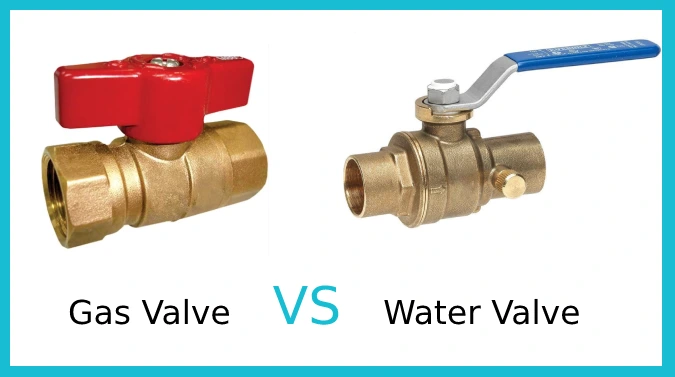

Last Updated on January 7, 2026
You’ll find brass fittings easier to machine and more cost-effective for low-pressure, non-corrosive applications. Stainless steel delivers superior strength, corrosion resistance, especially in saline or chemical environments, and higher temperature tolerance.
Brass suits standard plumbing with common tools, whereas stainless steel needs specialized equipment and labor. Stainless steel also resists lead contamination and lasts longer under stress.
If you want to optimize performance and durability in demanding scenarios, understanding these material distinctions becomes essential.
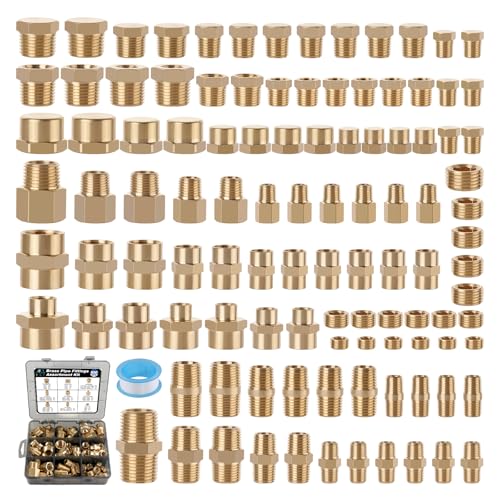
- VALUE PACK: This brass pipe fittings includes 106pcs:11pcs NPT reducing adapter;11pcs NPT male hex…
- PREMIUM MATERIAL: The brass fitting assortment kit is made of CA360 premium forged brass, thicker…
- TEMPERATURE RANGE: Temperature Range of -65°F to +250°F (-53°C to +121°C). Before using pipe…
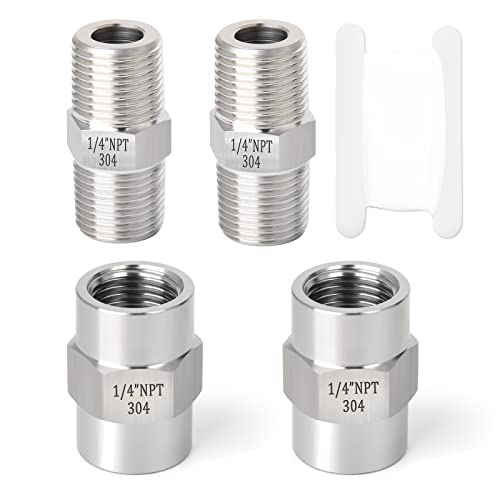
- Maximum working pressure: 2800PSI
- Use purpose:1/4 Inch MNPT x 1/4 Inch FNPT threads for connecting to threaded pipe fittings,NPT…
- Temperature range: -300 degrees Fahrenheit to +392 degrees Fahrenheit temperature range allows you…
Key Takeaways
- Brass fittings are more cost-effective and easier to machine, making them suitable for residential plumbing and low-stress applications.
- Stainless steel fittings offer superior corrosion resistance, ideal for marine, chemical, and high-temperature environments.
- Brass is softer with lower strength and temperature tolerance, while stainless steel provides higher durability and withstands extreme heat.
- Stainless steel fittings are lead-free, making them safer for potable water and food industry use compared to brass that may contain lead.
- Galvanic corrosion risks exist when mixing brass and stainless steel; dielectric unions or insulation prevent damage and extend fitting life.
Side-by-Side Comparison – Brass vs Stainless Steel Fittings
| Feature | Brass Fittings | Stainless Steel Fittings |
|---|---|---|
| Material Composition | Copper-zinc alloy, often with trace lead | Iron-chromium alloy with nickel |
| Corrosion Resistance | Good in freshwater, weaker in saline | Excellent, even in harsh environments |
| Strength & Durability | Moderate strength, softer material | High strength and long-term durability |
| Temperature Tolerance | Suitable for moderate heat | Handles extreme temperatures |
| Machinability & Installation | Easy to machine, simple tools | Requires specialized tools |
| Cost Consideration | Lower upfront cost | Higher initial cost, lower long-term risk |
| Typical Applications | Plumbing, HVAC, low-pressure systems | Marine, chemical, food, high-pressure use |
Material Composition and Cost Comparison

Although both brass and stainless steel fittings serve similar functions, their material compositions and costs differ considerably, affecting their suitability for various applications.
Brass is a copper-zinc alloy, typically 60–70% copper and 30–40% zinc, often with 2–3% lead in C36000 alloy to improve machinability. It’s softer and more malleable, enabling easier fabrication. Brass is also cost-effective and suitable for low to moderate pressure systems. However, brass fittings are more susceptible to dezincification corrosion, which can compromise their long-term reliability.
Brass, a copper-zinc alloy often with added lead, is soft and highly malleable for easy fabrication.
Stainless steel, conversely, is an iron-chromium alloy with 10–30% chromium and often nickel, making it harder and stronger due to its iron base. This composition provides superior resistance to corrosion and higher temperature tolerance compared to brass. Brass fittings cost less upfront because copper and zinc are cheaper than chromium and nickel.
Machining brass requires less time and simpler tools. Stainless steel fittings, while pricier and harder to machine, offer greater durability, justifying higher initial costs in demanding environments.
Corrosion Resistance in Different Environments
When selecting fittings for specific environments, understanding how brass and stainless steel resist corrosion is critical to ensuring long-term performance and reliability.
Brass excels in freshwater due to its copper content but deteriorates in saline environments via dezincification. Its ductility allows use in humid and aggressive environments, making it suitable for many applications despite some limitations. Proper maintenance procedures can extend the lifespan of brass fittings in challenging conditions.
Stainless steel, particularly grade 316, offers superior resistance to chlorides, acids, and high temperatures, maintaining its protective oxide layer under harsh conditions.
| Environment | Brass Resistance | Stainless Steel Resistance |
|---|---|---|
| Freshwater | Good; minor tarnish possible | Excellent; stable protective oxide |
| Saline/Marine | Poor; prone to dezincification | Superior; self-healing passive layer |
| Acidic/Chemical | Poor; vulnerable to acids | Excellent; resistant to aggressive media |
Strength and Durability Differences

When it comes to mechanical strength, stainless steel fittings really take the lead over brass. They boast higher tensile and yield strengths, which means they can handle more stress and pressure without compromising. Pretty impressive, right? Additionally, stainless steel fittings are less prone to damage from pressure fluctuations, which can be a common issue in plumbing systems.
Now, let’s talk about heat. Stainless steel performs exceptionally well when exposed to elevated temperatures. It keeps its structural integrity longer than brass, which tends to weaken and deform under those conditions. For example, stainless steel has a melting point of around 1710–1650°F, slightly lower than brass but with better high-temperature resistance.
This is a crucial factor to consider, especially if you’re looking for longevity and reliability in demanding applications. So, when you’re weighing your options, stainless steel might just be the way to go!
Mechanical Strength Comparison
Since mechanical strength directly impacts the performance and longevity of fittings, understanding the differences between brass and stainless steel is essential.
Stainless steel exhibits tensile strengths ranging from 500 to 1,550 MPa, roughly 1.5 to 3 times higher than brass’s 250 to 470 MPa. Its yield strength, often exceeding 200 MPa, allows it to resist permanent deformation better than brass, which varies between 110 and 570 MPa.
Hardness measurements further highlight stainless steel’s superiority, with Brinell hardness values up to 595 HB versus brass’s 73 HB maximum. Shear strength also favors stainless steel, with values reaching 900 MPa compared to brass’s 390 MPa.
Consequently, stainless steel fittings maintain structural integrity under higher loads and stresses, making them more suitable for demanding applications where mechanical strength is critical. Additionally, stainless steel’s higher structural strength supports its widespread use in environments requiring durability and corrosion resistance.
Temperature and Longevity
Although both brass and stainless steel fittings serve well in various applications, their temperature tolerance and longevity under thermal stress differ markedly.
Brass softens around 400°F (200°C), limiting its use in high-heat environments. However, excessive pressure or mechanical stress can lead to issues such as valve malfunction or failure in brass fittings due to their lower strength and durability.
In contrast, stainless steel endures up to 1000°F (540°C) or more without losing strength. Brass’s higher thermal conductivity causes rapid heating and cooling but also greater dimensional changes due to its higher expansion coefficient.
This can risk fatigue and sealing issues under cyclic temperatures.
Stainless steel maintains mechanical integrity and corrosion resistance at elevated temperatures, ensuring longer service life, especially in industrial settings. Its lower thermal expansion reduces mechanical stress from thermal cycling, enhancing durability.
Additionally, stainless steel’s tensile strength ranges from 515-620 MPa, making it significantly stronger and more durable than brass. You’ll find stainless steel preferable when stability and longevity under thermal and oxidative stress are critical, as regular inspection and maintenance can help prevent unexpected failures such as shut-off valve malfunction.
Temperature Tolerance and Thermal Expansion
When selecting fittings for temperature-sensitive applications, you must consider both their tolerance to heat and their thermal expansion characteristics.
Brass fittings tolerate temperatures up to 400°F (204°C), but continuous exposure above 250°F (121°C) can soften the material and compromise EPDM seals. Viton® seals extend this limit. Because brass offers good thermal conductivity, it helps dissipate heat efficiently in moderate temperature ranges. Proper installation and monitoring are essential to prevent failure, similar to ensuring the correct position of the float switch in sump pump systems.
In contrast, stainless steel fittings withstand much higher temperatures, up to 1,500°F (815°C) depending on grade, maintaining strength and integrity in extreme environments. Thermal expansion differs as well: brass expands at 11.1–11.4 × 10⁻⁶/°F, higher than stainless steel’s 9.6–10.2 × 10⁻⁶/°F. This means brass fittings experience more dimensional change with temperature shifts.
This impacts sealing and joint reliability, making stainless steel preferable for systems requiring high thermal stability under fluctuating or extreme temperatures.
Machinability and Installation Considerations

Brass fittings are a breeze to work with! Their softness makes them super easy to thread and shape, so you can get the job done quickly with just some common tools. This excellent machinability of brass also makes it ideal for creating small, precise metal components.
On the flip side, stainless steel is a bit more of a challenge. It requires specialized equipment and precise techniques, which can really ramp up the machining time and complexity.
Now, when it comes to installation, that’s where you’ll notice the difference again. Brass is great because you can use standard hand tools and simple joints to get everything fitted together nicely.
But with stainless steel, you’ll likely need torque wrenches and maybe even some skilled labor to ensure that everything is compatible and sealed properly. It’s definitely something to keep in mind depending on your project!
Ease of Fabrication
Since brass boasts a markedly lower hardness and superior machinability compared to stainless steel, you’ll find it much easier to machine and modify during installation.
Brass’s softness allows faster cutting speeds, reduced tool wear, and smoother surface finishes. Its malleability also facilitates on-site bending and adjustments without cracking.
Consider these fabrication advantages of brass fittings:
- Machining Efficiency: Brass’s 100% machinability rating enables quicker, cost-effective production with standard tooling.
- Installation Flexibility: You can bend or slightly deform brass fittings onsite to achieve a better seal and fit.
- Reduced Complexity: Brass’s ductility lowers installation time and simplifies modifications, unlike stainless steel which demands precise pre-fabrication. Additionally, choosing the right materials can impact energy efficiency in the overall system.
Additionally, brass requires less specialized tooling and cutting fluids compared to stainless steel, further enhancing fabrication efficiency due to its ease of machining.
Installation Tools Required
Although brass and stainless steel fittings serve similar functions, their installation demands vastly different tools due to their contrasting machinability and material properties.
You’ll find brass fittings easy to handle with standard plumbing tools like pipe wrenches and adjustable spanners, thanks to brass’s softness and excellent machinability.
Cutting, threading, and joining brass require basic hand tools, soldering, or compression fittings, which speeds up installation and lowers labor costs. Additionally, brass’s antimicrobial properties make it particularly suitable for plumbing and water systems where hygiene is important.
In contrast, stainless steel fittings need specialized power tools for cutting and threading because of their hardness. The hardness accelerates tool wear, requiring frequent replacement or maintenance of cutting equipment.
Welding and orbital welding are common joining methods, requiring expert skill and precise torque tools to prevent deformation. Stainless steel’s toughness accelerates tool wear and generates heat, demanding high-grade tooling and coolant, extending installation time and increasing skilled labor requirements.
Threading and Compatibility
When threading brass and stainless steel fittings, you must consider their distinct machinability and mechanical properties to guarantee compatibility and reliable installation.
Brass’s softness allows easier, faster threading with standard tools, reducing the risk of thread damage. Stainless steel requires specialized tooling and careful technique to prevent galling and cross-threading.
To ensure proper installation, keep these points in mind:
- Match thread types precisely (e.g., NPT, BSP) to avoid leaks or mechanical damage.
- Use proper lubrication and torque for stainless steel to prevent galling and maintain thread integrity.
- Employ dielectric unions or insulation to mitigate galvanic corrosion when combining brass and stainless steel fittings.
Understanding these factors helps you achieve durable, leak-free connections tailored to each material’s properties. Additionally, considering the PSI rating of fittings can help ensure they handle the system’s pressure requirements effectively.
Typical Applications for Brass Fittings
Because of their excellent corrosion resistance, durability, and sealing capabilities, brass fittings find extensive use across various industries.
In plumbing, you’ll see them in residential water supply lines, drainage, heating systems, and fire suppression due to their reliability with both potable and non-potable water. They are often paired with systems like hot water recirculating pumps to enhance water efficiency.
HVAC and refrigeration systems utilize brass fittings to handle refrigerant gases safely, ensuring chemical stability and secure connections.
For gas and fuel lines, brass fittings provide tight seals and spark resistance, making them ideal for natural gas, LP applications, and automotive fuel systems.
Industrially, you can rely on brass for fluid transport, pneumatic distribution, and low-pressure hydraulics, where corrosion resistance and mechanical strength are critical. Their high mechanical strength enables them to withstand mechanical stress and maintain performance in demanding environments.
Additionally, brass fittings serve electrical connectors and decorative hardware, combining functionality with aesthetic appeal.
Typical Applications for Stainless Steel Fittings
Stainless steel fittings really shine in the food and beverage industry. They’ve these incredibly hygienic and corrosion-resistant surfaces that make them perfect for that environment. Plus, you can always count on them to perform reliably, especially in marine and chemical settings.
When you’re dealing with harsh elements out there, you need something that can stand up to the challenge, right? They offer excellent corrosion resistance against rust and chemical attack, which is vital in these demanding environments. Their ability to withstand frequent on/off cycles ensures long-lasting durability in dynamic systems.
And let’s not forget about their high tensile strength! This feature makes stainless steel fittings ideal for high-pressure hydraulic systems. When you need consistent performance, even under extreme conditions, these fittings really come through.
Food and Beverage Industry
Although food and beverage processing demands stringent hygiene and durability, stainless steel fittings excel by providing corrosion resistance and maintaining structural integrity under harsh conditions. You’ll find grades 304 and 316 stainless steel ideal due to their resistance to acids, cleaning agents, and high temperatures.
Stainless steel also prevents bacterial growth thanks to its smooth, non-porous surface, meeting FDA and USDA food safety standards. Additionally, stainless steel products are widely used as equipment for commercial kitchens and beverage processing plants, ensuring safe and reliable operations.
Consider these typical applications:
- Transferring liquids like dairy, beverages, and edible oils through tubing and piping.
- Integration in equipment such as mixing vessels, heat exchangers, and storage tanks.
- Utilizing specialized fittings like crimp, weld-on, and instrumentation types for sanitary design and process efficiency.
This material outperforms brass in hygiene, durability, and regulatory compliance critical to food and beverage production.
Marine and Chemical Use
When selecting fittings for marine or chemical environments, stainless steel offers superior corrosion resistance and mechanical performance compared to brass.
Marine grade 316 stainless steel, enriched with molybdenum, resists pitting and crevice corrosion from chlorides in seawater better than 304 grade.
It endures salt spray, brackish water, and coastal conditions without significant degradation, making it ideal for components like railings, propeller shafts, and deck hardware. Stainless steel also provides a lustrous finish that maintains aesthetic appeal in marine settings.
Duplex stainless steels provide higher strength and corrosion resistance in estuaries, enabling lighter fittings under stress. In chemical processing, stainless steel fittings withstand aggressive chemicals, acids, and petroleum products without degrading, ensuring system reliability and safety.
Brass, while durable in general use, falls short in highly saline or acidic environments, limiting its application where corrosion and contamination control are critical.
High-Pressure Hydraulic Systems
Stainless steel’s superior corrosion resistance and mechanical strength make it the preferred material for high-pressure hydraulic systems. When you work with pressures exceeding 5,000 PSI, stainless steel fittings maintain integrity where brass fittings fail.
Here’s why stainless steel stands out:
- Pressure Handling: Stainless steel fittings support up to 6,000 PSI routinely and over 10,000 PSI in specialized designs. This far surpasses brass’s 1,000–3,000 PSI range.
- Corrosion Resistance: The molybdenum in 316 stainless steel prevents pitting and corrosion, which is critical in aggressive hydraulic fluids and fluctuating pressures. This is why stainless steel is widely favored for its corrosion resistance in harsh environments.
- Temperature Tolerance: Stainless steel sustains performance up to 600°C, ensuring reliability in extreme thermal environments. Brass degrades under heat stress.
Choosing stainless steel guarantees durability, safety, and longevity in demanding hydraulic applications like heavy machinery and industrial systems.
Health and Safety Implications
Because brass fittings may contain lead, they can pose significant health risks if used in potable water systems. Lead can leach into the water supply. You must ensure brass fittings comply with regulations limiting lead content (e.g., NSF/ANSI 61).
Additionally, improper combinations of brass with certain stainless steels can increase the risk of galvanic corrosion, potentially leading to contamination. Stainless steel fittings offer a lead-free alternative, eliminating this risk and suiting food and medical applications.
Brass’s copper content provides antimicrobial benefits, though stainless steel’s inertness guarantees no toxic leaching.
| Aspect | Brass Fittings | Stainless Steel Fittings |
|---|---|---|
| Lead Content | Regulated, potential leaching | 100% lead-free |
| Antimicrobial Effect | Copper-based inhibition | Inert, no microbial action |
| Regulatory Compliance | Must meet lead limits | Widely accepted for safe use |
Choose based on application safety requirements and compliance demands.
Compatibility and Galvanic Corrosion Risks
Although brass and stainless steel fittings are often combined for their complementary properties, their electrochemical differences can create serious compatibility issues. Brass acts as the anode and corrodes faster when electrically connected to stainless steel in moist, conductive environments.
This galvanic corrosion accelerates brass degradation, especially under high chloride or variable temperature conditions. Long-term use in corrosive environments without insulation is not recommended to prevent galvanic corrosion risks.
To manage these risks, you should:
- Use dielectric unions or insulating washers to prevent direct electrical contact and break the galvanic circuit.
- Select metals with closer galvanic potentials, keeping the difference below 0.15–0.25 V to reduce corrosion likelihood.
- Avoid long-term exposure to humid or chloride-rich environments without protective measures, as these conditions intensify brass dezincification and structural weakening.
Understanding these factors helps you guarantee safer, longer-lasting mixed-metal installations.
Maintenance and Longevity Expectations
Managing the compatibility of brass and stainless steel fittings extends beyond preventing galvanic corrosion; it also influences maintenance demands and lifespan.
Stainless steel fittings require minimal upkeep, resisting corrosion without coatings and maintaining mechanical integrity across extreme temperatures, with service lives exceeding 50 years. This is largely due to the chromium content that forms a protective passive layer enhancing corrosion resistance.
Stainless steel fittings offer long-lasting durability and corrosion resistance with minimal maintenance across extreme conditions.
In contrast, brass fittings need regular maintenance to prevent tarnish and preserve appearance, especially under chlorine exposure or saline conditions.
Brass’s malleability simplifies installation and repairs, reducing labor costs, but its durability and temperature tolerance (up to ~400°F) fall short of stainless steel’s (~1200°F).
While stainless steel demands specialized tools and higher initial costs, its superior corrosion resistance lowers long-term operational expenses through fewer failures and replacements.
Ultimately, the maintenance-longevity trade-off favors stainless steel in harsh or demanding environments, whereas brass suits moderate conditions with easier handling.
Frequently Asked Questions
Can Brass or Stainless Steel Fittings Be Recycled Effectively?
Yes, you can recycle both brass and stainless steel fittings effectively. Brass fittings retain full mechanical properties after recycling and fetch a higher scrap value, making them economically advantageous.
Stainless steel fittings recycle efficiently too, with high industry recycling rates and significant energy savings. Recycling both metals reduces raw material extraction and supports sustainability.
However, brass generally offers greater profitability and energy efficiency in the recycling process. You’ll find both support circular economy goals well.
How Do Brass and Stainless Steel Fittings Impact Water Taste?
You should know that modern brass fittings contain less than 0.25% lead, yet they can still impart a metallic taste, especially in acidic or hot water.
This happens due to copper and zinc leaching, which increases with corrosion or mineral buildup.
In contrast, stainless steel fittings resist corrosion and metal leaching, preserving water purity without metallic taste.
Are There Color Variations Between Brass and Stainless Steel Fittings?
Yes, you’ll notice clear color variations between brass and stainless steel fittings.
Brass fittings show warm yellow-gold hues, shifting to reddish or pinkish tones depending on copper content.
In contrast, stainless steel fittings maintain a consistent silver-gray metallic color, ranging from polished to brushed finishes without warm tones.
Brass may darken with patina over time, but stainless steel retains its neutral silver luster, aiding quick material identification visually.
Do Brass or Stainless Steel Fittings Require Specific Storage Conditions?
Yes, both brass and stainless steel fittings require specific storage conditions to maintain quality.
You’ll need to store brass fittings between 15°C and 35°C with low humidity to prevent moisture-induced black spots.
For stainless steel, keep the environment dry and free from chlorides to avoid pitting corrosion.
Both should be stored in clean, ventilated spaces, off the ground, away from corrosive chemicals, and separated by batch to prevent contamination.
Which Fittings Are More Environmentally Friendly to Manufacture?
You’ll find brass fittings are more environmentally friendly to manufacture since their production emits about 3.5 kg of CO₂ per kg, nearly half that of stainless steel’s 6.15 kg.
Brass manufacturing also requires less energy.
However, both materials are highly recyclable, which mitigates environmental impact over time.
If minimizing manufacturing emissions is your priority, choosing brass fittings offers a clear advantage in sustainability.
Selecting the Best Fitting Material for Long-Term Reliability
Choosing between brass and stainless steel fittings boils down to your specific needs. Each material offers distinct advantages like corrosion resistance, strength, and cost. Think of it as picking the right tool from a toolbox: brass suits moderate environments with ease, while stainless steel excels under demanding conditions.
By weighing factors like durability, temperature tolerance, and galvanic compatibility, you’ll make certain your system runs smoothly. This will help you avoid costly failures and maximize longevity.

- 96 PCS PACKAGE: The brass fittings kit includes: 10pcs NPT reducing adapter; 20pcs hex bushing…
- PREMIUM MATERIAL: KOOTANS brass fittings assortment kit is made of CA360 premium forged brass…
- EXQUISITE TECHNOLOGY: Brass pipe fittings are designed with deep and accurate thread to ensure tight…

- Tee shape with 3 ways to connect and branch three sections of pipe.
- Made of greater strength stainless steel, using durably.
- Suitable for Male threaded pipe.
Last update on 2026-04-01 / Affiliate links / Images from Amazon Product Advertising API