
If you want the best water softener for your well water in 2026, consider the APEC WH-SOFTENER-45-FG for combined reverse osmosis and softening, the Kenmore 350 with IntelliSoft AI for efficient salt use, or the EcoPure EP42 with AutoSense technology and clear iron removal.
Each offers digital controls and strong capacity suited to varying household sizes. Choosing the right one depends on your water hardness and space, and you can explore which fits your needs best here.
| Image | Name | Editor's Rating | Price |
|---|---|---|---|
|
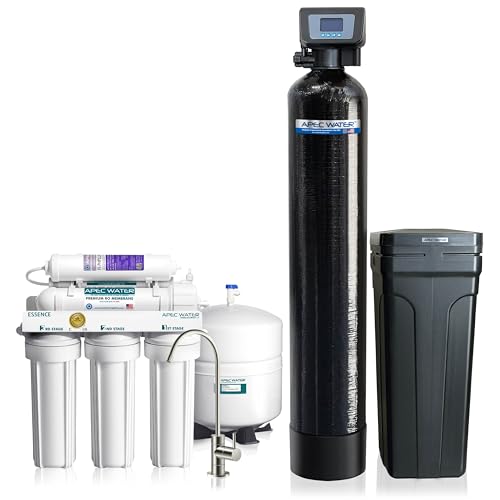
APEC WATER WH-SOFTENER-45-FG Reverse Osmosis System + Water ...
|
|
|

|
Kenmore 350 Water Softener System – 32,000 Grain Capacity Wh...
|
|
|

|
EcoPure EP42 42,000 Grain Water Softener | NSF Certified | S...
|
|
Key Takeaways
- APEC WH-SOFTENER-45-FG combines ROES-PH75 reverse osmosis and 45,000-grain softener for comprehensive well water treatment and scale prevention.
- Kenmore 350 offers a 32,000-grain capacity and IntelliSoft AI to optimize salt use, ideal for smaller households with moderate hardness.
- EcoPure EP42 uses AutoSense Technology and removes up to 11 ppm ferrous iron, suitable for households up to six people with iron concerns.
- Efficient digital control valves reduce salt and water waste by regenerating only when needed, enhancing well water softener efficiency.
- Proper sizing based on water hardness and daily use is essential to minimize salt, water waste, and resin fouling in well water systems.
APEC WH-SOFTENER-45-FG RO System & Softener Bundle
- BUNDLE CHOICE: Combining our most popular Reverse Osmosis System (ROES-PH75) with effective water...
- PURE DRINKING WATER: The top rated APEC ROES-PH75 reverse osmosis unit offers supreme quality and is...
- PREMIUM PH+ FILTER: The ROES-PH75 rigorously removes harmful impurities, but it also adds back the...

If you’re looking to both purify and soften your well water, the APEC WH-SOFTENER-45-FG RO System & Softener Bundle delivers a powerful dual solution by combining advanced reverse osmosis filtration with efficient water softening, making it ideal for homes that demand high-quality, scale-free water throughout.
This bundle pairs the ROES-PH75 system, which removes over 1,000 contaminants and adds beneficial minerals, with a softener boasting a 45,000-grain capacity. You’ll enjoy softer skin, brighter laundry, and protected plumbing, all managed by a smart digital valve to optimize performance and salt use. It’s a trusted, USA-assembled choice.
Best For: Homeowners seeking comprehensive water treatment that combines advanced purification and effective softening for well water with multiple bathrooms.
Pros:
- Removes over 1,000 contaminants including fluoride, lead, and PFAs while restoring beneficial minerals and alkalinity.
- Softens water with a high-capacity 45,000-grain softener, improving skin feel, laundry brightness, and preventing scale buildup.
- Features a microprocessor digital control valve for efficient regeneration cycles and optimized salt consumption.
Cons:
- Initial installation may require professional assistance due to system complexity.
Kenmore 350 Water Softener System, 32,000 Grain Capacity
- Perfect for Families: Designed for households of 1–4 people struggling with hard water. The...
- Powerful Whole Home Solution: Reduces hard minerals like calcium, magnesium, and iron to prevent...
- IntelliSoft Technology: The IntelliSoft system uses artificial intelligence to learn your family’s...
The Kenmore 350 Water Softener System, with its 32,000-grain capacity, suits households of 1 to 4 people looking to effectively reduce hard minerals like calcium, magnesium, and iron. It prevents scale buildup and stains while protecting your plumbing and appliances.
You’ll enjoy softer skin, brighter laundry, and spot-free dishes. The IntelliSoft AI adjusts regeneration cycles to your water use, cutting salt use by up to 40%. Its compact design fits tight spaces, and a digital display helps you monitor flow and salt levels.
Best For: Households of 1 to 4 people seeking an efficient, compact water softener to reduce hard minerals and protect plumbing while saving on salt and energy.
Pros:
- IntelliSoft AI optimizes regeneration cycles, reducing salt use by up to 40%
- Compact design with digital display for easy monitoring and installation in tight spaces
- Comprehensive service coverage including 10 years on the storage tank
Cons:
- 32,000-grain capacity may be insufficient for larger families or homes with very hard water
- Limited to treating hard minerals; may not address other water quality issues like bacteria or chemicals
EcoPure EP42 42,000 Grain Water Softener
- Autosense technology - this exclusive feature calculates how much salt and water is required to...
- Eco pure EP42 is ideal for households of 1 to 6 plus people and removes high levels of water...
- NSF certified to reduce hard water symptoms such as embarrassing stains, buildup on your Plumbing...
EcoPure EP42 42,000 Grain Water Softener suits households with up to six people, making it ideal for families dealing with hard water and iron buildup. It effectively reduces stains, plumbing buildup, and dish spotting while removing up to 11 ppm of clear ferrous iron.
Thanks to AutoSense Technology, it calculates the exact salt and water needed for regeneration, cutting waste and saving you money. This NSF-certified unit fits compact spaces with a durable, modern cabinet and extends your appliances’ lifespan.
Best For: Families or households of 1–6+ people seeking an efficient and reliable water softener to address hard water and iron buildup issues.
Pros:
- AutoSense Technology optimizes salt and water usage, reducing waste and saving money.
- Removes up to 11 ppm clear ferrous iron, effectively preventing stains and plumbing buildup.
- Compact design with durable cabinet fits small utility spaces and extends appliance lifespan.
Cons:
- May not be sufficient for very large households or commercial applications beyond 6+ people.
- Initial installation may require professional help for optimal setup.
| Feature | APEC WH-SOFTENER-45-FG RO Bundle | Kenmore 350 Water Softener | EcoPure EP42 Water Softener |
|---|---|---|---|
| System Type | RO filtration + water softener bundle | Water softener only | Water softener only |
| Grain Capacity | 45,000 grains | 32,000 grains | 42,000 grains |
| Best For | Homes needing full purification & softening (multi-bathroom) | 1–4 person households with limited space | 1–6+ person families with hard water & iron |
| Contaminant Removal | Removes 1,000+ contaminants incl. fluoride, lead, PFAs | Reduces hard minerals (calcium, magnesium, iron) | Reduces hard minerals & up to 11 ppm ferrous iron |
| Iron Removal | Not specified | Limited iron reduction | Up to 11 ppm clear ferrous iron |
| Special Technology | Microprocessor digital control valve | IntelliSoft AI regeneration | AutoSense Technology |
| Efficiency Benefits | Optimized salt use & regeneration cycles | Up to 40% salt savings | Precise salt & water usage to reduce waste |
| Mineral Enhancement | Adds beneficial minerals & alkalinity | No | No |
| Design | Whole-home system + under-sink RO | Compact, space-saving design | Compact cabinet with modern build |
| Ideal Household Size | Medium to large homes | Small households | Medium households |
| Installation | May require professional installation | Easy to install in tight spaces | Professional setup recommended |
| Key Advantage | Complete water treatment solution | Salt-saving AI & compact size | Strong iron removal & efficiency |
| Main Limitation | Higher complexity during installation | Lower capacity for large homes | Not suited for very large/commercial use |
Key Things to Keep in Mind When Selecting a Well Water Softener
When you’re picking out a water softener for your well, it’s important to check:
Water Hardness Levels
Although water hardness varies widely, understanding your well water’s hardness level is essential for choosing the right softener. Hardness is measured in grains per gallon (gpg) or parts per million (ppm), where 1 gpg equals about 17.1 ppm.
Water hardness falls into categories from soft (0–1 gpg) to very hard (over 10.5 gpg). If your well water exceeds 10–12 gpg, you’ll need a softener with a larger resin capacity or expect more frequent regenerations to maintain performance.
Don’t forget to test for dissolved iron, especially above 0.3 ppm, as it can foul the resin and increase maintenance. By knowing your hardness level and factoring in your household’s water use, you can pick a softener sized correctly to keep your water soft and your system efficient.
Grain Capacity Needs
Calculate your household’s grain capacity needs by multiplying your water hardness (in grains per gallon) by daily water use per person and the number of people, then factoring in the days between regenerations. This calculation gives you the minimum softener capacity required to handle your water demand without frequent regenerations.
Choose a unit with a grain capacity at least equal to this figure to guarantee consistent soft water. If your household size or water hardness varies, consider oversizing by 20–30% to accommodate fluctuations and reduce regeneration frequency.
Avoid undersizing, as it leads to more frequent cycles, higher costs, and periods of untreated hard water. For well water with seasonal hardness changes, adding a safety margin keeps your system reliable and efficient, preventing performance drops during peak hardness periods.
Regeneration Efficiency
After determining the right grain capacity for your household, you’ll want to focus on how efficiently your water softener uses salt and water during regeneration. Regeneration efficiency measures salt and water consumption per cycle to restore resin capacity.
Modern demand-initiated regeneration (DIR) systems adjust cycles based on actual water use and resin status, cutting unnecessary regenerations and saving resources. Efficient softeners often need 30–50% less salt than older timer-based models, expressed as pounds of salt per 1,000 grains removed.
If your well has variable flow, shorter, frequent partial regenerations prevent wasted resin capacity and reduce salt and water waste. Check regeneration settings and diagnostics closely—incorrect cycle frequency or brine volumes can double salt use, undoing efficiency gains even in advanced systems.
Salt and Water Usage
When choosing a water softener for your well, you’ll want to keep salt and water usage front and center. Salt consumption hinges on your water’s hardness and household usage, typically 6–12 pounds per cubic foot of resin each regeneration.
Modern metered systems cut salt use by 20–50% by regenerating only when needed, unlike time-clock models. Remember, regeneration also uses 20–50 gallons of water per cycle, so frequent regeneration ups your water waste.
To minimize salt and water use, pick a resin capacity that matches your well’s hardness and your daily water needs. Also, pre-treat your water to remove iron and sediment—this prevents resin fouling and excessive brine waste, keeping your softener efficient and lowering salt and water consumption over time.
System Size Compatibility
Because well water varies widely in hardness and daily use, you need to choose a water softener with a grain capacity that matches your household’s peak hardness level and water consumption. Calculate grains needed by multiplying grains-per-gallon hardness by gallons used daily, then pick a system rated for that capacity or higher.
For wells with high flow demands, select a softener with valve and resin size rated for your peak gallons per minute to prevent pressure drops when multiple fixtures run. Also, consider reserve capacity and regeneration frequency—larger tanks or higher-grain units reduce cycles, saving salt and water.
Finally, make certain your system fits your installation space and handles well water’s iron or sediment by choosing compatible mineral tanks and valves, possibly with pre-filters to maintain performance and ease maintenance access.
Contaminant Removal Capabilities
Although water softeners excel at removing hardness minerals like calcium and magnesium, they don’t eliminate many other contaminants commonly found in well water. Standard ion-exchange softeners mainly target hardness but won’t remove dissolved bacteria, viruses, or most chemical pollutants.
They can handle low levels of clear iron—usually up to about 5 to 11 ppm—depending on the resin, but higher iron concentrations need pre-filtration or specialized resins. Softening resins don’t tackle dissolved salts, nitrates, fluoride, VOCs, or heavy metals such as lead and arsenic.
To protect your system and maintain performance, use a sediment pre-filter to catch particulate matter before water reaches the softener. Testing your water for hardness, iron, manganese, hydrogen sulfide, bacteria, and chemicals helps you choose the right softener and any needed pre- or post-treatment solutions.
Digital Control Features
Selecting a water softener that suits your well water’s specific needs goes beyond contaminant removal—it also involves choosing the right digital control features. Look for control valves that track real-time water flow and trigger regeneration based on actual usage, preventing unnecessary cycles and conserving salt and water.
Advanced models use adaptive learning algorithms to optimize regeneration timing, cutting salt use by up to 50% compared to older time-clock systems. Electronic displays provide key info like hardness removal capacity, gallons before regeneration, and error codes, helping you stay ahead of maintenance.
You can select timed or demand-initiated regeneration modes to avoid disruptions during peak use times. Some systems even offer diagnostic logging and remote alerts via Wi-Fi or app integration, so you’ll know immediately if salt runs low or a fault occurs.
Frequently Asked Questions
How Does Hard Water Affect Household Appliances Long-Term?
Hard water causes mineral buildup inside your appliances, reducing their efficiency and lifespan. Over time, scale deposits clog pipes, damage heating elements, and make your washer, dishwasher, and water heater work harder.
This leads to higher energy bills and more frequent repairs. You’ll notice spots on dishes, stiff laundry, and slower water flow. Using a water softener can prevent these problems and keep your appliances running smoothly for years.
Can Water Softeners Remove Iron and Manganese From Well Water?
Yes, water softeners can remove small amounts of iron and manganese from your well water, but they’re not designed to handle high levels.
If your water contains significant iron or manganese, you’ll want a specialized filtration system or an iron remover to effectively tackle those minerals.
Softening primarily targets calcium and magnesium, so combining treatments often gives you the best results for cleaner, softer water throughout your home.
What Maintenance Is Required for Salt-Based vs. Salt-Free Softeners?
You know what they say, “A stitch in time saves nine.” For salt-based softeners, you’ll need to regularly add salt, clean the brine tank, and occasionally check resin beads.
Salt-free softeners, however, require less upkeep—just periodic filter changes and system flushing to prevent buildup. Both need routine inspections, but salt-based systems demand more hands-on care to keep them running smoothly and your water soft.
Are There Any Health Concerns With Softened Water Consumption?
You don’t have to worry much about health concerns with softened water. Salt-based softeners add sodium, but the amount is usually low and safe for most people—unless you’re on a low-sodium diet.
Salt-free softeners don’t add any chemicals, so they’re generally safe. Just remember, softened water isn’t ideal for drinking if you have certain health issues, so you might want to use a separate filter or faucet for drinking water.
How Do Water Softeners Impact Water Pressure in the Home?
Ironically, water softeners usually don’t slam your water pressure like you might fear—they’re designed to keep it steady or only slightly dip it. When you install a softener, you might notice just a tiny pressure drop, mainly because water has to pass through the resin tank.
But if your pressure tanks or plumbing are in good shape, you won’t even notice. So, you can enjoy softer water without sacrificing that satisfying shower spray.
Turn Everyday Water into an Everyday Luxury
Imagine stepping into your home after a long day, greeted by soft, silky water that cares for your skin and appliances. Choosing the right water softener for your well water isn’t just about numbers—it’s about bringing that invigorating ease into your daily life.
Whether it’s the reliable APEC bundle, the powerful Kenmore, or the efficient EcoPure, you’re investing in comfort that flows through every tap. Pick wisely, and enjoy water that feels like a gentle hug.
Last update on 2026-04-03 / Affiliate links / Images from Amazon Product Advertising API