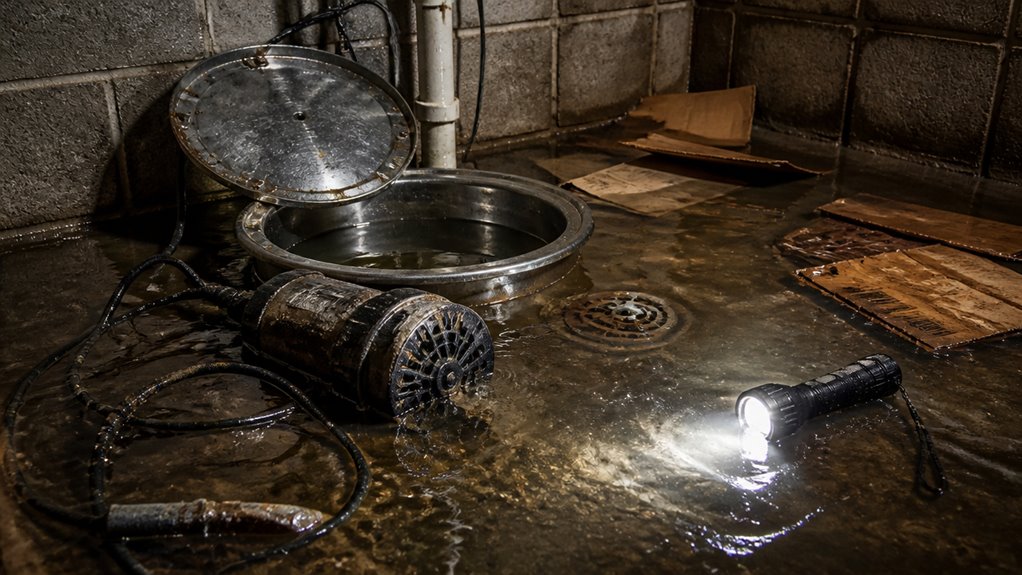
If your sump pump stopped working, first check power sources, breakers, and cords for issues.
Inspect the float switch for jams and clear any debris clogging the intake, impeller, or discharge lines.
Make certain the check valve functions correctly to prevent backflow.
If the motor hums, trips breakers, or smells burnt, it may be overheating or failing internally.
Acting quickly can prevent damage and restore function.
Learn how to troubleshoot, maintain, and when replacement is necessary.
Key Takeaways
- Check power source, breakers, and cords to ensure the sump pump is receiving electricity.
- Inspect and clear float switch obstructions to confirm it activates the pump properly.
- Remove debris from intake screens, discharge lines, and sump pit to prevent clogs.
- Verify the check valve is functioning to avoid water backflow and frequent cycling.
- Test the pump by filling the pit with water and observe if it starts and pumps water out.
Common Causes of Sump Pump Failure
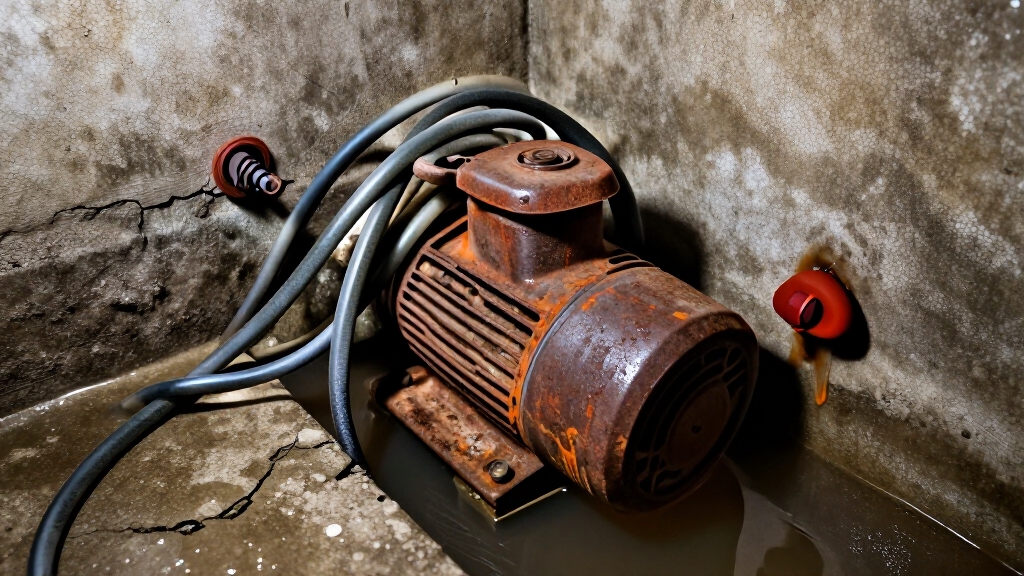
Although sump pumps are designed for reliability, several common issues can cause them to stop working effectively.
Sump pumps are reliable but can fail due to several common issues.
You might face power loss from tripped breakers or unplugged cords, which immediately halt pump operation.
A stuck float switch can either prevent activation or cause constant running, leading to premature wear.
Clogs in intake screens, impellers, or discharge lines block water flow, reducing pump efficiency or stopping it altogether.
A failed check valve allows pumped water to flow back into the sump pit, resulting in increased cycling and strain on the motor.
Finally, motor burnout or worn internal components can cause complete failure.
Regular inspections and prompt cleaning or part replacement will help you avoid these common causes and keep your sump pump functioning under critical conditions.
Installing and maintaining a battery backup system ensures operation during power outages and mechanical failures.
Warning Signs Your Sump Pump Is Failing
You might start to notice some telltale signs that your sump pump isn’t quite up to par.
For instance, if you see standing water in the sump pit or if the pump seems to be running non-stop when it shouldn’t, that’s a red flag.
Also, keep your ears open!
If you hear any grinding, rattling, or loud humming noises, those could indicate some mechanical issues.
Catching these signs early is key.
It gives you a chance to troubleshoot or even replace the pump before any serious damage can happen.
Regular inspection of the float switch can help prevent constant running and motor wear.
Common Failure Indicators
Frequently, the earliest signs of sump pump failure show up as unusual noises, persistent running, or water accumulation in the pit when the pump should be active.
You might hear grinding, rattling, or humming, indicating mechanical wear or debris interference.
If the pump runs non-stop or cycles frequently, the float switch may be stuck or the check valve could be failing.
Water rising without pump activation often points to electrical issues or motor failure.
A burning smell or breaker trips signal motor overheating or electrical faults.
Monitoring these indicators lets you intervene early: check power sources, inspect and clear the float switch, remove debris affecting the intake and discharge, and verify the check valve’s function.
Early detection prevents costly failures and flooding risks.
Regular maintenance, similar to checking the functionality of shower valves, can help ensure your sump pump operates reliably.
Audible Warning Signals
Listen closely for unusual sounds coming from your sump pump. They often signal underlying issues before a complete failure occurs. Ignoring these audible warnings can lead to costly water damage.
Pay attention to:
- Grinding or rattling noises, which indicate debris caught in the impeller or worn bearings.
- Loud humming, suggesting motor strain or electrical problems.
- Clicking sounds, often caused by a malfunctioning float switch or relay.
- Constant running noise, a sign of a stuck float or failed check valve causing short cycling.
Address these sounds promptly by inspecting and cleaning the pump components, checking electrical connections, and testing the float switch. Early intervention can prevent total pump failure and protect your basement from flooding. Regular maintenance is crucial to avoid general maintenance neglect, which often leads to these audible warning signs.
Troubleshooting a Sump Pump That Won’t Start
Start troubleshooting a sump pump that won’t start by verifying its power source.
Check if the outlet has power and make certain the breaker or GFCI hasn’t tripped.
Next, inspect the float switch for obstructions or tangled cords that might prevent activation.
Clear any debris from the sump pit, intake screen, and discharge line to avoid blockages.
Verify that the check valve isn’t stuck or failed, as this can affect pump cycling.
Test the pump by filling the pit with water and observing whether it activates and pumps out water.
If the pump still doesn’t start, inspect the motor for signs of burnout or overheating.
Address electrical faults or mechanical failures promptly to restore operation and prevent flooding.
Consider adding a battery backup system to ensure operation during power outages.
Maintenance Tips for a Smooth-Running Sump Pump
Regularly testing your sump pump guarantees it activates at the right water level and helps catch issues early. To maintain smooth operation, focus on key preventive steps that reduce failure risks and extend pump life.
Clean the sump pit regularly to remove sediment, debris, and gravel that can clog intake or damage components. Inspect the float switch for free movement and clear any obstructions that might cause it to stick or fail.
Check the discharge pipe to ensure water flows away unobstructed, preventing backflow and excessive cycling. Test any battery backup system routinely, replacing batteries before they lose capacity to make certain emergency readiness.
Additionally, inspect the check valve regularly to ensure it is functioning correctly and preventing water from flowing back into the pump.
Following these steps helps you avoid unexpected shutdowns and keeps your sump pump reliable when you need it most.
When to Replace Your Sump Pump Instead of Repairing?
If your sump pump is showing signs of advanced wear, like corrosion or rust, it might be time to think about replacing it. These issues can signal that it’s not going to hold up much longer.
Also, if you’re experiencing frequent motor burnout or dealing with ongoing mechanical damage, even after regular cleaning and inspections, that’s a big red flag. It’s a sign that your pump mightn’t be reliable anymore.
Regular inspections and addressing mechanical wear and tear early can help determine whether repair or replacement is the best option.
Signs Of Advanced Wear
When your sump pump shows persistent issues like repeated motor burnout or frequent overheating, it’s a clear sign that replacement is more practical than repair.
You should consider swapping it out when wear compromises reliability, risking flooding or failure.
Look for these advanced wear indicators:
- Corrosion, rust, or water intrusion around the housing and fittings
- Frequent short cycling or continuous operation despite cleaning and inspections
- Mechanical damage evident after thorough troubleshooting and maintenance
- Older pumps exhibiting recurring malfunctions despite repairs
Addressing these signs promptly prevents costly water damage and guarantees effective sump pit drainage.
Instead of investing in repeated repairs, replacing the pump restores dependable operation and peace of mind.
A new, properly sized unit reduces downtime and maintenance needs while protecting your basement from water intrusion.
Regular testing and maintenance, such as inspecting the float switch and discharge pipe, are essential to ensure long-term reliability and prevent premature pump failure.
Frequent Motor Burnout
Frequent motor burnout often signals a sump pump that’s struggling beyond repair.
When your pump’s motor overheats or burns out repeatedly, it indicates internal components are worn or damaged beyond simple fixes.
You’ll notice burning smells, excessive heat, or breakers tripping immediately after restart attempts.
Instead of repeatedly replacing motors, consider full pump replacement to guarantee reliable operation and avoid unexpected flooding.
Repair costs can exceed replacement, especially if the pump is older or shows corrosion and rust.
Upgrading to a properly sized, efficient pump reduces stress and extends service life.
After replacement, maintain the new system by regularly inspecting switches, clearing debris, and testing backup options.
This proactive approach prevents frequent burnout and protects your property from water damage.
Choosing a pump with thermal overload protection can further safeguard your system from motor damage due to overheating.
Persistent Mechanical Damage
Evaluating persistent mechanical damage is essential to deciding whether to replace your sump pump rather than attempt repairs.
If your pump repeatedly fails despite cleaning, switch testing, and valve inspection, underlying mechanical issues likely persist.
Signs such as corrosion, rust, or water intrusion on housing and fittings usually indicate advanced wear that compromises reliability.
Additionally, frequent short cycling or constant operation suggests the pump is worn or improperly sized.
Consider replacement if you notice:
- Repeated motor burnout or overheating despite maintenance
- Visible corrosion or damage to pump housing and components
- Persistent failure after routine troubleshooting steps
- Frequent cycling or continuous running indicating mechanical wear
Replacing the pump guarantees dependable operation and reduces flood risk, especially when failures recur. Installing a quiet check valve can also help reduce noise and wear caused by water slamming, potentially extending the life of your sump pump system.
Backup Sump Pump Options to Protect Your Home
Several reliable backup sump pump options can safeguard your home from flooding during main pump failure or power outages.
Battery backup pumps automatically activate when your primary pump or power supply fails, providing immediate protection. Ensure the battery is regularly tested and replaced to maintain optimal performance.
Battery backup pumps engage instantly during power or main pump failure; regular battery checks ensure reliable operation.
Water-powered backup systems offer an alternative by using municipal water pressure to remove water without electricity. However, they depend on local plumbing conditions and sufficient pressure.
When selecting a backup pump, consider system compatibility, discharge capacity, and installation requirements. Regularly test the backup by unplugging the main pump and filling the pit to confirm activation.
Proper maintenance and timely battery replacement are vital to guarantee your backup system performs reliably when needed. This minimizes flood risk and damage to your home.
Frequently Asked Questions
How Long Does a Typical Sump Pump Last Before Needing Replacement?
A typical sump pump lasts about 7 to 10 years before needing replacement.
You’ll want to contemplate replacing it sooner if you notice frequent motor burnout, overheating, or persistent mechanical issues despite maintenance.
Regularly inspect wear on switches, impellers, and fittings to catch problems early.
If your pump cycles constantly or shows corrosion, it’s often more cost-effective and safer to replace it rather than repair it, especially in flood-prone areas.
Can Sump Pumps Be Connected to Smart Home Systems for Alerts?
Imagine your sump pump sending a notification to your phone the moment it detects trouble. You can connect many modern sump pumps to smart home systems, enabling real-time alerts for power loss, pump failure, or high water levels.
What Is the Average Cost to Professionally Install a Sump Pump?
You can expect to pay between $500 and $1,200 for professional sump pump installation. This cost includes labor, materials, and any necessary electrical work.
Factors like pump type, pit condition, and local labor rates affect the price. To get the best value, request detailed quotes from licensed plumbers or contractors.
Ensure they handle permits and system testing. Proper installation prevents future failures and protects your basement efficiently.
Are Sump Pumps Noisy During Normal Operation?
You might be surprised, but sump pumps aren’t usually noisy during normal operation.
You’ll hear a low hum or gentle motor sound, which indicates it’s working properly.
If you detect grinding, rattling, or loud banging, that’s a sign something’s wrong, like debris caught in the impeller or a failing motor.
To keep noise minimal, regularly clean the pit, check for loose parts, and ensure proper installation and maintenance.
Can a Sump Pump Handle Sewage or Only Clean Water?
You should know that standard sump pumps are designed for clean or slightly dirty water, not sewage.
Sewage contains solids and debris that can clog or damage typical sump pumps.
If you need to handle sewage, use a sewage or effluent pump specifically built to process waste and solids safely.
These pumps have robust impellers and seals to prevent clogging and withstand harsher conditions.
This ensures reliable operation in wastewater applications.
Sump Pump Stopped Working? Final Troubleshooting Tips
Just like a well-oiled machine keeps a clock ticking flawlessly, your sump pump needs regular attention to prevent failure.
If yours stops working, don’t wait for a flood to test your luck. Identify warning signs early, troubleshoot promptly, and maintain it diligently.
Remember, sometimes replacing your sump pump is the smartest move. Consider a reliable backup system to make certain your home stays dry, no matter the storm.