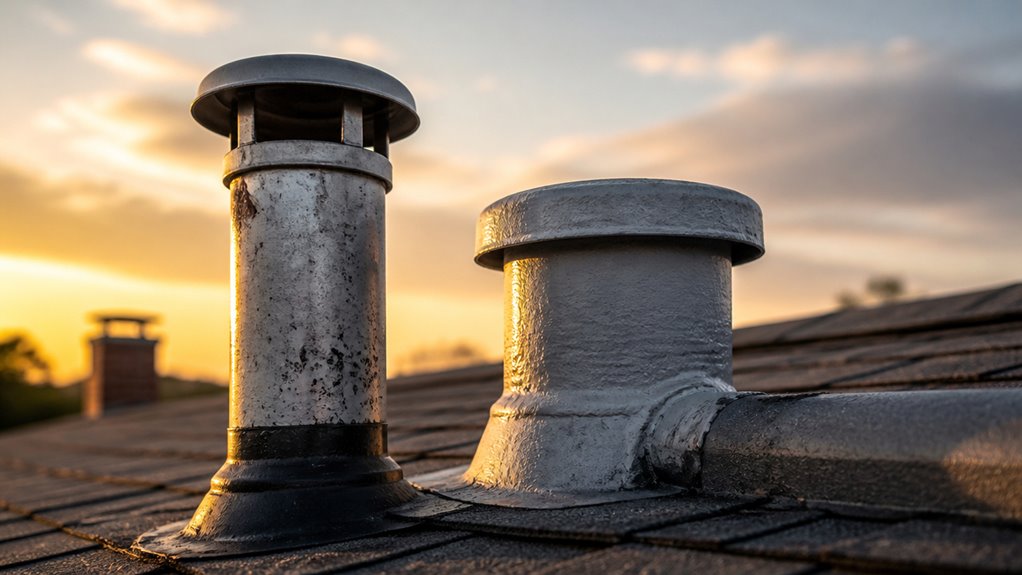
You’ll find that a vent stack is a dedicated vertical pipe solely for air circulation and pressure equalization in your drainage system, separate from waste flow.
In contrast, a stack vent is the upper part of your soil or waste stack, combining drainage and venting above the highest fixture connection.
Both must extend beyond the roofline to safely discharge sewer gases. Understanding these distinctions helps ensure proper vent sizing and placement, essential for maintaining system balance and preventing trap issues.
Explore further to optimize your plumbing design.

- OdorHog is an activated charcoal vent stack filter for plastic pipes that eliminates unpleasant…
- Fast and easy installation, choose from 4 sizes. This Slip On version will fit on Standard Schedule…
- Proudly made in the USA, OdorHog is built strong with ABS plastic to withstand the sun and weather…
Key Takeaways
- A vent stack is a standalone vertical pipe dedicated solely to air circulation and pressure equalization, separate from drainage lines.
- A stack vent is the upper extension of a drainage stack, combining drainage and venting functions above the highest horizontal drain.
- Vent stacks connect near the base of drainage stacks and serve only venting, while stack vents continue the drainage stack upward for venting.
- Both vent stacks and stack vents must terminate outdoors above the roofline to safely discharge sewer gases.
- Proper sizing and placement differ: vent stacks depend on total drainage fixture units, while stack vents must match drainage stack diameter and extend above the highest fixture.
Vent Stack vs Stack Vent: Key Differences in Function, Design, and Installation
| Comparison Factors | Vent Stack | Stack Vent |
|---|---|---|
| Definition | Dedicated vertical vent pipe within a plumbing system | Upper extension of a soil or waste stack |
| Primary Function | Air circulation and pressure equalization | Ventilation through the continuation of a drainage stack |
| Pipe Function | Ventilation only, without normal wastewater flow | Drainage below and ventilation above the highest fixture connection |
| Connection Point | Typically connected to the drainage stack or vent network | Continues directly from the soil or waste stack |
| Installation Position | Separate vertical piping within the drainage system | Located above the highest horizontal drain connection |
| Air Pressure Control | Helps prevent negative and positive pressure buildup | Helps balance pressure within the main drainage stack |
| Trap Protection | Helps prevent trap siphonage and water-seal loss | Supports trap seal protection through proper ventilation |
| Sewer Gas Management | Provides a ventilation pathway to the outdoors | Allows gases to vent through the upper stack extension |
| Pipe Sizing | Based on drainage fixture units and developed length | Based on drainage stack size and applicable venting rules |
| Roof Termination | Typically extends to an approved outdoor vent termination | Typically continues through the roof to open air |
| Common Materials | PVC, ABS, cast iron, where permitted | PVC, ABS, cast iron, where permitted |
| Best Application | Larger or more complex drainage systems requiring dedicated venting | Drainage stack configurations using the upper extension for ventilation |
| Overall Recommendation | Best when a separate vertical vent pathway is required | Best when the drainage stack’s continuation provides compliant venting |
Vent Stacks and Stack Vents: Definitions and Roles

Although vent stacks and stack vents both serve essential functions in a drainage system, they play distinctly different roles you need to understand.
Vent stacks and stack vents are essential yet serve distinctly different roles in drainage systems.
A vent stack is a dedicated vertical pipe installed mainly to circulate air and prevent pressure imbalances within the system. It operates separately from the drainage lines and serves only ventilation purposes.
In contrast, a stack vent is the upper extension of a soil or waste stack, continuing above the highest horizontal drain connection. This means the stack vent is part of the drainage stack itself and combines drainage and venting functions.
When you refer to a vent stack, you’re talking about a standalone vent pipe; with a stack vent, you mean the drainage stack’s upper section acting as a vent.
This distinction is vital for proper plumbing design and code compliance.
Proper venting, such as ensuring airtight joints, is essential to prevent gas seepage into the home and maintain system efficiency.
How Vent Stacks Regulate Air Pressure in Drainage Systems?
You know those vent stacks? They’re pretty essential for keeping the airflow balanced in your drainage system. Without them, you might run into some pressure imbalances, which can really mess up how waste flows.
It’s like having a traffic jam in your pipes!
When vent stacks equalize air pressure, they help ensure that traps retain their water seals. This is super important because it keeps those pesky sewer gases at bay. In some cases, you can use air admittance valves as an alternative to traditional vent stacks to maintain proper ventilation and prevent sewer gas escape.
Airflow Balance Mechanism
Vent stacks regulate air pressure in drainage systems by maintaining airflow balance that prevents negative or positive pressure buildup.
You rely on this mechanism to guarantee air moves freely within the vent stack, equalizing pressure as wastewater flows through the pipes.
When water displaces air in the drain, the vent stack admits air to replace the volume, preventing vacuum conditions that could siphon trap seals.
Conversely, it allows excess air to escape, avoiding pressure surges that might disrupt flow or damage piping.
This continuous airflow balance supports stable system performance, reduces noise, and protects fixture traps.
Proper sizing and placement of vent stacks are critical to maintaining this airflow, assuring the drainage system operates efficiently without pressure-related interruptions or failures.
In some cases, an Air Admittance Valve can be installed on the vent pipe to help maintain balanced pressure and prevent siphonage in sewage pump systems.
Pressure Equalization Role
When wastewater flows through drainage pipes, air pressure fluctuates inside the system. Vent stacks regulate this by allowing air to enter or escape as needed.
This pressure equalization prevents negative or positive pressure buildup that could disrupt water seals in traps. By maintaining balanced pressure, vent stacks protect against trap siphonage and backflow, ensuring smooth drainage operation.
Here’s how vent stacks manage pressure:
- Admit air to offset vacuum created by draining water, preventing trap seal loss.
- Release excess pressure to avoid pipe damage or sewer gas escape.
- Maintain consistent atmospheric pressure within the drainage system for stability.
In many cases, air admittance valves serve as an effective alternative to vent stacks by providing pressure equalization in confined or difficult-to-vent spaces.
Understanding this function helps you design plumbing systems that comply with code and perform reliably under varying flow conditions.
Why Stack Vents Matter Above the Highest Drain Connection?
Although often overlooked, stack vents play a critical role by extending above the highest horizontal drain connection to maintain proper air movement within the drainage system.
Stack vents extend above the highest drain to ensure essential air movement within the drainage system.
This extension prevents negative pressure buildup that could siphon traps or disrupt flow. By continuing the soil or waste stack beyond the uppermost fixture, stack vents ensure continuous air passage and balance pressure fluctuations caused by draining fixtures below.
This balance protects trap seals and prevents sewer gas from entering occupied spaces. Without a properly sized and positioned stack vent, you risk compromised venting efficiency, leading to potential drainage slowdowns and odor issues.
Fundamentally, the stack vent’s position above the highest drain is essential for sustaining uninterrupted airflow and maintaining the integrity of your drainage system’s venting function. Proper ventilation is as crucial as installing check valves in sump pump systems to maintain overall plumbing efficiency and prevent backflow issues.
Key Differences Between Vent Stacks and Stack Vents
Because both vent stacks and stack vents play roles in managing air within drainage systems, understanding their key differences is essential for proper installation and code compliance.
You’ll find that vent stacks are dedicated vertical pipes primarily for air circulation and pressure equalization, separate from the drainage flow.
Stack vents, on the other hand, are the upper portions of the soil or waste stack extending above the highest horizontal drain, combining drainage and venting functions.
Key distinctions to remember:
- Vent stack: a standalone vent pipe focused solely on ventilation and pressure control.
- Stack vent: continuation of the drainage stack serving both as a drain and vent above the top fixture.
- Installation points differ: vent stacks connect near the base, stack vents start above the highest drain.
Understanding these differences guarantees accurate system design and function. Proper ventilation is crucial, as it helps prevent hazardous gas buildup and ensures appropriate ventilation within plumbing systems.
Plumbing Code Requirements for Vent Stacks and Stack Vents
So, let’s talk about plumbing codes and how they differentiate between vent stacks and stack vents. It’s really important to get these definitions straight because they play a key role in your plumbing system.
When it comes to sizing and placement, you want to make sure you’re following the guidelines. Proper sizing and location are crucial for ensuring that your venting system can handle pressure and airflow effectively.
This helps prevent issues like trap siphonage, which can really mess with your drainage.
In the end, sticking to these code requirements isn’t just about compliance; it’s also about making sure your drainage system works as it should. Keeping everything in line with the codes ensures that you’ll have a reliable and efficient plumbing setup.
Additionally, understanding the role of a check valve can further help prevent backflow and maintain proper drainage function.
Code Definitions Distinction
Key distinctions include:
- Vent stacks serve exclusively as vent pipes, required when multiple branch intervals exist.
- Stack vents extend from the topmost fixture connection upward, continuing the drainage stack.
Both must terminate outdoors, but sizing and installation rules differ based on their function and location.
Understanding these code definitions helps you design and inspect compliant, efficient venting systems.
Proper installation often involves managing water pressure to protect plumbing integrity and ensure system longevity.
Sizing And Placement
When sizing and placing vent stacks and stack vents, plumbing codes require careful adherence to assure proper airflow and pressure balance within the drain-waste-vent system.
You’ll size vent stacks based on developed length and total drainage fixture units (DFUs), guaranteeing they handle airflow without pressure loss.
Stack vents must extend above the highest horizontal drain, maintaining a minimum height as code dictates to allow proper venting and gas release.
| Aspect | Requirement |
|---|---|
| Vent Stack Size | Based on DFUs and developed length |
| Stack Vent Placement | Extends above highest fixture drain connection |
| Termination | Both must vent outdoors, above roofline |
Following these rules guarantees system integrity and code compliance. Proper sizing also ensures compatibility with flow rate capacities to maintain efficient system performance.
Venting Requirements Compliance
Proper sizing and placement set the foundation for vent stacks and stack vents. Strict adherence to plumbing code requirements assures these components function safely and effectively within the drainage system.
You must follow the International Plumbing Code (IPC) and local amendments carefully. Vent stacks require sizing based on developed length and drainage fixture units. Stack vents extend above the highest horizontal drain and must terminate outdoors.
Compliance assures pressure equalization and prevents trap seal loss.
Key plumbing code requirements include:
- Vent stacks are mandatory for drainage stacks with five or more branch intervals.
- Stack vents must maintain uninterrupted airflow above the highest fixture connection.
- Both must terminate in open air to safely discharge sewer gases.
Staying code-compliant protects system integrity and occupant safety. Regular inspection and maintenance can prevent system failures that compromise venting effectiveness.
Identifying Vent Stacks vs Stack Vents in Your Plumbing
Although vent stacks and stack vents both serve critical roles in your plumbing’s drain-waste-vent system, you’ll identify them by their position and function within the piping network.
A vent stack is a dedicated vertical pipe installed primarily for air circulation and pressure equalization. It usually connects near the base of the drainage stack.
In contrast, a stack vent is the upper extension of the soil or waste stack that continues above the highest horizontal drain connection. It serves both drainage and venting functions.
When inspecting your system, note that vent stacks are separate vent-only pipes. Stack vents are integral parts of the drainage stack itself.
Recognizing this distinction helps guarantee proper system layout and compliance with plumbing codes.
How to Size Vent Stacks and Stack Vents Correctly?
Sizing vent stacks and stack vents correctly guarantees your plumbing system maintains balanced air pressure and efficient drainage. You need to follow local plumbing codes, which specify minimum pipe diameters based on the number of drainage fixture units (DFUs) connected.
For vent stacks, consider the developed length and total DFUs they serve. Stack vents must be sized according to the size of the soil or waste stack they extend from, assuring adequate air movement without restricting drainage.
Key sizing tips include:
- Use code tables to determine pipe diameter based on DFUs and vent length.
- Assure vent stacks meet minimum diameter requirements, typically 2 inches or larger.
- Confirm stack vent diameter matches or exceeds the drainage stack size they continue.
Proper sizing prevents trap siphoning and maintains system integrity.
Frequently Asked Questions
Can Vent Stacks Be Retrofitted Into Existing Plumbing Systems?
Yes, you can retrofit vent stacks into existing plumbing systems, but you’ll need to carefully assess space, access, and code compliance.
It often requires cutting into walls or ceilings to install vertical vent pipes that connect near drainage stacks.
Make certain to size the vent stack properly based on fixture units and length per code.
Consulting a licensed plumber guarantees your retrofit maintains proper airflow and prevents trap siphonage effectively.
What Materials Are Best for Vent Stack and Stack Vent Pipes?
Think of vent stack and stack vent pipes as the lungs and windpipes of your plumbing system.
You’ll want durable materials like PVC or ABS plastic for their corrosion resistance and ease of installation.
Cast iron works well for older systems, offering strength and noise reduction.
Copper is less common but viable.
Always choose code-approved materials that handle temperature and pressure, ensuring long-lasting, efficient venting and prevention of sewer gas buildup.
How Do Weather Conditions Affect Vent Stack Performance?
You’ll find that weather conditions like wind, temperature, and precipitation directly impact vent stack performance.
Strong winds can cause pressure fluctuations, disrupting airflow and potentially allowing sewer gases inside.
Cold weather risks freezing moisture in the vent, blocking air movement.
Rain or snow can enter and clog the vent stack if it’s not properly capped or sloped.
Regular inspections and weatherproofing measures help maintain peak vent stack function in varying climates.
Are There Common Signs of Vent Stack or Stack Vent Failure?
You’ll notice vent stack or stack vent failure through slow draining fixtures, gurgling sounds in drains, or sewer gas odors inside your building.
Pressure imbalances can cause trap seals to siphon dry, leading to these issues.
Also, visible cracks or blockages at the vent termination point can signal problems.
Regular inspection and clearing debris guarantee proper airflow and prevent these common failure signs.
Can Vent Stacks and Stack Vents Be Combined in Small Buildings?
Yes, you can combine vent stacks and stack vents in small buildings to simplify the plumbing system.
When the building has fewer fixtures and shorter drain runs, the soil or waste stack often extends as a stack vent. This reduces the need for a separate vent stack.
This approach meets code requirements if properly sized and installed, ensuring adequate air circulation and pressure balance within the drainage system without overcomplicating the layout.
Final Thoughts on Vent Stacks and Stack Vents
Now that you’re equipped with the facts, you won’t confuse a vent stack with a stack vent like a knight mixing up his sword and shield.
Both play essential roles in maintaining proper air pressure and preventing sewer gases from entering your home.
Remember, sizing and placement must follow plumbing codes precisely to keep your system efficient and safe.
With this knowledge, you can confidently identify and manage vent systems like a pro.
- OdorHog is an activated charcoal vent stack filter for plastic pipes that eliminates unpleasant…
- Fast and easy installation, choose from 4 sizes. This Slip On version will fit on Standard Schedule…
- Proudly made in the USA, OdorHog is built strong with ABS plastic to withstand the sun and weather…
Last update on 2026-10-19 / Affiliate links / Images from Amazon Product Advertising API