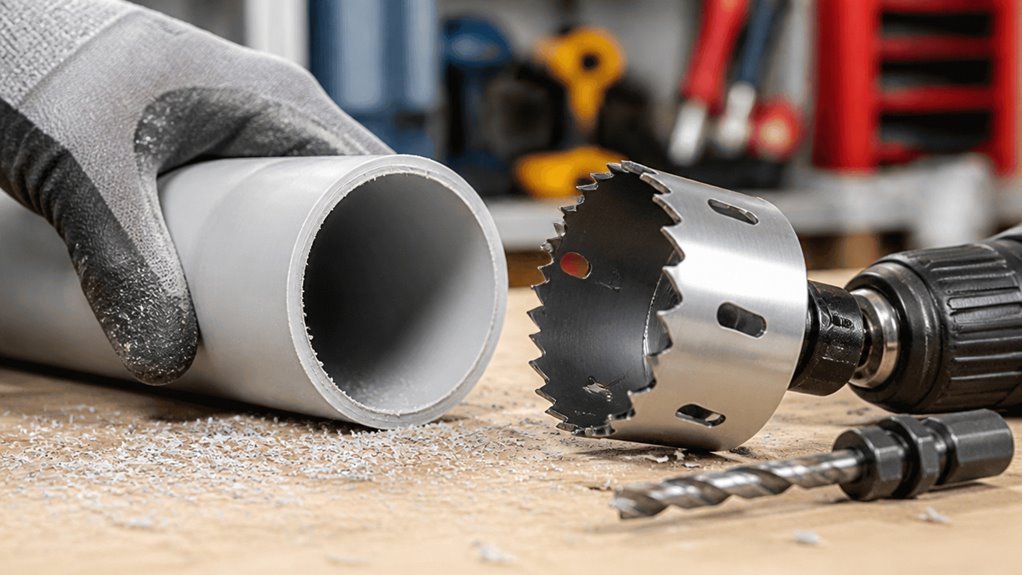
You’ll want a 2-inch hole saw to cut holes for 1 1/2-inch PVC because the actual outside diameter is about 1.90 inches, not the nominal size.
This size gives a clean fit with enough clearance for insertion and minor adjustments. Avoid smaller saws that can cause damage or oversized holes that reduce support.
For fittings or thicker materials, you might need slightly larger sizes. Follow precise sizing to guarantee a solid, leak-free installation and discover tips to achieve smooth, accurate cuts.
Key Takeaways
- Use a 2-inch hole saw for a clean, proper fit around 1 1/2-inch PVC with 1.90-inch outside diameter.
- A 1 7/8-inch hole saw offers a tighter fit but may require sanding for clearance.
- Choose a 2 1/8-inch hole saw when extra space is needed for fittings or thicker panels.
- Always measure the actual pipe OD, not the nominal size, before selecting hole saw size.
- Dry-fit the pipe or fitting before drilling to ensure the hole saw size is appropriate.
What Size Is 1 1/2-Inch PVC Pipe Really?

When you measure a 1 1/2-inch PVC pipe, don’t expect it to be exactly 1.5 inches across. The nominal size refers to the pipe’s internal diameter, not the outside.
Typically, the outside diameter (OD) measures about 1.90 inches for standard Schedule 40 and Schedule 80 pipes. This OD dimension is critical when selecting tools or fittings because it determines the actual space the pipe occupies.
Wall thickness and manufacturing tolerances can slightly affect this measurement, but the OD remains consistent enough for practical use.
It is important to note that Schedule 40 pipes have thicker walls compared to other schedules, which influences their overall dimensions and strength.
Recommended Hole Saw Sizes for 1 1/2-Inch PVC Pass-Through
Selecting the right hole saw size is essential for creating clean, accurate pass-throughs for 1 1/2-inch PVC pipes. Since the pipe’s outside diameter measures about 1.90 inches, a 2-inch hole saw is typically your best choice.
This size provides enough clearance for easy insertion while maintaining proper support and sealing. If you need a tighter fit, a 1 7/8-inch hole saw works but expect limited clearance and possible sanding.
For applications where extra space is beneficial, such as thicker panels or slight misalignments, consider a 2-1/8-inch hole saw. Always base your hole size on the actual pipe OD, not the nominal size, to avoid fitting issues.
Before drilling, dry-fit the pipe to confirm the hole saw size suits your specific material and installation requirements.
Using the correct hole saw size also helps ensure compliance with local plumbing codes and prevents potential installation issues.
Hole Saw Sizes for Fittings and Connectors
Although hole saw sizes for pipe pass-throughs often focus on the pipe’s outside diameter, fittings and connectors usually require larger holes to accommodate their increased size.
For 1 1/2-inch PVC, this means you’ll often need a hole saw diameter larger than 2 inches. A 2-1/8-inch hole saw is commonly recommended, providing enough clearance for bulkier fittings without compromising support.
Always measure the fitting’s outside diameter rather than relying solely on pipe size. Using a slightly oversized hole prevents installation difficulties and damage during insertion.
However, avoid excessive oversizing to maintain sealing integrity. Dry-fit your fittings before cutting to confirm proper fit.
Choose carbide-tipped hole saws if cutting through harder materials, and verify cutting depth to avoid incomplete holes.
Additionally, when installing sump pump fittings, it is important to consider the correct sizing of the check valve to ensure effective water flow and prevent backflow.
Why Hole Saw Size Matters for 1 1/2-Inch PVC?
Understanding the correct hole saw size goes beyond simply matching the pipe or fitting diameter. Using the right size directly impacts installation quality and long-term performance.
If the hole is too small, you risk damaging the 1 1/2-inch PVC or preventing proper insertion, which compromises sealing and structural integrity. Conversely, an oversized hole reduces support and may lead to leaks or instability.
Since the pipe’s outside diameter is about 1.90 inches, a 2-inch hole saw typically balances clearance and fit. This guarantees secure placement without excessive gaps.
Selecting the proper hole size also accommodates material tolerances and fitting types, which vary in required clearance. By choosing the appropriate hole saw size, you guarantee a precise, durable installation that meets both functional and safety standards.
It is important to secure the PVC pipe firmly before drilling to prevent slips and ensure an accurate, clean hole.
Tips for Cutting Clean Holes in 1 1/2-Inch PVC
When cutting holes for 1 1/2-inch PVC, you’ll want to make certain your tools and technique produce smooth, accurate openings that prevent damage to the pipe and surrounding material. Follow these tips for clean cuts:
- Use a sharp, carbide-tipped hole saw sized slightly larger than the pipe’s 1.90-inch outside diameter, typically 2 inches, to avoid tight fits or damage.
- Secure the workpiece firmly and drill at a slow, steady speed to reduce heat buildup and prevent PVC melting or chipping.
- Start with a pilot bit to keep the hole saw centered and minimize wandering during the cut.
- After cutting, deburr edges with a file or sandpaper to guarantee a smooth fit and proper sealing.
These steps guarantee precision and protect your materials. For improved cutting performance and reduced hand fatigue when working with PVC pipes, consider using tools with an ergonomic handle design.
Frequently Asked Questions
Can I Use a Drill Bit Instead of a Hole Saw for 1 1/2-Inch PVC?
You technically can use a drill bit instead of a hole saw for 1 1/2-inch PVC, but it’s not ideal.
Drill bits are designed for smaller, precise holes and won’t efficiently cut the large diameter needed. You’ll struggle to get a clean, round hole, risking uneven edges or cracking the pipe.
For best results, use a hole saw sized slightly larger than the pipe’s outside diameter, ensuring a smooth, accurate cut.
How Do I Prevent Cracking When Cutting 1 1/2-Inch PVC?
You can prevent cracking when cutting 1 1/2-inch PVC by maintaining a slow, steady drill speed, typically around 500 RPM, to reduce heat buildup.
Use a sharp, carbide-tipped hole saw with a pilot bit to keep the cut centered and avoid wandering. Support the pipe firmly to minimize vibration and apply light pressure without forcing the blade.
Cooling the cutting area with water or intermittent pauses also helps prevent stress fractures during the cut.
What Safety Gear Is Recommended When Using a Hole Saw on PVC?
You should always wear safety goggles to protect your eyes from flying debris when using a hole saw on PVC.
Use hearing protection, like earplugs or earmuffs, to guard against noise.
Gloves are recommended to prevent cuts and improve grip, but make sure they don’t get caught in the saw.
Also, wear a dust mask to avoid inhaling plastic dust.
Secure the workpiece firmly before cutting for added safety.
Can Hole Saw Teeth Damage PVC Pipe Edges?
Imagine the jagged teeth of a hole saw biting into smooth PVC edges. Yes, those teeth can cause chipping or rough cuts if you’re not careful.
To avoid damage, use a sharp, carbide-tipped hole saw and steady pressure. Slow, controlled cutting reduces cracking and splintering.
After cutting, you should sand or ream the edges to smooth them out for a clean, precise fit and better sealing when joining pipes.
Is Lubrication Necessary When Cutting Through PVC With a Hole Saw?
You don’t necessarily need lubrication when cutting PVC with a hole saw, but using a light lubricant or water can help reduce heat buildup and extend blade life.
It also minimizes melting or chipping at the edges. If you’re cutting thicker or denser PVC, lubrication becomes more beneficial.
Just apply it sparingly to avoid slipping, and keep the cutting speed moderate for cleaner, safer cuts.
Final Tips for Accurate PVC Hole Saw Sizing
Choosing the right hole saw size for 1 1/2-inch PVC isn’t just about fitting the pipe; it’s about ensuring a secure, leak-free connection that lasts.
While the pipe’s nominal size might suggest one dimension, the actual measurements demand precision.
Using too large a hole saw leaves gaps; too small, and you risk damage.
By selecting the exact size recommended, you balance efficiency with durability, making your PVC installation both practical and professional every time.