If your American Standard Titan toilet has flushing problems, constant running, leaks, or clogs, start by checking the tank water level, flapper condition, and chain tension to guarantee proper valve action.
Mineral buildup commonly restricts flush valves and trapways, reducing flow.
Leaks often come from worn gaskets or loose fittings.
Installation can be tricky due to heavy parts and alignment sensitivity.
Addressing these issues promptly restores function. Explore precise maintenance and part replacements for a reliable fix.
Key Takeaways
- Mineral buildup in flush valves and trapways reduces flushing performance in American Standard Titan toilets.
- Worn flappers often cause constant running or leaks by failing to seal the flush valve properly.
- Excessive toilet paper use can overload the trapway, leading to frequent clogs and weak flushes.
- Tank water level misadjustments cause weak flushes or continuous running due to overflow or insufficient fill.
- Installation challenges include heavy unit weight, bolt alignment issues, and side handle clearance near walls.
Fixing Common Flushing Problems on Titan Toilets

To fix common flushing problems on Titan toilets, start by checking the tank water level to make certain it meets the manufacturer’s specifications. A low level often weakens flush performance.
Begin by verifying the tank water level meets manufacturer guidelines to ensure strong flush performance.
Next, inspect the flush valve and flapper for mineral buildup or damage that can restrict valve action and reduce flushing power.
Examine the handle and lift-arm alignment to make certain they complete a full flush cycle without obstruction.
Check the chain connecting the handle to the flapper; improper tension can prevent proper closure.
Also, verify the trapway and drain passageways for partial blockages that might mimic flushing issues.
Addressing these components with precise adjustments or replacements will restore peak flushing efficiency and prevent recurring problems in your Titan toilet.
For stubborn blockages in the drain passageways, using a plumber’s auger can effectively dislodge clogs and improve flushing performance.
Why Your Titan Toilet Keeps Running and How to Stop It?
Once you’ve ruled out flushing mechanism issues, the next common challenge with your Titan toilet is constant running. This usually stems from a worn flapper that fails to seal the flush valve, allowing water to leak continuously.
Check the chain tension as well. If it’s too tight, it may keep the flapper slightly open after flushing. Also, make sure the water level isn’t set too high, as overflow into the standpipe causes persistent running.
Mineral buildup around the flapper seat or fill valve can prevent proper sealing and shutoff, so inspect and clean these areas. Replacing the flapper or adjusting the chain often resolves the issue, restoring normal operation without affecting the tank filling system. Regular maintenance, including cleaning the fill valve, can prevent water wastage and extend the lifespan of your toilet.
Titan Toilet Tank Filling Issues and How to Fix Them
When your Titan toilet tank isn’t filling properly, it can disrupt the flushing cycle and cause frustration. First, check the float adjustment. If it’s set too low, the tank won’t fill enough, leading to weak flushes.
Conversely, a float set too high may cause overflow into the overflow tube. Inspect the fill valve for malfunctions; wear or mineral buildup can slow or stop water flow.
Make sure the refill tube is correctly positioned above the overflow pipe to guarantee proper tank recovery. Also, examine the inlet holes inside the valve for blockages that restrict water flow.
If you have low water pressure, it might affect fill speed, especially in high-efficiency models. Address these issues systematically to restore ideal tank filling and flushing performance. Understanding the benefits of gravity-fed systems can help in diagnosing and improving tank fill issues.
Finding and Fixing Leaks in Titan Toilets
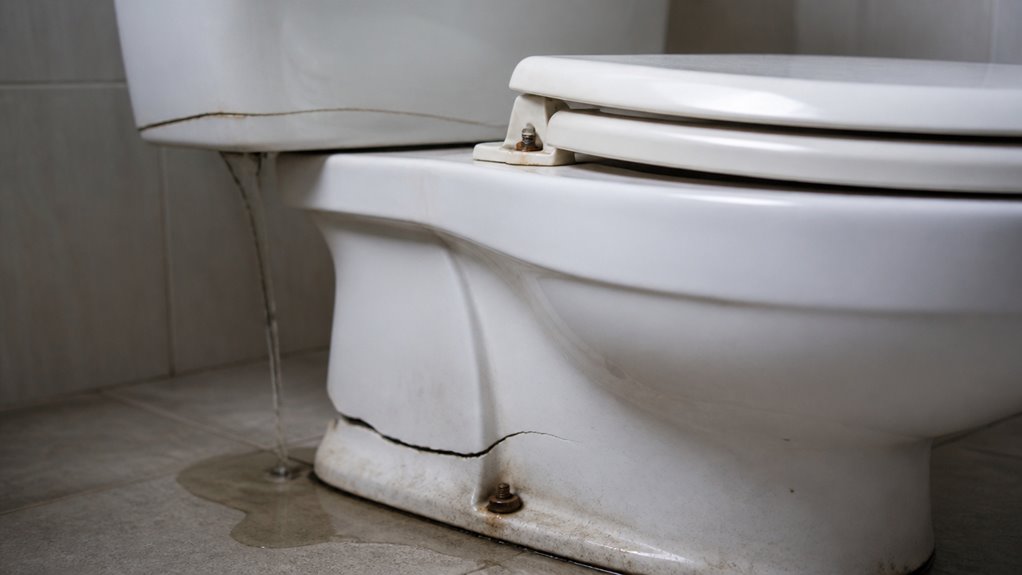
You know, it’s pretty common to find leaks in Titan toilets, especially around the tank-to-bowl connection, the base, or even inside the tank itself.
So, the first step is to figure out where the leak is coming from. Just take a good look at the gaskets, bolts, and valves—check for any signs of wear or damage.
Once you’ve pinpointed the source, you can get to work.
If you notice any faulty components, just replace or tighten them up. That should help stop the water loss and get your toilet functioning properly again. Easy peasy!
For optimal performance, ensuring your toilet meets water efficiency standards can also prevent issues related to leaks and waste.
Common Leak Locations
Although Titan toilets are generally robust, leaks can occur in specific, common locations that you should inspect carefully.
These include the tank-to-bowl connection, the base seal, the fill valve area, the flapper seal, and the supply line connection. Identifying these spots helps you target your repair efforts effectively and avoid unnecessary part replacements.
| Leak Location | Common Cause |
|---|---|
| Tank-to-bowl joint | Worn gasket or loose bolts |
| Base of toilet | Damaged wax ring or floor seal |
| Fill valve area | Faulty valve or loose fittings |
| Flapper seal | Worn or misaligned flapper |
| Supply line | Loose or cracked supply line connection |
Check these areas first to catch leaks early and maintain your toilet’s reliability. Proper gasket maintenance and replacement with a genuine Kohler part can prevent leaks and ensure long-lasting performance.
Diagnosing Leak Causes
Start by thoroughly inspecting the common leak points identified in your Titan toilet, such as the tank-to-bowl joint, base seal, fill valve area, flapper seal, and supply line connections.
Use a flashlight to detect moisture or corrosion and feel around seals for dampness.
Check for these signs:
- Water pooling or dampness at the base indicates a compromised wax ring or loose bolts.
- Moisture between the tank and bowl suggests worn or misaligned gaskets.
- Continuous dripping inside the bowl after flushing points to a faulty flapper or fill valve.
Confirm leaks by placing paper towels or dry tissue around suspect areas and monitoring for wet spots after flushing.
Accurate diagnosis helps you target the exact component needing repair or replacement.
For a reliable fix, consider using a wax-free toilet gasket to ensure a leak-free seal and easier installation.
Repairing Leak Components
After identifying the exact source of the leak in your Titan toilet, the next step involves addressing the faulty components directly.
Start by shutting off the water supply and draining the tank.
If leaks originate from the tank-to-bowl connection, remove the tank and replace the gasket and washers.
Ensure bolts are tightened evenly without overtightening.
For flapper leaks, inspect for warping or mineral buildup.
Replace with a compatible flapper if sealing fails.
Leaks at the base often require inspecting the wax ring; replace it if compressed or damaged.
Examine the fill valve for wear or mineral deposits and replace it if necessary.
Always verify that all parts match Titan specifications to ensure proper fit and function.
Using components with PowerWash rim technology can enhance cleaning performance and reduce buildup that might contribute to leaks.
This targeted approach prevents water waste and restores reliable operation.
Why Titan Toilets Clog and How to Fix Them?
Titan toilets can sometimes clog up, and it’s usually because of a heavy load of toilet paper or some buildup in the bowl and trapway that restricts the flow. You know how it goes—things just start to pile up!
Plus, if there are partial blockages in the drainpipe, it can feel like the toilet’s not working right, making it seem like there’s a defect when it’s really just a flow issue.
So, how do you tackle these problems? First off, you’ll want to clear out any obstructions. Keeping an eye on your flush performance is key, too. And don’t forget about that buildup!
Regular maintenance can go a long way in ensuring your toilet drains smoothly. Checking for clogged toilet trap is essential to prevent pressure buildup and flushing issues.
Common Causes
When Titan toilets clog, it’s often due to heavy toilet-paper loads overwhelming the drain path or partial blockages in the drainpipe itself.
You’ll want to take into account these common causes:
- Excessive toilet-paper use: Overloading the trapway restricts water flow, causing backups.
- Partial drainpipe obstructions: Mineral buildup or debris narrows the pipe diameter, impeding waste passage.
- Reduced bowl wash efficiency: Weaker flush power from mineral deposits or internal part wear leaves residue, encouraging clogs.
Understanding these factors helps you pinpoint why your Titan toilet clogs.
You should inspect for mineral deposits obstructing flush valves or trapways and avoid flushing excessive paper.
Regular maintenance can prevent buildup that reduces flushing effectiveness.
Identifying the exact cause allows for targeted fixes, ensuring your toilet operates reliably without frequent blockages.
Additionally, addressing sediment buildup in pipes and valves can reduce noises and improve overall flushing performance.
Effective Solutions
Addressing Titan toilet clogs requires identifying the underlying issues such as excessive toilet paper use, partial drain obstructions, and diminished flush efficiencyed
First, reduce toilet paper quantity to prevent overwhelming the trapway.
Next, use a plunger or auger to clear partial blockages in the drainpipe.
Inspect the flush mechanism and replace worn flappers, adjust the chain tension, and ensure the tank water level meets manufacturer specifications to restore optimal flush power.
Mineral buildup can impede valve action, so clean internal parts with a descaling agent.
For persistent weak flushing, consider replacing the flush valve or fill valve.
Regular maintenance and prompt repair of faulty components will minimize clogging and improve drainage, guaranteeing reliable operation of your American Standard Titan toilet.
Performing monthly cleaning with natural solutions like baking soda and vinegar can help prevent buildup and maintain pipe flow preventive maintenance.
Titan Toilet Installation and Design Challenges
Although the American Standard Titan toilet offers robust performance, its installation presents specific design challenges that require careful attention.
The American Standard Titan delivers strong performance but demands careful handling during installation.
You’ll find the toilet’s weight makes handling and precise positioning difficult, especially during alignment. Additionally, bolt alignment can be finicky, demanding patience to secure the tank and bowl properly.
The side handle placement may also create clearance issues if your toilet sits close to a wall, limiting installation options.
Key challenges include:
- Managing the heavy, bulky unit during placement and securing bolts without misalignment.
- Guaranteeing side handle clearance to avoid wall interference.
- Installing additional components like the seat and wax ring, which some models exclude.
Understanding these design factors helps prevent installation errors and promotes peak function.
Best Replacement Parts for Repairing Your Titan Toilet
Handling the Titan’s installation challenges often leads to identifying specific parts that need replacement to restore peak function. For flushing issues, replace worn flappers and flush valves designed for the Titan series to guarantee proper sealing and flow.
Address constant running by installing a new fill valve calibrated for correct water level control and a compatible flapper with durable materials to prevent leaks. For leaks at the tank or base, use OEM tank-to-bowl gaskets, washers, and bolts to secure tight seals.
If tank filling is slow or incomplete, a high-quality fill valve with adjustable float settings is essential. Finally, for clogging and drainage, inspect and replace trapway components or coupling kits to restore optimal flow. Using Titan-specific parts guarantees compatibility and durability.
Frequently Asked Questions
What Is the Typical Lifespan of an American Standard Titan Toilet?
You can expect an American Standard Titan toilet to last around 15 to 20 years with proper maintenance.
Its durable construction and high-quality materials contribute to this lifespan.
However, factors like water quality, usage frequency, and timely repairs affect longevity.
Keeping internal parts clean and promptly addressing issues such as leaks or flushing problems will help you maximize its service life.
This ensures reliable performance over time.
Are Titan Toilets Compatible With Standard Toilet Seats and Lids?
Titan toilets generally aren’t compatible with standard toilet seats and lids because their dimensions and bolt spacing differ from typical models.
You’ll need to use seats specifically designed for Titan toilets to guarantee a proper fit and secure mounting.
If you try to install a standard seat, you might face alignment issues or instability.
Always check manufacturer specs or purchase Titan-branded replacement seats for best results and reliable performance.
How Water-Efficient Are Titan Toilets Compared to Other Models?
If you imagine a Titan toilet as a small ocean, you’d expect it to swallow gallons each flush.
But you’ll be surprised—it’s actually water-conscious. Titan toilets typically use about 1.28 gallons per flush, aligning with modern high-efficiency standards.
Compared to older models gulping 3.5 to 7 gallons, you’re saving significant water.
Can I Install a Titan Toilet on Uneven Bathroom Floors?
You can install a Titan toilet on uneven bathroom floors, but you’ll need to level the base first for proper sealing and stability.
Use shims or adjustable mounting hardware to compensate for floor irregularities.
Make certain the wax ring seats evenly to prevent leaks.
Uneven floors without correction risk rocking, seal failure, or bolt misalignment, compromising performance and durability.
Always double-check levelness before fully securing the toilet to the flange.
Do Titan Toilets Require Special Tools for Routine Maintenance?
You don’t need special tools for routine maintenance on Titan toilets.
Basic tools like an adjustable wrench, flathead screwdriver, and pliers usually suffice for tasks such as replacing flappers, adjusting fill valves, or tightening bolts.
However, because some parts are specific to the Titan model, having the correct replacement components on hand is essential.
For more complex repairs, a specialized seal or coupling kit may be necessary, but typical upkeep stays straightforward.
Final Answer: American Standard Titan Toilet Problems
By tackling Titan toilet problems head-on, you’ll nip issues like running water, clogs, and leaks in the bud.
Understanding common flushing and tank filling glitches helps you avoid costly repairs and downtime.
With the right replacement parts and proper installation, your Titan toilet will function smoothly.
Remember, a stitch in time saves nine. Address small problems early to keep your toilet running efficiently and prevent bigger headaches down the line.