
If your well runs dry, first turn off the pump and monitor water levels to assess if the issue is temporary or permanent.
Check for mechanical faults like pump failure or pressure drops before assuming depletion.
Conserve water immediately by limiting use to essentials and fixing leaks to prevent waste.
Analyze recent usage and regional trends to identify causes.
If problems persist, consult a licensed professional for diagnostics and repair.
Understanding these steps can guide you toward effective solutions and prevention.
Key Takeaways
- Turn off the pump, monitor water levels, and compare with historical data to determine if dryness is temporary or permanent.
- Check for mechanical issues like pump failure, pressure tank problems, and electrical faults before concluding well depletion.
- Conserve water immediately by prioritizing essential use and fixing leaks to prevent waste during dry well emergencies.
- Inspect water clarity and flow for sediment buildup or contamination indicating well or aquifer problems.
- Contact a licensed well professional for accurate diagnostics, repairs, and advice on pump adjustment or deepening.
How To Tell If Your Well Is Temporarily Or Permanently Dry?
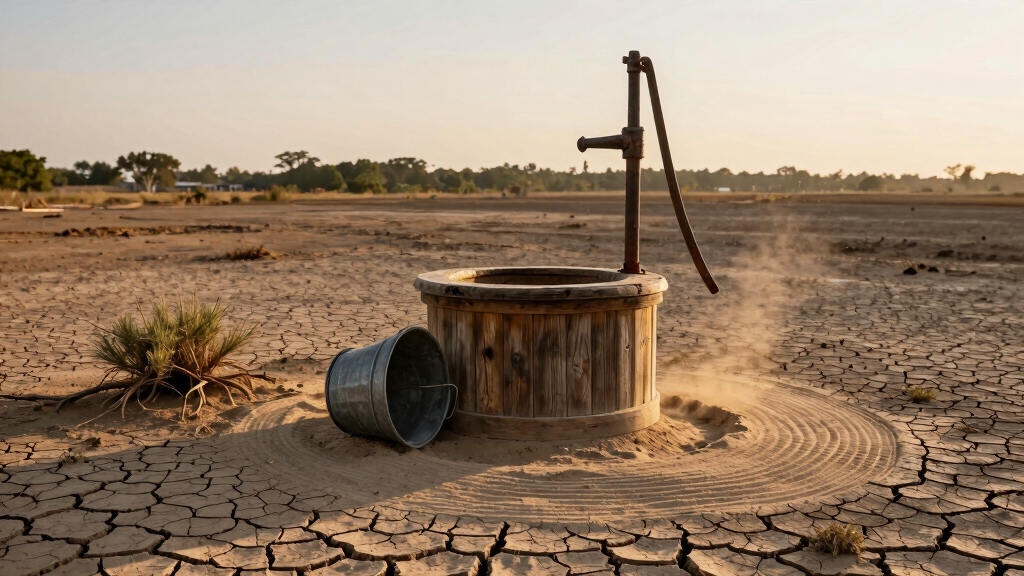
To figure out whether your well has run dry temporarily or permanently, start by turning off the pump and allowing the well to recover. Monitor the water level over a set period, noting changes linked to seasonal monitoring data.
Compare your observations with historical trends to assess if fluctuations align with expected seasonal aquifer recharge patterns. Consult neighbors who rely on wells; their input can clarify if a localized drought or aquifer depletion affects the area.
Analyze well performance alongside recent water usage to exclude over-pumping as a cause. Rule out mechanical failures before concluding permanent dryness.
This methodical approach, combining recovery testing, data analysis, and neighbor consultation, enables you to differentiate between temporary low water levels and permanent depletion. It informs your next steps accurately and efficiently. Also, consider whether a depleted water table may be impacting your well’s ability to maintain pressure and supply.
Recognizing Signs Your Well Is Running Low On Water
Once you’ve determined whether your well is temporarily or permanently dry, the next step involves identifying clear indicators that your well is running low on water.
After confirming your well’s dryness, look for signs signaling decreasing water levels.
You should conduct seasonal monitoring, noting changes in water levels during dry periods or droughts.
Pay attention to declining water pressure and sputtering faucets, which signal reduced water availability.
Muddy water or increased sediment often indicates sediment intrusion due to low water.
Monitoring neighbor reports on their well conditions can provide valuable context about regional groundwater trends.
This helps you assess if the issue is localized or widespread.
By combining direct observation with external data, you can precisely evaluate your well’s performance.
This approach supports proactive water management and timely intervention.
It is also important to understand how water chemistry can impact well water quality and plumbing system integrity.
How To Diagnose Mechanical Problems Before Declaring Your Well Dry?
Before you jump to conclusions about your well being dry, take a moment to inspect the pump and pressure tank. Look for any signs of malfunction, like irregular cycling or unexpected pressure drops. These little clues can tell you a lot about what’s going on.
Next, don’t forget to check the electrical system. Carefully examine the wiring, breakers, and control switches to rule out any power issues. You’d be surprised how often electrical problems can mimic a lack of water.
Also, consider checking for clogging caused by debris or sediment, which can restrict water flow and cause the pump to malfunction.
Pump and Pressure Tank
Diagnosing mechanical issues with your pump and pressure tank is essential before assuming your well has run dry. Check pump placement for proper depth relative to the water table; incorrect positioning can cause air intake or sediment buildup.
Evaluate tank sizing to guarantee it matches household demand. An undersized tank causes frequent cycling, stressing the pump. Inspect pressure settings and tank bladder condition for leaks or failure that reduce system efficiency.
Use the table below to guide your assessment:
| Component | Common Issue | Diagnostic Action |
|---|---|---|
| Pump Placement | Too shallow or deep | Measure depth; verify stable water level |
| Tank Sizing | Undersized or oversized | Review capacity; monitor cycling frequency |
| Pressure Tank | Bladder leaks or failure | Check pressure; listen for waterlogging |
Addressing these mechanical factors helps confirm well status accurately before further interventions. Additionally, installing a well pump controller can improve pump efficiency and protect your system from damage.
Electrical System Checks
Check your well’s electrical system meticulously to rule out power-related causes of pump failure before concluding the well is dry.
Start with a thorough wiring inspection, looking for damaged insulation, loose connections, or corrosion that may interrupt power flow.
Verify the integrity of circuit breakers and fuses, ensuring they haven’t tripped or blown.
Assess the control box and pressure switch functionality, as faults here can mimic water scarcity.
If you rely on backup power, confirm its readiness and correct operation to maintain pump function during outages.
Use a multimeter to test voltage at critical points, ensuring consistent supply to the pump motor.
Always identify whether your pump operates on 120V or 240V to apply the correct diagnostic and safety procedures.
Cut Water Use During A Dry Well Emergency
When a dry well emergency hits, it’s crucial to focus on the essentials. Make sure you’re prioritizing drinking water and hygiene first; these are the most important uses for your limited supply.
Also, if you notice any leaks, fix them right away! It’s amazing how much water can be wasted from even a small drip, and taking care of that will really help reduce your overall demand.
And hey, let’s talk about the nonessential stuff. It’s a good idea to hold off on activities like watering the lawn or washing your car. By cutting back on these, you’ll be able to stretch your available resources a bit longer.
Consider installing a whole house water pressure booster to maintain consistent water flow and pressure during low supply conditions.
Prioritize Essential Water Use
When your well runs dry, you need to scale back water use immediately to preserve the limited supply. Implement emergency rationing by restricting water consumption to essential activities: drinking, cooking, and basic hygiene only.
Avoid non-essential uses like lawn irrigation or vehicle washing to conserve resources. Coordinate with neighbors to share information on water availability and collectively manage usage, optimizing the community’s overall supply.
Track daily water use meticulously to prevent exceeding your reserve. Store any remaining water in clean containers safely.
Prioritizing essential water use reduces stress on your aquifer and delays further depletion until natural recharge or professional intervention occurs.
This strategic approach guarantees you maintain critical functions without accelerating well dryness during the emergency period. It is also important to minimize faucet use during outages to maintain system pressure and prevent contamination ingress.
Fix Leaks Immediately
Identify and repair leaks immediately to prevent unnecessary water loss during a dry well emergency. Start by conducting a thorough valve inspection to detect drips or corrosion.
Replace damaged pipes promptly, as even minor leaks exacerbate water scarcity. Use pressure testing to pinpoint hidden leaks within the system.
Prioritize pipe replacement in high-risk areas showing wear or damage. Regularly inspect valves for tight seals and proper operation to avoid unnoticed leaks.
| Action | Purpose |
|---|---|
| Valve inspection | Detect leaks, corrosion |
| Pressure testing | Locate hidden leaks |
| Pipe replacement | Eliminate damaged sections |
| Tighten fittings | Prevent minor leaks |
| Monitor system | Ensure ongoing leak prevention |
Address leaks swiftly to conserve water and maintain well system integrity during shortages. Additionally, turning off the well pump can help prevent unit damage and reduce risks during extended absences.
Limit Nonessential Activities
You should consistently reduce water consumption by eliminating nonessential activities to preserve your limited supply during a dry well emergency.
Prioritize essential uses such as drinking and hygiene while suspending tasks like lawn watering, car washing, and lengthy showers.
Implement short showers to minimize water output without compromising cleanliness.
Utilize timed irrigation systems only for critical plant watering, carefully scheduling to avoid excess runoff or evaporation losses.
Monitor household water pressure continuously; any decline signals increased severity of the dry well condition.
By strictly controlling discretionary water use, you extend your well’s functional period, allowing for possible natural aquifer recharge.
This targeted reduction strategy is crucial for managing scarce resources efficiently and mitigating the risk of complete depletion until professional assessment or corrective measures can be applied.
Be aware that heavy rain events can temporarily raise the water table, potentially helping with aquifer recharge after dry periods.
Effective Water Conservation Tips To Preserve Your Well
Cutting back on water use plays a crucial role in preserving your well’s longevity and preventing it from running dry.
You should adopt water-efficient techniques such as graywater recycling to reuse household wastewater for irrigation.
Implementing drip irrigation precisely delivers water to roots, minimizing waste.
Prioritize fixing leaks and installing low-flow fixtures to reduce continuous losses.
Monitoring daily consumption helps avoid exceeding your aquifer’s recharge capacity.
Choosing water softeners with demand-initiated regeneration can also reduce overall water waste in well systems.
| Conservation Method | Benefit |
|---|---|
| Graywater Recycling | Reuses wastewater, reduces demand |
| Drip Irrigation | Targets water delivery, lowers use |
| Leak Repairs & Fixtures | Prevents constant water loss |
Easy Maintenance Tips To Boost Your Well’s Water Flow
Maintaining your well regularly supports consistent water flow and extends its operational life. To optimize performance, you should implement these key maintenance actions:
- Conduct seasonal flushing to remove accumulated debris and prevent clogging. This ensures unobstructed water passage.
- Inspect and clean sediment screens frequently. Clogged screens reduce flow and strain the pump, risking damage.
- Monitor water clarity and flow rates. Sudden drops may indicate sediment buildup or mechanical wear requiring prompt attention.
How To Lower Or Deepen Your Well Pump Safely?
Before you think about lowering or deepening your well pump, it’s super important to check the current water table depth. You want to make sure your pump is placed below the water level. If you get this wrong, you could end up damaging the pump or pulling in sediment, which can really mess with its efficiency.
And hey, it’s always a good idea to bring in the pros for this kind of work. Licensed professionals have the right expertise and equipment to make sure everything stays safe and works well. Trust me, it’s worth it!
Assess Water Table Depth
When evaluating water table depth to lower or deepen your well pump safely, you’ll need accurate measurements of the current water level inside the well.
Begin by analyzing seasonal fluctuations, which can cause temporary drops in groundwater levels.
Use groundwater mapping data to understand regional aquifer behavior and predict sustainable depths.
To assess properly:
- Measure water level repeatedly over several weeks to capture fluctuations.
- Compare readings with historical groundwater data to differentiate between drought effects and permanent declines.
- Determine the safe pump setting depth to avoid sediment intake and pump damage.
This precise assessment guarantees your pump adjustment matches actual aquifer conditions, preventing costly errors and maintaining reliable water supply.
Without this data, you risk lowering the pump into unstable zones or reducing well lifespan.
Hire Licensed Professionals
Although you might feel tempted to adjust or deepen your well pump on your own, hiring a licensed professional guarantees the work aligns with safety standards and technical requirements.
Licensed contractors understand local permit requirements, assuring legal compliance and preventing costly violations. They possess the technical expertise to measure water depth accurately and reposition the pump without damaging the well structure or causing contamination.
Additionally, professionals carry liability insurance, protecting you from financial risk due to accidents or property damage during the operation. Attempting these tasks without proper credentials increases risks of improper installation, pump failure, or voided warranties.
Engaging a certified technician not only assures precise, code-compliant adjustments but also provides documented accountability and peace of mind throughout the well maintenance or deepening process.
Alternative Water Sources For Dry Well Users
Several viable alternative water sources can sustain you if your well runs dry, ensuring continued access to potable water.
You can implement rainwater harvesting systems to collect and store precipitation efficiently, reducing reliance on groundwater. Emergency deliveries of potable water offer a critical short-term solution during acute shortages.
Additionally, consider these three practical options:
- Install storage tanks coupled with pumps to buffer water during intermittent availability.
- Connect to a nearby public water supply where feasible, ensuring regulatory compliance.
- Explore drilling a new, deeper well with a licensed contractor to access a more reliable aquifer.
Each option demands careful assessment of costs, regulatory factors, and long-term sustainability. Balancing immediate needs with strategic infrastructure investments will help you maintain water security despite your well’s dryness.
When To Call A Professional Well Contractor For Your Dry Well?
If you notice persistent symptoms like sputtering spigots, continuous pump cycling, or sudden drops in water pressure despite reducing usage, it’s time to contact a licensed well contractor.
Proper contractor timing guarantees diagnostics distinguish between mechanical failure and aquifer depletion. Immediate emergency response is vital if water supply halts entirely.
| Symptom | Possible Cause | Recommended Action |
|---|---|---|
| Continuous pump cycling | Low water level | Call contractor promptly |
| Sediment in water | Well casing damage | Schedule professional inspection |
| Pressure drop | Aquifer recharge lag | Monitor; prepare for intervention |
Act swiftly to prevent pump damage or contamination. Only a professional can perform accurate water depth measurement and advise on repairs or well deepening.
Long-Term Maintenance And Conservation To Prevent Dry Wells
Implementing long-term maintenance and conservation strategies plays a critical role in preventing your well from running dry. You must manage water use in alignment with the aquifer’s seasonal recharge cycle, ensuring your extraction doesn’t exceed natural replenishment. Engage in community monitoring programs to share data on water levels and usage trends, improving regional water management.
Focus on these key actions:
- Schedule periodic well inspections and pump calibrations to maintain peak function and detect early signs of decline.
- Adopt water-efficient appliances and restrict non-essential water use to reduce demand pressure on the aquifer.
- Collaborate with neighbors on conservation efforts, fostering sustainable water consumption that supports collective seasonal recharge.
These measures sustain well longevity, safeguard water quality, and stabilize groundwater availability.
Frequently Asked Questions
How Can Drought Conditions Affect My Well’s Recharge Rate?
Drought conditions decrease your well’s recharge rate primarily through reduced infiltration, as dry soil limits water percolation into the aquifer.
Vegetation stress also plays a role, as stressed plants use more groundwater and contribute less organic matter to soil structure.
This further impedes infiltration.
This combination reduces aquifer replenishment, causing your well’s water table to drop.
It can potentially lead to decreased water availability or temporary well dryness during prolonged drought periods.
What Are the Risks of Using Contaminated Water From a Dry Well?
Like opening Pandora’s box, using contaminated water from a dry well exposes you to hidden dangers.
You risk pathogen exposure, leading to illnesses from bacteria, viruses, or parasites lurking in stagnant water.
Chemical contamination can introduce toxins from surrounding soil or industrial runoff, causing acute or chronic health issues.
Ignoring these risks compromises safety.
Always test water quality before use to prevent serious health hazards and maintain a secure water supply.
Can Seasonal Temperature Changes Impact My Well’s Water Availability?
Yes, seasonal temperature changes can impact your well’s water availability.
Temperature stratification in the aquifer causes layers of water at different temperatures, affecting recharge rates and flow.
During warmer months, increased seasonal demand heightens water usage, potentially lowering the water table temporarily.
Cooler seasons usually reduce demand, allowing recovery.
Understanding these patterns helps you predict fluctuations and manage your well sustainably, avoiding overuse during critical periods.
How Often Should I Test My Well Water Quality?
Think of your well water like a car’s engine oil. It needs regular checks to guarantee smooth operation.
You should perform annual testing to monitor contamination and water quality shifts. Always do post repair testing after any maintenance or deepening to confirm safety and function.
Consistent testing detects subtle changes that could signal aquifer issues or mechanical faults. This helps you act promptly and maintain a reliable, clean water supply without surprises.
What Are Common Signs of Aquifer Depletion Near My Property?
You’ll notice common signs of aquifer depletion near your property through declining water tables, which lower well water levels over time.
Failing springs are another indicator, as they reduce or stop flowing altogether.
Additionally, you might observe increased sediment or air in your water lines and reduced well yield.
Monitoring these signs helps you analyze groundwater stress and take timely action to manage your water resources effectively.
Keep Your Well Reliable Through Smart Maintenance
Think of your well like a car’s gas tank. Sometimes it’s just running low, not empty.
Just as you wouldn’t immediately replace your vehicle’s engine when the fuel light flickers, don’t rush to declare your well dry without checking mechanical issues or conserving water first.
By diagnosing problems early and practicing smart conservation, you can extend your well’s life. This keeps that essential water flowing steadily, even during dry spells.