
You should install a whole house sediment filter before your water softener to protect it from particulates and chlorine. These contaminants can damage resin beads.
Placing activated carbon or post-filters after the softener removes residual contaminants like organic chemicals and chlorine. This ensures softened, clean water throughout your home.
Proper filter and softener placement improves system longevity, water quality, and appliance protection. Discover how filter types, system design, and maintenance optimize your whole house water treatment.
Key Takeaways
- Install sediment filters before the water softener to remove particles and protect softener resin from damage and fouling.
- Place activated carbon or chlorine removal filters after the softener to avoid resin degradation and ensure improved water taste and odor.
- Pre-softener filtration maintains system pressure and prevents scale buildup inside the softener, extending its lifespan and efficiency.
- Post-softener filters help remove residual contaminants like chlorine and organics, providing clean, softened water at all household outlets.
- Proper filter-softener sequence and maintenance optimize water quality, system performance, and appliance protection throughout the home.
Understanding Water Quality and Treatment Goals
Because water quality varies widely by source and intended use, understanding your specific water characteristics and treatment goals is essential for selecting an effective whole house filtration and softening system.
You’ll need to address physical contaminants like sediment to protect equipment and improve clarity. Using a backwashing sediment filter can reduce maintenance by automatically cleaning and removing trapped particles, prolonging filter life.
Chemical elements such as iron, manganese, and hardness minerals require targeted removal to prevent scaling and staining.
Pathogenic microorganisms demand advanced disinfection methods to guarantee safety.
You should also consider aesthetic factors—taste, odor, and color—to enhance water usability.
Treatment strategies must adapt to your water source.
Municipal water typically needs chlorine and byproduct removal, whereas well water often requires multi-stage systems for sediment, metals, and microbial control.
Tailoring your system to these goals maximizes contaminant reduction, protects household appliances, and ensures safe, pleasant water throughout your home.
In addition, incorporating multiple barriers in your treatment approach enhances the removal of pathogens and contaminants effectively.
Importance of Water Testing Before Installation
Before you go ahead and install your whole house filter and water softener, it’s super important to know exactly what’s floating around in your water supply. You really want to test for those specific contaminants. Plus, testing helps you figure out the hardness levels of your water. This info is crucial because it directly affects how you size your softener and how effective it will be.
And here’s the thing—having this data at your fingertips lets you prioritize treatments that tackle both the things you can see (like that funky taste or smell) and the health-related concerns that might be lurking beneath the surface. Accurate water testing also ensures regulatory compliance and avoids potential penalties down the line. Understanding water chemistry and hardness is key to selecting the right water treatment technology for your system.
Identifying Contaminant Types
When you test your water supply, you can accurately identify the specific contaminants present. This ensures that the filter and softener you select effectively address those issues.
Testing detects sediment like sand and rust, which can clog softeners. It also identifies chlorine and chloramines that degrade resin life. Heavy metals such as lead and copper are revealed, requiring targeted filtration to mitigate health risks.
Iron and manganese, responsible for staining and fouling, are identified alongside organic compounds like pesticides that may need advanced treatment. To maintain the system, it is important to drain water properly during maintenance procedures. Regular water analysis also supports ongoing monitoring to detect changes in water quality over time, ensuring continued system effectiveness and safety.
Standard tests include bacteriological, mineral, organic chemical, pH, and turbidity analyses to provide all-encompassing data.
This precise contaminant profiling allows you to optimize system performance, prevent premature equipment failure, and tailor filter-softener placement for maximum efficiency and water quality.
Assessing Water Hardness Levels
Accurately evaluating water hardness levels is vital to selecting the right filtration and softening equipment for your home. Conducting water testing before installation ensures you choose systems tailored to your specific hardness profile, preventing ineffective or unnecessary treatments.
Since water hardness results from dissolved calcium and magnesium ions originating from rocks like limestone and gypsum, understanding the mineral content helps in customizing your treatment approach.
Additionally, knowing the water’s hardness helps determine the ideal flow rate capacity for your filtration system to maintain effective performance.
Utilize titration or laboratory analysis for precise measurement of calcium and magnesium ions, as these methods provide reliable baseline data essential for future performance monitoring. Electronic hardness testers offer rapid, accurate readings for ongoing checks, while test strips serve for quick, less precise assessments. Keep in mind that factors like local geology, pH, and temperature can affect measurement accuracy.
Pre-installation testing also fulfills regulatory and warranty requirements, and early detection of hardness prevents costly damage to plumbing and appliances, optimizing system lifespan and efficiency. Recognizing that natural geological factors significantly influence regional water hardness can guide decisions on the most appropriate water treatment solutions.
Determining Treatment Priorities
Since water quality varies considerably by source and location, conducting detailed testing before installation is essential to identify specific contaminants affecting your supply. Understanding the system’s capacity and compatibility is equally important to ensure effective integration with existing equipment.
Accurate water analysis, preferably from a professional lab, reveals elements like sediment, iron, chlorine, bacteria, and pH imbalances that dictate treatment needs. This process is similar to performing a thorough pump functionality test to verify system readiness under varying conditions.
This data enables you to prioritize filtration stages effectively, installing sediment filters upfront to protect softeners, targeting iron and manganese before softening, or placing carbon filters to remove chlorine and chemicals. Proper installation and sealing techniques are crucial to maintain system integrity and performance.
Testing also informs whether a softener alone suffices or if complementary filtration is necessary for thorough water quality improvement.
Regular testing post-installation ensures system effectiveness and detects evolving contaminants. It also confirms the effectiveness of compliance systems and helps maintain safe drinking water over time.
Functions of Whole House Filters in Water Treatment
Although you might not see the contaminants in your water, whole house filters actively remove sediment, rust, and various particulate matter from the incoming supply to protect your plumbing system. They also reduce chlorine, heavy metals, and organic chemicals, ensuring safer, better-tasting water throughout your home.
Filtration mechanisms include mechanical trapping, adsorption with activated carbon, and chemical reduction using KDF media. This comprehensive approach ensures clean, purified water at all household faucets, not just individual points of use. Additionally, regular maintenance and replacement of filter media are essential to maintain optimal filtration performance and longevity.
| Contaminant Type | Filtration Method | Benefits |
|---|---|---|
| Sediment & Rust | Mechanical Filtration | Prevents pipe clogging |
| Chlorine & VOCs | Activated Carbon Adsorption | Enhances taste and odor |
| Heavy Metals | Chemical Filtration (KDF) | Ensures water safety |
| Organic Chemicals | Multi-stage Systems | Removes pesticides, herbicides |
| Microbial Cysts | Advanced Filtration | Protects health |
These functions extend appliance life and improve overall water quality. Proper surface preparation and attention to system conditions support the effectiveness of water treatment components.
How Water Softeners Work and Their Benefits?
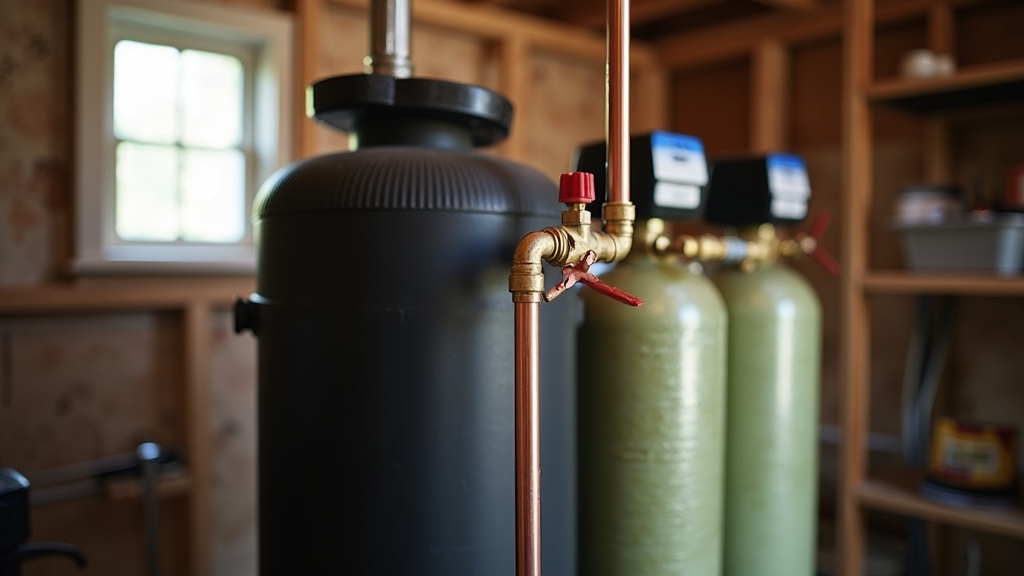
When you install a water softener, it uses ion exchange to remove hardness minerals like calcium and magnesium from your water supply. Water flows through resin beads in the mineral tank, where calcium and magnesium ions displace sodium or potassium ions held on the negatively charged beads. However, it is important to note that water softeners do not remove chlorine, which requires separate treatment to protect the resin and plumbing components from chlorine damage.
This exchange prevents scale buildup, protecting plumbing and appliances. The system includes a brine tank that regenerates the resin by flushing salt solution to replace hardness ions with sodium ions, maintaining softening efficiency.
Benefits include improved appliance lifespan, enhanced soap performance, softer skin and hair, and reduced energy costs due to less scaling. Since water softeners primarily reduce minerals but do not remove contaminants like chlorine or sediment, installing a whole house water filter can complement the softening process.
For ideal operation, maintain proper salt levels, monitor water pH, and schedule regular regeneration cycles to ensure consistent water softening throughout your household.
Advantages of Installing Whole House Filters Before Softeners
Installing a whole house filter before your water softener offers several technical advantages that enhance system performance and durability. By removing sediments, chlorine, and harmful contaminants first, you protect the softener’s resin and mechanical parts from wear. This reduces maintenance frequency and extends lifespan. Additionally, whole house filtration provides comprehensive treatment for the entire household plumbing system, improving water quality at every outlet.
This comprehensive treatment ensures all water entering the softener is pre-conditioned for optimal function. Pre-filtration can also help maintain consistent pressure and reduce temperature fluctuations that might otherwise impact system efficiency.
Pre-filtration also improves overall water quality and maintains ideal pressure for efficient softener operation.
| Benefit | Effect on Softener | Result |
|---|---|---|
| Sediment Removal | Prevents abrasion | Longer valve/component life |
| Chlorine Filtration | Protects resin | Maintains softening power |
| Contaminant Reduction | Lowers biofilm/scale buildup | Less frequent cleaning |
This setup ensures consistent, reliable softening and cost-effective maintenance over time. Proper pre-conditioning and flow management contribute to prolonged system durability and optimal performance.
Benefits of Placing Whole House Filters After Softeners
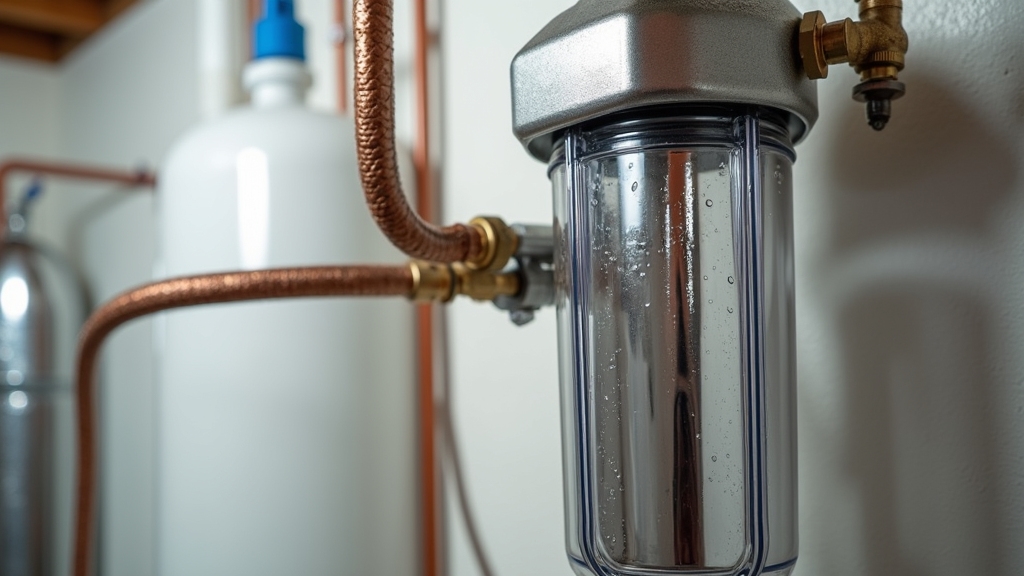
Since water softeners primarily remove hardness minerals like calcium and magnesium, placing a whole house filter after the softener targets residual contaminants such as chlorine, sediments, and organic compounds that the softener can’t eliminate.
This configuration enhances water quality by delivering softened, filtered water free from unwanted tastes, odors, and chemical residues throughout your home. It protects plumbing and appliances by reducing fouling, corrosion, and degradation caused by chlorine and particulates.
Activated carbon filters installed after softeners effectively remove chlorine and odors, improving water purity. Additionally, this setup helps maintain a balanced water environment by supporting pH stability in household water systems.
Additionally, filtering post-softening maintains the softener’s resin efficiency by preventing clogging from overlooked contaminants. Maintenance becomes more manageable, as filters downstream of the softener are less prone to clogging from hardness minerals, extending filter life and optimizing softener regeneration efficiency.
Types of Filters Commonly Used in Whole House Systems
You’ll find that sediment and activated carbon filters are the most common starting points in whole house systems. Sediment filters target particulates, while activated carbon filters tackle chemical contaminants. It’s a straightforward yet effective duo to improve your water quality. Sediment filters typically have micron ratings between 1-10 to efficiently remove rust, sand, and silt from well water.
Now, if you’re looking for something a bit more specialized, there are filters like KDF and UV units. These address heavy metals and microbial risks, which is super important if you want to ensure your water is safe for drinking and cooking. Some whole house systems also offer high capacity options that can treat up to 1,000,000 gallons, providing long-lasting performance.
Often, people integrate these specialty filters into multi-stage setups for more extensive treatment.
Understanding each filter’s role is key. It really helps you optimize where to place them and how to maintain them, making sure you have effective water purification throughout your home. It’s all about creating a system that works for your specific needs!
Sediment and Carbon
When choosing filters for a whole house system, understanding sediment and carbon filter types is crucial to guarantee peak water quality and equipment protection.
Sediment filters act as the first defense, removing particles like sand and rust, while carbon filters reduce chlorine and organic contaminants. Here’s what you need to know:
Polypropylene sediment filters commonly trap 5-micron particles, protecting downstream equipment. Industrial-grade filters with 5-micron sediment filter ratings offer robust durability and extended filter lifespan.
Pleated and reusable sediment filters extend service life and reduce replacement costs.
Granular Activated Carbon (GAC) targets chlorine, odors, and taste issues.
Carbon block filters offer enhanced contaminant removal including VOCs and chloramine.
Sediment filters always precede carbon filters to prevent clogging and optimize filtration efficiency.
Proper selection and placement of these filters ensure longevity for your water softener and maintain high water quality throughout your home.
Specialty and Multi-Stage
Although sediment and carbon filters form the foundation of whole house filtration, specialty and multi-stage systems address more complex water quality challenges.
These systems often combine media like KDF, catalytic carbon, UV, and reverse osmosis to target specific contaminants.
KDF filters use copper and zinc to remove heavy metals and inhibit microbial growth, extending filter life.
Catalytic carbon excels at breaking down chloramines and hydrogen sulfide, enhancing chemical removal beyond standard carbon filters.
UV filters provide critical disinfection by inactivating microorganisms, requiring prefiltration to guarantee effectiveness. They are especially useful when microbial contamination is a concern.
Reverse osmosis membranes remove up to 99% of dissolved solids but need pre-treatment to prevent fouling.
Multi-stage setups with specialty media tackle iron, manganese, radon, and arsenic, offering exhaustive, long-lasting filtration tailored to your water’s unique profile.
Impact of Filter and Softener Placement on Plumbing and Appliances
Since the placement of your water softener and filter directly affects plumbing integrity and appliance performance, understanding the essential sequence is crucial.
Installing the softener before the filter reduces scale buildup, preventing pipe corrosion and extending appliance lifespan. This order also maintains optimal water pressure and flow, which are vital for softener regeneration and effective filtration.
Additionally, when dealing with well water, placing a sediment filter before the softener can protect the softener from damage caused by high sediment levels.
Placing the softener before the filter prevents scale buildup, protects pipes, and ensures efficient water flow.
Incorrect sequencing can cause filter clogging, pressure drops, and increased maintenance.
Key impacts include:
- Reduced scale and corrosion in pipes and appliances
- Improved water flow and softener efficiency
- Longer filter lifespan with decreased clogging
- Enhanced appliance performance and energy efficiency
- Minimized sediment accumulation in plumbing joints
Best Practices for System Installation and Maintenance
Proper installation and maintenance are key to ensuring your whole house filter and water softener operate efficiently and last longer.
Install sediment filters before the softener to protect the media from clogging.
Shut off the main water supply before plumbing work, and use bypass valves on softeners for uninterrupted service.
Secure all fittings with Teflon tape to prevent leaks and maintain pressure.
Position the softener downstream of filtration but near the main water line entry. It is important to ensure the system has access to a nearby 120V electrical outlet for powering any electronic components.
Regularly replace filters and add salt or potassium chloride per manufacturer guidelines to sustain ion-exchange efficiency.
Flush the system after installation to clear air and debris.
Avoid parallel softener setups as they reduce performance and increase hydraulic resistance.
Monitor water softness and filter condition for timely maintenance, ensuring longevity and ideal system function.
Frequently Asked Questions
Can a Whole House Filter and Softener Be Installed in a Single Unit?
Yes, you can install a whole house filter and softener in a single unit by choosing a hybrid system.
These units integrate sediment and carbon filtration with ion exchange softening, handling hardness and contaminants simultaneously.
They feature automatic regeneration and require no separate filter changes, simplifying maintenance.
You’ll save space and enjoy efficient water treatment with built-in salt storage and electronic controls designed for both city and well water applications.
How Do Water Pressure Changes Affect Combined Filter and Softener Systems?
You notice water pressure drops during heavy use, feel slow flow when filters clog, and experience interruptions during regeneration cycles.
These changes in pressure can strain your combined filter and softener system by increasing resistance, causing resin bed fouling, and reducing flow rates.
To maintain steady pressure, you must monitor filter condition, schedule timely maintenance, size components correctly, and synchronize regeneration cycles.
Are There Any DIY Options for Installing Whole House Filters and Softeners?
Yes, you can DIY install whole house filters and softeners if you have moderate plumbing skills.
You’ll need basic tools like an adjustable wrench, tubing cutter, Teflon tape, and safety goggles.
Follow detailed manuals and videos carefully.
Make sure you shut off the main water supply, install bypass valves, and connect fittings properly to avoid leaks.
Pay attention to local plumbing codes and manufacturer instructions for a safe, compliant installation.
What Are the Energy Consumption Differences Between Filter and Softener Setups?
You’ll find that water softeners consume between 30 to 120 watts during regeneration, totaling around 70 kWh annually.
Whole-house filters, especially those with pumps or UV lamps, draw more power, up to 415 watts during operation.
Placing filters before softeners helps reduce softener energy by preventing resin fouling.
Can Whole House Filters Remove Bacteria Without UV Treatment?
No, standard whole house filters can’t reliably eliminate bacteria without UV treatment.
Sediment and activated carbon filters reduce particles and chemicals but don’t meet the CDC’s 0.3-micron pore size requirement for bacteria removal.
To effectively eradicate bacteria like E. coli or coliform, you need UV disinfection, reverse osmosis, or specialized ultrafiltration.
Next Steps to Improve Your Water Quality System
Think of your water treatment system as a finely tuned orchestra. Each component must play its part in harmony.
Installing your whole house filter before or after the water softener depends on your specific water quality and treatment goals.
Testing your water first guarantees you choose the ideal sequence, protecting plumbing and appliances effectively.
By understanding filter types and placement benefits, you’ll maximize system performance and longevity with proper installation and maintenance.