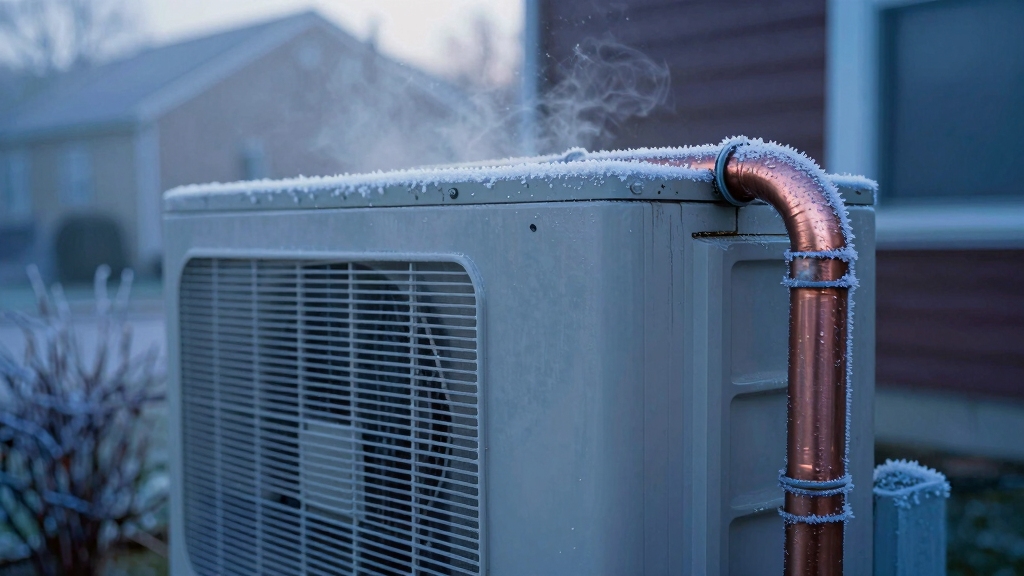
Your AC unit pipes freeze mainly because low refrigerant or restricted airflow causes the evaporator coil temperature to fall below freezing. Low refrigerant from leaks prevents proper heat absorption, leading to ice buildup.
Blocked vents, clogged filters, or dirty coils reduce warm air reaching the coil, dropping temperatures further. Faulty thermostats or blower issues worsen airflow and cooling balance.
Identifying leaks, maintaining airflow, and keeping components clean are key to prevention. You can explore how each factor specifically impacts freezing and what fixes help most.
Key Takeaways
- Low refrigerant levels cause evaporator coil temperatures to drop below freezing, leading to ice buildup on AC pipes.
- Blocked or closed vents restrict airflow, reducing heat absorption and causing pipe freezing.
- Clogged air filters limit airflow over the evaporator coil, causing temperatures to fall and moisture to freeze on pipes.
- Malfunctioning blower fans or thermostats cause continuous operation or reduced airflow, promoting ice formation on pipes.
- Dirt and debris on coils act as insulation, lowering heat transfer and increasing the chance of pipes freezing.
How Low Refrigerant Causes AC Pipes to Freeze?

When your AC unit’s refrigerant level drops, it directly lowers the pressure inside the evaporator coil. This causes its temperature to fall below freezing.
This pressure-temperature relationship is critical: lower refrigerant pressure means the coil’s temperature drops, potentially causing moisture to freeze on the pipes.
Refrigerant leaks often cause insufficient charge, leading to this dangerous drop. If you notice oily residue or hear hissing sounds near your unit, these signs indicate leaks that need professional repair.
Simply recharging refrigerant without repairing leaks won’t solve the problem. It will lead to recurring ice buildup and higher costs.
Maintaining correct refrigerant levels guarantees proper pressure and temperature balance. This prevents your AC pipes from freezing due to excessively cold evaporator coils.
To safely address and inspect the problem, always ensure to turn off power supply before attempting any maintenance or repairs.
Why Restricted Airflow Leads to Frozen AC Pipes?
Because restricted airflow limits the amount of warm air passing over the evaporator coil, the coil’s temperature can drop well below its normal 10-20°F range. This drop causes moisture in the humid air to freeze on the coil and pipes, leading to ice buildup.
You must identify airflow restrictions early to prevent freezing and damage.
| Cause | Effect on Airflow |
|---|---|
| Blocked vents | Reduces warm air supply |
| Collapsed ducts | Disrupts air circulation |
| Faulty blower fan | Limits airflow volume |
Check these components regularly. If airflow is compromised, the evaporator coil cannot absorb enough heat. This causes the temperature to fall below freezing and ice to form on your AC pipes. Improving system components like installing a quiet check valve can also reduce operational stress and prevent issues related to freezing.
How Clogged Air Filters Trigger AC Freezing?
Clogged air filters frequently reduce the airflow needed to maintain proper heat exchange in your AC system.
Clogged air filters often restrict airflow, disrupting efficient heat exchange in your AC system.
When dust, dirt, or pet hair accumulates, it blocks the essential air movement over the evaporator coil. This causes the coil’s temperature to drop below freezing.
This drop leads to ice buildup on the coil and the connected pipes. Reduced airflow prevents the warm air required to absorb heat from reaching the coil, disrupting the refrigerant’s heat exchange process.
Since filters trap contaminants, failing to replace them every 30 to 90 days based on usage directly impairs system efficiency.
Additionally, dirty filter racks can allow bypass air to deposit debris directly onto the coil, worsening freezing issues.
Regularly checking and replacing your air filter is the simplest and most effective step to prevent AC pipe freezing caused by airflow restriction.
Heat pump water heaters produce noise primarily from the compressor and fan, which are essential components for heat transfer but can indicate issues if abnormal sounds occur.
How Dirty Evaporator Coils Cause Frozen AC Pipes?
When dirt starts to build up on your evaporator coils, it can really mess with airflow. This buildup reduces heat transfer to the refrigerant, making the coil temperature drop to near freezing.
As a result, moisture can freeze and form ice on the coils. Ice buildup on fan blades and moisture-corroded fasteners increase imbalance and resonance-related buzzing.
Dirt Restricts Airflow
If dirt accumulates on your evaporator coils, it restricts the airflow essential for proper heat exchange. This buildup acts as an insulating barrier, reducing the warm air passing over the coils.
Without sufficient airflow, the coil temperature drops below the normal 10-20°F range, causing moisture to condense and freeze on the coil surface and adjacent pipes. This restricted airflow mimics the effects of clogged filters, markedly impairing heat transfer and system efficiency.
You need to regularly clean the coils, especially after ensuring air filters and vents are clear, to maintain peak airflow. Neglecting coil cleanliness leads to persistent freezing issues and potential damage to the compressor due to impaired refrigerant heat absorption. Additionally, regular maintenance is crucial to prevent debris buildup and ensure proper system function.
Ice Formation On Coils
Ice formation on evaporator coils results from restricted heat exchange caused by accumulated dirt and debris.
When dirt builds up on the coil’s surface, it insulates the metal, preventing adequate heat transfer from the warm air to the refrigerant inside.
This causes the coil temperature to drop below freezing, leading moisture from the air to condense and freeze on the coils.
The frozen layer further restricts airflow, compounding the problem by lowering coil temperature even more.
To prevent this, you must regularly clean the evaporator coils after checking your air filters and vents.
Neglecting coil cleanliness mimics clogged filters, causing ice buildup that can freeze AC pipes and reduce system efficiency.
Proper coil maintenance guarantees peak heat exchange and prevents freezing issues.
Similar to how mineral buildup can clog shower valves, accumulated deposits on coils hinder proper function and lead to freezing problems.
How Blocked AC Vents and Ducts Affect Freezing?
If you close or block your AC vents, you’re actually reducing the airflow over the evaporator coil. This can cause the temperature to drop, which leads to ice forming. Not fun, right?
Plus, if you have collapsed or leaking ducts, that just makes things worse by further disrupting airflow.
So, it’s super important to keep an eye on your vents. Make sure there’s no furniture or other objects blocking the return vents. This will help your system run smoothly and prevent any issues like pipe freezing.
Keeping everything clear is a simple step to maintain your AC’s efficiency! Additionally, regular inspection of airflow components can prevent problems caused by restricted air movement.
Impact Of Closed Vents
When you block or close AC vents, the airflow over the evaporator coil decreases markedly. This directly contributes to freezing issues.
Reduced airflow means less warm air passes over the coil, causing the refrigerant temperature to drop below freezing. This drop leads to moisture condensing and freezing on the coil and pipes.
Closed vents also increase pressure within the duct system, further restricting airflow. Over time, this imbalance forces the evaporator coil to operate at suboptimal temperatures, accelerating ice buildup.
To prevent this, make certain all vents remain open and unobstructed, allowing proper air circulation. Regularly inspect vents for blockages caused by furniture or debris.
Effective airflow is essential to maintaining coil temperature and avoiding frozen pipes in your AC unit. Electrical issues such as a tripped breaker can also affect the operation of cooling systems, potentially contributing to freezing problems.
Effects Of Collapsed Ducts
Beyond closed vents, collapsed ducts can severely disrupt airflow within your AC system. When ducts collapse, they restrict the volume of warm air reaching the evaporator coil. This causes the coil temperature to drop below freezing and leads to moisture freezing on the coil and pipes.
You’ll notice uneven cooling, higher energy use, and ice buildup when ducts restrict airflow.
| Effect | Cause | Result |
|---|---|---|
| Reduced airflow | Collapsed duct sections | Coil temperature drops below freezing |
| Moisture buildup | Restricted warm air flow | Ice forms on coils and pipes |
| Increased energy use | System works harder | Higher electricity bills |
| Uneven cooling | Airflow imbalances | Hot and cold spots in rooms |
| Potential damage | Prolonged freezing | Frozen pipes and system failure |
Proper functioning of components such as the float switch in sump pumps relies on accurate triggering and deactivation to prevent water damage, illustrating the importance of maintaining all system parts.
Obstructions Blocking Airflow
Obstructions like blocked AC vents and cluttered ducts markedly reduce airflow, causing the evaporator coil temperature to fall below freezing.
When airflow diminishes, the evaporator coil lacks sufficient warm air to absorb heat, resulting in moisture freezing on the coil and adjacent pipes.
Blocked return vents, often due to furniture or toys, limit the volume of warm air reaching the coil.
Collapsed or leaking ducts disrupt the system’s balanced airflow.
This imbalance forces refrigerant temperatures below normal operating ranges (10-20°F), accelerating ice buildup.
To prevent freezing, you must make certain all vents remain unobstructed and inspect ducts for damage or poor design.
Regularly clearing return air pathways and maintaining duct integrity are critical steps to maintain peak airflow and avoid costly ice formation on your AC unit’s pipes.
Using corrosion-resistant materials in your AC piping and fittings helps prevent additional complications related to freezing and leaks.
How Faulty Thermostats and Blowers Cause AC Freezing?
If your thermostat malfunctions or the blower fan fails to operate correctly, your AC system can run continuously without cycling off. This causes the evaporator coil temperature to drop excessively.
Prolonged operation lowers the coil temperature beyond normal limits, leading to ice formation on the pipes. Additionally, a faulty blower restricts airflow over the evaporator coil, exacerbating the freezing issue due to insufficient heat exchange.
Key points to regard include:
- Incorrect thermostat signals cause nonstop compressor activity, preventing temperature regulation.
- Blower fan issues reduce airflow, impairing heat absorption and cooling cycle balance.
- Continuous low coil temperature from these faults promotes moisture freezing on pipes and coils.
Addressing thermostat and blower problems promptly prevents persistent freezing and potential AC damage.
How to Identify Refrigerant Leaks Causing Frozen Pipes?
When refrigerant levels drop due to leaks, your AC system’s evaporator coil temperature falls below freezing. This causes ice to form on the pipes. To identify these leaks, look for oily residue around fittings, listen for hissing sounds, and monitor system pressure.
Low pressure readings confirm refrigerant loss. This directly lowers coil temperature and causes freezing.
| Sign | Cause | Action |
|---|---|---|
| Oily residue | Refrigerant escaping | Inspect & tighten fittings |
| Hissing sound | High-pressure leak | Call professional technician |
| Low system pressure | Insufficient refrigerant | Pressure gauge testing |
| Ice on evaporator coil | Temperature below freezing | Visual inspection |
Detecting leaks early prevents repeated freezing and costly recharges.
How to Prevent and Fix Frozen AC Pipes?
To prevent and fix frozen AC pipes, you must maintain proper airflow and ensure refrigerant levels stay within the recommended range.
Start by regularly inspecting and replacing clogged air filters to guarantee unobstructed airflow over the evaporator coil.
Next, check for refrigerant leaks. Low refrigerant causes pressure drops that freeze pipes. If you suspect a leak, have a professional locate and repair it before recharging the system.
Finally, clear any blocked vents or ducts to promote ideal air circulation and prevent coil temperatures from dropping too low.
- Replace air filters every 30-90 days to maintain airflow.
- Schedule professional leak detection and repair to maintain refrigerant balance.
- Keep return vents clear of obstructions to guarantee consistent airflow.
These steps help you avoid ice buildup and costly repairs.
Frequently Asked Questions
Can Outdoor Temperature Affect My AC Pipes Freezing?
Yes, outdoor temperature can affect your AC pipes freezing. When it’s too cold outside, your system may struggle to maintain proper refrigerant pressure and airflow, causing the evaporator coil to drop below freezing.
However, freezing usually results from internal issues like low refrigerant or restricted airflow. If your AC runs during cold weather without proper controls, the pipes can freeze. Make certain your thermostat and system settings match outdoor conditions.
Does Humidity Level Impact AC Pipe Freezing?
Yes, humidity levels directly impact AC pipe freezing. When humid air passes over cold evaporator coils, moisture condenses and freezes on the pipes.
Higher humidity accelerates ice formation because more water vapor turns into frost. You should control indoor humidity and guarantee proper airflow to prevent excessive condensation.
Maintaining clean filters and coils also helps by allowing warm air to absorb moisture before it freezes on the pipes.
How Does AC Pipe Insulation Prevent Freezing?
Think of insulation as a shield guarding your AC pipes from the cold’s attack.
It prevents heat loss by maintaining the refrigerant’s temperature above freezing, reducing condensation and ice formation.
By wrapping pipes with insulation, you stop cold air from chilling the lines. This ensures smooth refrigerant flow and system efficiency.
Without it, your pipes become vulnerable to freezing, leading to costly damage and reduced AC performance.
Can Oversized AC Units Cause Pipe Freezing?
Yes, oversized AC units can cause pipe freezing because they cycle on and off too frequently, preventing proper heat exchange.
This short cycling keeps the evaporator coil too cold, allowing moisture to freeze on the pipes.
You should make sure your system is correctly sized to maintain efficient airflow and temperature balance.
Proper sizing avoids rapid temperature drops that lead to ice formation on your AC pipes.
Is Regular AC Maintenance Effective Against Frozen Pipes?
You might think just changing filters occasionally is enough, but regular AC maintenance goes far beyond that to prevent frozen pipes.
By consistently inspecting refrigerant levels, cleaning evaporator coils, and ensuring unrestricted airflow through vents and ducts, you maintain peak system balance. This prevents temperature drops that cause ice buildup.
Routine professional check-ups catch leaks or blower issues early, ensuring your AC runs efficiently and avoids costly freeze-related damage.
Preventing AC Pipe Freeze Through Regular Maintenance and Proper Airflow
Frozen AC pipes can stem from low refrigerant, restricted airflow, or clogged filters. Each of these issues disrupts your system’s balance.
Dirty coils, blocked vents, and faulty thermostats compound the problem, leading to ice buildup. To keep your AC running smoothly, regularly inspect and maintain these components.
Identifying leaks early and ensuring proper airflow prevents freezing. This protects your unit’s efficiency and longevity, much like a well-tuned engine running at peak performance.