
If your shower water isn’t getting hot, first check the water heater thermostat setting. It should be around 120°F. Sediment build-up in your heater or mineral deposits in the shower valve can block hot water flow.
Also, a stuck mixing valve or plumbing restrictions could reduce heat delivery. Adjusting the anti-scald device might help if it limits hot water rotation. If these quick checks don’t fix the issue, deeper inspection of heater components and valves could reveal the next steps.
Key Takeaways
- Check the water heater’s thermostat setting; it should be at least 120°F to produce adequately hot shower water.
- Inspect the water heater for sediment buildup causing reduced heat transfer and fluctuating shower temperatures.
- Examine the shower mixing valve and cartridge for mineral deposits or damage restricting hot water flow.
- Adjust or remove the anti-scald device limit stop inside the shower valve to allow more hot water flow.
- Verify plumbing valves and pipes are fully open and free of blockages to ensure proper hot water delivery.
Why Isn’t My Shower Water Getting Hot?
If your shower water isn’t getting hot, the issue often lies in the water heater or the shower valve system. Troubleshooting shower water temperature usually starts with checking your water heater and shower valve system.
First, check if the water heater’s heating element is functioning; a broken element stops water from heating. Sediment buildup inside the tank can also reduce heat transfer efficiency, causing lukewarm water.
On gas units, verify that the pilot light is lit. Next, inspect the shower valve system. A stuck mixing valve or worn-out o-rings can block hot water flow or cause inconsistent temperatures. Mineral deposits accumulating in the mixing cartridge often restrict hot water passage.
Additionally, the anti-scald device might be set too high, limiting hot water rotation. Addressing these areas systematically will help restore proper hot water delivery to your shower.
Also, inspecting and replacing faulty faucet cartridges can resolve improper mixing that prevents hot water flow.
How Water Heater Thermostat Settings Affect Shower Hot Water?
After confirming your water heater elements and shower valve are functioning properly, examine the thermostat settings. If the thermostat is set below 120°F, it won’t heat water sufficiently for a hot shower.
Modern heaters often have adjustable thermostats; verify the set temperature matches your hot water needs. Faulty thermostats can misread water temperature, producing lukewarm output despite correct settings.
Use a thermometer to measure water temperature at the showerhead; if it’s lower than the thermostat setting, recalibrate or replace the thermostat. Keep in mind safety features may limit maximum temperature to prevent scalding.
Adjust the thermostat incrementally and test water temperature after each change. Correct thermostat settings guarantee efficient heating and consistent hot water supply to your shower.
Additionally, maintaining proper equipment and settings can help avoid issues similar to those prevented by reliable thermostat protection features in sump pumps, ensuring consistent performance.
Signs Your Water Heater Has Sediment Blocking Hot Water Flow
If your shower water isn’t getting hot, it might be time to consider that sediment buildup inside your water heater could be the culprit. You know, that pesky stuff can really mess with the flow and reduce how efficiently your heater transfers heat.
You might notice some signs of this issue, like fluctuating water temperature or reduced pressure at the showerhead. It can be pretty frustrating, right? Catching these flow restrictions early on can save you from dealing with more serious problems down the line.
So, keep an eye out for those warning signs! Sediment can settle at the tank bottom and create an insulating barrier, which reduces heat transfer efficiency and contributes to cooler shower water.
Sediment Buildup Effects
Sediment buildup in your water heater can markedly restrict hot water flow, causing lukewarm showers and inconsistent temperatures.
Over time, minerals like calcium and magnesium settle at the tank’s bottom, insulating the heating elements and reducing heat transfer efficiency.
This forces your heater to work harder, often triggering temperature fluctuations and diminished hot water supply.
Additionally, sediment can clog the dip tube and outlet pipes, further limiting flow and pressure.
To resolve this, flush your water heater annually to remove sediment deposits.
If buildup is severe, consider professional descaling or replacing the sacrificial anode rod to slow mineral accumulation.
Regular maintenance guarantees efficient heating and consistent hot water delivery, preventing sediment-related disruptions in your shower’s temperature and flow.
Corrosion caused by sediment accumulation can also weaken the drain valve seal, leading to leaks and further heating inefficiency, so it’s important to check for corrosion or rust regularly.
Identifying Flow Restrictions
Recognizing flow restrictions early can save you from prolonged hot water issues and costly repairs. Sediment buildup inside your water heater often causes these blockages, reducing hot water flow to your shower. You might notice:
Weak water pressure or uneven temperature output during showers.
Gurgling or rumbling noises from the heater tank indicating sediment disturbance.
Slow hot water delivery or sudden temperature drops when demand increases.
These signs point to sediment accumulation restricting water movement.
To resolve this, flush your water heater regularly to remove deposits and check for deteriorated dip tubes or clogged pipes. If problems persist, inspect shower valves and cartridges for mineral deposits limiting hot water flow.
Addressing these issues promptly maintains efficient heating and consistent hot water delivery. Always ensure to monitor the draining process carefully when flushing your water heater to avoid potential hazards.
How Mineral Deposits in Shower Valves Limit Hot Water?
Mineral deposits accumulate inside shower valves over time, restricting the flow of hot water and reducing temperature output. These deposits, primarily calcium and magnesium, build up in the mixing cartridge and valve passages, causing partial blockages.
You’ll notice inconsistent temperature control or lukewarm water despite adjusting the handle. Regular maintenance or cartridge replacement can restore proper hot water flow.
| Problem Area | Effect on Hot Water |
|---|---|
| Mixing cartridge | Hot water flow blocked |
| Valve passages | Reduced temperature |
| Anti-scald device | Limits hot water range |
| Mineral buildup rate | Correlates with hardness |
In some cases, sediment buildup within the valve can also damage internal components, further limiting hot water delivery.
Plumbing Restrictions That Cause Lukewarm Shower Hot Water
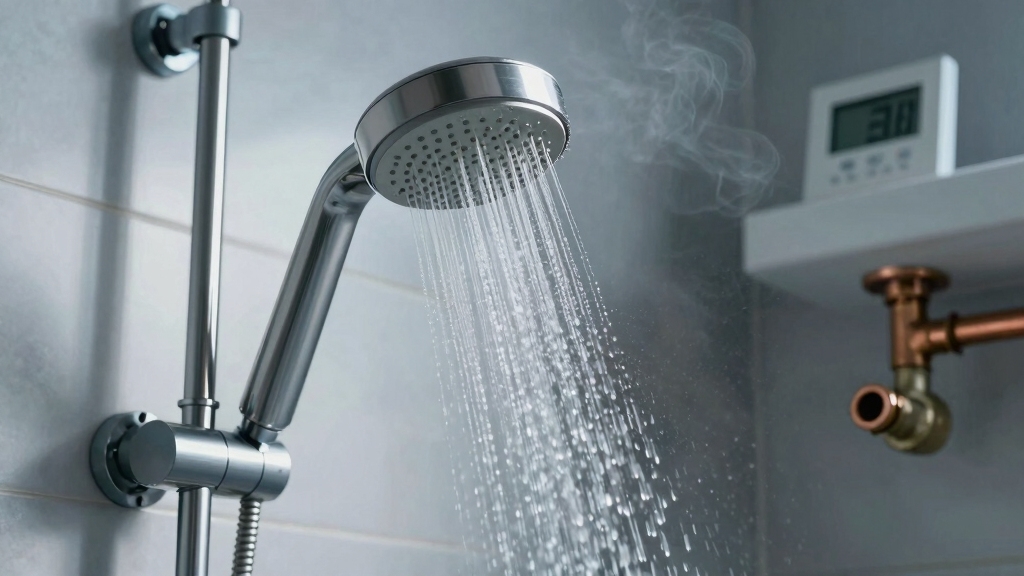
Although your water heater may be functioning properly, you might still experience lukewarm shower water due to plumbing restrictions. These limitations can reduce hot water flow or pressure before it reaches your showerhead, affecting temperature output.
Lukewarm shower water can result from plumbing restrictions, even if your water heater works fine.
Common plumbing restrictions include:
- Blocked or corroded pipes that reduce hot water flow and pressure.
- Partially closed or malfunctioning shut-off valves limiting hot water supply.
- Older or faulty valves in the hot water branch causing uneven mixing or flow restriction.
To address these issues, inspect supply lines and valves for debris, corrosion, or improper positioning. Make sure shut-off valves are fully open. If you find pipe blockages or valve degradation, consider professional cleaning or replacement to restore proper hot water delivery.
These steps help maintain consistent, hot shower water without needing to replace your water heater. Additionally, pipe blockages and sediment buildup can cause pressure fluctuations that lead to uneven hot water temperature.
How to Fix Shower Valve Problems That Reduce Hot Water?
If your plumbing lines and valves are clear but your shower water still isn’t hot enough, the issue often lies within the shower valve itself.
Start by inspecting the mixing valve for mineral buildup or corrosion that blocks hot water flow.
Remove and soak the cartridge in a descaling solution if deposits are present.
Check for worn or damaged o-rings, replacing them to restore a proper seal and consistent temperature.
Verify the shower mixer valve is correctly positioned; misalignment can skew water temperature toward cold.
Test the valve’s operation by gradually adjusting the handle to confirm smooth hot water delivery.
If the valve is stuck or malfunctioning, consider disassembling for cleaning or replacing the entire valve assembly.
Regular adjustments help maintain the thermostatic mixing valve’s functionality and prevent temperature inconsistencies.
Adjusting Anti-Scald Devices for Hotter Shower Water
Hey there! If you’re looking to enjoy hotter showers, adjusting the anti-scald device is a great way to go. This handy little gadget helps keep the water at a safe temperature, so you can avoid burns.
First things first, you’ll need to find the anti-scald device. It’s usually located on the shower faucet or behind the handle. Once you’ve spotted it, you can gently rotate the temperature limit stop. This will allow more hot water to flow through.
But remember, after you’ve made that adjustment, it’s super important to test the water temperature before hopping in. You want to make sure it’s just right—comfortable but safe! Enjoy your steamy showers!
If you notice any unusual noise while adjusting, it might be due to mechanical issues within the valve that need attention.
Anti-Scald Device Basics
When your shower water isn’t getting hot enough, adjusting the anti-scald device can often fix the problem. This device limits how far the handle can turn toward hot water, preventing burns but sometimes restricting temperature.
To adjust it properly, first locate the anti-scald stop, usually inside the valve cartridge or behind the handle. Then, follow these steps:
Remove the handle carefully to expose the stop mechanism. Rotate or reposition the stop to allow a greater range toward hot water. Reassemble and test the water temperature incrementally.
Having an integral stop on a shower valve makes it easier to perform such adjustments without shutting off water to the entire house.
Adjusting Temperature Limits
Adjusting the anti-scald device lets you increase the maximum hot water temperature in your shower without compromising safety.
Locate the device inside the shower mixing valve; it often appears as a plastic or metal limit stop restricting the handle’s rotation toward the hot side.
Using a screwdriver or pliers, carefully shift this limit stop to allow greater handle movement.
This adjustment lets more hot water flow, raising the temperature output.
Avoid forcing the handle beyond the new limit to prevent valve damage.
After adjustment, verify that the water temperature reaches a comfortable, safe level, typically below 120°F to prevent burns.
If you encounter stiff resistance or unclear mechanisms, consult the valve’s manual or a professional plumber for guidance to guarantee proper and safe adjustment.
Testing Water Temperature
After modifying the anti-scald device to increase hot water flow, verifying the actual water temperature guarantees both comfort and safety.
You should test the shower water temperature immediately to make certain it stays within a safe range without sacrificing warmth. Use a reliable thermometer or a digital temperature probe for accuracy.
Check water temperature at different handle positions to confirm consistent heat delivery. To effectively test water temperature, follow these steps: Run hot water for several minutes to stabilize temperature before measuring.
Measure temperature at the showerhead outlet, aiming for 100-110°F for comfort and safety. Adjust the anti-scald device incrementally, testing after each tweak to avoid overheating risks.
Regular testing helps maintain a balance between safety and comfort in your shower water temperature.
When to Call a Plumber for Shower Hot Water Issues?
If you’ve checked your thermostat settings and ruled out simple fixes like adjusting the shower valve or cleaning mineral buildup, it’s time to call a plumber.
Persistent issues such as a broken heating element, faulty mixing valve, or sediment-clogged pipes require professional diagnosis.
A plumber can assess internal components like the water heater’s heating element, pilot light, or tank sediment buildup that affect heat production.
They also inspect shower valves for stuck mixing cartridges or worn o-rings causing temperature inconsistencies.
If anti-scald devices limit hot water flow or flow sensors in tankless systems fail, a plumber’s expertise guarantees accurate repairs.
Calling a plumber prevents further damage and restores reliable hot water delivery efficiently, especially when troubleshooting goes beyond basic adjustments or visible blockages.
Frequently Asked Questions
Can Cold Weather Affect the Temperature of My Shower Water?
Yes, cold weather can affect your shower water temperature.
When incoming cold water is colder, your water heater works harder to reach the set temperature. If your thermostat is too low or the heater struggles with sediment buildup, you’ll notice lukewarm water.
Adjusting your thermostat higher or flushing the heater can help. Also, check shower valves and anti-scald settings, as cold weather can exacerbate existing flow or mixing issues.
Does Using a Low-Flow Showerhead Impact Hot Water Availability?
Using a low-flow showerhead is like turning the faucet to a gentle trickle. It generally reduces water volume, so your water heater doesn’t have to work as hard to keep water hot.
This can actually improve hot water availability by stretching your heater’s capacity. However, if your heater or pipes already have sediment buildup or valve issues, the effect might be less noticeable.
Make sure to check for restrictions or buildup that could limit performance.
How Often Should I Flush My Water Heater to Prevent Issues?
You should flush your water heater at least once a year to remove sediment buildup that reduces heating efficiency and damages the tank.
If you have hard water, consider flushing every six months to prevent mineral deposits from restricting hot water flow.
Regular flushing helps maintain peak heat transfer, prolongs heater life, and guarantees consistent hot water delivery.
Always follow manufacturer instructions and turn off power or gas before flushing.
Can a Leaking Shower Valve Cause Lukewarm Water?
A leaking shower valve can definitely throw a wrench in your hot water flow, causing lukewarm showers.
When the valve leaks, it disrupts the proper mixing of hot and cold water, often letting cold water sneak in or hot water escape.
To fix this, check for worn o-rings or mineral buildup in the valve and replace faulty parts.
Adjusting or replacing the mixing cartridge usually restores proper temperature control.
Are Electric and Gas Water Heaters Equally Prone to Temperature Problems?
Electric and gas water heaters both face temperature problems, but the causes differ.
You’ll find gas heaters prone to pilot light outages or thermocouple failures, while electric units often suffer broken heating elements or faulty thermostats. Both types can experience sediment buildup reducing efficiency.
To fix temperature issues, you’ll need to check specific components: pilot light and burner for gas, heating elements and thermostat for electric. Regular maintenance helps prevent problems in both.
From Cold to Comfort: Solving Shower Heating Issues
If your shower water isn’t heating up, don’t let frustration take over. There’s usually a clear fix. Whether it’s adjusting your water heater thermostat, clearing sediment buildup, or tweaking anti-scald devices, small changes can restore your hot water flow.
Think of your plumbing like a puzzle: each piece matters. When in doubt, call a plumber to quickly pinpoint and solve hidden issues. This way, you can enjoy a hot shower without the guesswork.