
When choosing between SDR 26 and SDR 35 pipes, understand SDR is the ratio of pipe diameter to wall thickness. SDR 26 has thicker walls, offering higher pressure capacity (up to 160 psi) and better structural strength.
This makes it suited for deep or high-load applications. SDR 35 is thinner and more flexible, ideal for low-pressure gravity drainage and easier installation. Your choice depends on load, depth, and budget.
Exploring their detailed differences reveals more about their performance and suitability.
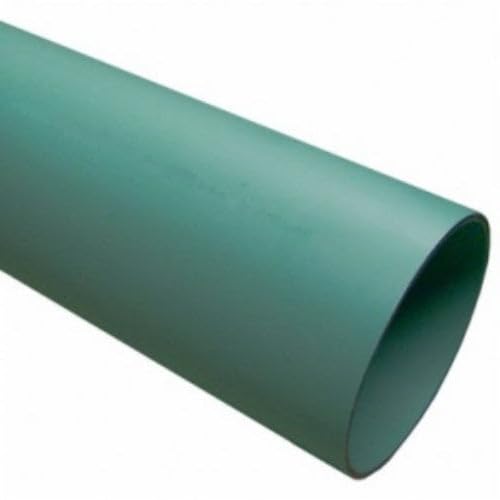
- MADE IN THE USA: For over a century, Ventral has been fabricating pipe lumber and fittings…
- VENTRAL Products are Manufactured and/or Designed and Fabricated in the USA
- VENTRAL PIPE AND FITTINGS: Are used in irrigation, underground sprinkler systems, drainage, swim…
Key Takeaways
- SDR 26 pipes have thicker walls and higher pressure ratings (up to 160 psi) compared to SDR 35’s thinner walls and lower pressure rating (around 46 psi).
- SDR 26 is ideal for deep burial, high external loads, and pressurized systems, while SDR 35 suits shallow, gravity drainage applications.
- SDR 35 pipes are lighter, more flexible, and generally less expensive and more widely available than SDR 26 pipes.
- SDR 26 offers superior structural strength and deformation resistance, beneficial in unstable soils and heavy load conditions.
- Installation of SDR 26 requires more precise bedding and handling due to thicker walls, whereas SDR 35 is easier to install around curves.
SDR 26 or SDR 35 Pipe: Comparison
| Feature / Factor | SDR 26 | SDR 35 |
|---|---|---|
| Standard Dimensional Ratio | Lower SDR value (26) – thicker wall | Higher SDR value (35) – thinner wall |
| Wall Thickness | Thicker, more material | Thinner, less material |
| Pressure / Load Capacity | Handles higher loads and soil stress | Suited for lower loads and lighter duty |
| Pipe Stiffness | Higher stiffness, resists deformation | More flexible, can deflect more |
| Typical Burial Depth | Better for deeper installations | Commonly used at moderate depths |
| Best Applications | Heavier-duty sewer, storm, or site drainage where loads are higher | Residential and light commercial gravity drainage |
| Durability & Longevity | Greater structural strength in demanding conditions | Adequate for standard drainage conditions |
| Installation Ease | Slightly heavier, more robust to handle | Lighter and easier to work with on site |
| Material & Cost | Uses more PVC, higher cost per foot | Less PVC, more budget-friendly |
| Availability | May be more specialized in larger sizes | Widely stocked for common sewer sizes |
Understanding SDR and Its Impact on Pipe Dimensions
Although SDR might seem like just a number, understanding its calculation and significance is crucial when selecting pipe dimensions. SDR, or Standard Dimensional Ratio, equals the pipe’s outer diameter (OD) divided by its minimum wall thickness (WT). SDR is calculated by dividing a pipe’s outer diameter by its minimum wall thickness.
This dimensionless value directly reflects wall thickness relative to diameter. Lower SDR means thicker walls and higher stiffness; higher SDR indicates thinner walls and increased flexibility. This concept is similar to how selecting the right material thickness in drop-in bathtubs balances durability and comfort.
For example, a 6” nominal pipe with SDR 26 has a wall thickness around 0.204 inches, while SDR 35’s wall ranges closer to 0.110-0.136 inches. Importantly, the outside diameter stays constant across SDRs for a nominal size, but wall thickness variations alter the inner diameter and flow capacity.
This interplay between SDR and pipe dimensions guides you in balancing strength, flexibility, and hydraulic performance. Additionally, the minimum pipe stiffness varies significantly between SDR 26 and SDR 35, affecting the pipe’s resistance to deformation and suitability for different burial depths.
Pressure Ratings and Mechanical Strength Comparison
When selecting between SDR 26 and SDR 35 pipes, you must carefully consider their pressure ratings and mechanical strength. These factors determine suitability for specific applications.
SDR 26 pipes offer markedly higher pressure ratings (up to 160 psi) and mechanical stiffness (115 psi), making them ideal for pressurized systems and high-load environments. They are also more suitable when long service life and durability against corrosive media are required.
In contrast, SDR 35 pipes have lower pressure ratings (46 psi) and stiffness, limiting their use to gravity drainage and low-pressure scenarios. Their thinner walls provide flexibility but reduce resistance to deformation and impact. Proper bedding and support are essential to prevent damage in underground use.
| Property | SDR 26 | SDR 35 |
|---|---|---|
| Max Pressure Rating | ~160 psi (PVC) | 46 psi |
| Pipe Stiffness | 115 psi | 46 psi |
| Wall Thickness | Thicker | Thinner |
| Impact Resistance | High | Lower |
| Application Scope | Pressurized systems | Gravity drainage |
Ideal Applications for SDR 26 and SDR 35 Pipes
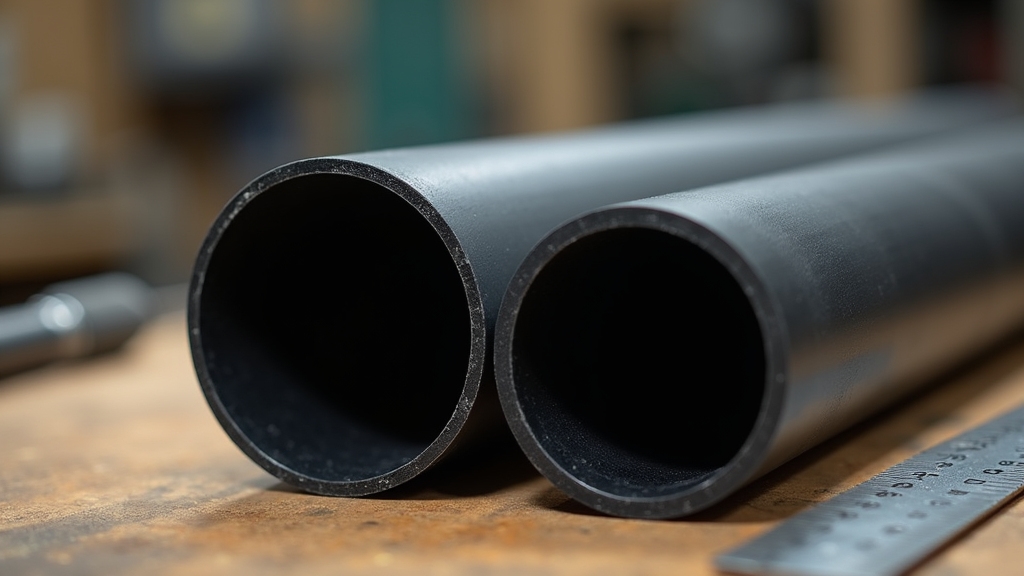
Since SDR 26 and SDR 35 pipes differ markedly in stiffness and wall thickness, choosing the right type depends on your project’s load demands, burial depth, and soil conditions.
You’ll opt for SDR 26 in gravity sewer or stormwater systems where higher external soil loads, deeper burial (up to 13 feet), or poorly draining soils prevail. Its thicker walls provide superior structural integrity and resistance to deformation.
Both SDR 26 and SDR 35 are made from Polyvinyl Chloride (PVC), a material known for its corrosion resistance and durability in soil environments. Regular maintenance is essential to prevent issues such as mineral scale buildup that could affect pipe longevity.
Conversely, SDR 35 suits residential or light commercial drainage with moderate depths (under 8 feet) and less severe soil conditions. Its flexibility simplifies installation in municipal sewer and storm drain applications.
Both pipe types are limited to non-pressure drainage systems, so neither fits pressurized water use. Proper assessment of soil compaction and anticipated load is essential for selecting between SDR 26’s robustness and SDR 35’s installation ease.
Size Availability and Cost Considerations
Both range from 4″ to 48″ diameters under ASTM D3034 and F679 standards, but SDR 35’s thinner walls make it more prevalent, especially in large diameters (18″–48″). SDR 35 is widely stocked, often in green for drainage, and generally less expensive due to reduced material volume and production costs.
SDR 26, with approximately 30% thicker walls, requires more PVC, increasing both material and shipping expenses. While small diameters are available for both, SDR 26 large sizes often come from specialty suppliers, potentially raising lead times and accessory costs.
Your project budget benefits from SDR 35’s availability and lower price, but SDR 26’s durability may justify higher upfront costs in demanding conditions.
When working with submersible pumps in these piping systems, it is important to follow proper disassembly procedures to ensure safety and avoid damage during maintenance.
Installation Challenges and Performance Factors
Although both SDR 26 and SDR 35 pipes serve drainage applications, their installation challenges and performance differ considerably due to wall thickness and stiffness.
SDR 26’s thicker walls provide superior structural strength (115 psi stiffness) compared to SDR 35’s 46 psi. This makes it ideal for deep or unstable soil installations where deformation risks are high. Proper fastening of pipe supports is essential with SDR 26 to prevent pipe vibration during water flow.
Thicker walls of SDR 26 offer 115 psi stiffness, perfect for deep or unstable soil installations. You’ll find SDR 26 less prone to cracking during handling, but it demands precise trench bedding and slightly more jointing labor.
Additionally, the wall thickness directly influences the pipe’s shear strength and durability, making SDR 26 more robust under pressure. Conversely, SDR 35’s flexibility and lighter weight ease maneuvering and accommodate curves. This benefits installations with alignment challenges or horizontal directional drilling.
For long-term performance, SDR 26 resists ground movement and external loads better, reducing maintenance needs. SDR 35 suits standard, low-stress environments. Selecting between them hinges on balancing installation conditions with expected service demands.
Frequently Asked Questions
How Does Temperature Affect SDR 26 and SDR 35 Pipe Performance?
You’ll find that as temperature rises, both SDR 26 and SDR 35 pipes lose strength due to PVC’s viscoelastic nature. SDR 26, with thicker walls, retains pressure better and resists deflection and stress relaxation more effectively than SDR 35.
However, above 140°F, both become unsuitable for pressure applications. You must consider temperature-induced creep and deformation, as elevated heat accelerates aging and reduces long-term durability, impacting performance markedly.
Are SDR 26 and SDR 35 Pipes Compatible With the Same Joint Types?
Yes, you can use the same joint types for both SDR 26 and SDR 35 pipes. They typically employ gasketed joints that fit grooves on the pipe ends, guaranteeing watertight seals.
Since their outer diameters match for the same nominal size, fittings and universal couplings designed for one SDR usually fit the other. Just make certain you follow ASTM D3034 standards and installation guidelines to maintain joint integrity and compatibility.
What Are the Environmental Impacts of Producing SDR 26 Vs SDR 35 Pipes?
You’ll find that producing SDR 26 pipes consumes more raw materials and energy than SDR 35 due to their thicker walls. This leads to higher greenhouse gas emissions and a larger carbon footprint per unit length.
Additionally, SDR 26 generates more manufacturing waste and transportation emissions because of increased weight. However, its durability might offset environmental impacts over time.
Recycling opportunities exist for both, but effective infrastructure is key to minimizing waste.
Can SDR 26 and SDR 35 Pipes Be Recycled After Use?
You can recycle SDR 26 and SDR 35 pipes like turning old plastic into fresh feedstock.
Both are made from PVC, a thermoplastic that’s regrindable and extrudable. If the pipes are clean and uncontaminated, you cut them into small pieces for recycling machines.
Internal production scrap is almost entirely reclaimed, while post-use recycling depends on sorting and condition. Although standards limit recycled content in new certified pipes, controlled reuse exists in some products.
How Do SDR 26 and SDR 35 Pipes Handle Chemical Exposure Differences?
You’ll find SDR 26 pipes handle chemical exposure better due to their thicker walls, offering enhanced resistance to acids, alkalis, and salts common in wastewater. SDR 35 pipes still resist these chemicals well but with thinner walls, they’re less suited for highly corrosive environments.
Both meet ASTM standards for sewer use, but if your application involves higher chemical stress, SDR 26 provides marginally superior protection against erosion and penetration.
Final Thoughts: Matching SDR 26 vs SDR 35 to Your Site Conditions
Choosing between SDR 26 and SDR 35 pipes is like selecting a shield for different battles. SDR 26 offers a sturdier defense with higher pressure tolerance, while SDR 35 provides flexibility where weight and cost matter more.
Understanding their structural nuances helps you match the pipe to your project’s demands precisely. Just as a skilled strategist weighs strength against agility, you must balance mechanical properties, installation challenges, and budget to optimize performance and longevity.
- MADE IN THE USA: For over a century, Ventral has been fabricating pipe lumber and fittings…
- VENTRAL Products are Manufactured and/or Designed and Fabricated in the USA
- VENTRAL PIPE AND FITTINGS: Are used in irrigation, underground sprinkler systems, drainage, swim…
Last update on 2026-04-03 / Affiliate links / Images from Amazon Product Advertising API