
If you need high pressure for deep wells or multi-floor water supply, a jet pump’s venturi design boosts head but sacrifices flow and efficiency.
Centrifugal pumps, better for shallow sources, deliver higher flow rates with greater energy efficiency and quieter operation but struggle at depths beyond 25 feet.
Jet pumps self-prime and simplify above-ground setups, though they demand more power and generate more noise.
Understanding these trade-offs will clarify which pump suits your specific application best.

- SHALLOW WELL JET PUMP: Red Lion Premium Cast Iron Shallow Well Jet Pump features a 1-1/4” FNPT…
- BUILT TO LAST: Rugged cast iron casing and volute for long life and high-efficiency; glass-filled…
- HEAVY DUTY MOTOR: runs on either 115 or 230 volts; voltage must be selected to match incoming power…

- Optimal Suction and Discharge: MAX.Q 4250 GPH, Max Head 108 ft, With a 2″ NPT suction and a 1-1/2″…
- Enhanced Impeller and Diffuser: The centrifugal pump boasts a reinforced impeller and diffuser,…
- Flexible Voltage & Efficiency: With dual voltage (115/230 V) and a high-efficiency round flange…
Key Takeaways
- Jet pumps create higher pressure using a venturi ejector, while centrifugal pumps generate higher flow through rotating impellers.
- Centrifugal pumps are more energy-efficient, especially in shallow applications, consuming less power for comparable flow rates.
- Jet pumps can lift water from deeper wells (up to 120 feet) and are typically surface-mounted for easier maintenance.
- Centrifugal pumps require priming and enclosed installation, whereas jet pumps are self-priming and mounted above ground.
- Jet pumps have fewer moving parts and lower maintenance needs; centrifugal pumps need frequent impeller and seal inspections.
Jet vs Centrifugal Pump: Key Differences at a Glance
| Feature | Jet Pump | Centrifugal Pump |
|---|---|---|
| Operating Principle | Uses a venturi ejector system to create suction and boost pressure | Uses a rotating impeller to move water outward |
| Water Depth Capability | Can draw water from deep wells up to 100–120 ft depending on configuration | Best suited for shallow sources under 25 ft |
| Pressure Output | Produces higher pressure, ideal for multi-floor supply | Provides moderate pressure suitable for basic systems |
| Flow Rate | Lower flow volume, better for targeted water delivery | Higher flow capacity, ideal for irrigation or large supply |
| Energy Efficiency | Generally less energy efficient due to ejector losses | More energy efficient, especially at design flow rates |
| Priming Requirement | Self-priming, easier to start | Usually requires manual priming |
| Noise Level | Louder operation because of venturi turbulence | Quieter and smoother operation |
| Installation | Typically above-ground mounted | Often enclosed or submerged |
| Maintenance Needs | Simpler maintenance with fewer moving parts | Requires regular impeller and seal checks |
Operating Principles of Jet Pumps vs Centrifugal Pumps

Although both jet pumps and centrifugal pumps rely on impellers and electric motors to move fluids, their operating principles differ fundamentally.
Centrifugal pumps use a rotating impeller to throw fluid radially outward. This converts rotational energy into kinetic energy, which the volute then directs for discharge.
Rotating impellers propel fluid outward, transforming rotational energy into kinetic flow guided by the volute.
In contrast, jet pumps employ a venturi tube and ejector system, creating a pressure drop that increases fluid velocity and extends pumping range.
Centrifugal pumps typically have multiple impeller stages, adapting to various flow requirements. Jet pumps feature fewer moving parts in the suction chamber, reducing wear.
Both systems use impellers and motors, but the jet pump’s design leverages fluid dynamics differently. It focuses on velocity amplification through pressure reduction rather than direct mechanical fluid displacement like centrifugal pumps.
Jet pumps are generally surface-mounted and rely on suction pipes for operation, limiting their effective depth compared to submersible centrifugal pumps.
Pressure and Head Performance of Jet and Centrifugal Pumps
Understanding how jet and centrifugal pumps manage pressure and head helps you select the right pump for your application.
Jet pumps generate higher head pressures than centrifugal pumps at the same power level, thanks to their venturi and ejector design. This enables them to lift water up to three or four floors.
In contrast, centrifugal pumps produce lower pressures, performing best in low-lift scenarios, typically pushing water one or two floors.
Jet pumps maintain consistent pressure across multiple outlets and higher demand situations but show performance drop-offs near 60-70 PSI.
Centrifugal pumps provide stable, lower pressure suited for shallow systems.
When you require elevated pressure and higher head, jet pumps outperform centrifugal types. However, centrifugal pumps are preferable for applications demanding moderate head and efficient low-pressure pumping.
Additionally, considering pump efficiency can help optimize your system’s energy use and long-term costs.
Flow Rate and Volume Capacity Comparison
When choosing between jet and centrifugal pumps, consider their distinct flow rate and volume capacities to match your system’s demands.
Centrifugal pumps handle a broad flow range, often exceeding 110 liters per minute per horsepower. This makes them suitable for large-scale applications like irrigation and extensive sprinkler networks.
In contrast, jet pumps typically deliver lower flow rates, around 58 liters per minute per horsepower. They focus on point-to-point water delivery rather than bulk transfer.
This difference stems from their operating principles: centrifugal pumps convert rotational energy into high-volume flow, while jet pumps use a venturi effect to boost pressure at the expense of volume.
If your priority is moving substantial water volumes efficiently, centrifugal pumps outperform jet pumps. Conversely, jet pumps excel where moderate flow and higher pressure are required.
Additionally, the efficiency and energy consumption of these pumps can vary significantly depending on their design and application.
How Deep Can Jet and Centrifugal Pumps Draw Water?
Because suction depth directly impacts pump selection, knowing how deep jet and centrifugal pumps can draw water is essential for matching them to your well or water source.
Centrifugal pumps are limited to shallow wells, typically less than 25 feet deep, due to physical suction constraints. They perform best with water sources close to the surface.
Jet pumps, however, offer greater flexibility. A shallow-well jet pump can draw water up to 25 feet, while a two-pipe deep-well jet pump extends this range to 100-120 feet. Convertible jet pumps operate efficiently up to around 70 feet.
This extended suction capability stems from the jet pump’s venturi and ejector system, which effectively reduces pressure and increases water velocity. This enables deeper water extraction than centrifugal designs.
In contrast, submersible pumps work by being fully submerged in water, eliminating suction limitations and allowing for efficient extraction at much greater depths through submersion technology.
Energy Use: Which Pump Saves More?
When you dive into energy efficiency, you’ll notice that centrifugal pumps tend to outperform jet pumps. This is especially true when they’re operating close to their design points and at shallower depths.
But it’s not just about power consumption. You also have to think about maintenance and how your system is set up. All these factors play a role in your operating costs. Additionally, centrifugal pumps offer high-flow, low-pressure capabilities that can further enhance energy savings in many applications.
Energy Efficiency Comparison
Although jet pumps offer versatility and easier installation, centrifugal pumps generally save you more energy during operation.
Centrifugal pumps convert rotational energy into fluid kinetic energy with higher hydraulic efficiency, especially near their design point. Their capacity to match flow demands using variable speed drives further enhances energy savings by reducing power consumption under partial loads.
In contrast, jet pumps rely on a venturi ejector system, which inherently dissipates energy, causing lower overall efficiency. They also consume more power when self-priming, as the motive fluid requires additional energy input.
For shallow-depth applications, centrifugal pumps outperform jet pumps in energy efficiency by approximately 10-20%, depending on the system design and operating conditions.
Consequently, if minimizing energy use is critical, centrifugal pumps present a more energy-efficient solution than jet pumps in most scenarios.
Additionally, external pumps, like centrifugal models, typically have an efficiency rate of around 85%, which contributes to their lower energy consumption compared to other pump types.
Operating Cost Factors
Since operating costs hinge largely on energy consumption, selecting the right pump directly affects your expenses over time.
Centrifugal pumps generally consume less energy than jet pumps, especially when operating near their design point and in shallow applications. Their higher hydraulic efficiency translates into lower power requirements for comparable flow rates.
Jet pumps, with their ejector system, tend to use more energy due to inherent inefficiencies in converting motive fluid energy and self-priming losses. If your application involves deep wells or high head requirements, jet pumps might still be necessary despite higher energy use.
However, for shallow sources and large volumes, centrifugal pumps save you money by minimizing electricity consumption. Investing in a variable speed drive with a centrifugal pump further optimizes energy use, reducing operating costs even more effectively than fixed-speed jet pumps.
Additionally, pumps with higher energy efficiency can significantly reduce long-term operating expenses by lowering power consumption throughout their service life.
Maintenance and Operation Differences Between Pumps
Because jet pumps have fewer moving parts in the suction chamber, they generally demand less maintenance than centrifugal pumps, which rely on impellers that experience wear over time.
Centrifugal pumps need frequent inspection of impellers and seals, while jet pumps mainly require checking the ejector components. Centrifugal pumps also require priming before operation, unlike self-priming jet pumps.
Operationally, jet pumps are easier to service above ground, reducing downtime.
| Aspect | Jet Pump | Centrifugal Pump |
|---|---|---|
| Moving Parts | Fewer, mainly ejector | Multiple impeller components |
| Maintenance Frequency | Lower | Higher due to wear |
| Priming Requirement | Self-priming | Manual priming needed |
| Ease of Access | Above-ground installation | Often submerged or enclosed |
| Service Complexity | Simpler | More complex due to impeller |
Additionally, understanding the impeller function is crucial for maintaining centrifugal pumps effectively.
Noise and Installation Options for Jet and Centrifugal Pumps
You’ll notice that jet pumps tend to generate a louder, high-pitched noise compared to the quieter operation of centrifugal pumps. It’s quite a difference! If noise is a concern for you, this is definitely something to keep in mind.
Now, when it comes to installation, jet pumps have the upper hand in flexibility. You can easily mount them above ground, which makes access for maintenance a breeze. That’s pretty handy, right?
Additionally, the placement options for jet pumps allow them to avoid overheating issues common in pumps installed directly in water.
Noise Levels Comparison
Typically, jet pumps generate louder, high-pitched noise compared to centrifugal pumps, which operate much more quietly. You’ll notice that the venturi and ejector system in jet pumps creates turbulent flow and cavitation, contributing to sharper, more penetrating sounds during operation.
Centrifugal pumps, on the other hand, rely on smooth impeller rotation within a volute casing, resulting in lower vibration and noise emission. If noise reduction is critical for your application, centrifugal pumps offer distinct advantages, especially in residential or indoor settings.
Jet pumps’ noise levels can be mitigated with sound enclosures, but their fundamental design limits quiet operation. Understanding these acoustic differences helps you select a pump that fits your noise tolerance and operational environment precisely, ensuring efficient and comfortable performance. Additionally, optimizing operating conditions such as flow rate and pressure can help reduce noise and energy consumption in pump systems.
Installation Flexibility Options
When considering installation flexibility, jet pumps offer greater adaptability due to their above-ground mounting capability. This simplifies access for maintenance and reduces the need for complex underground housing.
This configuration allows you to install jet pumps in varied environments without extensive excavation or enclosure construction. In contrast, centrifugal pumps generally require below-ground or enclosed installations to protect the impeller and motor, limiting placement options.
Additionally, centrifugal pumps demand priming before operation, complicating their setup. Jet pumps’ fewer moving parts and self-priming nature reduce installation constraints but generate higher noise levels, which you must manage through soundproofing.
Ultimately, if you prioritize ease of installation and maintenance accessibility, jet pumps provide superior flexibility. Centrifugal pumps, though quieter, impose stricter installation requirements due to their design and operational needs.
Choosing the Right Jet or Centrifugal Pump for Your Application
Deciding between a jet pump and a centrifugal pump hinges on specific factors like well depth, required flow rate, and pressure demands.
You need to evaluate your system’s parameters carefully to select the optimal pump type. Consider these critical points:
- Well Depth: Use jet pumps for depths exceeding 25 feet. Centrifugal pumps suit shallow sources under 25 feet.
- Flow Rate: Choose centrifugal pumps for high-volume applications. Jet pumps handle lower volumes efficiently.
- Pressure Requirements: Jet pumps deliver higher head pressures, ideal for multi-floor supply. Centrifugal pumps excel at low-lift, high-flow tasks.
- Energy Efficiency: Centrifugal pumps generally offer better efficiency and lower energy consumption, especially near design points.
Analyze these criteria against your operational needs to guarantee reliable performance and longevity.
Frequently Asked Questions
Can Jet Pumps Handle Abrasive or Dirty Water Better Than Centrifugal Pumps?
You’ll find jet pumps handle abrasive or dirty water better than centrifugal pumps because they’ve fewer moving parts in the suction chamber, reducing wear from particles.
However, their venturi and ejector system can still clog if debris is excessive.
Centrifugal pumps’ impellers are more vulnerable to damage from solids, requiring more maintenance.
What Materials Are Commonly Used in Jet and Centrifugal Pump Construction?
You’ll find jet and centrifugal pumps commonly built from cast iron, stainless steel, and bronze due to their corrosion resistance and durability.
Impellers often use stainless steel or engineered plastics to withstand wear and fluid abrasiveness.
For jet pumps, you might see more plastic components in the ejector system, reducing weight and cost.
Seals and bearings use materials like carbon, ceramic, or rubber composites to guarantee reliable, long-term operation under varying conditions.
How Do Temperature Limits Compare Between Jet and Centrifugal Pumps?
You’ll find centrifugal pumps usually handle higher temperatures better, often up to 250°F (121°C) depending on materials and seals.
Jet pumps, with their simpler suction chamber and fewer moving parts, typically tolerate lower temperature limits, around 140-180°F (60-82°C).
So, if you’re dealing with hotter fluids, centrifugal pumps are generally more suitable.
Jet pumps suit moderate temperature applications, balancing performance with material constraints.
Are Jet or Centrifugal Pumps Better for Saltwater Applications?
Think of saltwater as a relentless sculptor, constantly eroding its canvas.
You’ll find centrifugal pumps less suited here, as their intricate impellers corrode faster under saline assault.
Jet pumps, with fewer submerged moving parts, handle saltwater better, reducing wear and maintenance.
Yet, you must choose corrosion-resistant materials, like stainless steel or specialized coatings, regardless.
Ultimately, jet pumps offer greater durability and reliability in saltwater environments if properly constructed.
What Are Typical Warranty Periods for Jet Versus Centrifugal Pumps?
You’ll typically find both jet and centrifugal pumps come with warranty periods ranging from one to two years, depending on the manufacturer and model.
High-end centrifugal pumps sometimes offer extended warranties up to five years due to robust construction.
Jet pumps usually have standard one-year coverage, reflecting simpler designs and fewer moving parts.
Always check specific product documentation, as warranty terms can vary with usage conditions and installation quality.
Making the Right Choice Between Jet Pump and Centrifugal Pumps
When choosing between jet and centrifugal pumps, consider your specific needs.
Jet pumps excel in drawing water from depths up to 25 feet, while centrifugal pumps handle higher flow rates, often exceeding 100 gallons per minute. Remarkably, centrifugal pumps typically operate with 10-15% greater energy efficiency.
Understanding these distinctions guarantees you select the best pump for performance, energy use, and maintenance. This optimization will enhance both cost and operational reliability in your application.

- Powerful Suction: 1HP electric motor can provide plenty of water flow with strong suction power,…
- Dual Voltage Motor: This heavy-duty shallow well pump runs on 115V/230V safely. Factory set for…
- Overheat Protection: When the water inside the pump runs out, the intelligent pump will shut off…
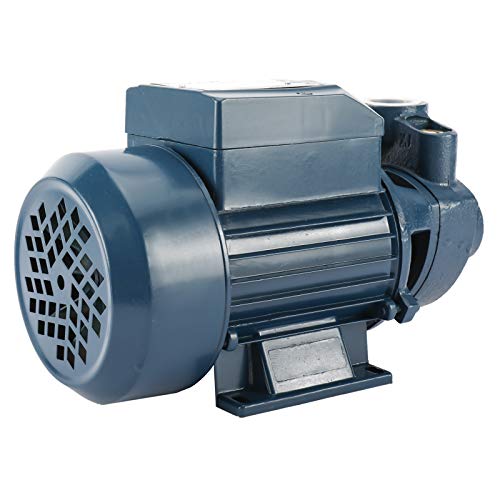
- Model: 1/2 HP/110 volt/370 watt/60 Hz/2.5 amp. Capacity: 10 Gallons per minute; Includes a one-inch…
- Heavy-duty centrifugal electric pump features with a pre-filter, for drawing water from tanks,…
- The Water Pump is made of sturdy cast iron and includes a stainless steel mechanical seal as well as…
Last update on 2026-03-30 / Affiliate links / Images from Amazon Product Advertising API