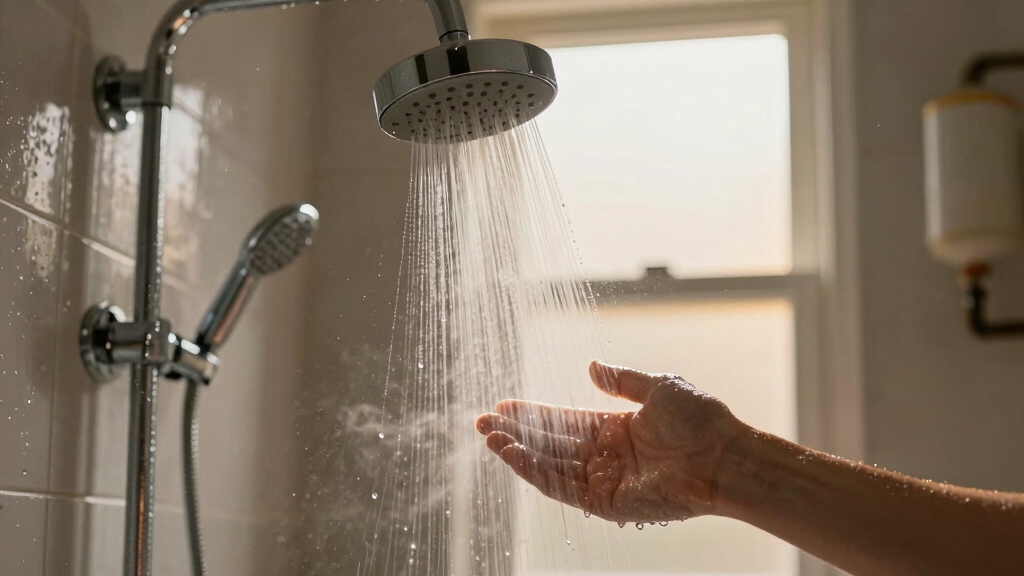
You can shower while your water softener regenerates, but expect temporary hard water with higher mineral levels. You may also experience lower water pressure and fluctuating temperatures due to flow rerouting and valve operation.
This can reduce soap lather, cause dry skin, and weaken your shower stream. Hot water use during regeneration may expose you to elevated sodium briefly. For minimal discomfort, schedule showers outside regeneration times or use cold water.
Discover how your system’s design and regeneration type influence these effects.
Key Takeaways
- During regeneration, softened water is temporarily unavailable, so shower water will be hard with higher mineral content and reduced soap lather.
- Water pressure and temperature may fluctuate during regeneration, causing weaker flow and possible sudden hot or cold water changes in the shower.
- Showering during regeneration can increase skin dryness and irritation due to hard water minerals and reduced natural oil retention.
- Scheduling showers outside typical regeneration times or using cold water showers minimizes exposure to hard water and temperature fluctuations.
- Systems with multi-tank design or soft water reserve can maintain softened water flow during regeneration, reducing shower impact.
Understanding the Water Softener Regeneration Process
When your water softener regenerates, it undergoes a carefully controlled sequence of stages designed to restore its mineral-removing capacity.
First, during the fill stage, water flows into the brine tank, dissolving salt to create a concentrated brine solution essential for ion exchange. This step is crucial because the fill stage influences the duration of subsequent brine draw and rinse stages.
Next, the brine draw stage pulls this solution into the resin tank, where sodium ions replace calcium and magnesium on resin beads, flushing out hardness minerals. This process helps maintain water quality by ensuring minerals responsible for hardness are effectively removed.
Following this, the system performs slow and fast rinse stages to remove residual brine and compact the resin bed, preventing salty taste. Before brine application, a backwash stage reverses water flow to clean and redistribute resin beads, ensuring peak performance.
Timing and Duration of Regeneration Cycles
Although the regeneration process is essential for maintaining softener efficiency, its timing and duration vary markedly depending on system design and household usage. Typically, a full cycle lasts between 1.5 and 2.5 hours, with brine draw and rinse stages taking the longest.
Most systems initiate regeneration during low-demand periods, commonly around 2:00 AM, to minimize disruption. During regeneration, the system flushes minerals from resin beads to restore ion-exchange capacity. Proper maintenance requirements ensure the system functions effectively through multiple cycles.
Frequency depends on water hardness and household consumption, ranging from every few days to several weeks. Key timing and duration points include:
- Regeneration cycles usually last 70–90 minutes, extending up to 2.5 hours for larger or older units.
- Start times are often programmable or triggered by water usage thresholds.
- Backwash typically takes 6–12 minutes; brine draw/rinse can be up to 2 hours.
- Fill and rinse stages vary between 5 and 15 minutes each.
Impact of Regeneration on Water Hardness During Showering
When your water softener goes into regeneration, you’ll notice a temporary shift in water quality. Essentially, you’ll be getting untreated hard water because the system redirects the flow away from the resin bed. This can be a bit of a hassle, especially if you’re not prepared for it.
The regeneration process includes stages like backwash and brine draw that temporarily interrupt soft water supply ion exchange process. Choosing a system with a high-flow rate can help minimize pressure drops during such times.
If your setup doesn’t have a soft water reserve or a multi-tank design, then you’re really out of luck. You won’t have any softened water available until the regeneration cycle is complete. Knowing this can really help you plan ahead and manage your expectations about water hardness while you’re showering.
Temporary Hard Water Exposure
Typically, during a water softener’s regeneration cycle, your household water supply receives untreated hard water as the system diverts flow away from the resin tank. This means calcium and magnesium ions remain in your shower water, causing reduced soap lather and drier skin.
The cycle lasts 1.5 to 2 hours, exposing you to hardness levels of 10-20 grains per gallon. Monitoring your system’s regeneration schedule can help avoid showering during these periods, reducing hard water exposure.
You might notice scale buildup on fixtures after repeated exposure. Hard water bypasses resin beads, delivering full mineral content untreated. Regeneration starts when resin beads can no longer hold additional minerals, initiating the process to restore softening capacity.
Soap scum increases, reducing cleaning efficiency during showers. Regeneration timing can overlap peak shower hours, heightening exposure. No salt or brine residues enter your water during this phase.
Soft Water Reserve Limits
In managing your water softener’s performance, understanding the concept of soft water reserve is essential. This reserve reflects the resin bed’s capacity to soften water before regeneration triggers.
It’s calculated based on your household’s water use and hardness levels. During regeneration, all water bypasses the resin bed, halting softening and depleting any prior reserve immediately.
This causes hard water delivery, lasting 1.5 to 2 hours until the cycle completes. Single-tank systems rely solely on this reserve, with no bypass softening. The regeneration process typically takes around two hours total, during which the stages execute sequentially to restore resin capacity.
Battery backup sump pumps use float switches to activate automatically when needed, ensuring continuous operation during power outages. If you shower mid-cycle and exceed the reserve, you’ll experience hard water exposure.
To minimize this, schedule regeneration during low-usage periods and monitor consumption to adjust settings. This ensures reserve limits prevent hardness breakthrough during critical times like showers.
Effects of Regeneration on Water Pressure and Temperature
When your water softener goes through its regeneration process, you might notice some changes in your water pressure. This happens because the internal flow gets rerouted and the valves start operating differently.
During regeneration, the resin beads are being flushed with a salt-and-water mixture called brine, which temporarily affects the softener’s normal operation. If you encounter a leak during this time, knowing how to tighten the washer nut on your water valve can help prevent water damage.
So, if you’re showering while the softener is regenerating, you might experience some fluctuations in water pressure. It can lead to inconsistent flow rates at your showerhead, especially if you’ve got other fixtures running at the same time.
But that’s not all. You might also feel a difference in water temperature. This variability happens because the altered flow paths can affect the water heater’s inlet supply during those regeneration cycles.
Water Pressure Fluctuations
Water pressure often drops temporarily during a water softener’s regeneration cycle because the system diverts flow to flush minerals from the resin bed. This backwashing process consumes water pressure, reducing flow available to household fixtures. Contaminated water may also contribute to flow restrictions if not properly treated.
The severity of pressure fluctuation depends on softener size, regeneration timing, and system maintenance. You may notice more significant drops if regeneration occurs during peak water use or if your unit is undersized or poorly maintained.
Backwash diverts water, causing temporary pressure loss. Regeneration during low-usage times minimizes impact. Undersized or clogged systems worsen pressure drops. High-quality or twin-tank units maintain steady flow. Regular cleaning and maintenance of the water softener system are crucial for preventing clogs and flow restrictions.
Temperature Variability During Regeneration
Pressure fluctuations during softener regeneration often coincide with noticeable changes in water temperature, especially in showers. When regeneration diverts water flow, it can disrupt hot water supply, causing sudden temperature shifts.
This effect intensifies if your softener is near the water heater, leading to temporary hot water loss during the brine flush phase. Seasonal backwash temperatures and ambient conditions further influence these variations, but temperature normalizes once regeneration ends.
It is important to ensure proper installation of your water softener system to prevent additional issues like pressure drops or mechanical failures that could exacerbate temperature variability.
| Factor | Effect on Water Temperature |
|---|---|
| Hot Water Diversion | Sudden temperature shifts, possible hot water loss |
| Proximity to Water Heater | Increased disruption risk during regeneration |
| Backwash Temperature | Seasonal variation affects flow and efficiency |
| Ambient Temperature | Influences tank temperature and bacterial growth |
| Regeneration Cycle Phases | Temporary temperature fluctuations during cycle |
Health and Skin Considerations When Showering During Regeneration
Although the water softener temporarily ceases to soften during regeneration, you may experience dry, itchy skin due to mineral buildup that impedes moisturization.
Hard water minerals form insoluble soap films on your skin, reducing natural oil retention and increasing irritation risk. Using soaps that are phosphate-free can help reduce residue and irritation caused by mineral interactions.
Soap lather diminishes, requiring more product and longer rinsing, which compounds dryness. Soft water rinses shower products without leaving residue, resulting in cleaner, more moisturized skin and hair.
Sodium levels briefly rise, potentially affecting sensitive individuals. Keep these points in mind during regeneration showers:
- Mineral deposits hinder moisturization, causing tight, less hydrated skin.
- Soap scum accumulation leads to itchiness and residue buildup.
- Reduced lathering demands higher soap use, increasing skin exposure to irritants.
- Elevated sodium may alter water taste and affect low-sodium diet adherence.
How Water Bypasses the Softener During Regeneration?
During regeneration, your system reroutes flow to guarantee untreated water bypasses the resin tank, maintaining household supply without interruption. This is made possible by the lever bypass valve, which is often located between the inlet and outlet valves for easy manual operation.
This bypass occurs via internal valves controlled by the softener’s control head, temporarily diverting incoming water around the resin bed. The brine and dislodged minerals flow directly to the drain, preventing contamination of household plumbing.
Depending on your model, bypass mechanisms vary: single-handle integrated valves switch flow with a quarter turn, while three-valve copper bypasses allow precise manual isolation. Many bypass valves are U-shaped and located near the softener for easy access.
Automatic internal bypass valves engage during regeneration, ensuring continuous untreated water supply. Pressure equalization briefly delays full bypass activation, but anti-contamination valves prevent backflow. Regular maintenance and correct valve positioning help prevent clogging or damage to these valves.
The system’s control head sequences rinse and refill cycles while maintaining the bypass path, ensuring your household water remains available, albeit untreated, throughout regeneration.
Risks of Using Hot Water During Regeneration Cycles
If you use hot water while your water softener regenerates, you risk exposure to elevated sodium levels and fluctuating temperatures that can impact both safety and comfort.
During the brine draw stage, concentrated salt solution enters your water, increasing sodium content temporarily. This can irritate skin and pose health risks, especially if you have hypertension or sodium sensitivity. It is important to note that softening with sodium chloride increases sodium in drinking water, which can affect health.
Additionally, regeneration disrupts hot water flow, causing sudden temperature swings or loss of hot water at the shower. Reduced water pressure further affects shower performance.
- Elevated sodium during regeneration raises health and skin safety concerns.
- Hot water temperature fluctuates, risking scalding or discomfort.
- Water pressure drops, weakening shower stream.
- Temporary taste and water quality degradation occur.
Best Practices for Showering While Softener Regenerates
Frequently, showering while your water softener regenerates can lead to noticeable changes in water quality and shower performance.
To minimize these effects, schedule showers outside the typical regeneration window, often at night, to avoid hard water exposure. The regeneration cycle flushes resin media tanks with a brine solution to clean and recharge the media for future ion exchanges.
If showering during regeneration is unavoidable, opt for cold-water-only showers to prevent hard water entering your hot water tank. This helps reduce scale buildup. Stagger high-demand water uses like laundry or dishwashing to lower flow during regeneration, preserving system efficiency.
Consider filling a pitcher with softened water beforehand for rinsing to improve soap removal. Avoid heavy water use during critical regeneration stages to prevent incomplete resin cleaning and potential cycle repetition. Implementing these practices helps maintain shower comfort while protecting your softener’s longevity and performance.
Upgrading to Demand-Initiated Regeneration Systems
When you upgrade to a demand-initiated regeneration (DIR) system, your water softener regenerates based on actual water usage rather than a preset schedule. Upgrade to demand-initiated regeneration for water softening tailored precisely to your actual usage.
This adaptive mechanism uses sensors or meters to monitor resin capacity and initiates regeneration only when necessary, enhancing efficiency and ensuring continuous soft water availability.
Unlike timer-based systems, DIR prevents hard water breakthrough and reduces waste. Key benefits include:
- Precise regeneration triggered by resin exhaustion, saving salt and water
- Real-time tracking of gallons used, adapting to household demand variations
- Extended equipment lifespan due to fewer unnecessary cycles, which is important as resin beads lose effectiveness over time
- Advanced models with learning capabilities optimize energy and resource use
Frequently Asked Questions
Can Regeneration Cycles Cause Noise Disturbances During Nighttime Showers?
Yes, regeneration cycles can cause noise disturbances during nighttime showers.
You’ll likely hear hissing, clicking, or gurgling sounds from the water softener valve and tanks, reaching up to 80 dB, similar to a washing machine.
If your unit isn’t in the basement or your home lacks one, these noises become more noticeable.
To minimize disturbances, schedule regeneration overnight or reprogram the cycle timing.
Persistent loud noises may indicate a mechanical issue needing professional attention.
Does Water Softener Regeneration Affect Laundry Washing Quality?
Yes, water softener regeneration can temporarily affect laundry quality.
During regeneration, untreated hard water may enter your washer, reducing detergent effectiveness and causing duller rinses.
You might need higher detergent doses for loads run then.
However, this impact is brief, lasting 1–2 hours.
If you schedule laundry outside regeneration times or have a dual-tank system, you’ll avoid disruptions and maintain peak cleaning performance consistently.
How Does Regeneration Impact Water Softener Lifespan Over Years?
Regeneration cycles gradually degrade your water softener’s resin beads and valves, shortening lifespan by 10-20% over 10 years if overused.
Frequent cycles cause mechanical wear, increase salt and water consumption, and accelerate component fatigue by up to 15%.
Properly balancing regeneration frequency and performing maintenance like resin cleaning and valve inspections can extend life by several years, helping your system last 15-20 years instead of just 7-10.
Are There Eco-Friendly Alternatives to Traditional Salt-Based Regeneration?
Oh sure, you can keep using salt-based softeners and just love that salty wastewater, or you can choose eco-friendly alternatives.
You’ve got nanofiltration systems removing hardness without sodium or harmful brine discharge.
Potassium chloride offers a greener regeneration option.
Salt-free conditioners and template-assisted crystallization prevent scale without salt or water waste.
These options save water, protect ecosystems, and maintain healthy minerals, all while sparing you from salty environmental guilt.
Can Regeneration Cycles Increase Household Sodium Intake Significantly?
No, regeneration cycles won’t materially increase your household sodium intake.
The sodium added during ion exchange is minimal—about 7.9 mg per liter per grain of hardness removed, which is negligible compared to daily dietary sodium.
Even with frequent regeneration, the sodium concentration in softened water remains low.
If you’re concerned, you can use potassium chloride instead of salt or install a reverse osmosis system to remove sodium effectively.
Reduce Dry Skin by Timing Showers Around Regeneration
Think of your water softener’s regeneration like a brief traffic detour. It temporarily redirects hard water around the system. While you can shower during this cycle, be aware that water hardness may spike. This can affect soap’s effectiveness and possibly your skin.
A study found that 20% of users noticed dryness when showering mid-regeneration. To avoid surprises, schedule showers outside these times. Alternatively, consider upgrading to demand-initiated systems that regenerate only when needed. This ensures consistently softened water.