
To keep pipes from freezing in your crawl space, start by sealing all vents with R10-rated sealers or spray foam to block cold drafts and moisture.
Insulate exposed pipes using foam sleeves or fiberglass wraps. Apply self-regulating heat tape beneath insulation for added protection.
Circulate warm interior air with low-power thermostatically controlled fans positioned near vulnerable pipes.
Consider supplemental baseboard heaters within 30 inches of pipe clusters, and maintain steady indoor temps.
Explore how integrating these techniques creates a reliable freeze defense system.
Key Takeaways
- Seal crawl space vents with R10-rated vent sealers or spray foam to block cold air and maintain warmer temperatures.
- Insulate exposed pipes using foam sleeves or fiberglass wraps, securing joints and bends to reduce heat loss.
- Use self-regulating heat tape with built-in thermostats to provide efficient, safe pipe warming below 20°F.
- Circulate conditioned warm air from the home into the crawl space using automated fans positioned near vulnerable pipes.
- Install heavy-duty vapor barriers and termite-resistant foam board insulation on walls to control moisture and create thermal barriers.
Why Pipes Freeze in Crawl Spaces?

Because crawl spaces are often unheated and exposed to outside air through vents or gaps, pipes located there are highly susceptible to freezing.
Crawl spaces, being unheated and vented, leave pipes vulnerable to freezing temperatures.
When temperatures drop below freezing, the cold air rapidly cools uninsulated pipes, causing the water inside to freeze, expand, and potentially burst.
The risk intensifies when pipes run across floor joists or near uninsulated foundation walls, where cold drafts circulate.
Frost lines indicate soil depth where freezing occurs; pipes below this line generally stay safe, but those above require extra protection.
Moisture accumulation worsens heat loss, further chilling pipes.
To minimize freezing, you need to understand airflow patterns, insulation levels, and pipe placement.
Recognizing these factors helps you target vulnerable sections and prepare effective preventative measures that maintain pipe integrity throughout winter.
Additionally, ensuring the maintenance of submersible well pumps can prevent freezing-related damage and costly repairs in cold conditions.
How Crawl Space Encapsulation Prevents Frozen Pipes?
To kick things off, you want to seal those crawl space vents. You can use R10 vent sealers or even some spray foam to keep the cold air from sneaking in. It’s all about blocking that chill.
Once you’ve got the vents sealed, the next step is to install some termite-resistant foam board on the walls. This creates a nice thermal barrier that helps keep the temperature steady in there. You definitely want to avoid those wild temperature swings.
Finally, it’s important to condition the air in the crawl space so it matches what you have inside your home. This helps prevent those pesky frozen pipes by keeping everything at a more consistent temperature. No one wants to deal with frozen pipes, right?
Using closed-cell spray foam around pipes and walls can further reduce moisture and heat loss, providing additional protection against freezing.
Sealing Vents Effectively
When cold air infiltrates through crawl space vents, it drastically lowers the temperature around your pipes, increasing the risk of freezing. Sealing these vents effectively is essential for maintaining a stable, warmer environment.
Use R10-rated vent sealers or spray foam to block airflow. Make sure you cover every vent opening completely to prevent cold drafts. The sealing material must be termite-resistant and durable for long-term protection.
Here’s a quick reference to guide your sealing process:
| Vent Type | Sealing Material | Key Consideration |
|---|---|---|
| Fixed Vents | R10 Vent Sealer | Full coverage needed |
| Louvered Vents | Spray Foam | Fill all gaps |
| Crawl Space Door | Canvas Flap Closure | Retain internal heat |
| Wall Openings | Foam Board | Termite resistance |
Additionally, maintaining continuous water flow through pipes can help prevent freezing even if some cold air enters.
Proper vent sealing stops cold air entry, protecting pipes without relying solely on insulation.
Thermal Barrier Installation
Installing a thermal barrier in your crawl space substantially reduces the risk of frozen pipes by blocking cold air infiltration and maintaining consistent temperatures.
You achieve this by encapsulating the crawl space walls and floor with insulating materials designed to resist moisture and pests.
Follow these steps to install an effective thermal barrier:
- Seal all vents using R10-rated vent sealers or spray foam to prevent drafts.
- Attach termite-resistant foam board insulation firmly to crawl space walls, creating a continuous thermal envelope.
- Cover the ground with a heavy-duty vapor barrier, overlapping seams and sealing edges to eliminate moisture intrusion.
This setup stabilizes temperature fluctuations and protects pipes from freezing by maintaining a warmer, drier environment inside the crawl space.
Additionally, using moisture-resistant materials helps maintain a healthy environment by preventing mold and water damage.
Conditioning Crawl Space
Creating a conditioned crawl space builds on the thermal barrier by actively managing the air temperature and quality within the area.
You seal all vents using R10 vent sealers or spray foam to block cold air infiltration.
Then, install termite-resistant foam board on walls, forming an effective thermal envelope.
This encapsulation stabilizes the internal environment, preventing temperature dips that cause pipe freezing.
By closing off the crawl space doorway with a canvas flap, you retain warmth more efficiently.
Conditioning the crawl space reduces or eliminates the need for individual pipe insulation or heat tape, simplifying freeze protection.
Additionally, you can circulate warm air from the house using a low-power fan for further temperature control.
This method guarantees pipes remain above freezing, preserving water flow and reducing frost risk.
Using a submersible pump for water circulation in the crawl space can enhance efficiency and reliability in maintaining temperature control.
Effective Pipe Insulation Methods for Crawl Spaces
You know, protecting your pipes is really important, especially in those chilly months. One simple way to do this is by wrapping them with foam insulation sleeves or fiberglass wraps. You can easily find these at your local hardware store.
But wait, there’s more! If you really want to go the extra mile, consider installing rigid board insulation under the crawl space floor. This adds a solid thermal barrier that can help keep the cold air from reaching your pipes.
Combining these methods? Now that’s a smart move! It creates a thorough shield against those freezing temperatures, ensuring your pipes stay nice and cozy.
Additionally, using foam pipe insulation helps prevent freeze damage by reducing heat loss and protecting pipes from expanding ice inside.
Foam Sleeves And Wraps
Foam sleeves and fiberglass wraps provide a straightforward, effective barrier against freezing temperatures in crawl space pipes. You want to select pipe insulation sleeves available at hardware stores, sized to snugly fit your pipes.
Proper installation is key for maximum thermal protection. Follow these steps:
- Measure pipe diameter and length accurately before purchasing foam sleeves or fiberglass wraps.
- Slide foam sleeves over exposed pipes or tightly wrap fiberglass insulation around each pipe, securing with waterproof tape.
- Make certain full coverage across pipes running along floor joists, paying special attention to joints and bends to eliminate cold air gaps.
This method reduces heat loss markedly and prevents freezing by maintaining pipe temperature closer to ambient crawl space warmth. Combining foam or fiberglass insulation with other strategies enhances pipe protection in cold conditions. Additionally, maintaining the minimum bend radius when insulating pipes with bends is essential to prevent stress and potential damage during installation.
Board Insulation Benefits
Alongside foam sleeves and fiberglass wraps, board insulation plays a substantial role in protecting pipes from freezing in crawl spaces.
You can install rigid foam boards between floor joists or on crawl space walls to create a thermal barrier, reducing cold air exposure to pipes.
Boards also add structural support to insulation layers and resist moisture, preventing condensation issues.
When combined with other insulation methods, board insulation markedly improves pipe freeze protection.
Additionally, choosing insulation materials with moisture resistance helps maintain long-term durability in damp crawl space environments.
| Benefit | Description |
|---|---|
| Thermal Barrier | Limits cold air circulation around pipes |
| Moisture Resistance | Prevents condensation and mold growth |
| Structural Support | Adds rigidity to insulation layers |
| Easy Installation | Cut to fit spaces between joists and walls |
| Compatibility | Works with foam sleeves and fiberglass wraps |
Using Heat Tape and Heat Cables to Protect Pipes
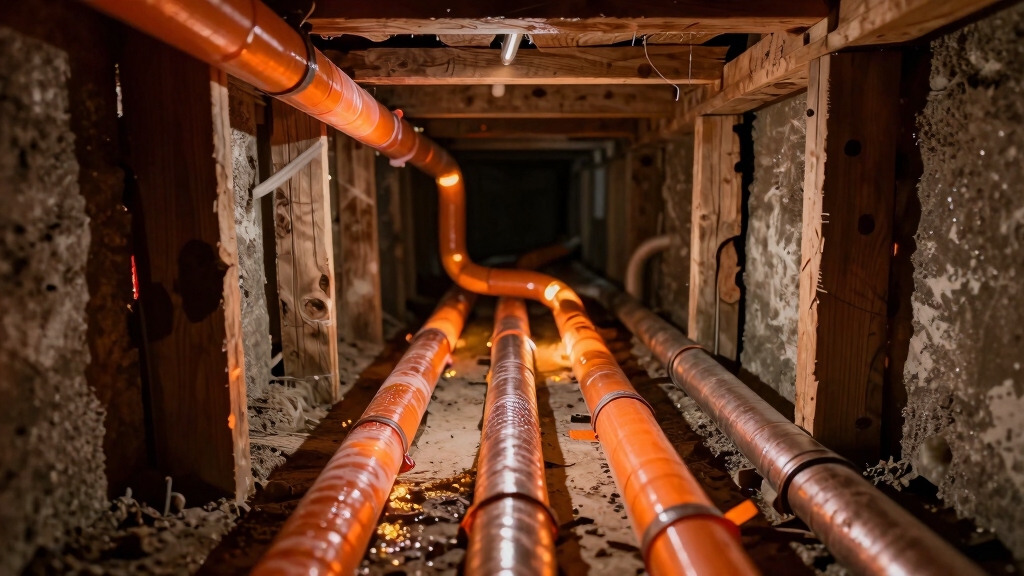
When freezing temperatures threaten your crawl space pipes, installing heat tape or heat cables can effectively prevent ice buildup and bursting. You’ll want to use self-regulating heat tape that automatically adjusts heat output based on the pipe’s temperature.
Apply the tape directly onto the pipe surface before wrapping it with insulation to maximize efficiency. Always plug heat tape into a GFCI outlet and set it to activate below 20°F.
Place heat tape on pipes before insulating and use a GFCI outlet, activating below 20°F for best results. Follow these steps for proper installation:
- Clean and dry the pipe surface to guarantee tape adhesion.
- Wrap the heat tape spirally or straight along the pipe length, avoiding overlaps.
- Cover the taped pipe with foam or fiberglass insulation to retain warmth and protect the tape.
This method provides controlled, consistent heat, reducing freeze risks without waste. Selecting heat tape with built-in thermostat activation ensures the tape only heats when necessary, improving energy efficiency and safety.
Circulating Warm Air to Keep Crawl Space Pipes Safe
Besides installing heat tape, another effective way to prevent pipe freezing in crawl spaces is to circulate warm air around the pipes.
You can achieve this by installing a low-power fan that draws warm air from the heated interior of your home and directs it into the crawl space.
Position the fan to blow air across exposed pipes, especially those running along floor joists where cold air tends to settle.
Automate this setup by connecting the fan to a thermostat and a solid-state relay, enabling it to activate only when temperatures approach freezing.
This strategy maintains a consistent temperature around vulnerable pipes without excessive energy use.
It’s especially suitable if you want a low-electricity solution or are using solar power, as it avoids direct heating while still preventing freeze damage efficiently.
For added protection and peace of mind, consider using hydraulic crimping tools to ensure all pipe connections are secure and leak-free before implementing heating methods.
Adding Supplemental Heat Near Vulnerable Pipes
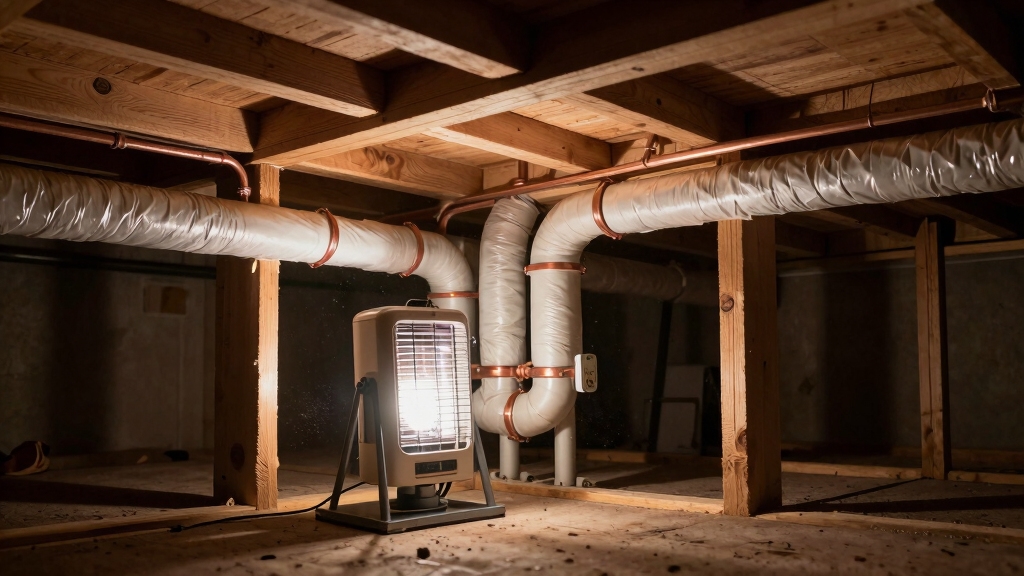
Frequently, adding supplemental heat near vulnerable pipes offers a reliable way to prevent freezing in crawl spaces. You can install a 500-watt baseboard heat strip directly on the foundation wall closest to the most exposed water lines.
Control it with a line-voltage thermostat, which allows you to manually activate heat as temperatures approach zero degrees Fahrenheit. Make sure to avoid open flames or propane heaters to minimize fire risks.
Here’s how to add supplemental heat effectively:
- Position the heat strip within 30 inches of vulnerable pipes for targeted warming.
- Use a thermostat to maintain consistent temperatures without wasting energy.
- Verify electrical connections are protected with a GFCI outlet for safety.
This method provides steady warmth, reducing the chance of pipe freeze without overcomplicating installation.
Managing Water Flow and Monitoring Pipes in Cold Weather
Although insulating and heating pipes are essential, managing water flow and monitoring your plumbing system during cold weather can prevent costly freeze damage.
Run water at a slow trickle through vulnerable pipes when temperatures dip below 20°F to keep water moving and reduce freezing risk.
Maintain a consistent indoor thermostat setting day and night to stabilize pipe temperatures.
Regularly check faucet pressure to identify potential frozen sections early.
Pay special attention to unheated areas like crawl spaces during cold snaps, as they’re most susceptible.
Use pressure tests on multiple faucets to pinpoint freeze locations.
If you detect frozen pipes in inaccessible spots, call a licensed plumber promptly to avoid pipe bursts.
Proactive flow management combined with vigilant monitoring safeguards your plumbing efficiently.
Combining Methods for Reliable Pipe Freeze Protection
When protecting pipes in crawl spaces from freezing, relying on a single method often falls short under severe conditions.
Combining insulation, heat application, and air management provides a reliable defense against freezing. Here’s how you can integrate methods effectively:
Combining insulation, heating, and air circulation creates a strong, effective barrier against pipe freezing.
- Insulate thoroughly: Wrap pipes with foam sleeves or fiberglass. Insulate the crawl space walls and floor with foam boards to block cold air infiltration.
- Apply heat tape or supplemental heating: Install self-regulating heat tape directly on pipes, then cover with insulation. Use baseboard heaters near vulnerable lines if needed.
- Circulate warm air: Introduce conditioned air from the house into the crawl space using a low-power fan. This helps maintain ambient temperature above freezing.
Frequently Asked Questions
Can Pets or Rodents Damage Pipe Insulation in Crawl Spaces?
Yes, pets and rodents can damage pipe insulation in crawl spaces. They often chew on foam sleeves or fiberglass wraps, compromising the insulation’s effectiveness.
You should regularly inspect your crawl space for signs of gnawing or nesting. To protect pipes, consider using termite-resistant foam board or metal mesh barriers around insulation.
Sealing crawl space vents also helps reduce rodent entry, minimizing the risk of insulation damage and pipe freezing problems.
How Often Should Crawl Space Insulation Be Inspected or Replaced?
You should inspect your crawl space insulation at least once a year, ideally before winter.
Check for moisture damage, compression, or pest intrusion that reduces effectiveness.
Replace insulation every 5 to 10 years or sooner if you spot mold, significant wear, or gaps exposing pipes.
Regular inspections prevent heat loss and pipe freezing risks.
Always address issues promptly to maintain thermal protection and energy efficiency in your crawl space.
Are There Eco-Friendly Insulation Options for Crawl Space Pipes?
Like a green shield around your pipes, eco-friendly insulation options include natural materials such as recycled denim or sheep’s wool.
Both are excellent at retaining heat and moisture-resistant.
These materials reduce environmental impact and provide effective thermal protection.
You can also consider cellulose-based wraps.
When choosing, make certain materials resist mold and pests, and install snugly to prevent cold air gaps.
Combining these with proper sealing enhances energy efficiency and pipe safety.
What Are the Signs of Hidden Pipe Leaks in Crawl Spaces?
You’ll notice hidden pipe leaks in crawl spaces through damp or musty odors, unexplained water stains on insulation or wood, and soft or rotting floorboards.
Listen for dripping sounds or check water pressure drops. Mold growth or increased humidity are also red flags.
Use a moisture meter to detect wet spots. Early detection prevents structural damage and costly repairs, so inspect regularly and call a plumber if you suspect leaks.
Can Crawl Space Moisture Affect Pipe Freeze Protection Methods?
Moisture in your crawl space acts like a silent thief, stealing the effectiveness of your pipe freeze protection. High humidity can degrade insulation materials, reduce heat tape efficiency, and encourage condensation that triggers corrosion.
You’ll want to control moisture with proper encapsulation, vent sealing, and dehumidification. This guarantees your insulation and heat sources maintain peak performance, keeping your pipes safe from freezing and damage during cold spells.
Layered Protection: The Key to Frozen-Pipe Prevention
Protecting your crawl space pipes from freezing is like building a fortress against winter’s chill. By combining crawl space encapsulation, quality pipe insulation, and heat tape, you create multiple defense layers.
Don’t forget to circulate warm air and add supplemental heat near vulnerable spots. Monitoring water flow guarantees early detection of issues.
Using these practical, technical methods together gives you reliable, all-encompassing protection, keeping your pipes safe and your home worry-free all winter long.