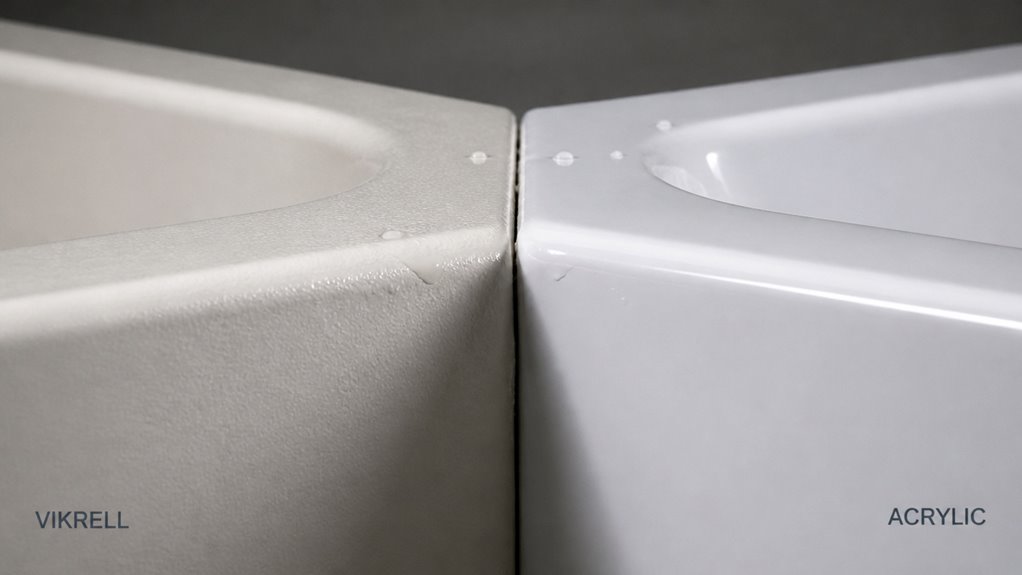
If you want superior durability and chemical resistance, Vikrell’s solid composite outperforms acrylic’s lighter, more flexible vacuum-formed sheets.
Acrylic offers better heat retention and more design options, but Vikrell handles impacts, scratches, and harsh cleaners with greater ease.
Installation differs too; Vikrell needs extra support due to its density. Your choice hinges on balancing durability, thermal performance, and style preferences.
Understanding these trade-offs will clarify which material fits your project best.

- Made from solid Vikrell material for strength, durability, and lasting beauty
- High-gloss finish provides a smooth, shiny surface that is easy to clean
- ADA adaptable when installed per the requirements of the Accessibility Guidelines, Section 6-in…
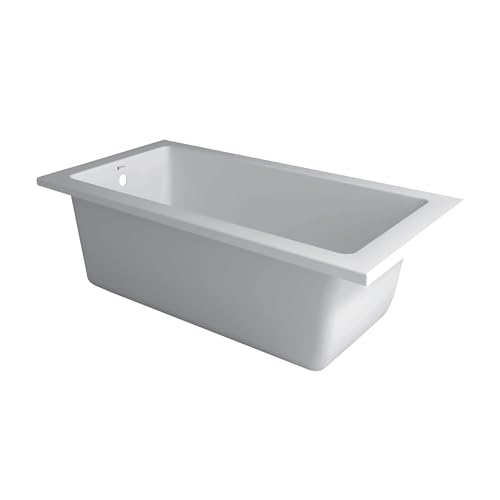
- HIGH QUALITY: This bathtub features durable acrylic fiberglass construction with a smooth glossy…
- COMFORT & SAFETY: Designed with a slip-resistant interior, this bathtub ensures secure footing and…
- VERSATILE DESIGN: Built for flexible placement, the tub includes a side bathtub drain and can be…

Key Takeaways
- Vikrell is a dense, solid-core composite offering superior durability, impact resistance, and easier, cost-effective repairs compared to acrylic.
- Acrylic is lighter, more flexible, and offers a wider range of design options and finishes due to vacuum-formed sheet construction.
- Acrylic retains heat better, providing a warmer bath experience, while Vikrell dissipates heat faster with lower thermal insulation.
- Vikrell tolerates harsher cleaners and maintains its finish longer, whereas acrylic requires gentler cleaning to avoid surface damage.
- Vikrell is pricier and needs more installation support, making acrylic a budget-friendly choice with easier handling and installation.
Vikrell vs Acrylic: Key Differences in Durability, Heat Retention, and Maintenance
| Comparison Factors | Vikrell | Acrylic |
|---|---|---|
| Material Composition | Compression-molded fiberglass and resin composite | Thermoformed acrylic sheets, often fiberglass-reinforced |
| Construction Type | Rigid composite construction | Formed sheet with reinforcing layers |
| Weight and Handling | Described as denser and more substantial | Generally lightweight and easier to handle |
| Impact Resistance | Article emphasizes strong impact resistance | Durable, but resistance depends on construction |
| Scratch Resistance | Described as resistant to surface wear | May develop scratches from abrasive contact |
| Heat Retention | Article describes lower thermal insulation | Article emphasizes better warmth retention |
| Surface Finish | Smooth, durable composite surface | Smooth, glossy acrylic surface |
| Cleaning Requirements | Routine nonabrasive cleaning | Gentle, nonabrasive cleaning recommended |
| Chemical Resistance | Article emphasizes greater chemical resistance | May be affected by incompatible cleaning chemicals |
| Repair Options | Composite-specific repairs may be possible | Acrylic repair and refinishing methods may be available |
| Design Flexibility | More limited selection of shapes and finishes | Wider variety of shapes, colors, and styles |
| Installation Considerations | Requires model-specific support and installation | Requires proper support and secure positioning |
| Hard Water Maintenance | Smooth surface may simplify mineral deposit removal | Requires regular gentle cleaning to manage deposits |
| Whirlpool Compatibility | Depends on available manufactured configurations | Available in various jetted and whirlpool designs |
| Environmental Considerations | Composite construction complicates recycling | Reinforced construction may complicate recycling |
| Best Application | Durability-focused bathrooms and routine daily use | Design-focused bathrooms and varied tub configurations |
| Overall Recommendation | Choose for rigid construction and practical maintenance | Choose for design versatility and lightweight construction |
What Is Vikrell?

Vikrell is a composite material primarily composed of fiberglass and polyresin or similar fillers, formed through compression molding.
Vikrell combines fiberglass and polyresin through compression molding for a durable composite material.
When you examine its structure, you’ll notice it’s a solid-core composite rather than a surface coating, lending substantial rigidity and durability.
This composition grants Vikrell enhanced resistance to impacts, scratches, and chipping, distinguishing it from layered materials.
You’ll also find its density contributes to a firm, substantial feel underfoot.
Unlike lighter, more flexible alternatives, Vikrell demands precise manufacturing controls to maintain its integrity and performance characteristics.
Its chemical inertness means it resists degradation from common household cleaners, reducing maintenance challenges.
Additionally, Vikrell’s durability and resistance to corrosion make it comparable to materials like cast iron in terms of long-term performance.
Vikrell vs Acrylic: Key Material Differences
Although both materials serve similar functions in bathtubs and showers, their fundamental compositions and manufacturing methods create distinct differences in performance and handling.
Vikrell is a compression-molded composite of fiberglass and polyresin, forming a solid-core structure. In contrast, acrylic is vacuum-formed from thin acrylic sheets often reinforced with fiberglass backing.
This results in Vikrell being denser and more rigid, offering superior impact resistance and chemical inertness. This translates to enhanced durability and easier maintenance.
Acrylic, by contrast, is lighter, more flexible, and easier to mold into diverse shapes. However, it tends to scratch and chip more readily.
You’ll find acrylic provides greater design versatility and simpler installation. Vikrell demands more support but delivers a more substantial feel and longer-lasting surface integrity under heavy use.
For maintenance and repair, acrylic surfaces benefit from specialized acrylic tub repair kits that restore smooth finishes and resist water damage, extending their lifespan.
Which Keeps Your Bath Water Warmer: Vikrell Or Acrylic?
When choosing between Vikrell and acrylic for your bathtub or shower, heat retention becomes a significant factor affecting your comfort during use.
Acrylic generally outperforms Vikrell in keeping bath water warmer due to its superior insulating properties. Here’s why:
Acrylic outshines Vikrell at retaining bath water warmth thanks to its excellent insulating qualities.
- Material composition: Acrylic is a vacuum-formed sheet with fiberglass backing, creating an effective thermal barrier. Vikrell’s solid composite structure dissipates heat faster.
- Heat loss rate: Vikrell tends to conduct and lose heat more quickly, causing the water temperature to drop sooner during your soak.
- User experience: Acrylic’s ability to maintain warmth enhances prolonged comfort. This makes it the preferred choice if heat retention is your priority.
Additionally, acrylic tubs feel warmer initially due to their lower thermal conductivity, providing a more comfortable surface temperature at the start of your bath.
Therefore, if you want your bath water to stay warmer longer, acrylic is technically the better material to choose.
Durability And Impact Resistance Compared
Since durability and impact resistance are critical for long-term bathroom fixtures, understanding how each material responds to wear and damage is essential.
Vikrell, composed of a compression-molded fiberglass and polyresin composite, offers superior resistance to scratching, chipping, and cracking due to its solid-core structure.
When you use Vikrell, it withstands impacts from dropped objects better than acrylic, maintaining its finish integrity over time.
Acrylic, made from vacuum-formed sheets with fiberglass backing, is durable but more prone to surface scratches and chips under similar stress.
While acrylic handles daily use adequately, it’s more vulnerable to abrasions, especially in high-traffic settings.
Choosing Vikrell means opting for a more rigid, impact-resistant material, which translates to longer-lasting durability in demanding bathroom environments.
Additionally, materials like Vikrell contribute to the overall long lifespan of bathroom fixtures, often lasting 15 to 20 years with proper care.
Cleaning Ease And Chemical Resistance Of Vikrell vs Acrylic
Because bathroom fixtures endure constant exposure to water, soap, and cleaning agents, the chemical resistance and ease of cleaning are essential factors in material selection.
Vikrell exhibits superior chemical inertness, making it less reactive to harsh cleaning agents than acrylic. You’ll find Vikrell’s smooth, solid-core surface easier to maintain without risking surface dulling or scratches.
Vikrell’s chemical inertness ensures easier maintenance and lasting surface clarity without dulling or scratches.
Consider these key points:
- Vikrell resists damage from abrasive cleaners better, preserving finish integrity longer than acrylic.
- Acrylic requires gentler cleaning methods to avoid surface haze or chemical etching.
- Vikrell’s low reactivity reduces long-term maintenance costs and cleaning frequency.
Selecting Vikrell means you can use a broader range of household cleaners without fear of degradation. This enhances durability and appearance retention over time compared to acrylic. Additionally, some refinishing products designed for Vikrell surfaces utilize non-yellowing resins to maintain a fresh, glossy finish.
Repair, Maintenance, And Longevity: Which Lasts Longer?
Although both Vikrell and acrylic offer durable options for bathtubs and showers, Vikrell generally requires less frequent maintenance and proves easier to repair when damage occurs.
Its solid composite construction resists chipping and scratching more effectively, reducing repair needs.
When damage does happen, you can often fix Vikrell with simpler, more cost-effective methods compared to acrylic, which may require professional refinishing due to its thinner, surface-layer design.
Acrylic, while durable, shows surface wear sooner under heavy use and demands gentler upkeep to maintain appearance.
Over time, Vikrell’s chemical inertness and impact resistance contribute to a longer service life, especially in high-traffic settings.
If longevity and low-maintenance reliability are priorities, Vikrell clearly outperforms acrylic in sustaining structural and aesthetic integrity.
However, it is important to note that the durability of acrylic can be significantly enhanced when reinforced with a steel frame, improving resistance to chipping and cracking.
Cost, Design Options, And Installation: A Side-By-Side Look
When comparing Vikrell and acrylic, you’ll find that cost, design options, and installation requirements vary considerably between the two materials.
Acrylic generally costs less and offers broader design flexibility, including more colors and a glossier finish.
Vikrell, while pricier, provides a more rigid and solid-feeling structure but has a limited style range.
Installation also differs significantly. Consider these factors:
- Cost: Acrylic is budget-friendly; Vikrell commands a premium, especially for branded units.
- Design: Acrylic’s vacuum-formed sheets allow complex shapes and diverse finishes; Vikrell’s composite limits variety.
- Installation: Acrylic weighs less and is easier to handle; Vikrell requires more support and careful setup due to its density.
Additionally, understanding the differences in heat retention properties can influence comfort and energy use in your bathroom.
Understanding these distinctions helps you select the material that best fits your project’s budget and aesthetic demands.
When Should You Choose Vikrell Over Acrylic?
Choosing between Vikrell and acrylic involves evaluating more than just cost and design flexibility.
You should choose Vikrell when durability and chemical resistance are your priorities.
Vikrell’s solid composite structure offers superior resistance to scratching, chipping, and chemical damage compared to acrylic’s softer surface.
If your bathroom endures heavy use or abrasive cleaning, Vikrell maintains its finish longer.
Additionally, Vikrell is easier and less costly to repair, making it a practical choice for long-term maintenance.
However, if heat retention or a wider design range matters more, acrylic may be preferable.
Ultimately, select Vikrell when you need a robust, low-maintenance material that withstands impact and chemical exposure.
This is especially important in high-traffic or demanding environments where longevity and resilience are critical.
Frequently Asked Questions
Are Vikrell and Acrylic Tubs Environmentally Friendly?
Neither Vikrell nor acrylic tubs are highly environmentally friendly due to their synthetic compositions and energy-intensive manufacturing processes.
You’ll find Vikrell’s fiberglass and polyresin blend involves nonrenewable materials, while acrylic’s plastic sheets derive from petrochemicals.
However, both can offer long service lives, reducing replacement frequency.
If you want greener options, consider recycled materials or tubs designed for recyclability, as neither standard Vikrell nor acrylic tubs prioritize sustainability inherently.
Can Vikrell or Acrylic Tubs Be Recycled?
You might be surprised to learn that neither Vikrell nor acrylic tubs are easily recyclable through conventional means.
Both materials combine resins and fiberglass, complicating recycling processes.
While acrylic can sometimes be repurposed in specialized facilities, Vikrell’s composite nature makes it even less likely to be recycled.
You’ll often end up relying on landfill disposal unless you find a niche recycler that accepts these complex materials.
Do Vikrell or Acrylic Tubs Support Built-In Jets or Whirlpool Features?
You can install built-in jets or whirlpool features in both Vikrell and acrylic tubs, but acrylic tubs usually support these systems more easily due to their lighter weight and flexibility.
Acrylic’s moldability allows precise jet placement and integration. Vikrell, being denser and more rigid, requires careful reinforcement to accommodate plumbing and mechanical components.
In either case, professional installation guarantees structural integrity and proper function of built-in jets or whirlpool systems.
How Do Vikrell and Acrylic Tubs Perform With Hard Water Stains?
You’ll find Vikrell tubs resist hard water stains better due to their chemically inert, low-reactivity surface.
This makes buildup easier to clean without damage.
Acrylic tubs, while smooth, tend to be more prone to staining or surface dulling from mineral deposits if cleaning isn’t prompt and gentle.
You’ll need to use milder cleaners on acrylic to prevent etching, whereas Vikrell tolerates stronger cleaners.
This helps maintain a cleaner, stain-free appearance longer.
Are There Warranty Differences Between Vikrell and Acrylic Tubs?
Warranties can be the safety net you never see until you need it most.
Typically, Vikrell tubs offer longer, more all-encompassing warranties due to their durability and chemical resistance, often spanning 10 to 15 years.
Acrylic tubs usually come with shorter warranties, around 5 to 10 years, reflecting their susceptibility to surface wear and damage.
Always check specific brand terms, but expect Vikrell warranties to cover more extensive repairs and longer periods than acrylic’s.
Vikrell vs Acrylic: Making the Right Choice
When choosing between Vikrell and acrylic, think of Vikrell as a sturdy fortress, durable and low-maintenance, while acrylic feels like a sleek, heat-holding vessel with a modern edge.
You’ll want Vikrell for impact resistance and simplicity, but acrylic excels in warmth retention and design versatility.
Weigh your priorities carefully, as each material carves its niche in performance.
Your ideal choice hinges on balancing durability, comfort, and style with calculated precision.
- Made from solid Vikrell material for strength, durability, and lasting beauty
- High-gloss finish provides a smooth, shiny surface that is easy to clean
- ADA adaptable when installed per the requirements of the Accessibility Guidelines, Section 6-in…
- HIGH QUALITY: This bathtub features durable acrylic fiberglass construction with a smooth glossy…
- COMFORT & SAFETY: Designed with a slip-resistant interior, this bathtub ensures secure footing and…
- VERSATILE DESIGN: Built for flexible placement, the tub includes a side bathtub drain and can be…
Last update on 2026-10-31 / Affiliate links / Images from Amazon Product Advertising API