
If your water hardness exceeds 10 GPG, a water softener’s ion exchange system will remove calcium and magnesium ions. This gives you genuinely soft water and superior scale control.
For hardness below 10 GPG, a descaler using template-assisted crystallization prevents scale by altering mineral behavior without removing them. It requires little upkeep.
Softeners need regular salt and electricity, while descalers offer a low-cost, maintenance-free alternative. To understand which fits your water quality and lifestyle best, keep exploring their differences.
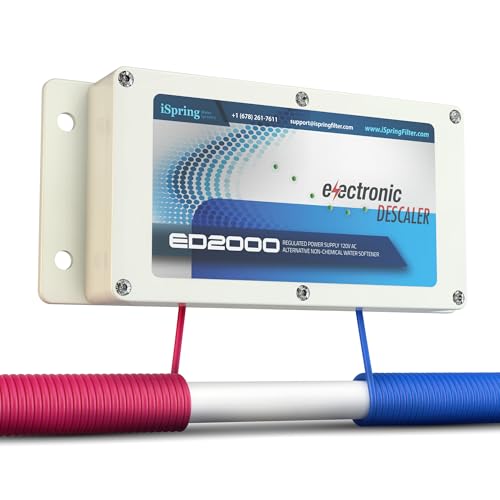
- [Improve Water Quality] Solves hard water problems without the need for chemicals, salt, or…
- [Reliable Descaler] Descales your entire water system and prevents scale buildup in pipes. Reduces…
- [Environmental Friendly] Designed for very hard water areas (10-19 grains per gallon). Saves energy…

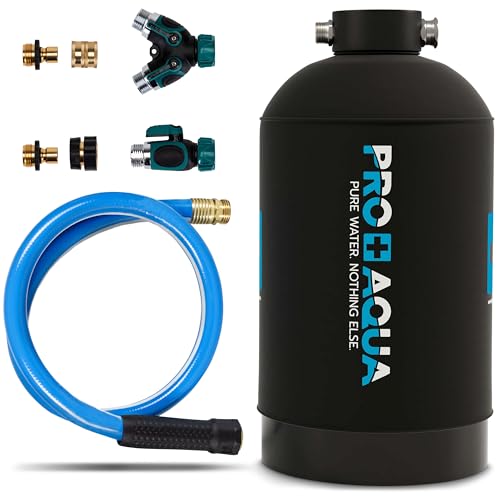
- 【 HIGHLY EFFICIENT 】Hard water is notorious for smelling like rotten eggs and having a foul…
- 【 READY TO USE IN 5 MINUTES 】This PRO+AQUA Portable Water Softener comes fully assembled with…
- 【 MULTI-PURPOSE & EFFECTIVE】Innovatively designed in the U.S., this portable water softener can…
Key Takeaways
- Water softeners remove calcium and magnesium ions, producing truly soft water, while descalers alter mineral behavior without removing minerals.
- Softeners are best for water hardness above 10 GPG; descalers suit hardness below 10 GPG to prevent scale without changing water composition.
- Softeners eliminate scale buildup and improve soap lathering; descalers prevent scale formation but do not improve water taste or lather.
- Softeners require regular salt refills and electricity, incurring ongoing costs; descalers are maintenance-free and salt-free after installation.
- Softeners improve water quality and appliance lifespan but use more space and energy; descalers offer compact, eco-friendly, and flexible installation.
Descaler vs Water Softener Comparison: Hard Water, Scale Control, and Cost
| Comparison Point | Descaler | Water Softener | Best Choice |
|---|---|---|---|
| Main Function | Changes how minerals behave to reduce scale buildup | Removes calcium and magnesium through ion exchange | Softener for true soft water |
| Mineral Removal | Does not remove minerals from water | Removes hardness minerals and replaces them with sodium or potassium | Softener for hardness removal |
| Best Hardness Level | Better for water under 10 GPG | Better for water above 10 GPG | Depends on water test results |
| Scale Control | Helps prevent new scale from sticking to surfaces | Offers stronger scale prevention by removing hardness minerals | Softener for heavy scale problems |
| Soap Lathering | Usually does not improve soap performance much | Improves soap lathering and reduces residue | Softener for better washing results |
| Water Feel | Keeps water mineral content mostly unchanged | Produces noticeably softer-feeling water | Softener for skin and hair feel |
| Maintenance | Usually low-maintenance and salt-free | Needs salt refills, electricity, and periodic checks | Descaler for easy upkeep |
| Operating Cost | Lower ongoing cost after installation | Higher ongoing cost due to salt and power use | Descaler for budget operation |
| Environmental Impact | No salt discharge and less waste | Uses salt, electricity, and may create wastewater | Descaler for eco-friendly use |
| Best Use Case | Mild to moderate hardness, scale prevention, compact homes | Severe hard water, appliance protection, better water quality | Match to |
Water Softener and Descaler Mechanisms

Understanding how water softeners and descalers work is essential when choosing a solution for hard water issues.
Water softeners use ion exchange to remove calcium and magnesium ions, replacing them with sodium or potassium ions. This process effectively eliminates hardness-causing minerals from your water, producing genuinely soft water.
In contrast, water descalers don’t remove minerals; instead, they alter the chemical structure of these minerals using template-assisted crystallization (TAC) technology. This change prevents minerals from adhering to pipes and fixtures, stopping scale buildup without reducing water hardness.
You should know that while softeners physically remove hardness ions, descalers only modify mineral behavior. They offer different mechanisms tailored to specific hard water challenges and maintenance preferences.
Many modern systems, such as the Kind Water Systems E-3000, use salt-free softening methods to decrease scale formation without salt, providing an alternative to traditional water softeners.
Suitability Based on Water Hardness Levels
When selecting between water softeners and descalers, your water’s hardness level plays a vital role in determining the most effective solution. If your water hardness exceeds 10 grains per gallon (GPG), a water softener is your best choice.
It removes calcium and magnesium ions entirely, addressing all hard water issues, including scale buildup and bitter taste. Conversely, if your water hardness is below 10 GPG, a descaler can effectively prevent scale formation without altering mineral content.
However, descalers only control scale and don’t improve soap lathering or taste. For moderate hardness levels, water conditioners employing template-assisted crystallization (TAC) offer superior performance compared to basic descalers.
Assessing your water hardness accurately guarantees you select a system that meets your specific water conditioning needs efficiently. Choosing a resin with high ion exchange capacity ensures more effective and longer-lasting softening results.
Water Quality and Scale Control Benefits
Although both water softeners and descalers aim to address hard water challenges, they differ materially in their impact on water quality and scale control.
Water softeners remove calcium and magnesium ions via ion exchange, replacing them with sodium or potassium ions. This effectively produces genuinely soft water with zero grains per gallon (GPG) hardness.
Water softeners replace calcium and magnesium with sodium or potassium, creating truly soft water free of hardness.
The elimination of hard minerals prevents scale formation entirely, offering superior protection for plumbing and appliances.
In contrast, descalers use template-assisted crystallization (TAC) technology to alter the chemical structure of minerals. This prevents them from adhering to surfaces without removing hardness.
While descalers maintain original mineral levels and don’t affect water taste, they only prevent new scale and can’t remove existing buildup.
Both reduce hard water stains, but softeners provide more thorough scale control and improved soap performance.
Additionally, salt-free water softeners offer an eco-friendly alternative that protects septic system health by preventing scale buildup without using salts or harsh chemicals.
Maintenance and Cost Comparison
Beyond their effects on water quality and scale control, maintenance demands and upfront costs play a significant role in choosing between water softeners and descalers. When deciding, consider these factors:
1. Maintenance: Water softeners need regular salt refills and consume electricity. This requires ongoing attention.
Descalers using template-assisted crystallization (TAC) run salt-free and are maintenance-free, saving you time and effort.
2. Upfront Cost: Water softeners typically cost between $1,500 and $2,000 due to their dual-tank systems.
Descalers are more affordable, averaging $200 to $300 with compact single units.
3. Operational Costs: Softener systems incur continuous expenses for salt and power.
In contrast, descalers operate without additional costs after installation.
Additionally, choosing the right solution can impact your plumbing system’s longevity, as some adhesives and treatments ensure water-resistant bonds to protect against damage.
Understanding these distinctions helps you balance initial investment and upkeep to fit your household’s needs efficiently.
Lifestyle and Environmental Trade-Offs of Water Softeners and Descalers
Because your choice affects daily living and environmental impact, it’s important to weigh the lifestyle and ecological trade-offs between water softeners and descalers.
Softeners improve water quality and appliance lifespan but consume salt and electricity, generating wastewater.
Descalers avoid salt waste and power use, offering eco-friendliness and compact design. However, they don’t remove hardness or improve lathering.
| Aspect | Water Softeners |
|---|---|
| Environmental Impact | Salt discharge, higher energy use |
| Maintenance | Regular salt replenishment, power needed |
| Lifestyle Benefits | Softer water, better skin/hair hydration |
| Space & Flexibility | Larger units, fixed installation |
Understanding these trade-offs helps you choose a system aligned with your environmental values and lifestyle needs. However, because water softeners do not remove chlorine, it is often necessary to install an activated carbon filter to protect the resin from damage and improve water taste.
Frequently Asked Questions
Can Water Softeners and Descalers Be Used Together Safely?
Yes, you can safely use water softeners and descalers together, but it’s usually unnecessary.
Water softeners remove hardness ions, while descalers prevent scale buildup chemically.
Combining them won’t harm your plumbing but might be redundant and costly.
If your hardness level is very high, rely on a softener first.
Descalers can supplement for scale prevention, especially in appliances.
Make certain proper installation to avoid system conflicts or reduced efficiency.
How Long Does It Take for Each System to Show Results?
Curious how fast you’ll see changes? Water softeners deliver noticeable results immediately after installation. They remove hardness ions right away, so you’ll feel smoother water and better soap lathering instantly.
Descalers usually take a few weeks to show effects since they alter mineral crystallization gradually. They prevent scale buildup over time without removing hardness.
Are There Any Health Concerns With Using Sodium in Softeners?
Yes, you should be aware that sodium added by water softeners can increase your daily sodium intake, especially if your water is very hard or you consume a lot of softened water.
This might pose a risk for individuals on low-sodium diets or with hypertension. However, the actual sodium increase is generally low.
If concerned, you can opt for potassium-based softeners or use a reverse osmosis system to reduce sodium levels in your water.
Do Water Softeners Affect the Plumbing Warranty or Insurance?
When it comes to plumbing warranties or insurance, you should know “an ounce of prevention is worth a pound of cure.”
Installing a water softener usually doesn’t void your warranty or insurance, as it prevents scale buildup, protecting pipes and appliances.
However, you must follow manufacturer guidelines and use the system properly.
Check your specific warranty terms, since improper installation or neglect might affect coverage.
Always consult your insurer before installing.
Can Descalers Handle Iron or Other Mineral Contaminants?
Descalers can reduce scale buildup caused by iron but don’t remove iron or other mineral contaminants from your water.
They alter mineral crystallization to prevent deposits, but iron particles remain dissolved or suspended.
If you have high iron levels, you’ll need a dedicated iron filter or water softener with iron removal capabilities.
Relying solely on a descaler won’t address water discoloration, taste, or potential staining from iron or other minerals.
- [Improve Water Quality] Solves hard water problems without the need for chemicals, salt, or…
- [Reliable Descaler] Descales your entire water system and prevents scale buildup in pipes. Reduces…
- [Environmental Friendly] Designed for very hard water areas (10-19 grains per gallon). Saves energy…
- 【 HIGHLY EFFICIENT 】Hard water is notorious for smelling like rotten eggs and having a foul…
- 【 READY TO USE IN 5 MINUTES 】This PRO+AQUA Portable Water Softener comes fully assembled with…
- 【 MULTI-PURPOSE & EFFECTIVE】Innovatively designed in the U.S., this portable water softener can…
Choose the Right System for Your Water Hardness
Choosing between a descaler and a water softener is like picking the right tool for a craftsman’s task. You want precision and efficiency.
If your water hardness is high, a softener’s ion-exchange method offers thorough scale removal. For moderate hardness, a descaler’s electromagnetic approach reduces buildup without chemicals.
Consider maintenance, cost, and environmental impact carefully. Ultimately, understanding your water’s needs guarantees you invest in the most effective, sustainable solution for long-term scale control.
Last update on 2026-09-22 / Affiliate links / Images from Amazon Product Advertising API