
You can remove mold from your toilet effectively without bleach by using white vinegar and baking soda. Pour undiluted vinegar into the bowl and tank, let it sit for at least an hour, then scrub with a toilet brush and flush. Baking soda applied as a paste also scrubs away mold while neutralizing odors.
These natural agents safely disrupt mold growth and reduce humidity, protecting surfaces. For detailed steps, safety tips, and prevention methods, explore further insights available.
Key Takeaways
- Pour undiluted white vinegar into the toilet bowl and tank, let sit for an hour, then scrub with a toilet brush and flush.
- Apply a baking soda paste or spray mixture, wait 15–30 minutes, scrub thoroughly, and rinse to naturally remove mold and odors.
- Use freshly squeezed lemon juice on moldy areas, wait five minutes, then wipe clean for a mild acidic mold treatment.
- Ensure good bathroom ventilation and run exhaust fans during and after cleaning to reduce moisture and prevent mold regrowth.
- Wear gloves, masks, and eye protection during mold cleanup to avoid exposure to spores and irritants safely.
Understanding Mold Growth in Toilets
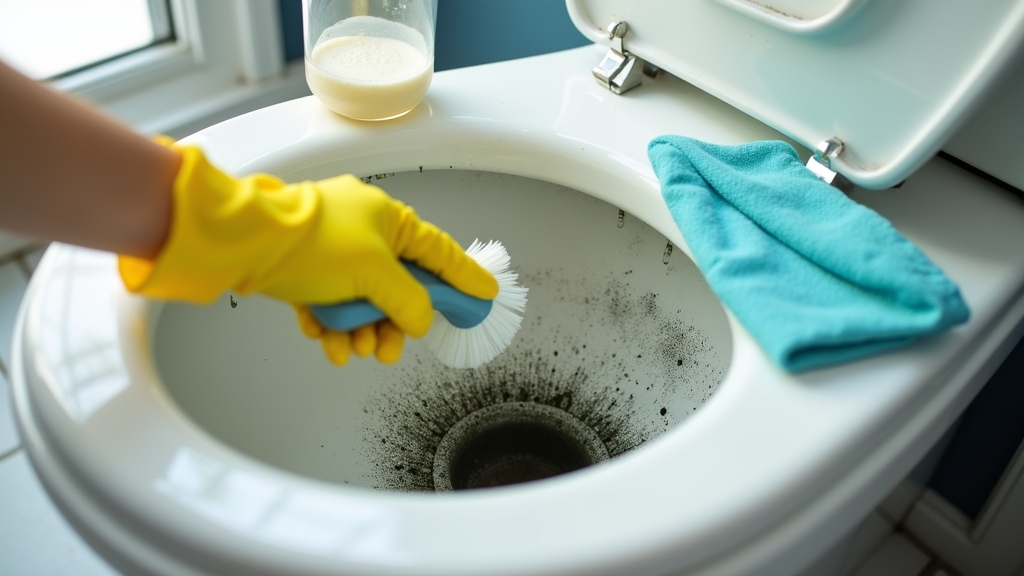
Because toilets offer a consistently moist and nutrient-rich environment, mold can easily establish and thrive within them.
You’ll find mold growing on surfaces like the toilet bowl rim, tank interior, underside of the seat, base, and lid. These areas accumulate moisture and organic matter such as skin cells, urine, and feces, which provide nutrients.
The presence of moisture is crucial since sealed construction in some plumbing setups helps prevent leaks that could worsen mold growth.
Mold spores, which float in the air, settle in these damp spots, especially when ventilation is poor. High humidity and stagnant water in the bowl or tank further encourage growth.
While some have hypothesized a link between toilet mold and diabetes due to sugar in urine, scientific evidence shows that environmental factors are the primary causes of mold buildup.
Leaks or plumbing issues add excess moisture, supporting mold colonies. Understanding these conditions helps you recognize why mold develops and persists in toilets.
This highlights the importance of addressing moisture, ventilation, and cleanliness to prevent it from taking hold.
Natural Cleaning Agents Effective Against Mold
Did you know that white distilled vinegar is a fantastic natural cleaning agent? It contains about 5% acetic acid, which is really effective at killing mold spores and preventing them from coming back in your toilet.
Vinegar also helps to reduce humidity levels, which is a common cause of mold growth in damp areas.
Now, if you pair that with baking soda, you’ve got a winning combo! Baking soda acts as a mild abrasive, which means it can help scrub away those pesky mold stains and even neutralize odors. And the best part? It won’t damage your surfaces.
Using these natural agents regularly can help reduce potential health hazards by preventing mold growth and keeping your toilet environment safer.
Vinegar for Mold
While vinegar’s acetic acid content makes it an effective antifungal agent against certain household molds, its efficacy varies depending on the mold species and surface type.
Vinegar disrupts mold growth on non-porous surfaces and prevents regrowth, but it’s less effective on porous or deeply embedded molds. You can pour undiluted vinegar into the toilet bowl and tank or spray it directly on moldy areas, letting it sit for an hour before scrubbing. It is recommended to use gloves, mask, and eye protection during mold removal to ensure safety. For persistent mold, combining vinegar treatment with chemical-resistant materials in cleaning tools can enhance removal effectiveness.
| Property | Effectiveness | Notes |
|---|---|---|
| Acetic Acid (5-8%) | Disrupts mold growth | Effective on some molds only |
| Surface Penetration | Good on non-porous | Limited on porous surfaces |
| Toxicity | Non-toxic, safe | Safer than bleach |
| Application | Spray or pouring | Requires scrubbing after use |
| Limitations | Incomplete removal | May need repeated treatment |
Baking Soda Benefits
Baking soda offers a scientifically supported, natural approach to mold removal and prevention, leveraging its alkaline properties to disrupt mold growth.
Its mild alkalinity raises pH levels, neutralizing mold’s acidic surfaces and damaging cell structures to inhibit proliferation.
You can apply baking soda as a paste or solution to physically scrub and loosen mold colonies without harming porcelain.
It also absorbs moisture, depriving mold of the damp environment it needs to thrive, which is essential for persistent control.
After scrubbing, rinsing removes residues and dislodged spores. Regular applications enhance efficacy, creating a hostile environment against regrowth. Baking soda is particularly effective on non-porous surfaces such as porcelain toilets, glass, and sealed stone.
While baking soda excels on non-porous surfaces like toilets, it’s less effective on porous materials.
Step-by-Step Guide to Removing Mold Without Bleach

Since bleach can be harsh and produce strong fumes, opting for natural alternatives to remove mold from your toilet is both safer and effective.
Start by pouring one cup of distilled white vinegar into the toilet bowl and tank, letting it sit for at least an hour to break down mold.
Vinegar kills approximately 82% of mold species, making it a powerful natural cleaner. Always ensure you are working in a clean workspace to maximize the effectiveness of any cleaning process.
Next, scrub thoroughly with a toilet brush and flush.
Alternatively, spray a mixture of one-quarter tablespoon baking soda dissolved in water onto moldy areas, wait 15–30 minutes, then scrub and rinse. Baking soda also helps to prevent mold return after cleaning.
You can also apply freshly squeezed lemon juice directly on mold, allow five minutes for its acidic action, and wipe clean.
These methods leverage acidity and mild abrasiveness to eliminate mold safely.
Vinegar’s acidity (pH ~2.5) disrupts mold growth.
Baking soda neutralizes odors and loosens mold.
Lemon juice’s natural citric acid and aroma aid cleaning.
Safety Measures for Mold Cleaning in Bathrooms
When you’re getting ready to tackle mold in your bathroom, it’s super important to gear up properly. Make sure to wear gloves, goggles, and a respirator. This helps keep those nasty spores at bay and protects your health. Using protective equipment is one of the key safety measures.
Also, don’t forget about ventilation! Keeping your windows open or turning on those exhaust fans can really help reduce the number of airborne contaminants floating around. It’s also crucial to dry everything thoroughly to prevent mold from returning.
Oh, and here’s a biggie: avoid mixing cleaning chemicals. You might think it’s a good idea to combine them for a stronger effect, but trust me, that can lead to some really toxic fumes. Your safety is way more important than that!
Protective Gear Essentials
Although mold removal in bathrooms may seem straightforward, using proper protective gear is vital to safeguard your health from airborne spores and harsh chemicals.
You should always wear a NIOSH-approved N95 respirator or better to prevent inhaling spores. Eye protection with non-vented goggles is essential since safety glasses can allow spores to enter.
Long rubber gloves, extending to mid-forearm, shield your skin from mold and cleaning agents. Additionally, wearing disposable coveralls or old, washable clothes helps prevent cross-contamination.
Wearing proper PPE reduces the risk of mold spores contaminating other areas and causing health issues. Ensuring adequate grounding of electrical equipment nearby can further enhance safety during cleaning.
Use snug-fitting N95 or higher respirators to block spores and chemical vapors. Protect eyes with non-vented goggles to avoid irritation and infection.
Wear long, chemical-resistant gloves and disposable clothing to minimize skin contact and contamination. Following these steps ensures effective and safe mold cleaning in your bathroom.
Ventilation Importance
Proper ventilation plays a crucial role in controlling humidity levels in your bathroom, directly impacting mold growth.
By running exhaust fans during and at least 30 minutes after showers, you remove excess moisture, reducing the damp conditions mold needs. The effectiveness of ventilation can be enhanced by understanding the activation threshold of moisture sensors in some modern exhaust fans.
Opening windows or doors further helps expel humid air and prevent condensation.
Mechanical ventilation is essential if natural airflow is limited. Ensuring that the ventilation system’s float switch or sensor is correctly positioned helps maintain consistent operation.
Make certain exhaust fans vent outdoors, not into attics or crawl spaces, to avoid hidden moisture buildup. Effective air circulation accelerates drying of surfaces like toilets and walls, limiting mold establishment.
Ventilation also lowers bathroom temperature, inhibiting mold spore germination. Regularly inspect and maintain ventilation systems to guarantee maximum function.
Proper airflow improves indoor air quality, reducing mold spores and associated respiratory risks, making ventilation a critical safety measure during mold cleaning.
Bathrooms, especially shower areas, provide ideal conditions due to frequent water exposure, which makes effective ventilation even more important to manage moisture levels.
Avoiding Chemical Mixes
Maintaining good ventilation helps reduce mold growth, but handling cleaning agents safely is equally important to protect your health during mold removal. Avoid mixing chemicals, as some combinations produce toxic gases.
For example, bleach mixed with vinegar releases chlorine gas, while bleach combined with ammonia forms chloramine gas, both hazardous to breathe. Always use one cleaning agent at a time and read product labels carefully for incompatibilities.
Additionally, ensuring a stable power source prevents electrical issues that could interfere with ventilation systems.
To stay safe, follow these guidelines:
- Never mix bleach with other cleaners like ammonia or vinegar.
- Use only one cleaner per cleaning session to prevent accidental mixing.
- Store all cleaning agents in their original containers and out of children’s reach.
- Additionally, wearing gloves during cleaning provides essential protection for your skin when handling mold and cleaning solutions.
Preventing Mold Regrowth in Your Toilet
Since mold thrives in moist and poorly ventilated environments, you should focus on reducing humidity and moisture in your bathroom to prevent regrowth in your toilet.
Run exhaust fans during and after showers and open windows to improve air circulation, keeping humidity below 60%. Install timers on fans to ensure consistent use and avoid creating conditions that require an external shut-off valve.
Flush toilets at least weekly to prevent stagnant water, which encourages mold spores. Mold can begin developing within 24-48 hours, so timely flushing is crucial.
Use natural mold inhibitors like white vinegar, hydrogen peroxide solutions, or baking soda mixtures monthly to inhibit growth safely.
Address hard water mineral buildup by employing water softeners and regularly cleaning surfaces to remove residues that harbor mold.
Tools and Supplies Needed for Mold Removal

To effectively remove mold from your toilet, gathering the right tools and supplies is necessary to guarantee thorough cleaning and safety.
You’ll want protective gear to minimize exposure to mold spores and cleaning implements designed for both broad and tight spaces. Natural cleaning agents will help you avoid harsh chemicals while efficiently eliminating mold.
Essential items include:
Essential items include gloves, cleaning mask, white vinegar, baking soda, and brushes for thorough mold removal.
- Rubber gloves and a cleaning mask for personal protection
- White vinegar and baking soda for non-toxic mold removal and scrubbing
- Toilet brush, soft-bristle brush, and toothbrush to access all toilet surfaces
Additionally, use a spray bottle for even application and ensure proper ventilation to reduce airborne spores. Proper bathroom ventilation is important because mold thrives in moist environments.
Proper preparation with these tools will make your mold removal process both effective and safe.
When to Consider Professional Mold Remediation?
If mold covers extensive areas or penetrates hidden spaces in your bathroom, you should consider professional mold remediation to guarantee complete removal and safety. Proper remediation involves containment and air control to prevent spore spread during cleanup.
Seek experts when mold exceeds 10 square feet, appears on multiple surfaces, or hides inside plumbing and toilet tanks. Professional help is vital if persistent mold returns despite cleaning or if musty odors suggest hidden growth.
Health risks, such as allergy flare-ups, respiratory problems, or the presence of toxic species like black mold, also indicate the need for remediation. Structural damage, water leaks, and mold in HVAC systems further justify professional intervention.
Certified specialists use containment, air filtration, and specialized equipment, ensuring compliance with health regulations. Immediate professional help is essential if mold spreads rapidly, involves contaminated water, or compromises building integrity.
Additionally, understanding the horsepower of the pump used in sump systems can be crucial in preventing water accumulation that fosters mold growth.
Frequently Asked Questions
Can Mold in Toilets Cause Health Problems Beyond Allergies?
Yes, mold in toilets can cause health problems beyond allergies. When you inhale mold spores or mycotoxins, you risk respiratory inflammation, immune suppression, and chronic sinus infections.
Mold exposure might also lead to fatigue, cognitive difficulties, and skin irritations.
Additionally, toxic molds can produce metabolites that impair your immune system and increase infection susceptibility.
How Often Should Toilet Mold Cleaning Be Performed for Best Results?
You should clean toilet mold at least once a week to prevent buildup, focusing on under the rim and inside the tank. In bathrooms with poor ventilation, hard water, or heavy use, increase frequency to multiple times per week. Regular scrubbing and disinfecting disrupt mold colonies effectively.
Monthly descaling also helps prevent mineral deposits that promote mold. Consistent cleaning paired with adequate ventilation optimizes mold control and maintains hygiene.
Are There Any Natural Scents to Mask Vinegar Odor After Cleaning?
Yes, you can mask vinegar odor naturally by infusing it with citrus peels like lemon or orange for several days, which adds a fresh scent.
Adding essential oils such as lemon, lavender, or rosemary directly to your vinegar solution also helps neutralize the sour smell while enhancing antimicrobial effects.
Additionally, steeping herbs like rosemary or pine needles in vinegar boosts fragrance and cleaning power. These methods guarantee effective odor control during cleaning.
Is It Safe to Flush Moldy Water Down the Toilet During Cleaning?
Sure, go ahead and flush moldy water. You’ll release a microscopic party of spores, airborne and eager to invade lungs and plumbing alike.
Scientifically, it’s not safe: spores can linger in pipes, spread allergens, and harm sensitive individuals. Flushing won’t eradicate mold; it merely relocates it.
Instead, use gloves, masks, and thorough cleaning to remove mold safely. Avoid turning your toilet into a spore-launching cannon.
Can Toilet Tank Mold Affect the Plumbing System Over Time?
Yes, toilet tank mold can affect your plumbing system over time. Mold signals persistent moisture, which can cause leaks or cracks in the tank. This moisture promotes mineral buildup and corrosion on internal parts, impairing flush mechanisms and valves.
If left untreated, leaks may spread water damage to surrounding pipes and structures, increasing maintenance needs. Regular inspection and mold removal help protect your plumbing’s integrity and prevent costly repairs down the line.
Choose the Best Way to Remove Mold From Toilet Thats Not Bleach Today
Removing mold from your toilet without bleach is both safe and effective when you use natural agents like vinegar or baking soda. Just like a careful apothecary of old, you’ll mix, apply, and let these substances work their magic.
By following proper safety measures and maintaining cleanliness, you’ll prevent mold regrowth efficiently. Remember, if the mold persists or spreads, it’s wise to seek professional help to protect your health and home.